A piezoelectric buzzer earns its reputation as the energy-efficient performer of the audible alert world because it makes sound from a ceramic element that needs almost no continuous current. For product engineers and sourcing teams building battery-powered devices, that single property decides whether a design can run for months or drain in weeks. This guide explains how a piezoelectric buzzer works, why its current draw stays near zero, and how to specify one with confidence before mass production.
Unlike its electromagnetic cousin, the piezoelectric buzzer relies on the piezoelectric effect rather than a coil and magnet. The difference is not just academic: it changes the voltage, current, and drive circuit the buyer must plan for, and it sets the ceiling on how long a product can sound an alarm on a small cell.
What a Piezoelectric Buzzer Actually Is
The name describes the mechanism. A piezoelectric buzzer converts electrical energy into sound by exploiting the piezoelectric effect of certain ceramics. When a voltage is applied across a polarized ceramic plate, the plate changes shape; reverse the polarity and it changes back. Drive it with an alternating voltage at the right frequency and the plate vibrates fast enough to push audible sound into the air. Because the piezoelectric buzzer needs no coil to stay energized, its quiescent current is essentially the leakage of a capacitor, not the steady draw of a winding.
How the Piezoelectric Effect Turns Voltage into Sound
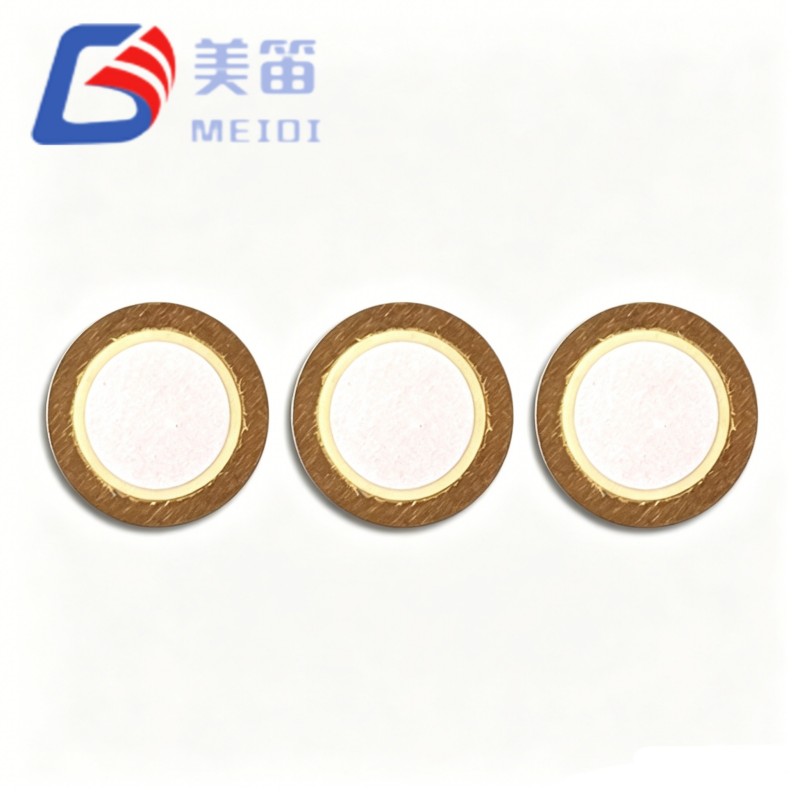
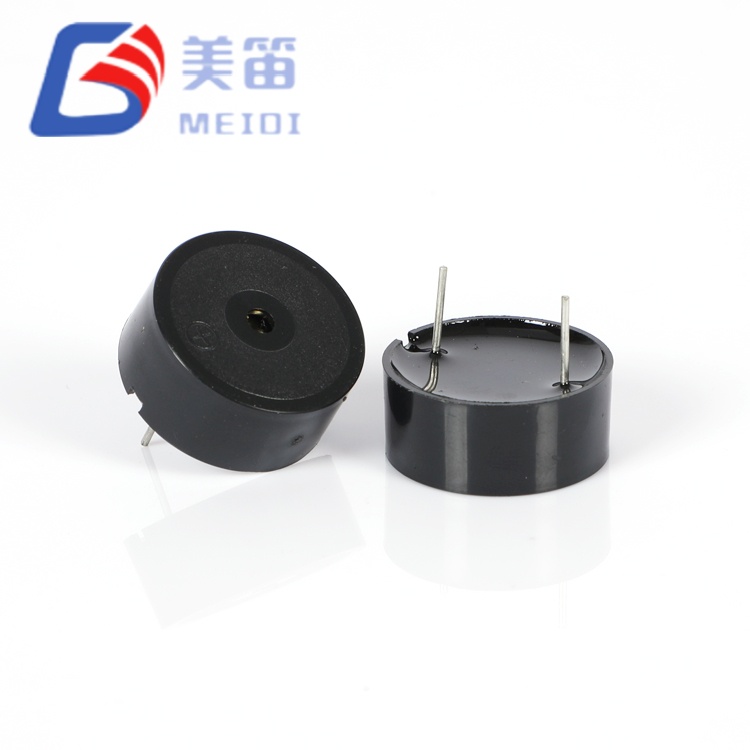
Inside the piezoelectric buzzer, a thin ceramic disc is bonded to a metal plate. Applying an alternating voltage makes the ceramic expand and contract in the planar direction while the metal plate resists, so the bonded element bends up and down. That bending is the sound source. The element is tuned so its mechanical resonance lands in the audible band, and the housing shapes the output into a usable tone. This is why a piezoelectric buzzer is often called a ceramic sound maker: the ceramic itself is the active part.
Core Components of the Buzzer
Three parts decide how the piezoelectric buzzer sounds and how easy it is to mount:
Piezoelectric ceramic plate: the active element that bends under voltage.
Metal substrate: a brass or stainless plate that sets the bend direction and stiffness.
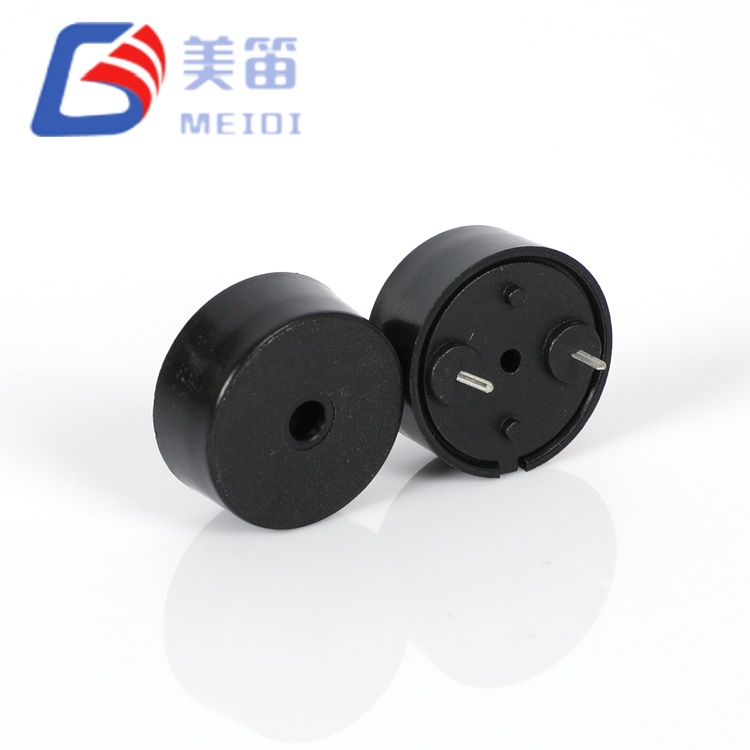
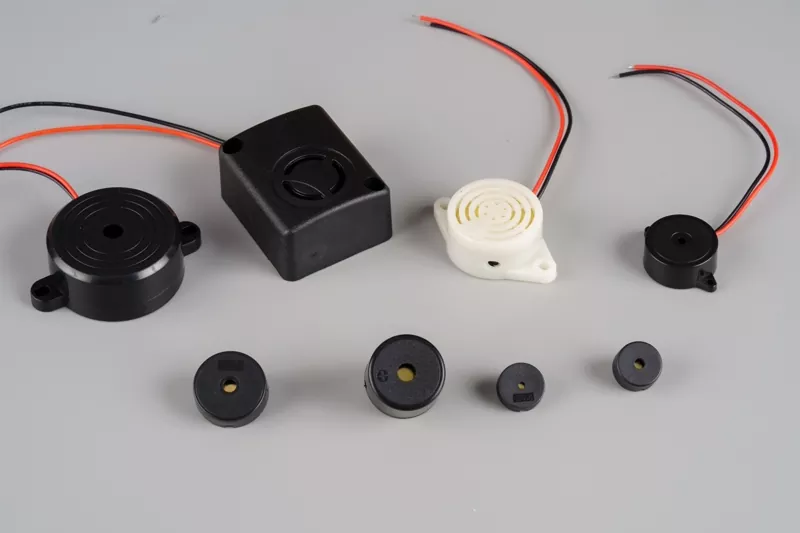
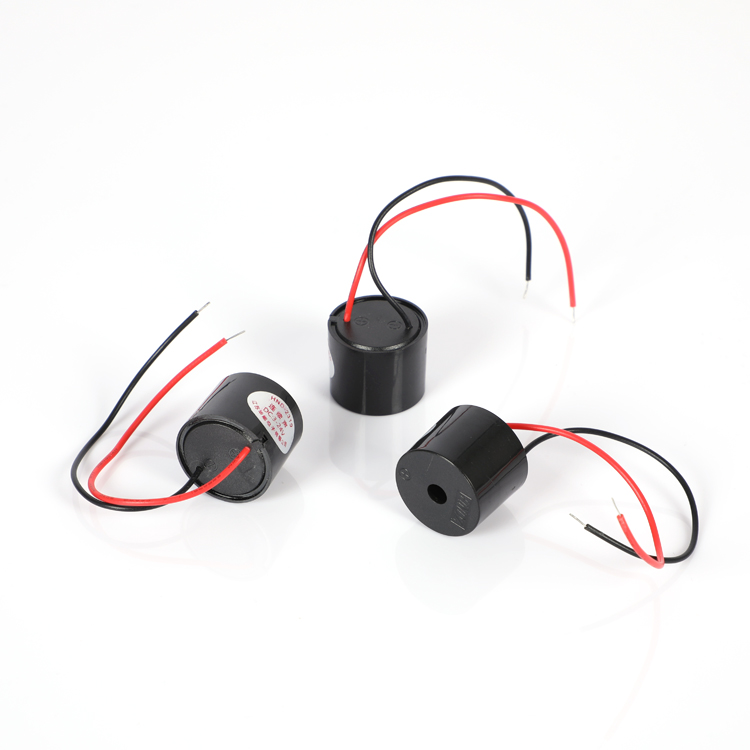
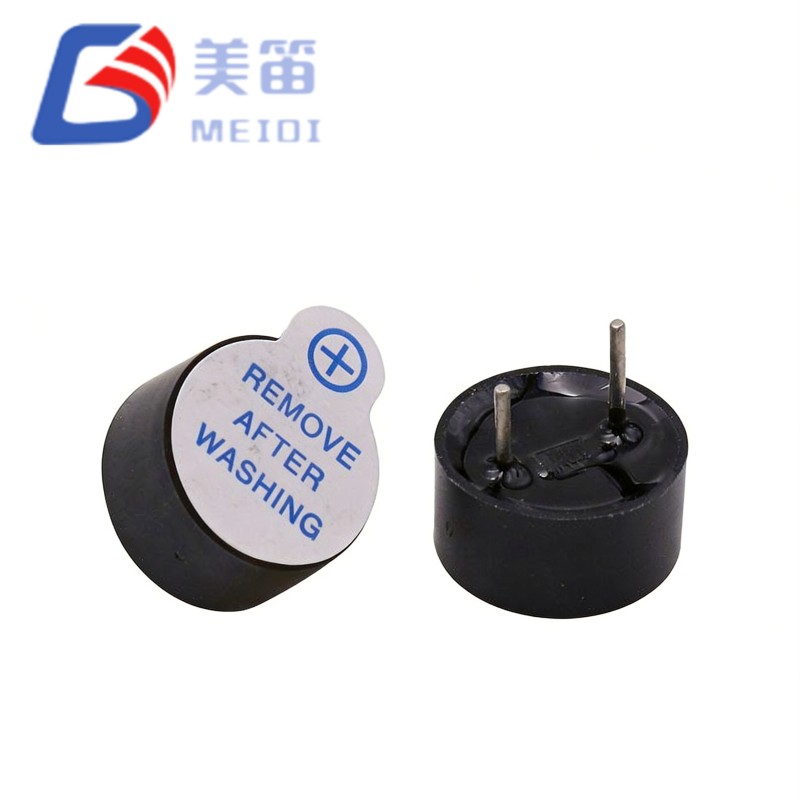
Housing and terminals: protect the element and define the lead or SMD footprint.
The thickness and diameter of the ceramic, plus the stiffness of the metal substrate, set the resonant frequency and the sound pressure level the buzzer can reach. A well-built piezoelectric buzzer holds these values tightly across repeat lots, which matters more than a single perfect sample when orders scale.
Capacitance and Impedance: Why a Piezo Buzzer Draws Almost No Current
The most important electrical fact about a piezoelectric buzzer is that it behaves like a capacitor. A typical element shows a capacitance of a few tens of nanofarads, so at rest it draws almost no current. The drive circuit only supplies current to charge and discharge that capacitance at the operating frequency. That is why a piezoelectric buzzer can sound an alarm from a coin cell that would starve an electromagnetic buzzer within hours. For battery-powered designs, this near-zero current is the reason the piezoelectric buzzer is the default choice.
Active vs Passive Piezoelectric Buzzer
The piezoelectric buzzer ships in two drive styles. A self-drive, or active, version carries a built-in oscillator and emits a fixed tone the moment power is applied. A passive version has no oscillator and depends on a square wave from the host controller to set pitch and pattern. The right pick depends on how much tone control the product needs and how much firmware the team wants to write. An active piezoelectric buzzer shortens the design cycle; a passive one lets the product play custom melodies.
Piezoelectric Buzzer vs Electromagnetic Buzzer
An electromagnetic buzzer pulls higher current at a lower voltage because its coil must stay energized, whereas the piezoelectric buzzer pulls almost no current at a higher voltage because it is a capacitive load. The practical result is clear: in a door sensor running on a button cell, a piezoelectric buzzer may sound for a year, while an electromagnetic buzzer might exhaust the same cell in days. The trade-off is drive complexity: the piezoelectric buzzer often needs a higher voltage rail and an external oscillator or driver, while the electromagnetic buzzer is happy on a logic supply. Choose the piezoelectric buzzer when energy efficiency dominates; choose the electromagnetic type when a simple low-voltage DC beep is enough.
Key Electrical Characteristics Buyers Should Read
Four numbers decide whether the piezoelectric buzzer fits the board. Rated voltage is usually higher than an electromagnetic part, commonly 3 V to 30 V depending on the element size. Capacitance at rated voltage should be checked because it sets the drive current and the required driver strength. Resonant frequency defines the tone, and current at rated voltage tells the power budget. The buyer should design to the worst case, not the typical line in the catalog, because both voltage and capacitance move the sound pressure level.
Resonant Frequency and Sound Pressure Level
Sound pressure level, or SPL, measured in dB at 10 cm, is the value QC and field service verify most often. A piezoelectric buzzer rated around 85 dB at 10 cm is loud enough for most alarm and notification jobs. Because SPL depends on the drive voltage and the resonant frequency, the buyer should confirm the exact test condition, not only the headline number. A small change in drive voltage can shift SPL by several dB, so the test point must match the real application.
SMD and Through-Hole Packaging
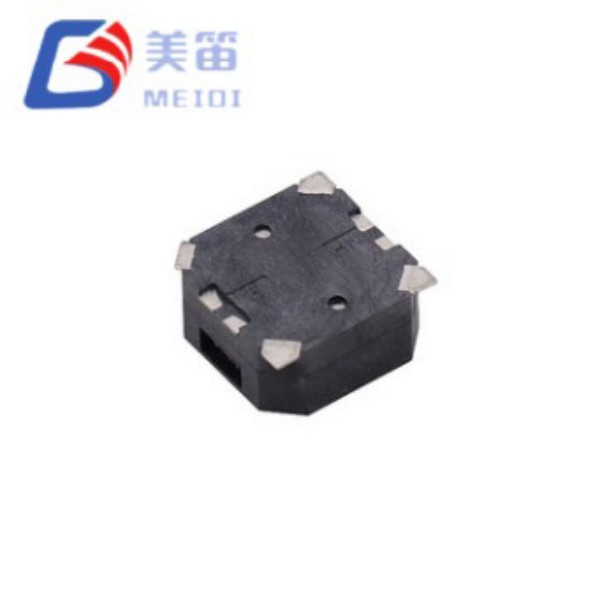
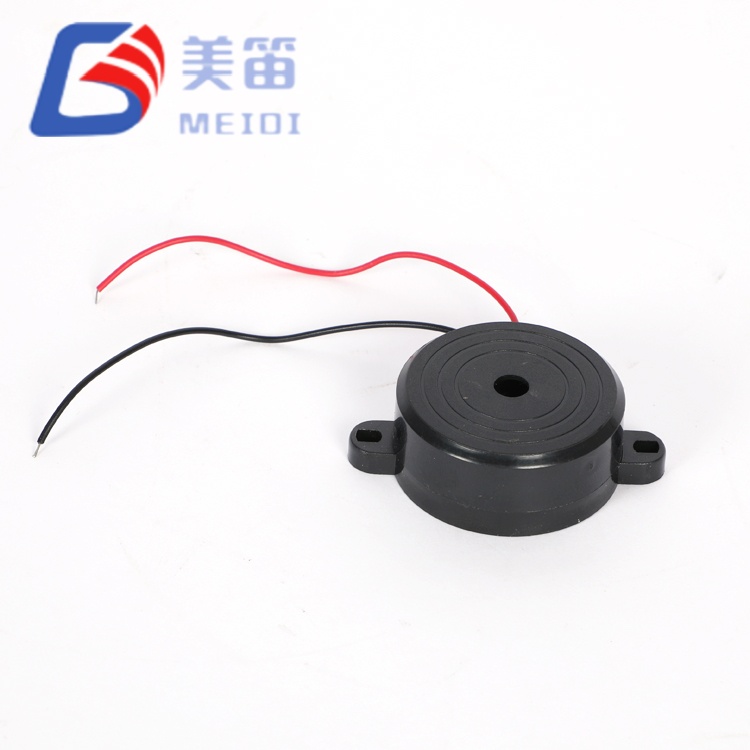
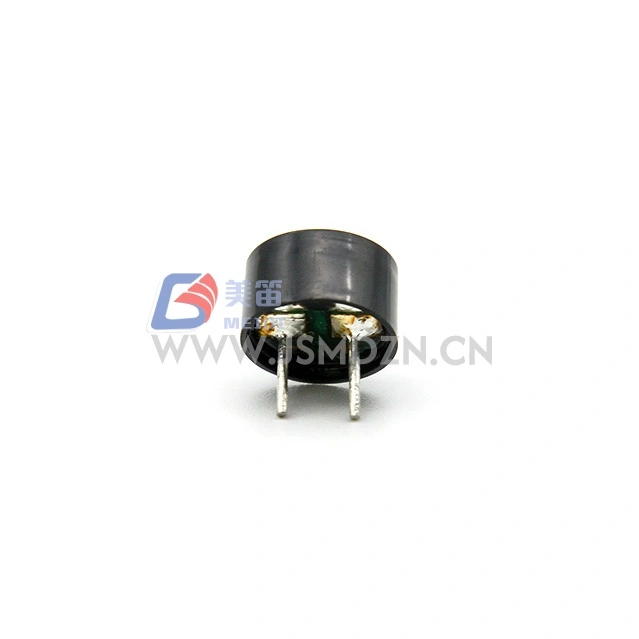
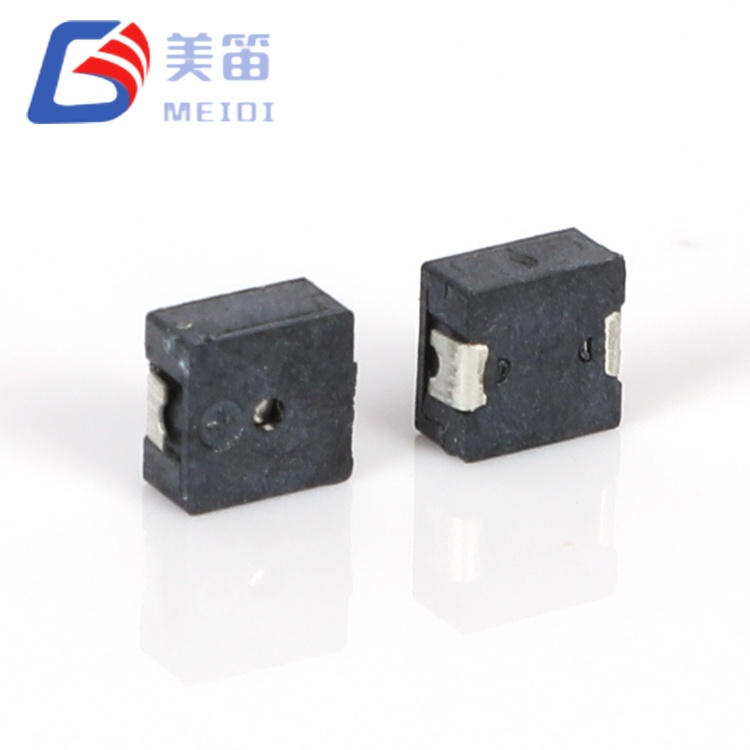
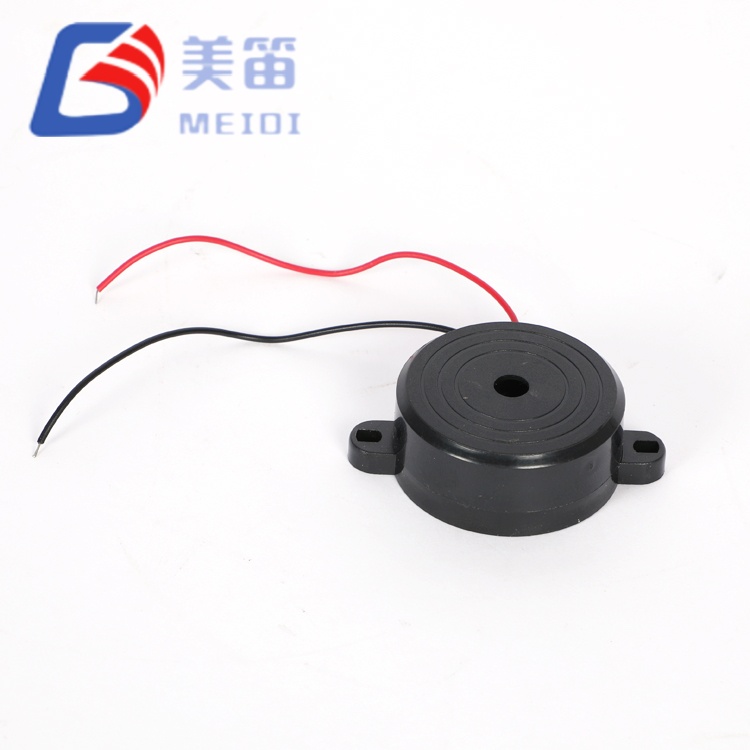
For pick-and-place production, SMD piezoelectric buzzers cut manual insertion and lift consistency at volume. Through-hole and wire-lead styles still suit hand assembly or boards that need extra mechanical strain relief. The lead style should match the factory process so the piezoelectric buzzer never becomes the bottleneck when orders scale from prototype to mass production.
Drive Circuit and Waveform
An active piezoelectric buzzer asks only for DC power and a built-in oscillator does the rest. A passive piezoelectric buzzer needs a square wave whose frequency sets the tone, and the controller firmware owns the sound pattern. Because the element is capacitive, the driver must handle the charge and discharge current rather than a steady DC load. Buyers should confirm that the existing microcontroller can spare the timer and pins, or the saving on the part is lost to software work.
Typical Applications of the Buzzer
Application
Why the Piezoelectric Buzzer Fits
Battery alarms and sensors
Near-zero current extends cell life
Medical instruments
Stable, low-power audible feedback
IoT and wearable devices
Energy-efficient alerts on small cells
Home appliances
Reliable prompts, low cost
Automotive and industrial
Robust sealed package, high voltage tolerance
Selection Checklist Before You Buy
Rated voltage and operating voltage range, and capacitance at rated voltage.
Resonant frequency and its tolerance, since tone pitch must stay in the acoustic window.
Sound pressure level (SPL) in dB at 10 cm under a stated voltage and distance.
Lead style: SMD, through-hole, or wire lead, matched to assembly.
Unlike the electromagnetic type defined by coil impedance, the piezoelectric buzzer is defined by capacitance, so the drive circuit must match.
Operating temperature and RoHS or CE compliance status with documents.
Common Inspection Points and Quality Control
At incoming inspection, the piezoelectric buzzer is checked for resonant frequency, capacitance, and SPL against the agreed tolerance, because these three numbers decide what the end user hears. A stable buzzer keeps the same sound behavior across repeat lots, which is why batch consistency from the factory matters more than a single perfect sample pulled from a demo batch.
Why the Piezoelectric Buzzer Wins in Battery-Powered Products
The piezoelectric buzzer keeps its place in portable designs because it is cheap, rugged, and astonishingly efficient. Where an electromagnetic buzzer would drain a cell to maintain a tone, the piezoelectric buzzer sips microamps between beeps and only draws during the brief charge and discharge of its ceramic. For products that must sound an alarm for months on a coin cell, the piezoelectric buzzer is not just the efficient choice, it is often the only choice that meets the battery budget.
How to Test the Buzzer on the Bench
A quick bench check uses a regulated supply set to the rated voltage, a sound level meter at 10 cm, and a frequency counter on the output. For a passive piezoelectric buzzer, a function generator supplies the square wave. Recording SPL, capacitance, and resonant frequency for a few samples builds the incoming inspection baseline and shows whether the buzzer batch is stable before it reaches the line.
How to Choose the Right Buzzer Factory
When a buyer compares offers from more than one buzzer factory, the lowest quote is rarely the safest. A capable supplier documents rated voltage, capacitance, SPL, and resonant frequency for each model, ships RoHS and CE files without being chased, and can show repeat-lot consistency data on request. For OEM and distributor programs, sample support, custom labeling, and stable lead times signal whether the factory is built for long-term supply rather than one-off orders.
Quality, Compliance, and Supply
RoHS and CE documentation should travel with the piezoelectric buzzer. For OEM programs, ask about batch consistency, lead-time stability, and whether the factory can support custom labeling, packaging, or pin configuration for the buzzer. A supplier that treats compliance as default, not as a favor, saves the buyer from downstream customs and audit problems.
Frequently Asked Questions
Q: Is a piezoelectric buzzer the same as a piezo buzzer?
A: Yes. Piezo buzzer is simply the shorter name for the same ceramic piezoelectric device.
Q: Why does it draw less current than an electromagnetic buzzer?
A: The ceramic element is a capacitor, so it only draws current to charge and discharge at the drive frequency, not to stay energized like a coil.
Q: Should I choose active or passive for a battery alarm?
A: Either works; an active piezoelectric buzzer is simpler to drive, while a passive one gives custom tone control if the firmware can spare it.
Q: Do Meidi buzzers ship with compliance documents?
A: Yes. Meidi products are supported by RoHS and CE-related documentation, and the factory can supply sample and export support for qualified OEM and distributor projects.
Procurement Reminder
Choose the piezoelectric buzzer by the application and the power budget rather than the lowest unit price, because the wrong drive style can add a firmware cycle and a re-sample that costs more than the part itself. When energy efficiency is the priority, the piezoelectric buzzer usually pays back its small premium in battery life and field reliability.
We use cookies to offer you a better browsing experience, analyze site traffic and personalize content. By using this site, you agree to our use of cookies. Privacy Policy