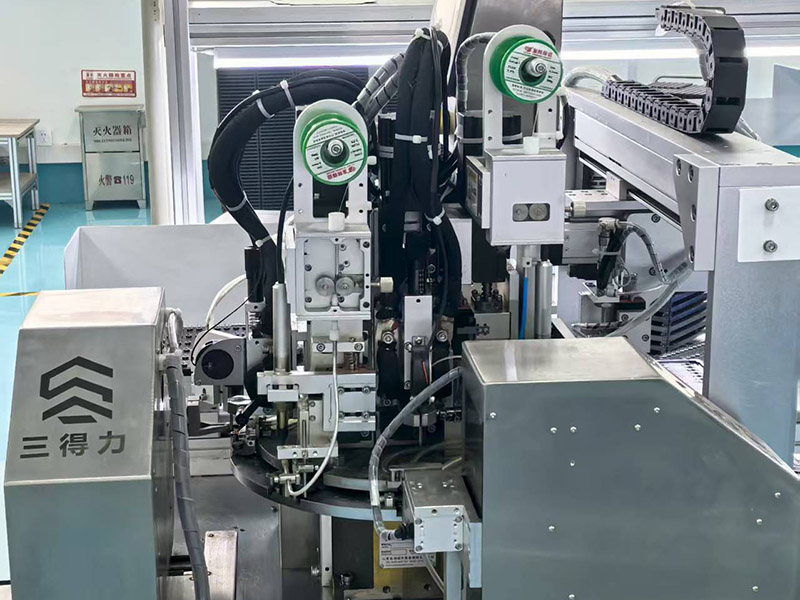
Jiangsu Meidi has manufactured electromagnetic and piezoelectric buzzers since 2011. The production facility houses dedicated SMD assembly lines where automated pick‑and‑place machines, reflow ovens, and acoustic test stations operate in sequence. Monthly output of surface‑mount buzzers reaches several million units, supported by in‑house tooling and process engineering teams. For projects that require specific pin layouts, housing dimensions, or acoustic profiles, the company provides OEM and ODM customization backed by on‑site prototyping capabilities.
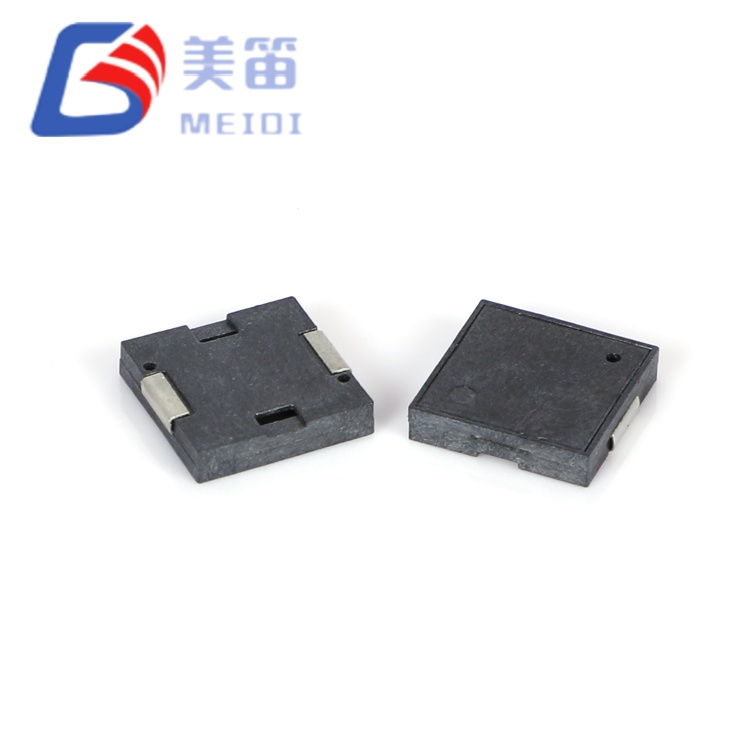
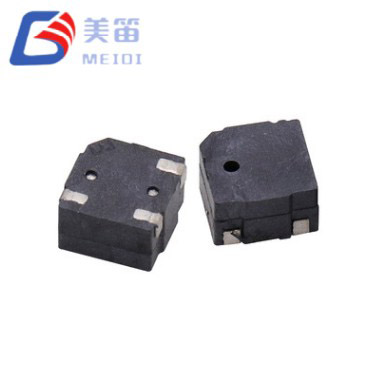
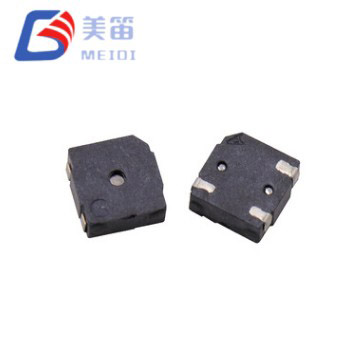
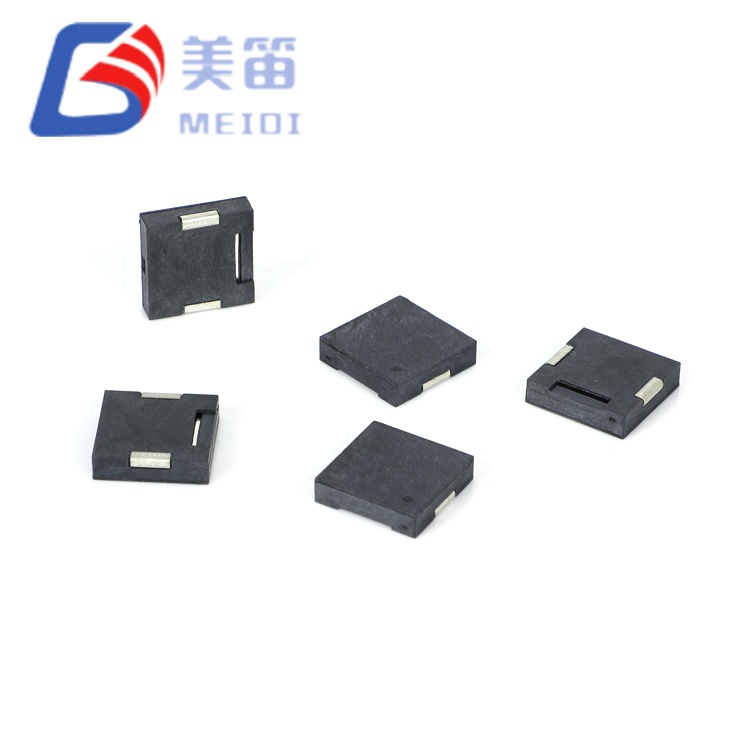
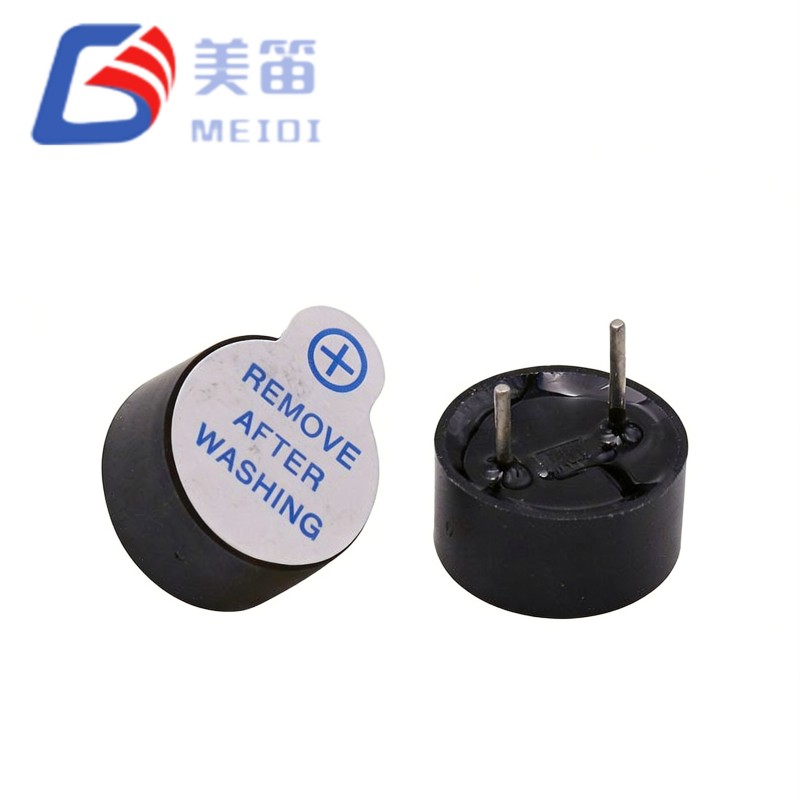
SMD buzzers are surface‑mount acoustic components that generate audible alerts in compact electronic assemblies. Unlike through‑hole counterparts, they are designed for automated pick‑and‑place placement and reflow soldering, which reduces assembly time and improves process consistency. They can be divided into two main groups based on their driving mechanism: SMD Magnetic Active Buzzer and SMD Magnetic Passive Buzzer models that rely on a coil and magnetic diaphragm, and SMD Piezoelectric Passive Buzzer units that use a ceramic element bonded to a metal substrate. Both types serve applications where board space is limited and a clean, automated soldering process is preferred.
Active SMD buzzers integrate an oscillator circuit, so applying a DC voltage within the rated range immediately produces a fixed‑frequency tone. Passive SMD buzzers require an external square wave or PWM signal, giving the designer control over pitch, duty cycle, and volume. The choice between electromagnetic and piezoelectric versions depends on the desired frequency range, current budget, and tone character. Electromagnetic SMD buzzers typically deliver a lower‑pitched, richer output, while piezoelectric SMD types offer a sharper, higher‑frequency alert with lower power consumption.
SMD buzzers are available in compact footprints, typically 5 mm × 5 mm, 7.5 mm × 7.5 mm, or 9 mm × 9 mm, with heights ranging from 2 mm to 5 mm. Rated voltages commonly include 3 V, 5 V, and 12 V DC, with sound pressure levels reaching 70 dB to 95 dB at 10 cm. The resonant frequency for electromagnetic SMD buzzers usually falls between 200 Hz and 3 kHz, while piezoelectric SMD types resonate between 2 kHz and 6 kHz. When selecting a model, the reflow profile should be checked against the buzzer’s thermal rating to ensure the plastic housing and internal connections withstand the peak soldering temperature, typically 250 ℃ to 260 ℃ for several seconds.
SMD buzzers are found in portable devices, wearable electronics, IoT sensors, and smart home modules where board real estate is at a premium. Medical handheld instruments and diagnostic tools use them for audible confirmation of button presses or alarm conditions. Automotive dashboard electronics increasingly adopt SMD buzzers for turn‑signal indicators and parking sensor alerts due to their compatibility with automated assembly. Industrial embedded systems and telecom equipment also integrate these parts to provide local status indication without adding bulk.
Production of SMD buzzers at MEIDI involves precision die‑bonding of the acoustic element to the PCB substrate, wire bonding or flip‑chip interconnection, housing overmolding, and 100% automated acoustic testing. Reflow profile validation is performed on each batch to verify solder joint integrity. The ISO 9001 certified quality system also covers periodic reliability tests including thermal cycling, humidity exposure, and mechanical shock, ensuring consistent field performance for high‑volume OEM customers.
What is the main advantage of choosing an SMD buzzer over a through‑hole one?
SMD buzzers can be placed and soldered automatically using standard pick‑and‑place equipment and reflow ovens, which significantly reduces assembly labour and improves process repeatability in high‑volume production. They also occupy less board space and can be mounted on both sides of the PCB.
Can SMD buzzers withstand multiple reflow cycles?
Most SMD buzzers are rated for two or three reflow cycles at peak temperatures around 250 ℃ to 260 ℃, provided the time above the liquidus temperature does not exceed the specified limit. Exceeding the thermal rating may deform the plastic housing or degrade the acoustic element. It is advisable to consult the specific datasheet and run a process validation before full production.
Are SMD buzzer elements available as bare piezoelectric discs?
The SMD buzzer category refers to fully packaged, reflow‑solderable components. If a bare piezoelectric ceramic disc without a housing is needed, the Buzzer Element category contains a range of bare piezo elements that can be mounted in custom housings or directly bonded to the PCB.
The table below lists all standard specifications of products in this series. Customized solutions are available upon your request; please feel free to contact us for further customization requirements.
| Model | Product Image | Resonant Frequency (kHz) | Free Capacitance (pF) | Equivalent Resistance (Ω) | Dielectric Loss (tan δ) | Operating Temperature (°C) | Substrate Material | Dimensions (mm) |
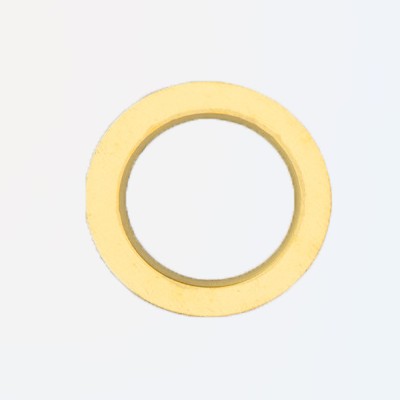
| FT-11T-7.8A1 |
|
7.8±1.0 | 12000±30% (at 120Hz) | ≤500 | ≤5% | -20~+70 | Brass | Ø11.0×0.18 |
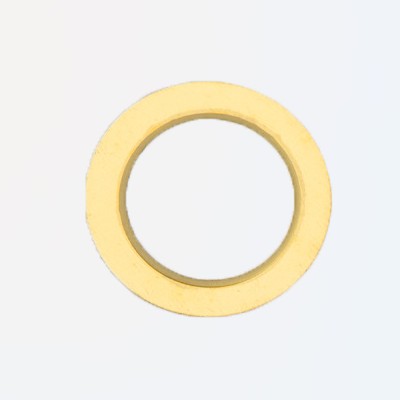
| FT-11T-9.0A1 |
|
9.0±1.0 | 12000±30% (at 120Hz) | ≤500 | ≤5% | -20~+70 | Brass | Ø11.0×0.18 |
| FT-12.5T-7.8A1 |
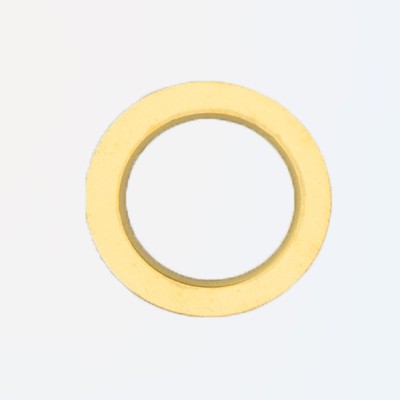
|
7.8±0.8 | 12000±30% (at 120Hz) | ≤300 | ≤5% | -20~+70 | Brass | Ø12.5×0.19 |
| FT-12T-8.0A1 |
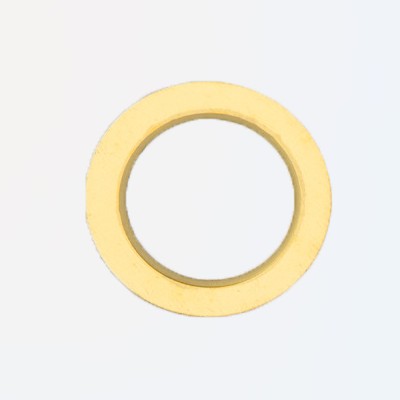
|
8.0±1.0 | 17000±30% (at 120Hz) | ≤300 | ≤5% | -20~+70 | Brass | Ø12.0×0.18 |
| FT-27T-4.0B1-C25 |
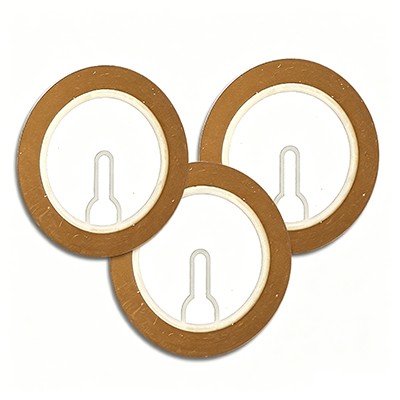
|
4.0±0.5 | 25000/2600±30% (at 120Hz) | ≤500 | ≤5% | -20~+70 | Brass | Ø27.0×0.44 |
| FT-35T-2.9B1-C30 |
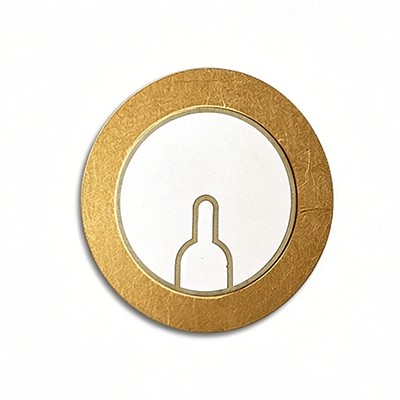
|
2.9±0.5 | 30000/3300±30% (at 120Hz) | ≤500 | ≤5% | -20~+70 | Brass | Ø35.0×0.55 |