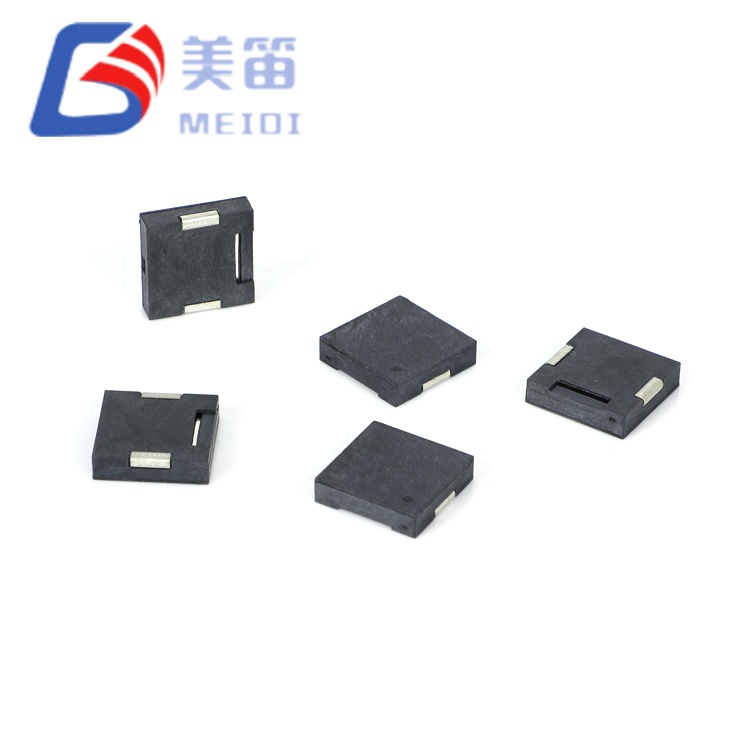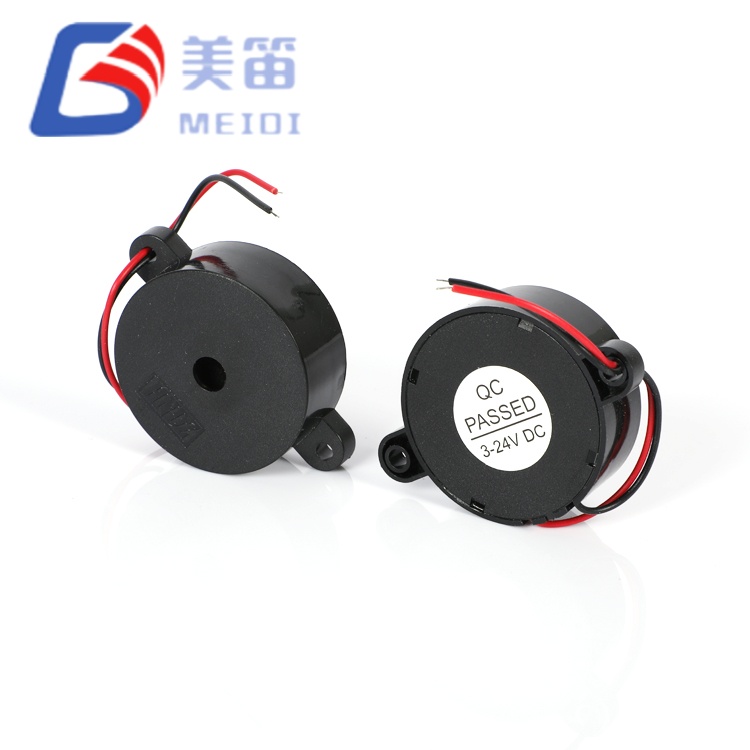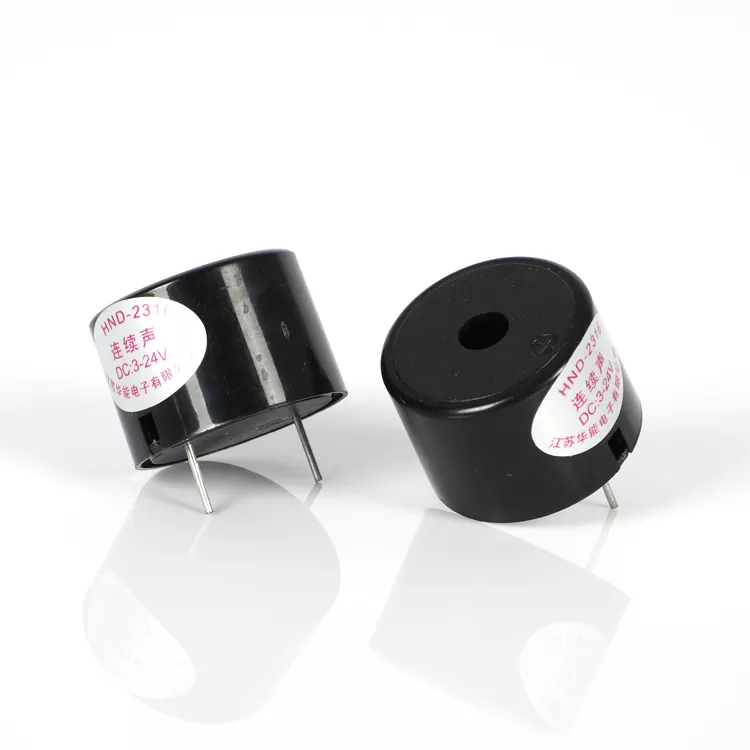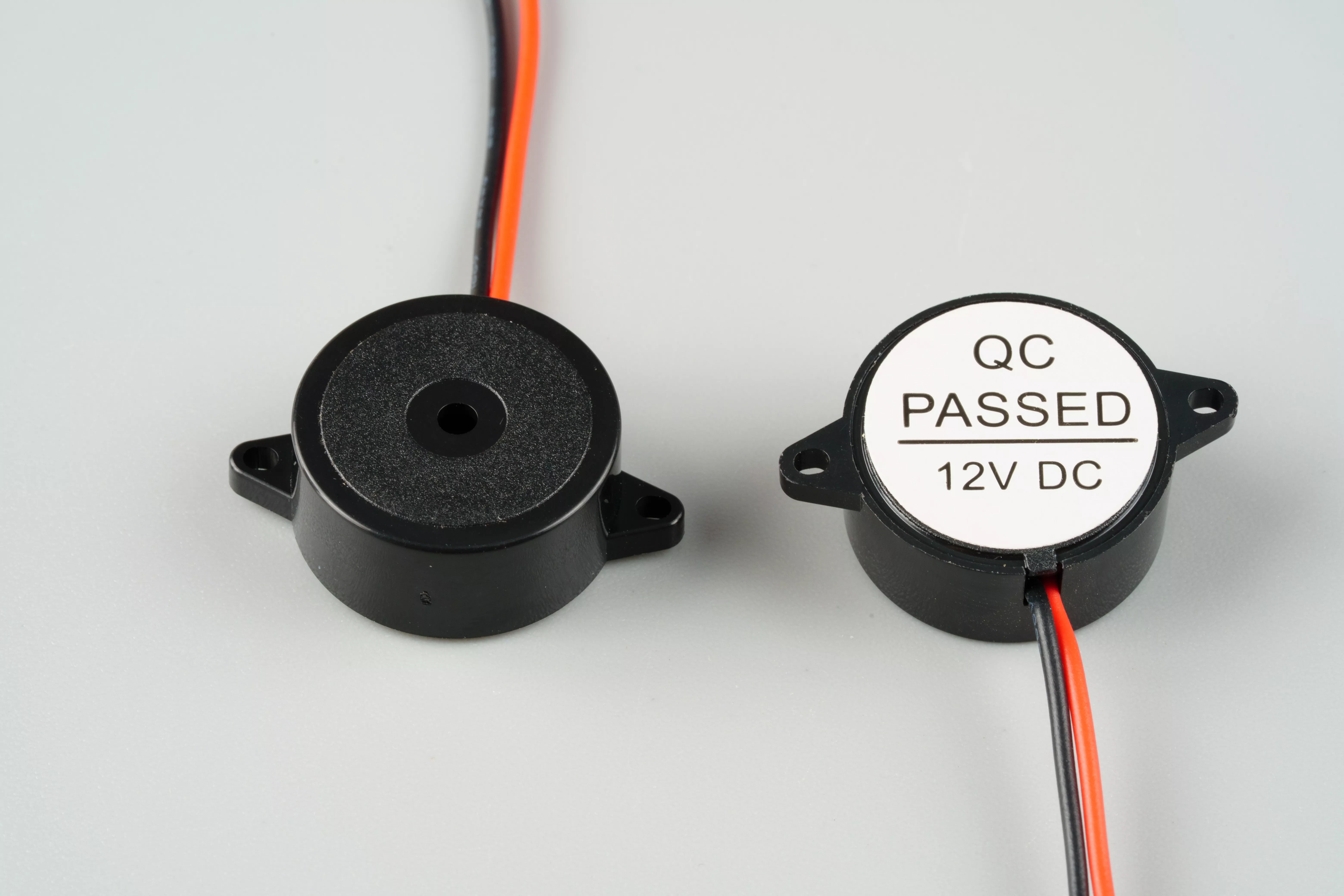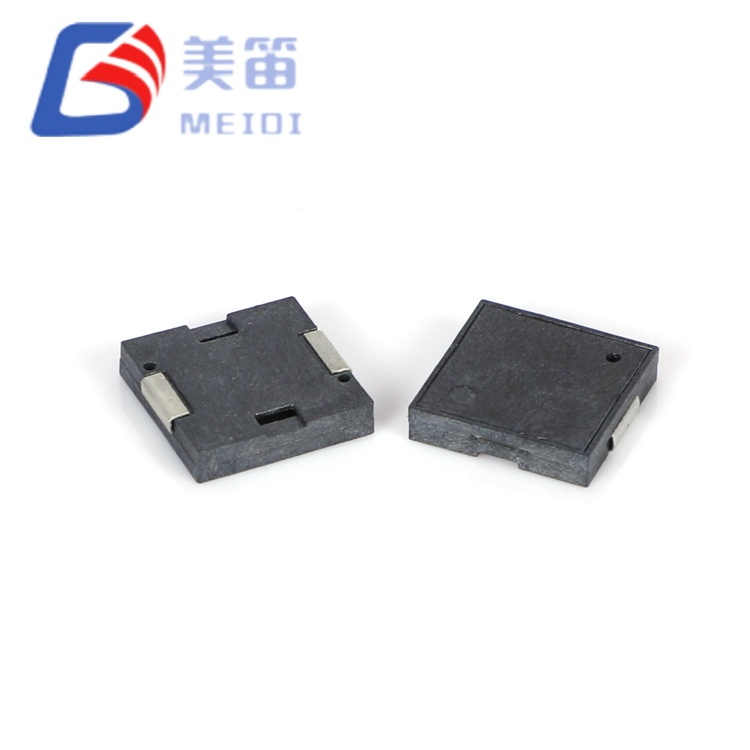
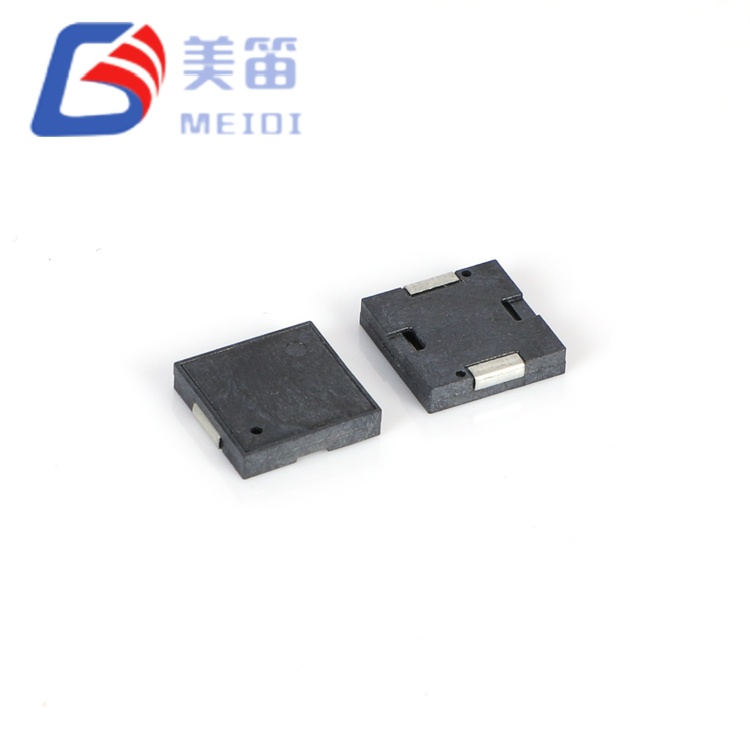
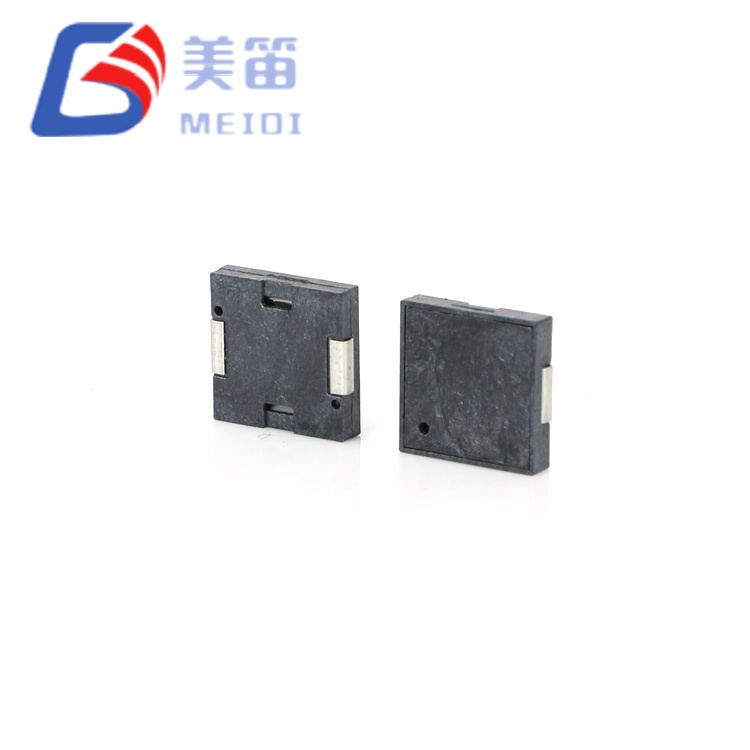
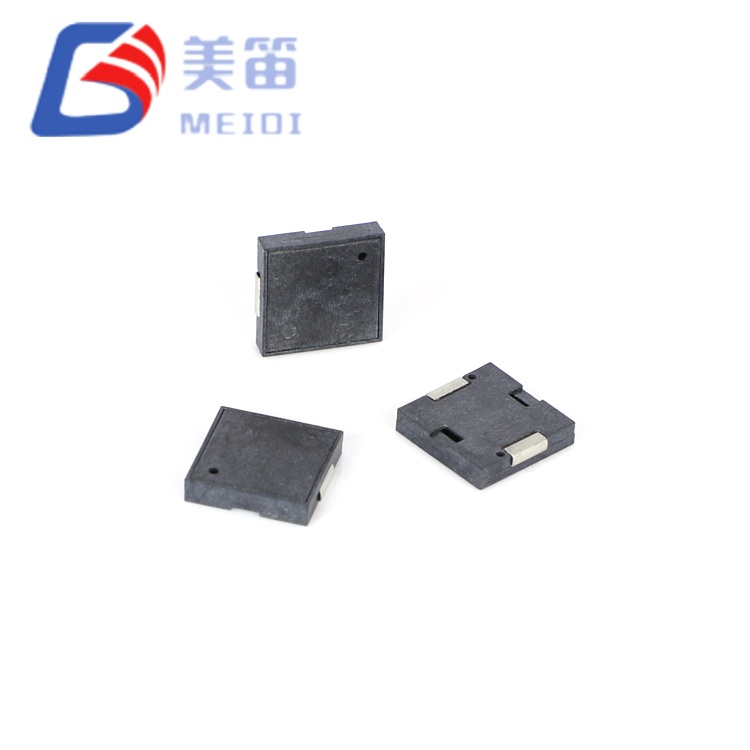
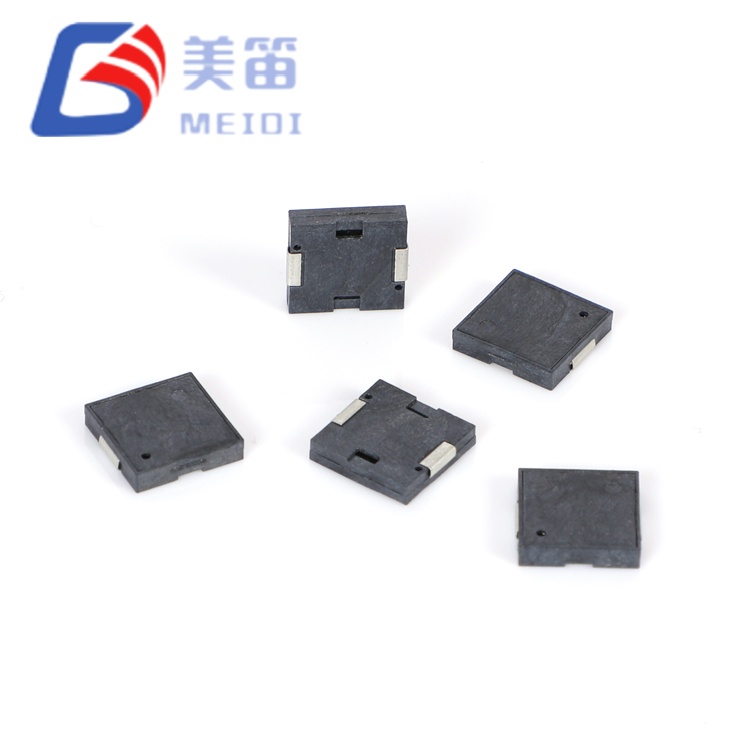
The 9×9×1.8mm SMD Piezoelectric Passive Buzzer is a surface‑mount passive piezoelectric buzzer designed for applications that demand a clear audible signal within a very small footprint and strict power budget. With a height of only 1.8 mm and a 9.0 × 9.0 mm base, it can be placed in assemblies where conventional buzzers simply do not fit. Its capacitive drive principle keeps operating current at or below 5 mA at the rated 5 V, removing the need for flyback diodes and making direct microcontroller drive feasible.
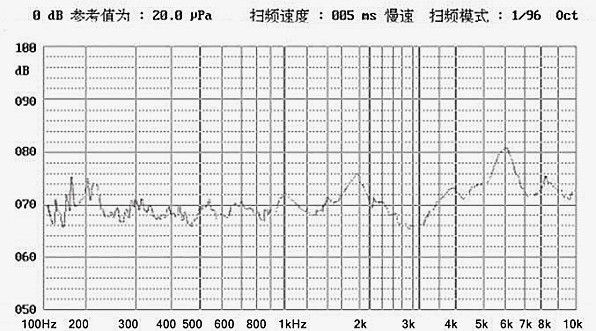
A single component covers a 1 V to 25 V operating range, which means the same buzzer can serve 3.3 V logic circuits, 12 V automotive rails and 24 V industrial control panels without additional regulation. At 5 V the sound pressure level reaches a guaranteed minimum of 70 dB at a distance of 10 cm, with the resonant frequency held to 4000 ± 300 Hz. The specified capacitance of 12000 pF (±30 %) enables straightforward driver design, while the black LCP housing withstands reflow soldering and continuous operation from −30 °C to +70 °C.
As a passive piezoelectric transducer, the 9×9×1.8mm SMD Piezoelectric Passive Buzzer requires an external AC signal, typically a square wave or PWM waveform close to the 4000 Hz resonant point. When the alternating electric field is applied, the ceramic element deforms and generates sound waves, without any magnetic components. This operating principle eliminates the inductive kickback found in magnetic buzzers, so the drive circuit can be built without suppression diodes and with fewer components overall.
The device draws no more than 5 mA under the 5 V, 4000 Hz test condition, and because the load is predominantly capacitive (approximately 3.3 kΩ reactance at resonance), the design emphasis moves from current delivery to voltage swing. The wide 1–25 V input range lets the same buzzer operate across multiple system voltages, and the sound pressure level increases predictably with drive amplitude. At 5 V peak‑to‑peak the minimum output is 70 dB at 10 cm; higher voltages produce correspondingly higher sound levels.
Weighing 0.4 g and moulded in black LCP, the package is compatible with standard reflow soldering and can go through up to three thermal cycles according to the product specification. A 10‑unit sample test report is included in the documentation to give designers a realistic view of production uniformity, with sound levels ranging from 71.8 dB to 76.4 dB and capacitance values between 11385 pF and 12950 pF.
For custom drive circuit recommendations or to discuss integration with your voltage rail and duty cycle, reach out to MEIDI applications engineering.
The capacitive piezoelectric structure means there is no electromagnetic coil and therefore no inductive transient to manage; the ≤5 mA current rating makes the buzzer suitable for energy‑sensitive designs without extra suppression components.
At only 1.8 mm tall and with a 9.0 mm square footprint, the MLT‑9018 fits into the tight vertical clearances found in stacked boards, thin display modules and card‑reader mechanisms.
The 1–25 V operating voltage span covers 3.3 V logic, 5 V systems, 12 V automotive lines and 24 V industrial buses, allowing one part number to replace several voltage‑specific alternatives.
The resonant frequency is fixed at 4000 Hz with a ±300 Hz production tolerance, giving firmware teams a well‑defined acoustic target.
A nominal capacitance of 12000 pF (±30 %) is specified at 1 kHz and 25 °C to assist with reactive load calculations during the design phase.
The operating temperature range extends from −30 °C to +70 °C, which goes beyond the usual −20 °C floor of many commercial‑grade buzzers.
MEIDI Intelligent Technology has been manufacturing acoustic components since 2011, operating a vertically integrated facility in Jiangsu, China. The factory combines in‑house LCP moulding, automated SMD assembly lines and 100 % inline acoustic testing under an ISO 9001‑certified quality management system. This infrastructure supports the consistent production of high‑volume components such as the MLT‑9018, with detailed batch records maintained for every shipment.
The MLT‑9018 is subjected to a comprehensive reliability test programme defined in the product specification. Environmental stress screening includes a 48‑hour high‑temperature soak at +80 ± 2 °C, a 48‑hour cold exposure at −30 ± 2 °C, and five thermal shock cycles between these extremes with a 30‑minute dwell at each temperature. Mechanical durability is verified through vibration testing from 10 Hz to 55 Hz at 1.0 mm amplitude on all three axes, followed by three 75 cm free‑fall drops onto a 10 mm hardwood surface.
Humidity resistance is confirmed by a 48‑hour exposure to 50 ± 5 °C at 90–95 % relative humidity with a 2‑hour ambient recovery period. Soldering integrity is validated by a 10‑second dip at 250 ± 5 °C with the component body positioned 2.0 mm from the solder, as well as full reflow profile testing according to the soldering specification.
These tests are performed on a per‑batch basis, and the resulting reports are available to customers who require documentation for their own qualification processes. For applications that demand extended qualification, such as automotive or medical device standards, MEIDI’s engineering team can discuss additional screening protocols.
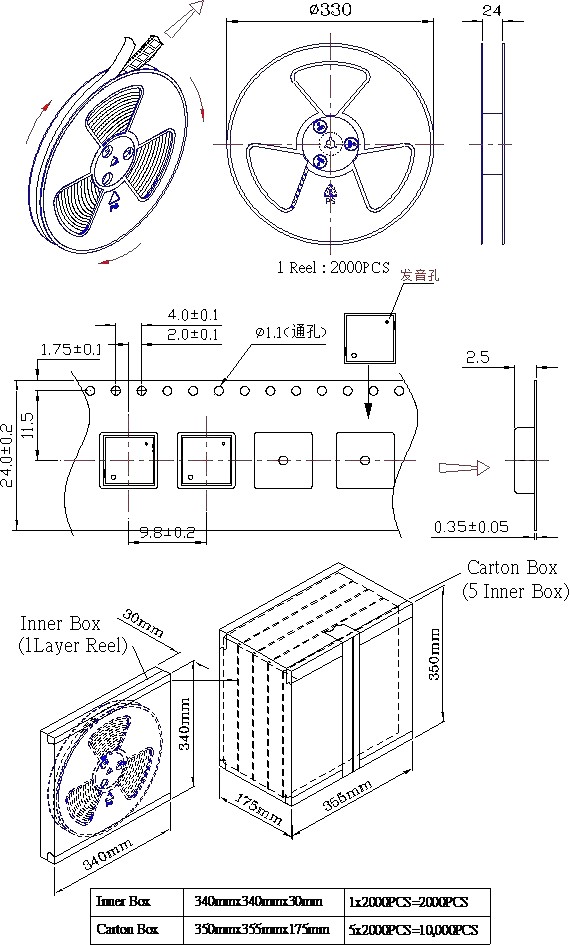


| Parameter | Value | Test Conditions |
| Product Type | Piezoelectric SMD Passive Buzzer | — |
| Rated Voltage | 5 V (Vp‑p) | Resonant frequency reference |
| Operating Voltage | 1 – 25 V (Vp‑p) | Drive signal peak |
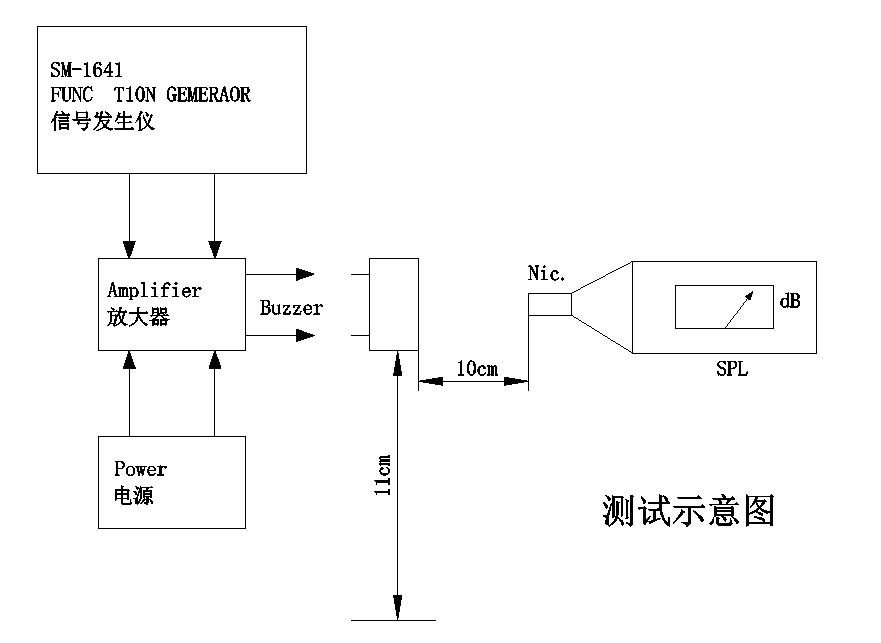
| Sound Output at 10 cm | ≥ 70 dB | At 5V, 4000 Hz, 10 cm |
| Operating Current | ≤ 5 mA | At 5V, 4000 Hz |
| Resonant Frequency | 4000 ± 300 Hz | At rated voltage |
| Capacitance | 12000 ± 30% pF | At 1 kHz, 25 °C |
| Operating Temperature | -30 °C ~ +70 °C | Continuous |
| Storage Temperature | -40 °C ~ +85 °C | Non‑operating |
| Dimensions (L × W × H) | 9.0 × 9.0 × 1.8 mm | Body only |
| Weight | 0.4 g | Typical |
| Housing Material | Black LCP | — |
| Soldering (Recommended) | Reflow: 255 ± 5 °C, 3 s; Preheat 180 °C, 40–70 s | Per specification, up to 3 passes |
| Soldering (Wave) | 255 ± 15 °C, 4–6 s | 2–3 passes |
| Soldering (Manual) | 360 ± 10 °C, 2–5 s | 2–3 passes |
| Parameter | Sample Range |
| Sound Pressure | 71.8 – 76.4 dB |
| Frequency | 4000 Hz |
| Capacitance | 11385 – 12950 pF |
| Diameter | 9.0 mm |
| Height | 1.8 mm |
The sample data illustrates typical production uniformity. Only the guaranteed limits in the main specification table apply to all production lots.
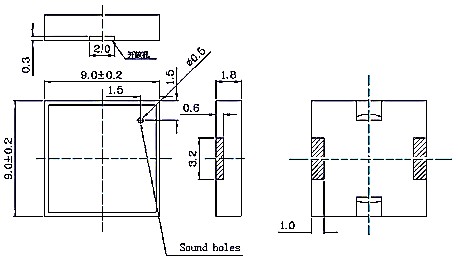
The suggested uses below are based on the electrical and mechanical characteristics of the MLT‑9018. They are intended as design‑in guidance and should be confirmed against the specific requirements of the final product.
•Battery‑operated portable devices: the ≤5 mA current draw extends run time in products powered by coin cells or small lithium packs.
•Cold‑environment equipment: the −30 °C lower operating limit supports refrigerated logistics trackers, outdoor sensors and unheated industrial enclosures.
•Slim electronic assemblies: 1.8 mm height allows integration into ultra‑thin displays, membrane panels and card‑reader bezels.
•Multi‑voltage industrial nodes: the 1–25 V input eliminates voltage translation circuitry, simplifying designs that must operate on 5 V, 12 V and 24 V buses.
•Automotive interior modules: direct 12 V compatibility suits dashboard chimes, parking sensor feedback and seat‑belt reminders.
•IoT endpoints and sensor gateways: the low active current is well matched to energy‑harvesting or long‑life battery applications.
| Design Consideration | MLT‑9018 Specification |
| Current budget constraint | ≤5 mA operating current per specification |
| Voltage rail variation | 1–25V operating range covers multiple system voltages in one SKU |
| Vertical clearance | 1.8 mm height below typical 2.0–2.5 mm alternatives |
| Low‑temperature operation | -30 °C operating limit per specification |
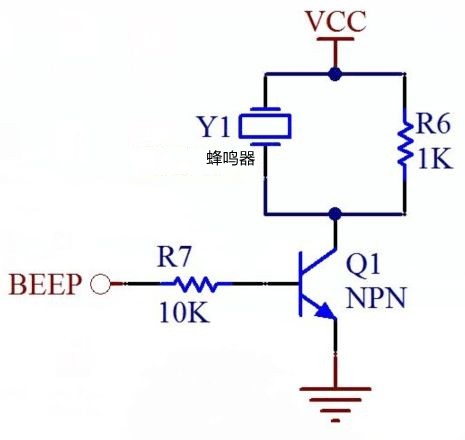
| Drive circuit simplicity | No inductive kickback; no flyback diode required |
| Capacitive load characteristic | 12000 pF specified for reactive impedance calculation |
The 9×9×1.8mm SMD Piezoelectric Passive Buzzer was developed specifically for situations where current, space and voltage flexibility are the primary constraints. Its capacitive nature presents a reactive load of roughly 3.3 kΩ at resonance, which means the driver must deliver voltage swing rather than large continuous current; this distinction often leads to a simpler and more cost‑effective drive stage compared with magnetic transducer designs.
Samples are available for evaluation so that you can measure acoustic output and current consumption with your own drive waveform and PCB layout.
1. What type of drive signal does the MLT‑9018 require?
The MLT‑9018 is a passive piezoelectric buzzer and needs an external AC signal, normally a square wave or PWM near 4000 Hz. A DC voltage alone will not produce sound. The drive circuit must charge and discharge the 12000 pF capacitance at the switching frequency; average current is low, but peak instantaneous current should be checked against the driver’s capability.
2. How does sound pressure vary with operating voltage within the 1–25V range?
Sound pressure increases with drive voltage amplitude. The ≥70 dB guarantee is given at the 5 V rated condition. At lower voltages the output will decrease, and at higher voltages it will rise. Voltage‑specific acoustic data can be requested from MEIDI.
3. Can the MLT‑9018 be driven directly from a microcontroller GPIO pin?
Direct drive from a 3.3 V or 5 V GPIO is possible if the pin can supply the reactive current into 12000 pF at 4000 Hz. The ≤5 mA average value falls within many GPIO specifications, but the peak charging current during capacitive switching may be higher. For 12 V and 24 V operation a transistor buffer or dedicated piezo driver is recommended. MEIDI can provide reference circuits for common setups.
4. What is the significance of the 12000 pF capacitance specification?
The capacitance determines the reactive impedance: Z = 1/(2πfC). At 4000 Hz this works out to approximately 3.3 kΩ. The drive circuit must source current into this reactive load. The ±30 % tolerance (8400–15600 pF) should be taken into account when designing the driver stage. Application engineers can assist with component selection.
5. What is the difference between the sample test data and the guaranteed specifications?
The sample report (10‑unit measurement) shows typical values, such as sound pressure between 71.8 dB and 76.4 dB. These are provided for reference only. The guaranteed specifications are sound pressure ≥70 dB, frequency 4000 ± 300 Hz, and capacitance 12000 ± 30 % pF. Production test protocols are available on request.
6. Does MEIDI provide customisation for this buzzer?
Yes, OEM and ODM services are available. Parameters such as frequency, voltage, dimensions and waterproofing can be modified to suit specific requirements. Contact the applications team with your target specification for a feasibility assessment.
For drive circuit design guidance, voltage‑specific acoustic measurements, cold‑environment deployment recommendations, or to discuss OEM customisation, send your requirements through the contact form. MEIDI’s applications engineering team normally responds within one business day with technical documentation and volume pricing.
The MEIDI factory in Jiangsu Province has been delivering piezoelectric and electromagnetic acoustic components to global customers since 2011. With in‑house LCP moulding, automated SMD assembly and full acoustic testing, the company supplies industries ranging from automotive electronics and industrial controls to medical devices and smart home systems. ISO 9001 quality management and a dedicated reliability laboratory underpin every product specification we publish.
Address
No.6, Wenlin Road, Chenbao Town, Xinghua City, Jiangsu Province, China
Tel