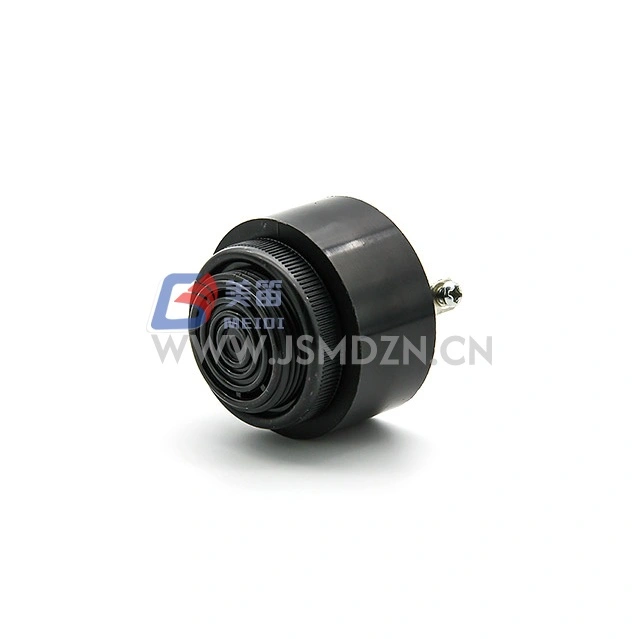
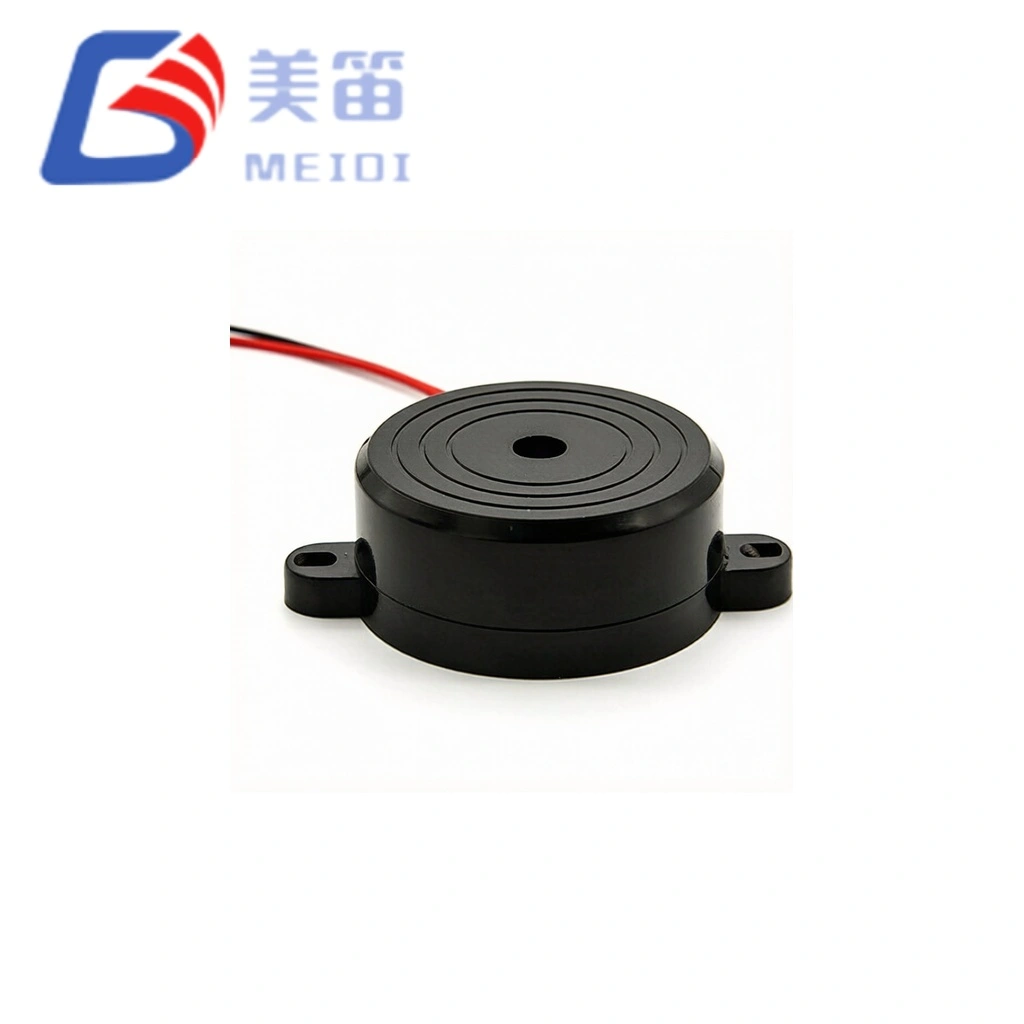
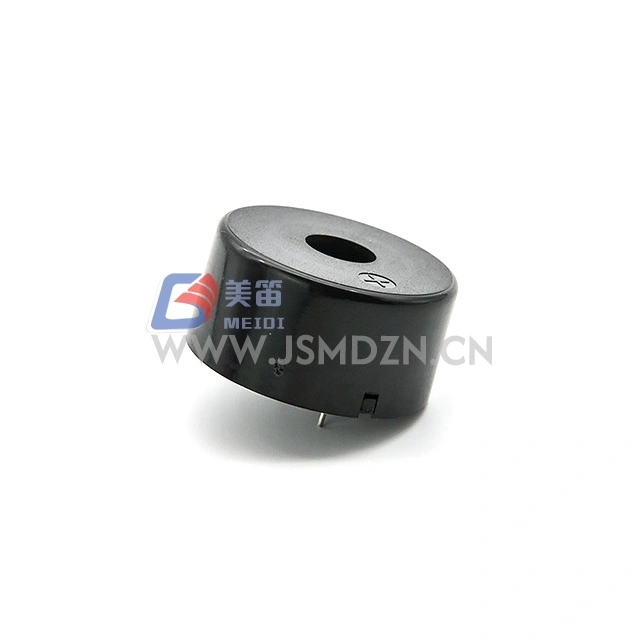
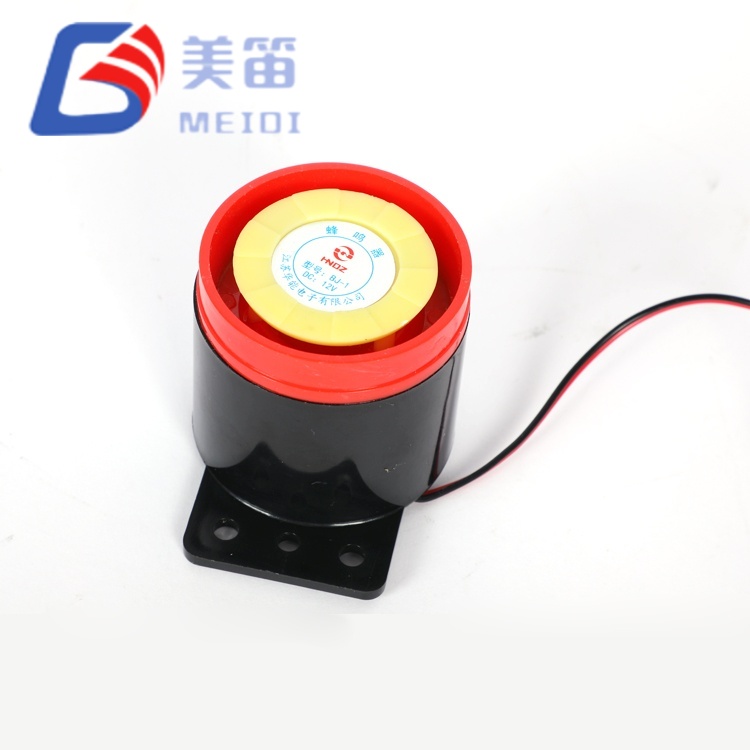
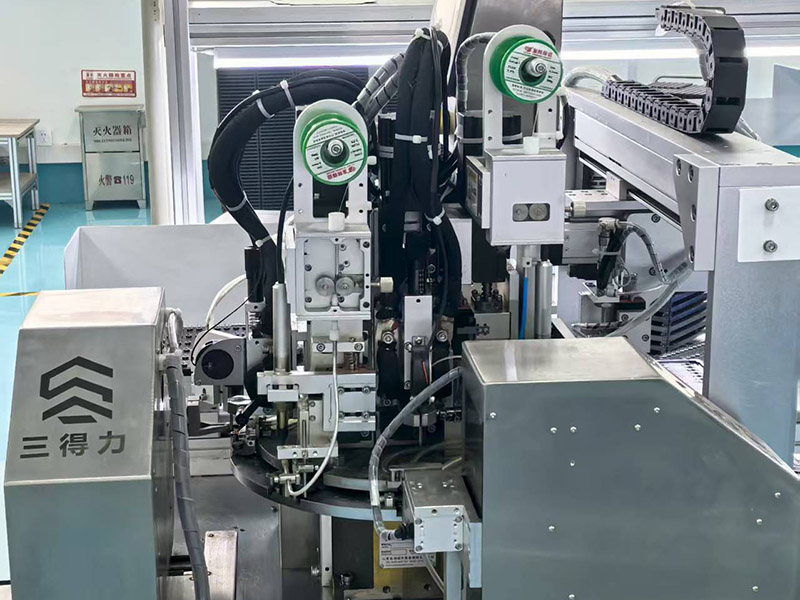
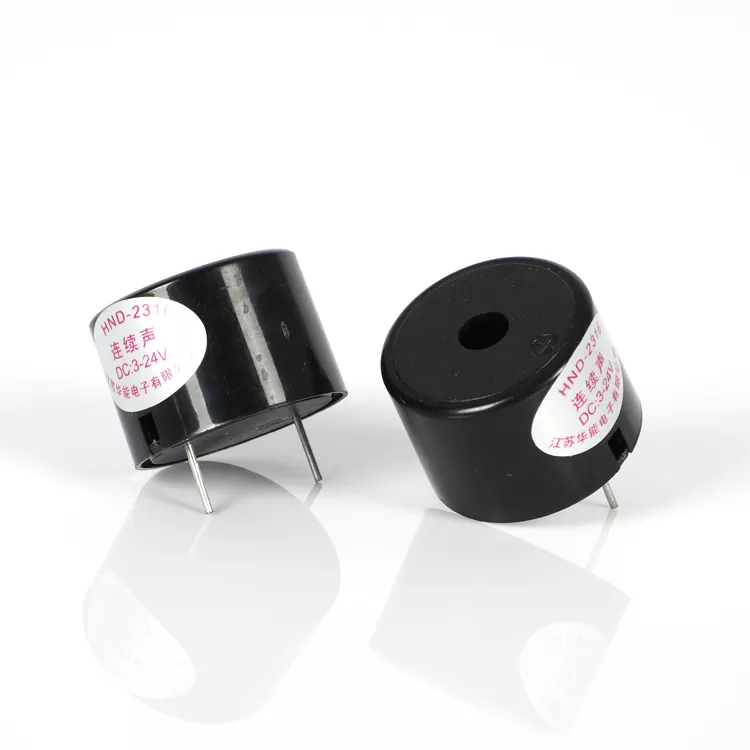
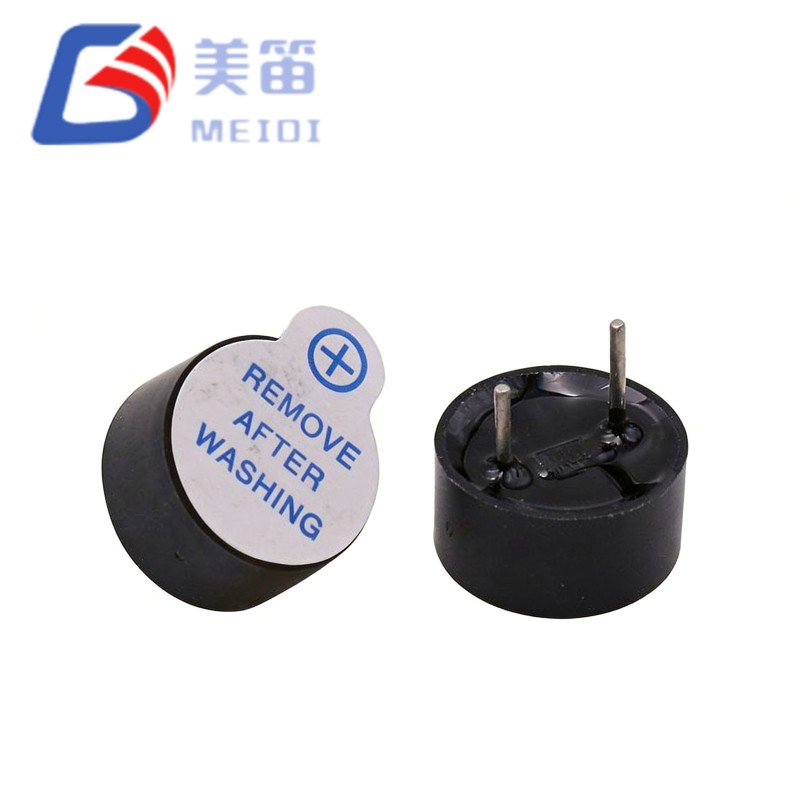
Jiangsu Meidi's alarm buzzer engineering group includes acoustic chamber tuning specialists and regulatory compliance engineers who validate each design against regional safety certifications. The team maintains a reference library of tone profiles and housing material data, allowing them to recommend specific configurations for evacuation signals, intrusion alerts, and industrial warning tones. Tailored tone sequencing and enclosure material selection are available for projects that must meet particular market standards.
Alarm buzzers produce high‑decibel warning sounds intended for security surveillance systems, fire alarm panels, burglar alarm modules, emergency warning devices, and industrial safety equipment. These acoustic components deliver loud, attention‑grabbing tones that communicate critical alerts across large spaces and noisy environments where an immediate human response is essential. Unlike general‑purpose buzzers that provide simple user feedback, alarm‑grade units are designed to meet specific sound pressure requirements and often need to comply with regional safety codes.
The acoustic output is shaped by an optimized sound chamber that amplifies the transducer's natural resonance, pushing sound pressure levels higher than what a bare element can achieve. High‑efficiency transducers, whether Electromagnetic Buzzer or Piezoelectric Buzzer types, are selected based on the required frequency range and power budget. Electromagnetic alarm buzzers typically deliver a strong low‑frequency tone below 3 kHz, while piezoelectric versions produce a sharper, higher‑frequency alert above 2 kHz with lower current draw.
Alarm buzzers can generate a single continuous tone or multiple alternating patterns, such as slow whoop, fast sweep, or pulsed beeps. The tone pattern is determined either by the internal oscillator in an Active Piezoelectric Buzzer or Magnetic Active Buzzer, or by the external drive signal in a Passive Piezoelectric Buzzer or Magnetic Passive Buzzer. For applications that need multiple distinct warnings from a single device, an externally driven passive buzzer paired with a microcontroller offers the greatest flexibility. Some alarm buzzers also incorporate a Piezo Ceramic Buzzer Element mounted in a custom acoustic cavity to achieve a specific sound signature.
Many alarm buzzers are built with robust housings that withstand temperature extremes, humidity exposure, and mechanical stress common in outdoor security installations and industrial settings. The enclosure material, often ABS, PBT, or flame‑retardant grades, is chosen to match the expected operating environment. Sealed versions with an IP rating can be specified for locations exposed to dust or water spray. Mounting options include panel‑mount flanges, threaded bodies with locknuts, and PCB‑mount pins, allowing integration into control panels, alarm bell housings, and standalone siren units.
What distinguishes an alarm buzzer from a standard buzzer?
Alarm buzzers are engineered for higher sound pressure levels and often need to comply with safety standards that define minimum audibility, frequency range, and durability. They are typically used in life‑safety and property‑protection systems, whereas standard buzzers serve general‑purpose user feedback in consumer products and appliances.
Q: Do your alarm buzzers comply with international safety standards?
A: Yes. Our alarm designs are validated by regulatory compliance engineers against regional and international safety certifications, with reliable long-term performance for life-safety and property-protection systems worldwide.
Can the tone pattern be customized for a specific application?
Yes. For active alarm buzzers with a built‑in oscillator, the tone sequence can be programmed during manufacturing. For passive models, the pattern is controlled entirely by the external drive signal. MEIDI's engineering team can assist with tone profile development and regulatory pre‑compliance checks.
Are alarm buzzers available in surface‑mount packages?
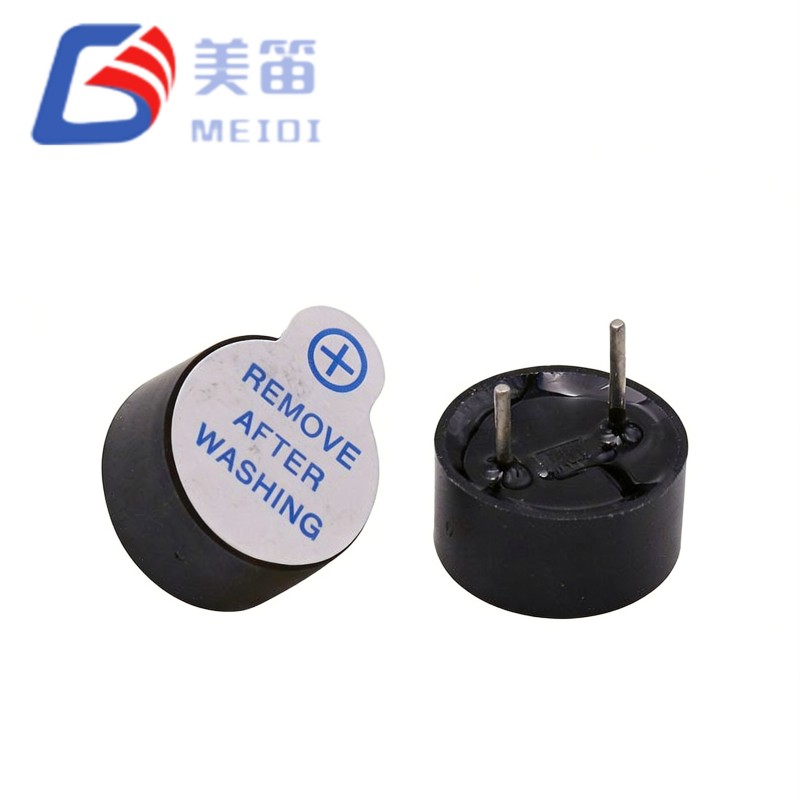
Most alarm buzzers use through‑hole or panel‑mount form factors due to their larger size and higher power requirements. However, compact SMD Buzzer variants can be used for lower‑output alarm functions in space‑constrained designs, provided the sound pressure level meets the application's audibility requirements.
The table below lists all standard specifications of products in this series. Customized solutions are available upon your request; please feel free to contact us for further customization requirements.
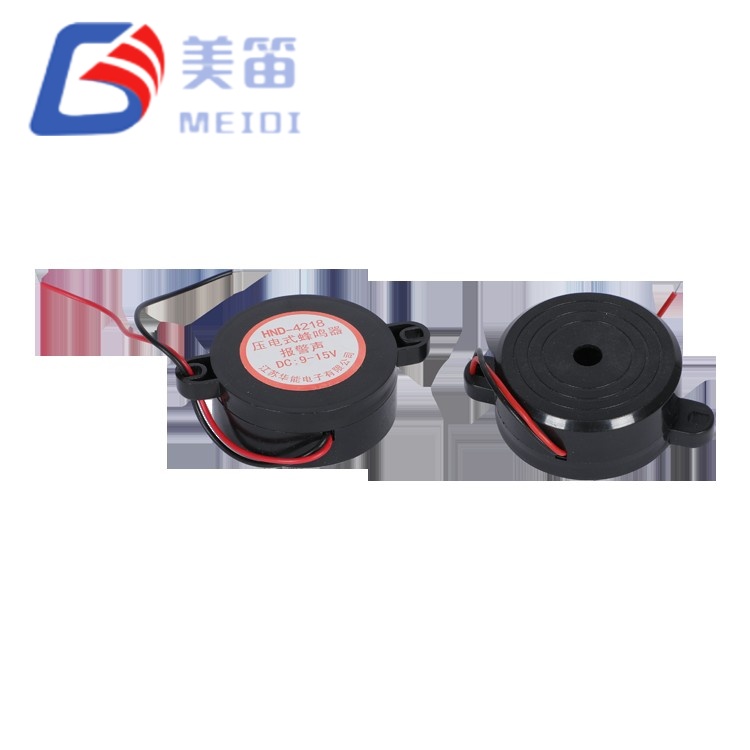
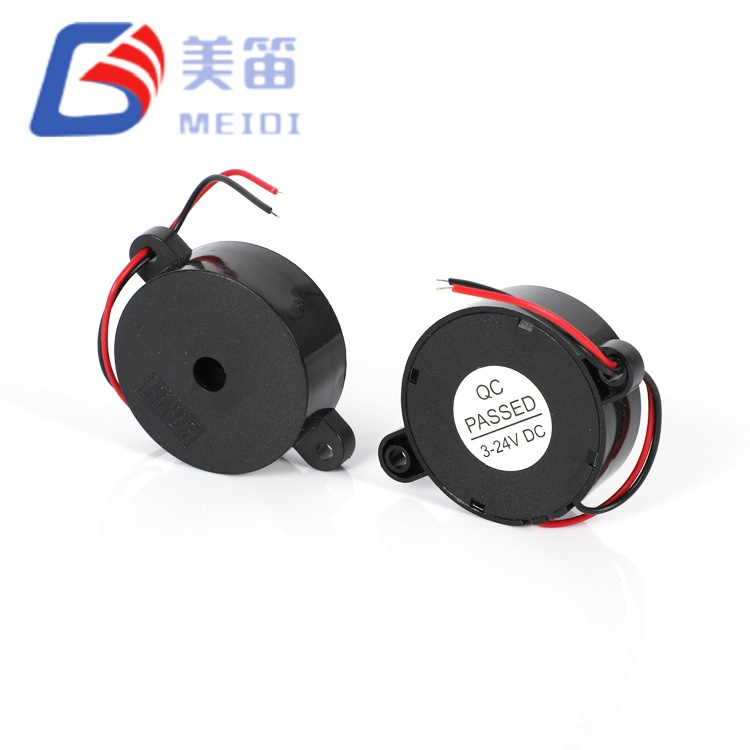
| Model | Product Image | Rated Voltage (VDC) | Operating Voltage (VDC) | Sound Pressure Level @10cm (dB) | Current Consumption (mA) | Resonant Frequency (Hz) | Operating Temperature (℃) | Weight (g) | Dimensions (mm) |
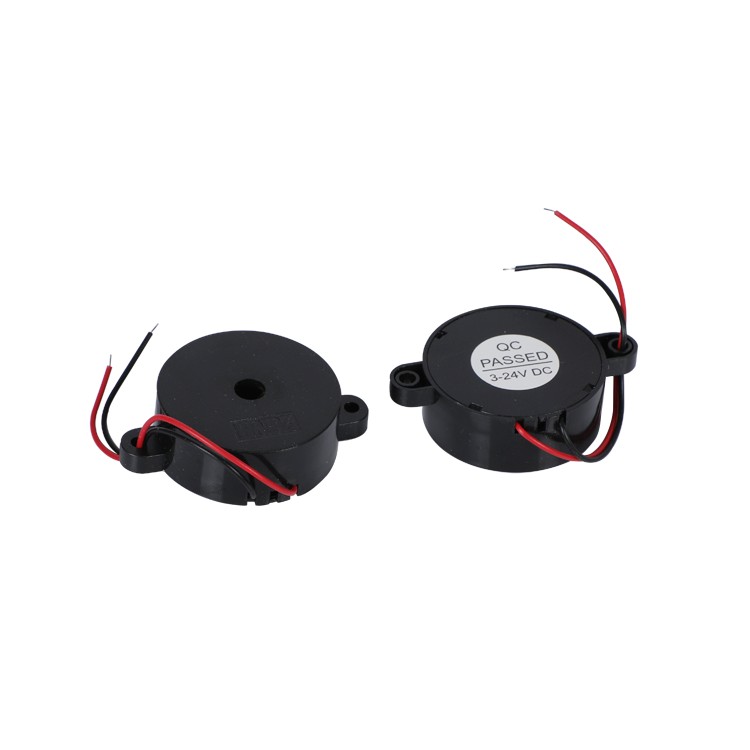
| HND-4216 |
|
12 | 3~24 | ≥90 | ≤8 | 2800±500 | -20~+80 | 12 | Ø41.8×16 |
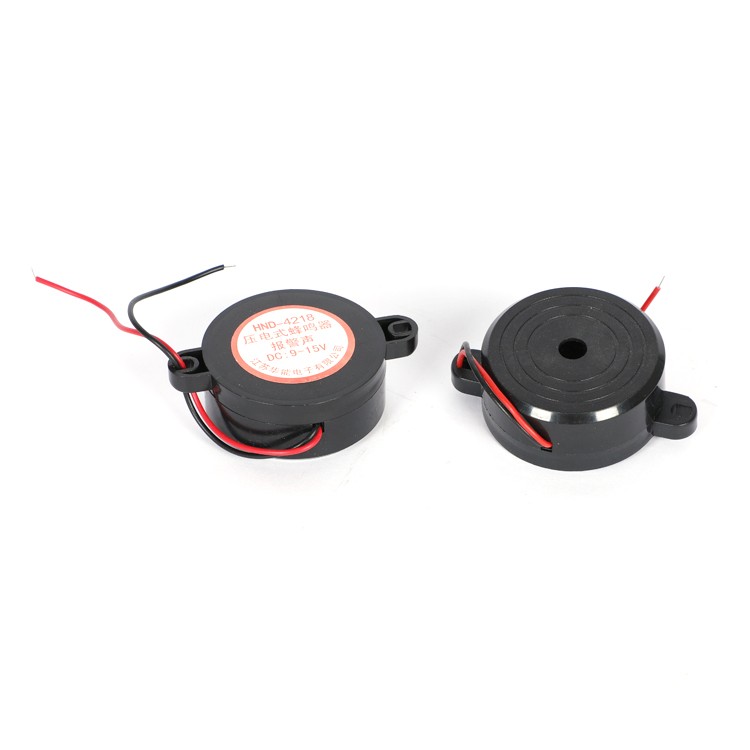
| HND-4218 |
|
12 | 3~24 | ≥90 | ≤8 | 2800±500 | -20~+80 | 12 | Ø41.8×18 |