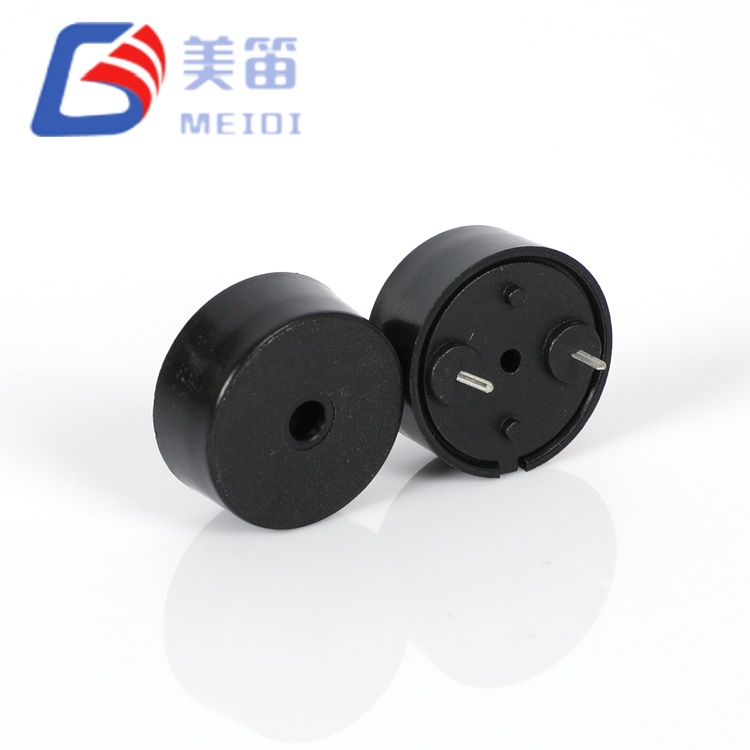
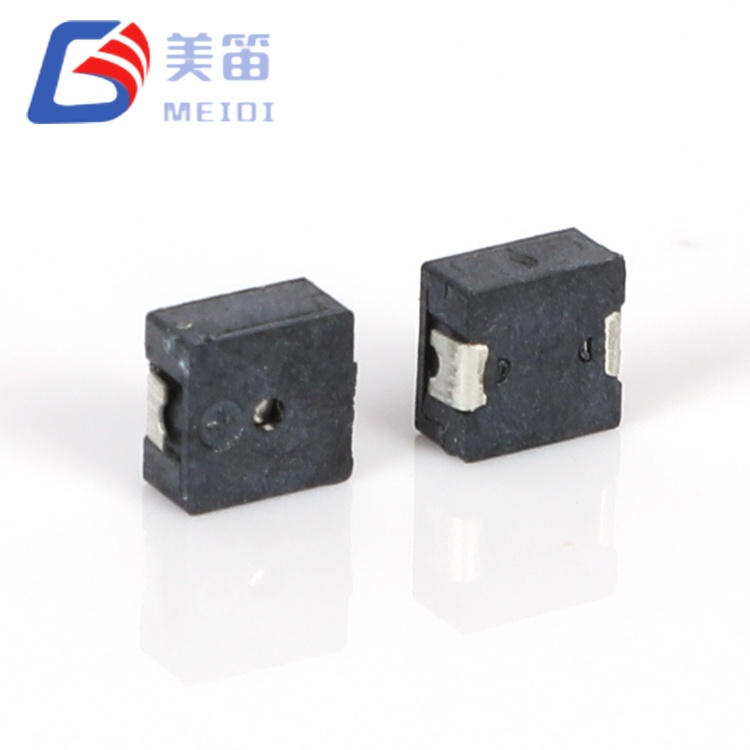
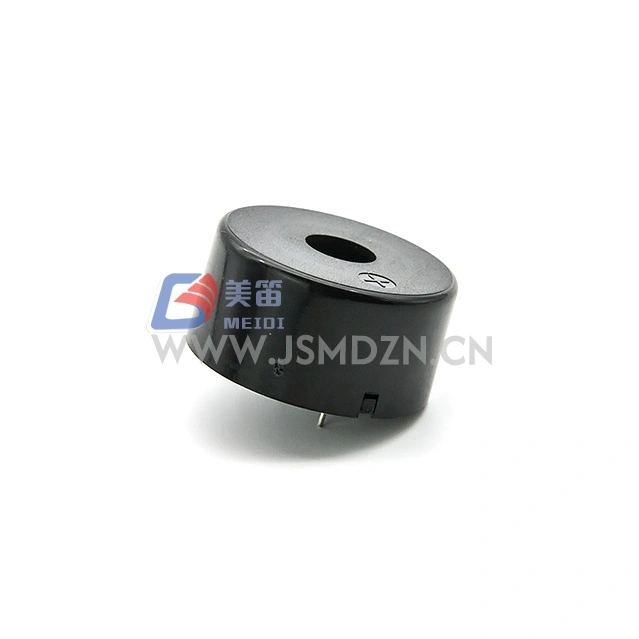
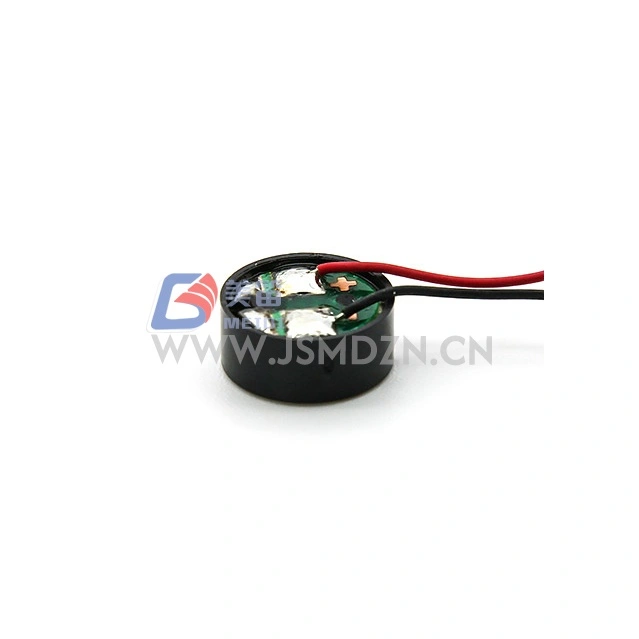
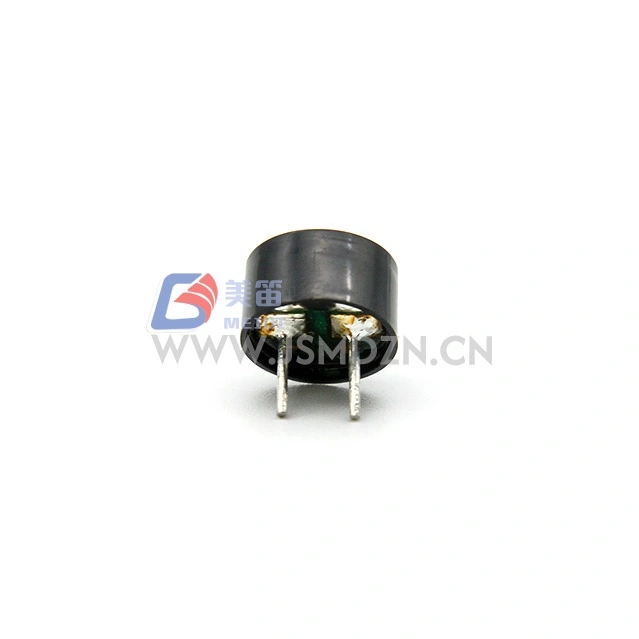
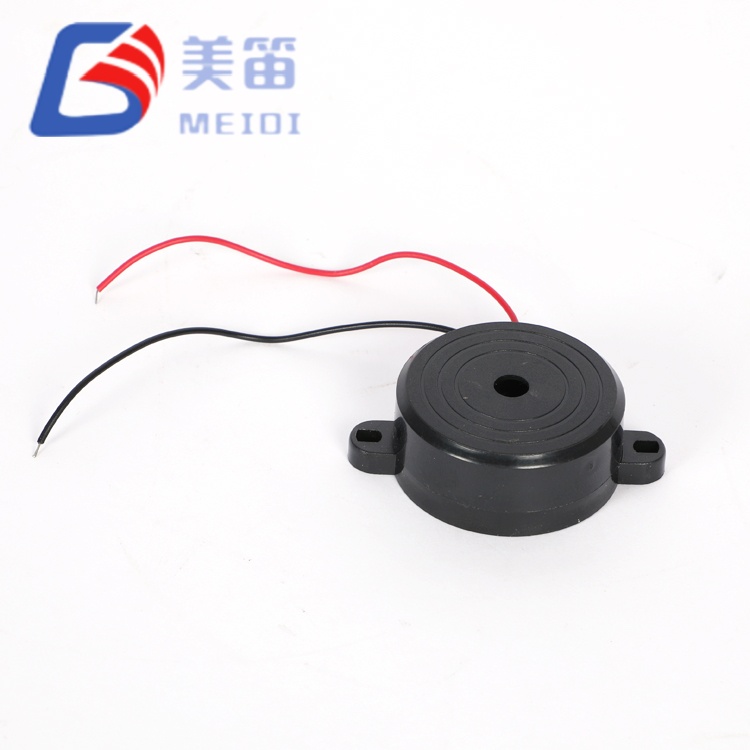
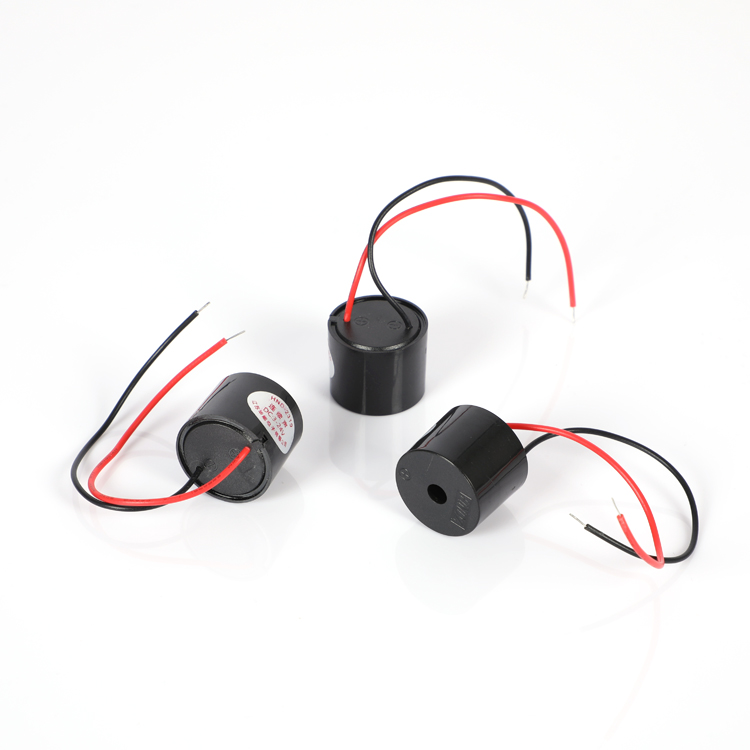
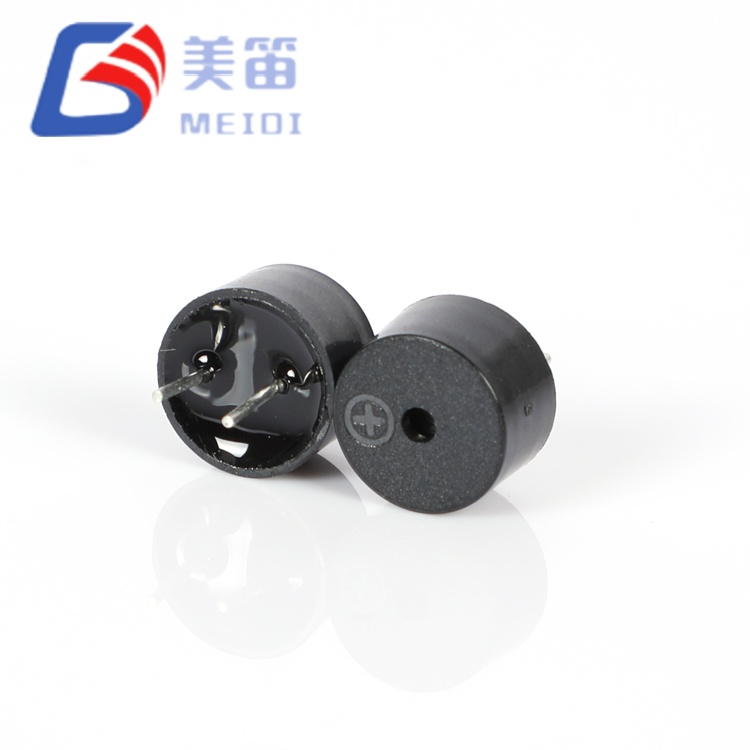
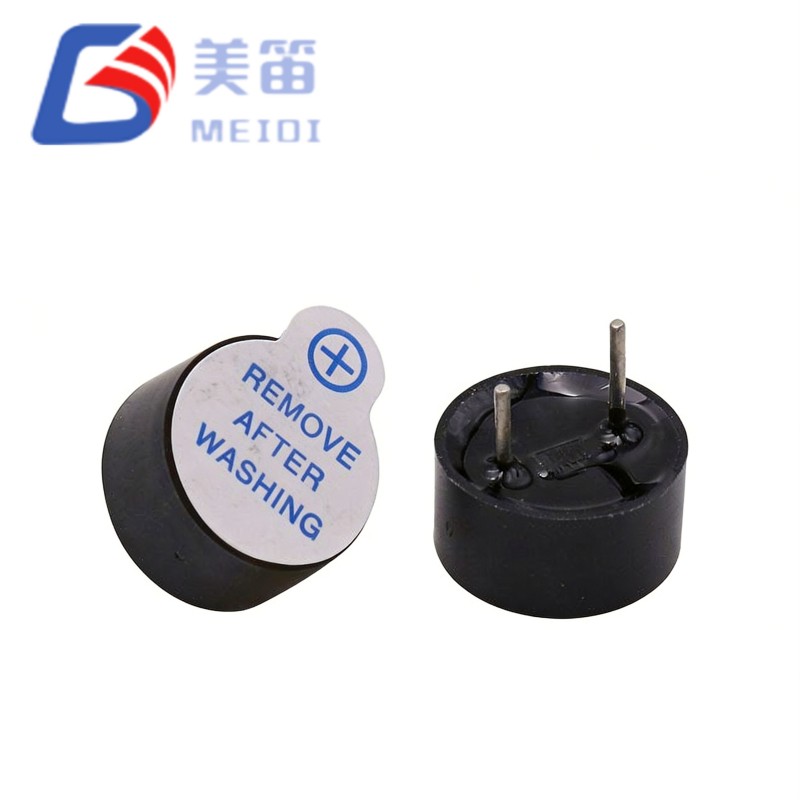
A surface-mount SMD buzzer is an electro-acoustic transducer engineered for high-speed pick-and-place lines. Instead of pushing leads through drilled holes, it reflows alongside your resistors, capacitors and ICs in one convection oven pass. For modern, space-constrained products, that single difference changes the whole manufacturing story of the SMD buzzer.
Traditional through-hole buzzers demand thick Z-axis clearance and a secondary wave-solder or hand-solder stage. A compact SMD buzzer uses flat bottom pads that bond flush to the copper, so it survives drops and motor vibration better and frees board height for thinner enclosures. Designers choosing an SMD buzzer usually do it for the footprint first and the sound second.
Every SMD buzzer is either active (internal oscillator, drive with DC, fixed tone) or passive (externally driven by an MCU PWM, tone programmable). Active saves firmware time; passive lets one SMD buzzer emit "warning", "critical" and "mute" patterns from software alone. The right call follows from your software resources, not just the bill of materials. Keep one SMD buzzer of each architecture on the bench so firmware and hardware can validate tone before the board is frozen.
The single most important SMD buzzer choice is the transduction principle, because it dictates your power budget, drive circuit and acoustic profile. Both families ship in surface-mount packages, but their physics diverge sharply.
A magnetic SMD buzzer drives a coil that pulls a metal diaphragm down and releases it to snap back, repeating at the resonant frequency. That heavier moving mass favours a lower, warmer tone around 2–3 kHz and lets the part run comfortably on 1.5–5 V logic rails — ideal for 3.3 V MCU boards. The trade-off is current: a magnetic SMD buzzer can draw up to roughly 100 mA, which matters for coin-cell designs.
A piezoelectric SMD buzzer bonds a ceramic disc to a metal plate; the reverse piezoelectric effect bends the plate when AC voltage is applied. It behaves as a capacitive load, so current stays sub-milliamp (often under 5 mA) while still reaching sharp, piercing tones above 4 kHz. The trade-off is a higher drive voltage (Vp-p), frequently 3–20 V, supplied by a small FET or transistor.
| Parameter | Magnetic (EM) SMD buzzer | Piezoelectric SMD buzzer |
|---|---|---|
| Principle | Coil + magnet + diaphragm | Piezo ceramic inverse effect |
| Drive voltage | 1.5–5 V (low) | 3–20 V+ (Vp-p) |
| Current draw | Up to ~100 mA class | < 5 mA (sub-mA typical) |
| Resonant frequency | ~2–3 kHz (warmer) | ~4 kHz+ (sharp) |
| Typical SPL | 80–85 dB @ 10 cm | 70–90 dB @ 10 cm |
| Package height | 2.0–4.0 mm achievable | As low as 1.8 mm |
| Best fit | Low-voltage logic, appliances | Battery IoT, wearables, multi-tone |
Frame the decision around your exact power budget versus the required SPL at a stated distance. Targeting 85 dB at 10 cm drives entirely different drive requirements than 70 dB at 10 cm, and a piezoelectric SMD buzzer usually wins the battery-life argument while a magnetic SMD buzzer wins the low-voltage simplicity argument.
The tables below list verified MEIDI SMD buzzer models drawn from our production datasheets — not generic placeholders. Both electromagnetic and piezoelectric surface-mount families are covered so a single SMD buzzer shortlist can serve mixed projects.
| Model | Rated V | Operating V (Vp-p) | Resonant freq | SPL min | Package (mm) | Weight |
|---|---|---|---|---|---|---|
| HN-9042W | 3 V | 2–4 | 2730 Hz | ≥ 85 dB @ 10 cm | 9.0 × 4.2 | 1.0 g |
| MLT-5020 | 3.0 V | 2–4 | 4000 ± 300 Hz | ≥ 80 dB @ 10 cm | 5.0 × 5.0 × 2.0 | 0.1 g |
| MLT-7525-16R | 3.6 V | 2.5–4.5 | 2700 ± 300 Hz | ≥ 85 dB @ 10 cm | 7.5 × 7.5 × 2.5 | 0.5 g |
| MLT-8530-16R | 3.6 V | 2.5–4.5 | 2700 ± 200 Hz | ≥ 85 dB @ 10 cm | 8.5 × 8.5 × 3.0 | 0.5 g |
| MLT-8540-16R | 3.6 V | 2.5–4.5 | 2700 ± 300 Hz | ≥ 85 dB @ 10 cm | 8.5 × 8.5 × 4.0 | 0.5 g |
| Model | Rated V | Operating V (Vp-p) | Resonant freq | SPL min | Package (mm) | Weight |
|---|---|---|---|---|---|---|
| MLT-1109 | 5 V | 1–25 | 4000 ± 300 Hz | ≥ 70 dB @ 10 cm | 9 × 9 × 1.8 | 0.4 g |
| MLT-1230 | 3 V | 1–25 | 4000 ± 300 Hz | ≥ 80 dB @ 10 cm | 12 × 12 × 3.0 | 0.4 g |
| MLT-1625 | 5 V | 1–20 | 4000 ± 500 Hz | ≥ 75 dB @ 10 cm | 16 × 16 × 2.5 | 1.0 g |
Note the current split: a piezoelectric SMD buzzer draws negligible DC current (well under 5 mA) while an electromagnetic SMD buzzer sits in the higher-current class. Match the package height to your enclosure before locking the BOM — the MLT-1109 at 1.8 mm is the thinnest MEIDI SMD buzzer in the table.
The same SMD buzzer behaves differently once it lives inside a real product, because enclosures muffle sound and listen distance shifts perceived SPL. Below are three common deployment scenes where a surface-mount buzzer earns its place.
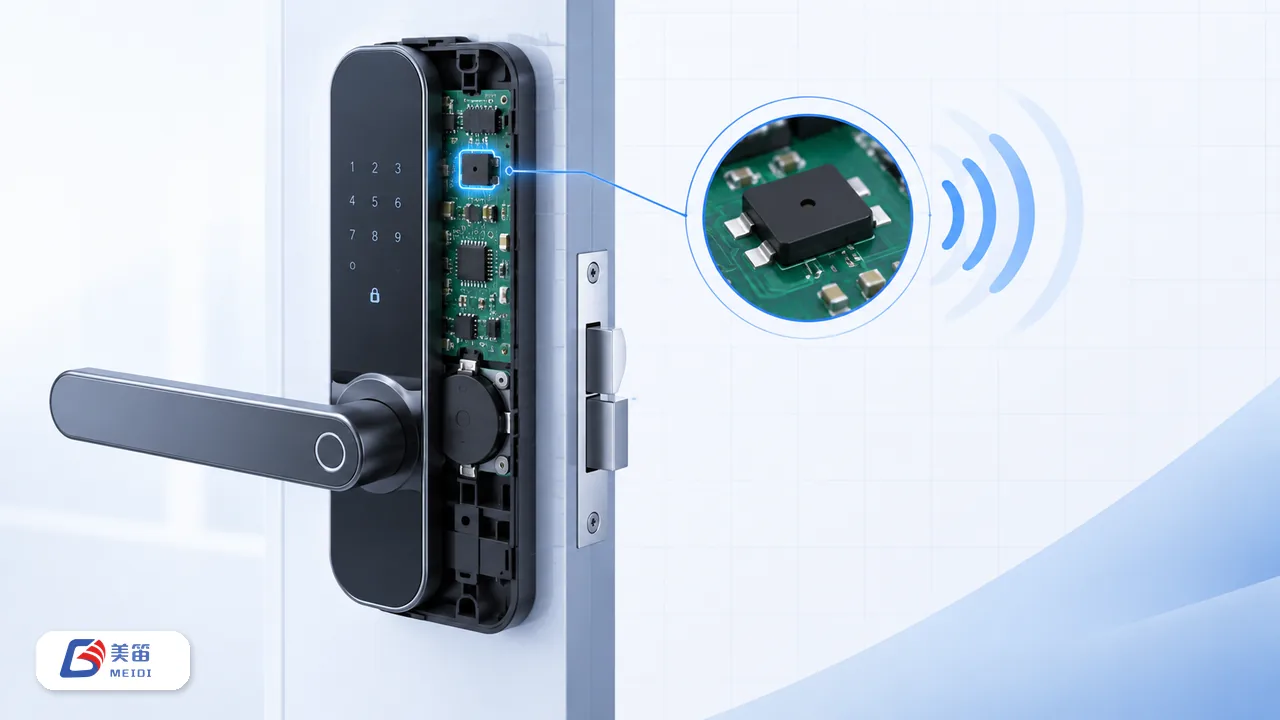 Concept illustration — smart-lock control board with a compact SMD buzzer (generate via ChatGPT, 16:9).
For battery-powered smart locks and white-goods control boards, a low-voltage magnetic SMD buzzer such as MLT-5020 or MLT-7525-16R gives a familiar mid-frequency confirmation tone with minimal drain. The small footprint keeps the board inside a slim lock body.
 Concept illustration — portable medical monitor with a low-current SMD buzzer (generate via ChatGPT, 16:9).
Glucose meters and pulse oximeters favour piezoelectric SMD buzzers because the sub-milliamp draw protects coin-cell life and the thin 1.8–3.0 mm profile fits handheld housings. Where a richer, layered alarm is needed, an MCU-driven passive SMD buzzer programmes multi-stage tones in firmware.
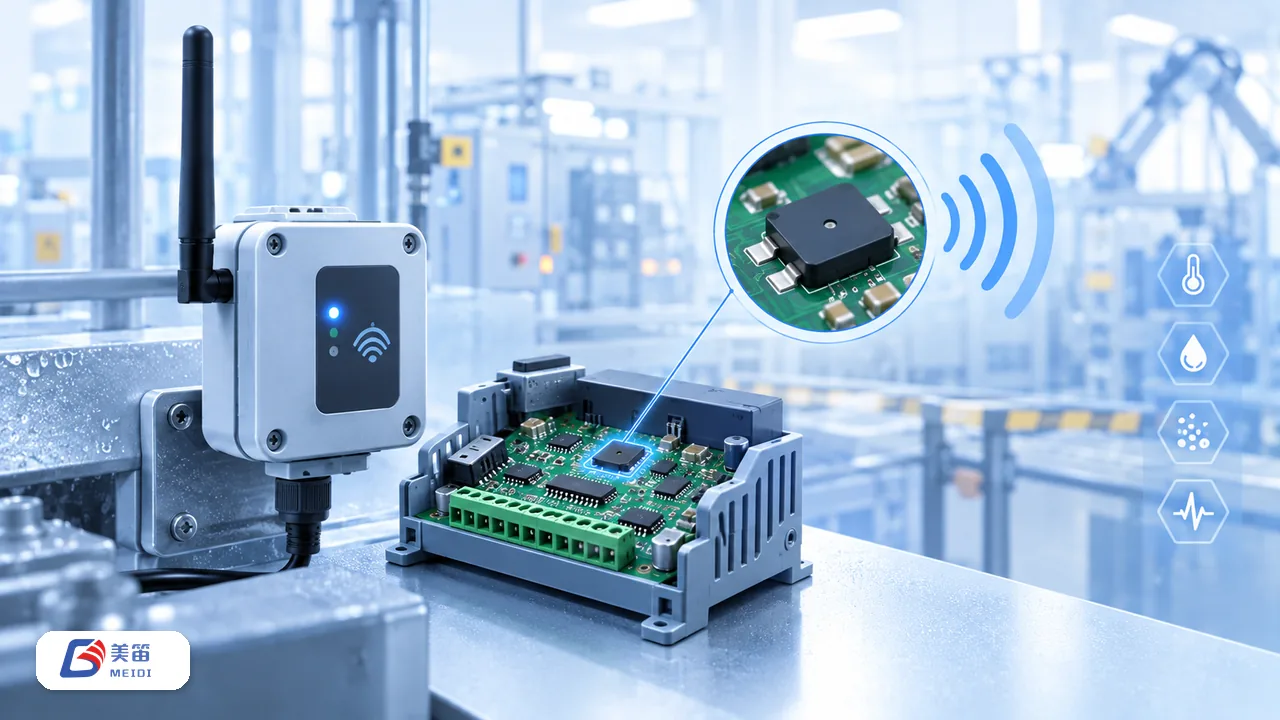 Concept illustration — IoT sensor node with an SMD buzzer for harsh-environment alerting (generate via ChatGPT, 16:9).
Wireless IoT sensors and PLC-adjacent controllers benefit from piezoelectric SMD buzzers: no coil means no EMI near sensitive modules and negligible idle current. A 12 V industrial controller often pairs a piezoelectric SMD buzzer with a small FET and MCU PWM to generate penetrating fault tones.
An SMD buzzer rides through the oven with the rest of the board, so thermal discipline is not optional. Ignore the profile and you warp the diaphragm or weaken the housing before the product ever ships.
Enforce the manufacturer's recommended profile: pre-heat to roughly 150–180 °C to activate flux, peak at 250–260 °C for no more than 10–20 seconds, then control the cooling rate to avoid micro-cracks in the solder joints. Share the buzzer's datasheet profile directly with your SMT engineers and confirm the allowed number of reflow passes. This thermal discipline applies to every electromagnetic SMD buzzer and to most piezoelectric SMD buzzers in the lineup.
Most acoustic SMD buzzers are not washable — they carry an open sound-emission hole. If cleaning fluid enters that hole it coats the diaphragm and permanently changes the tone. Sending a standard open-hole SMD buzzer through an ultrasonic bath is a near-certain failure; specify a sealed "washable" variant when post-solder washing is mandatory.
Once mounted, sound exits through the board's hole, so hole position, diameter and cavity volume all shift the final SPL. A working rule is about 6 dB lost per doubling of distance, and supply drift from the rated point can be estimated with ΔSPL ≈ 20 × log₁₀(V_actual / V_rated) dB. For battery projects, request SPL at the worst-case end-of-discharge voltage, not the nominal rated figure.
Before the BOM is frozen, lock these six questions with both hardware and procurement:
MEIDI has supplied electro-acoustic components for 15 years since its 2011 factory, with automated production and lot-level testing. Every SMD buzzer in the lineup above is built under an ISO 9001 / ISO 14001 quality system and shipped RoHS and REACH compliant. When you qualify a new SMD buzzer for production, request SPL and frequency data at your actual operating point so the production unit matches the prototype.
Yes, provided the housing uses a high-temperature plastic such as LCP and the oven profile stays within the component's peak limit (typically 250–260 °C for a few seconds). Always confirm the allowed number of reflow passes with the datasheet.
Choose a piezoelectric SMD buzzer for coin-cell and wearable products where sub-milliamp current draw protects battery life. Choose a magnetic SMD buzzer when you need a low-voltage, simple drive and can tolerate the higher current.
Usually insufficient drive voltage, a wrong PWM frequency for a passive type, or the sound hole partially blocked by the enclosure or conformal coating. Measure at the actual listen distance and worst-case supply voltage.
Yes. A freewheeling diode is recommended for magnetic types to absorb the inductive spike when the coil de-energises, protecting the driving transistor or MCU pin.
They are built under ISO 9001 and ISO 14001 and are RoHS and REACH compliant. Request the specific certificates and SPL/frequency test data when qualifying a new SMD buzzer for production.