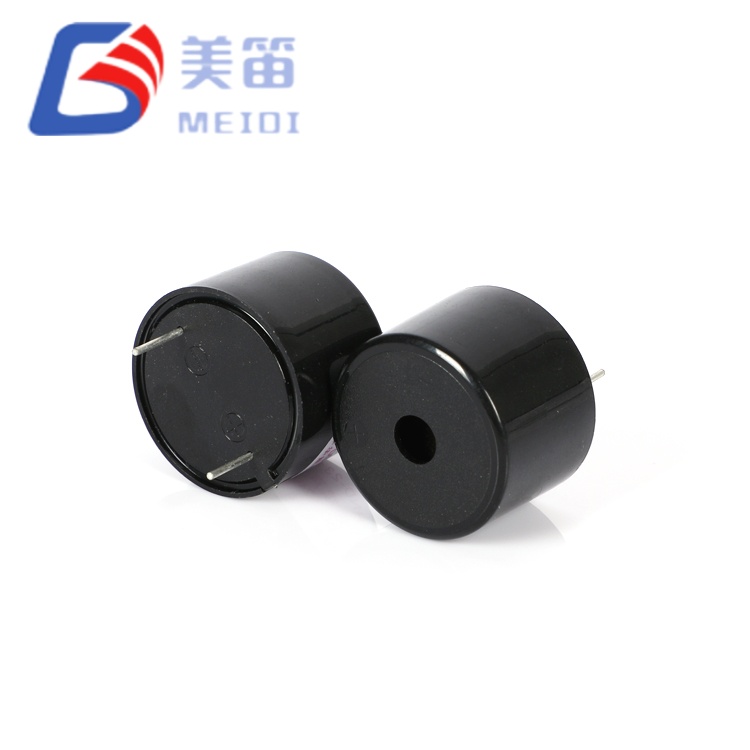
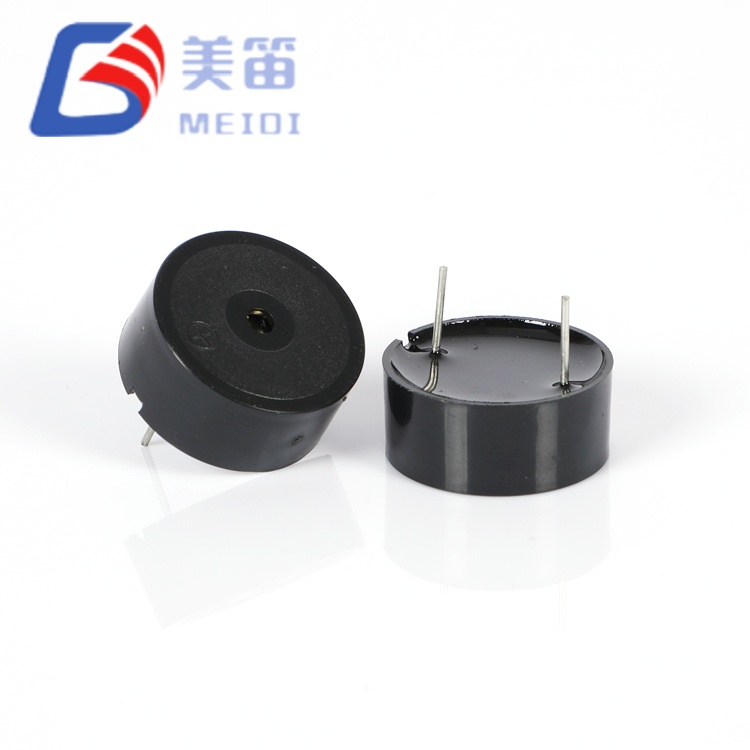
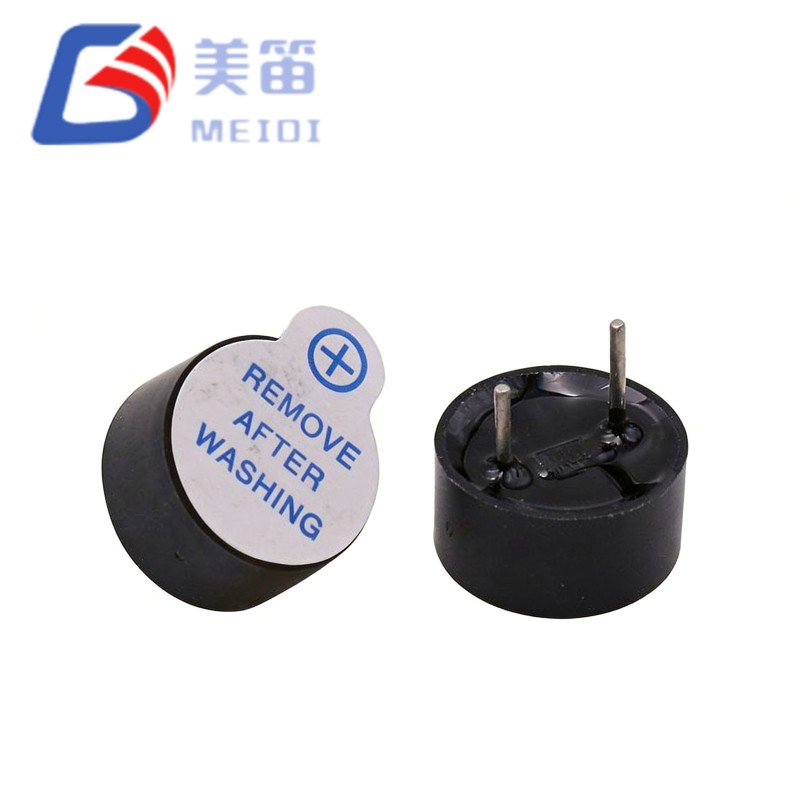
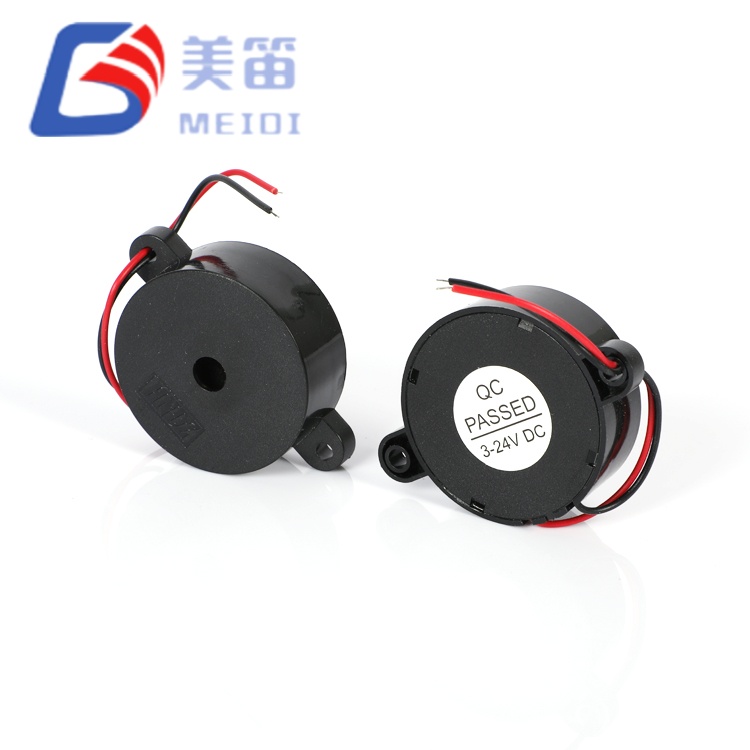
A piezoelectric buzzer produces sound by applying an alternating voltage across a thin ceramic disc bonded to a metal substrate. The reverse piezoelectric effect causes the ceramic layer to expand and contract, bending the entire assembly and radiating sound waves from its surface. This mechanism requires very little current compared to electromagnetic types, and the resonant frequency typically sits in the 2 kHz to 6 kHz range, giving the tone a sharp, clear character that carries well in open spaces. Piezoelectric elements are inherently passive, but when combined with an internal drive circuit they form a self‑contained unit that only needs a DC supply.
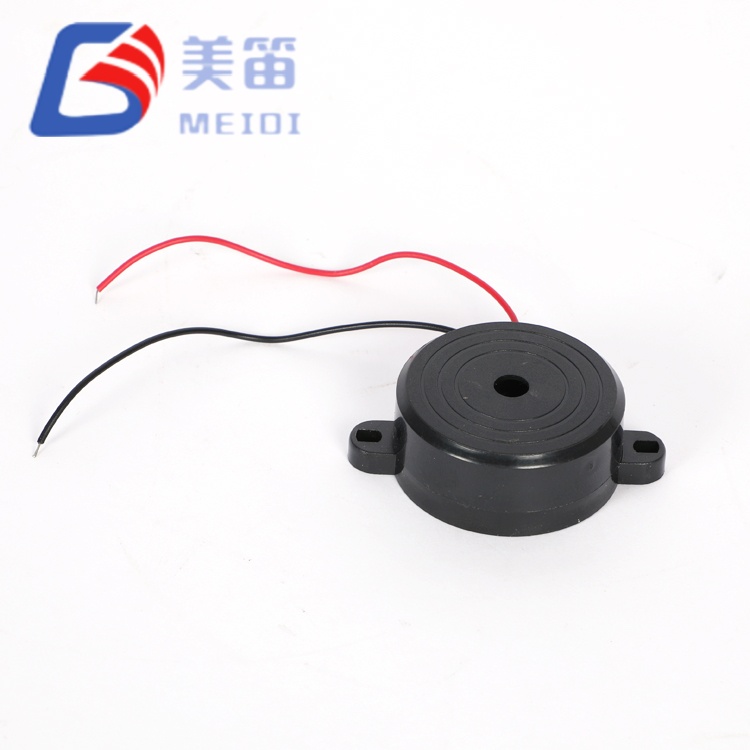
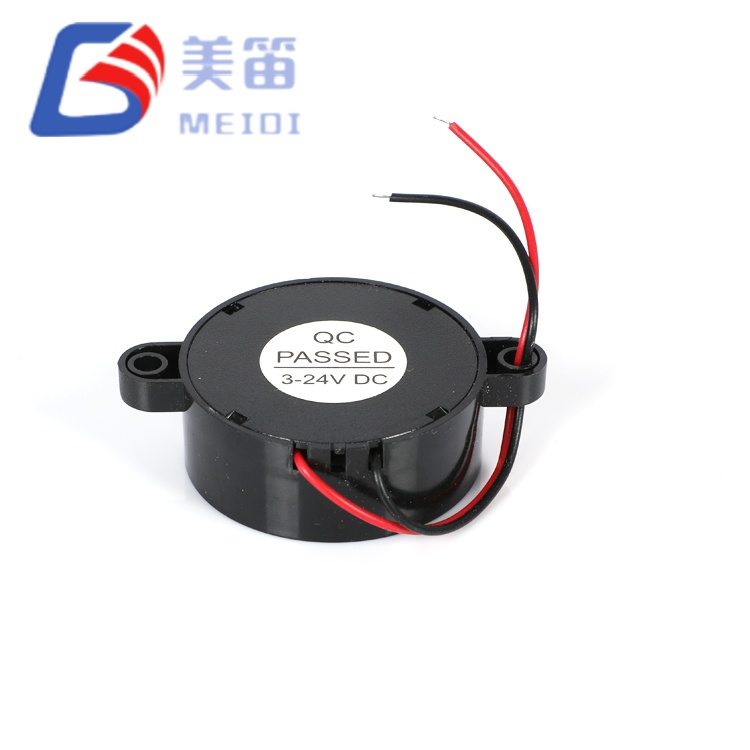
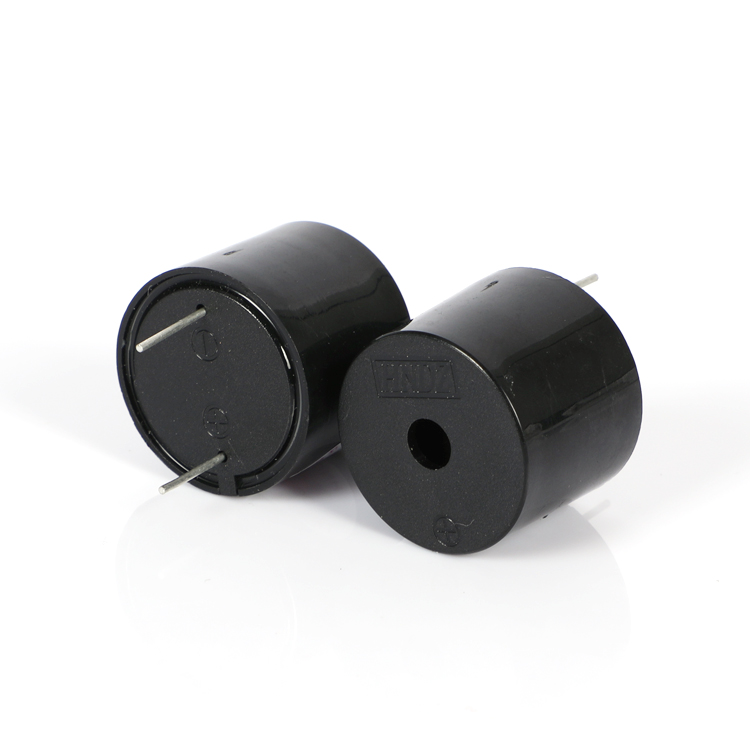
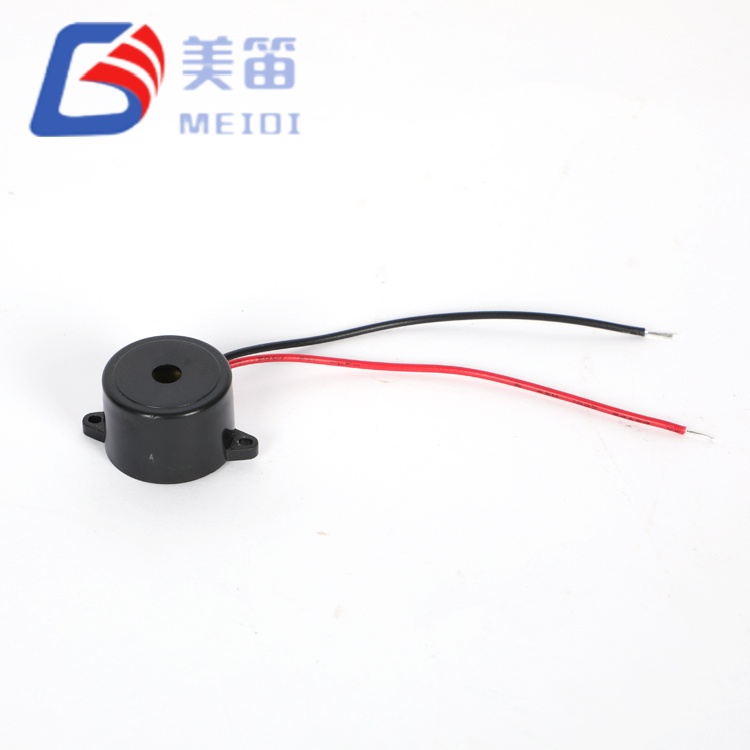
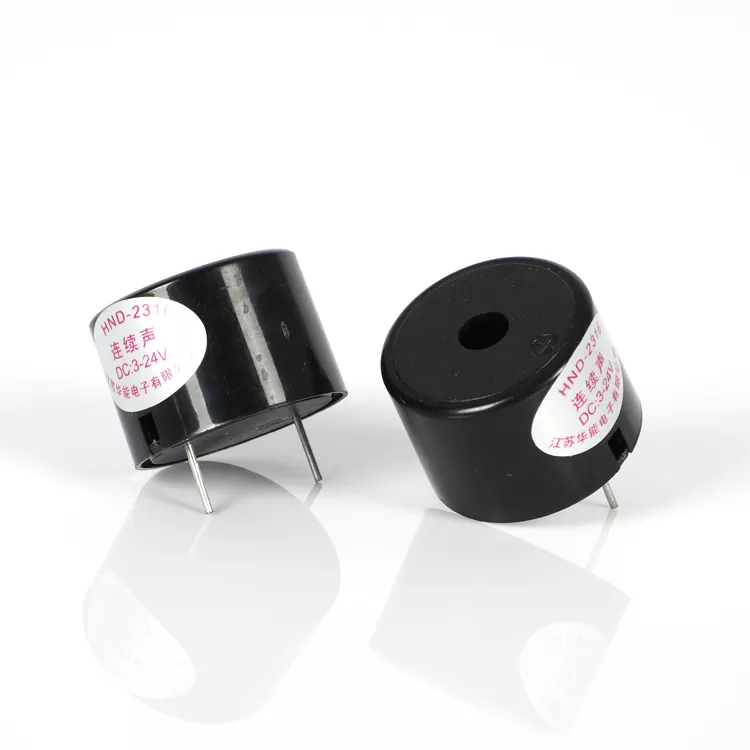
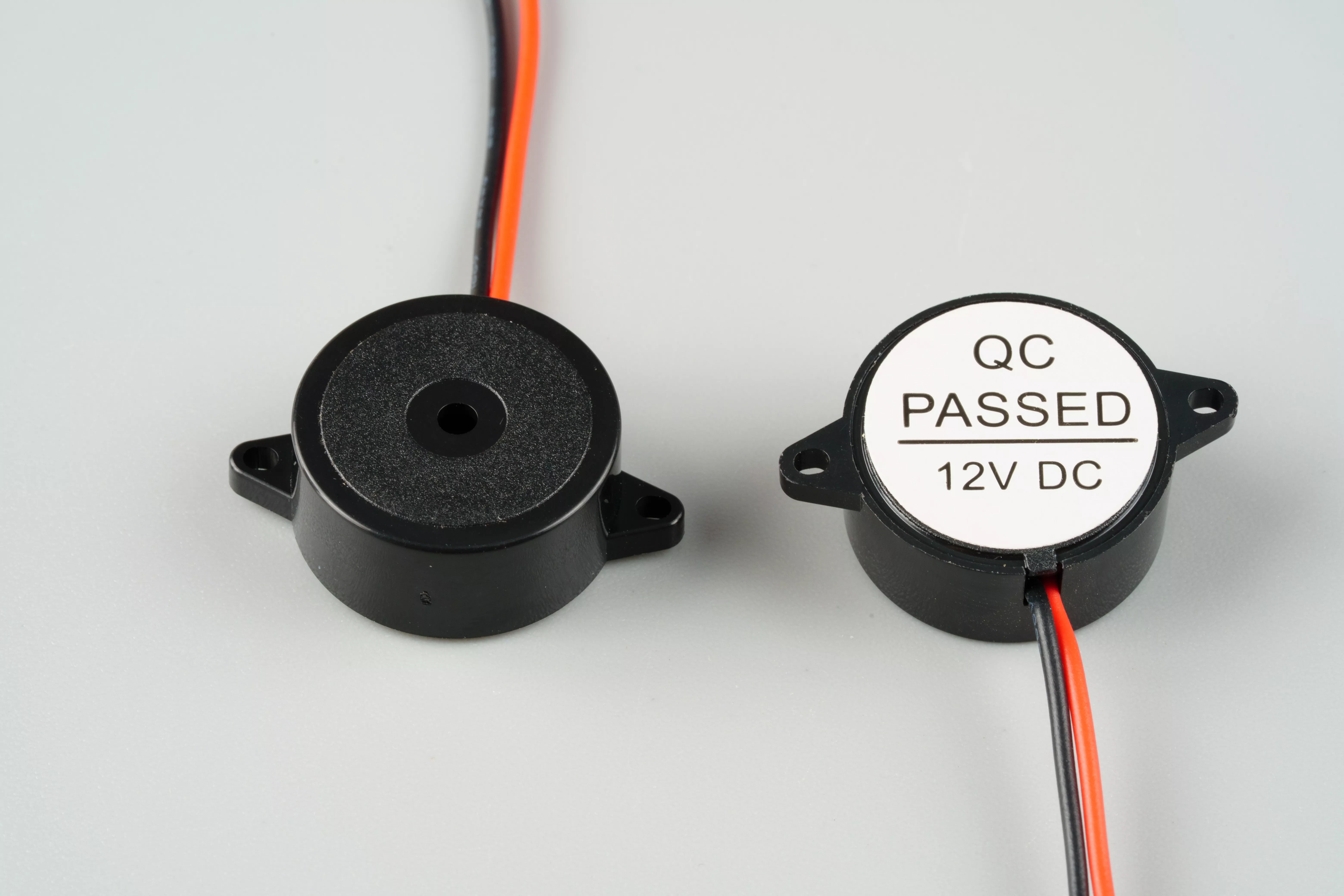
An Active Piezoelectric Buzzer integrates a small oscillator chip on the same substrate as the ceramic element. Applying a DC voltage within its rated range causes the circuit to generate a square‑wave drive at the mechanical resonance, producing a steady tone without any external signal. This simplifies system design and is commonly used in security panels, medical alarms, and consumer appliances where a fixed‑frequency alert is sufficient.
A Passive Piezoelectric Buzzer omits the oscillator. The designer must supply an external AC signal, usually a square wave or PWM from a microcontroller, at the resonant frequency to achieve maximum loudness. This approach offers full control over the tone, duty cycle, and volume, making it useful for multi‑tone alert systems and applications that already have a tone‑generating circuit in place. Surface‑mount versions, such as SMD Piezoelectric Passive Buzzer models, provide the same acoustic behaviour in a reflow‑compatible package for automated PCB assembly.
The ceramic material is a specially formulated lead zirconate titanate compound that is polarized during manufacture to retain its piezoelectric properties. The metal substrate, typically brass or nickel alloy, determines the mechanical stiffness and influences the resonant frequency. Thinner ceramics produce higher resonant frequencies, while larger diameters tend to generate higher sound pressure levels. Standard elements cover diameters from 12 mm to 50 mm, with frequencies ranging from roughly 2.0 kHz to 6.5 kHz and sound outputs of 75 dB to 95 dB at 10 cm. These bare Piezo Ceramic Buzzer Elements can be integrated into a customer’s own housing and drive circuit, or purchased as fully assembled active or passive buzzers.
Piezoelectric buzzers are used wherever a low‑power, high‑frequency alert is beneficial. In automotive electronics, they provide reversing alarms and seatbelt reminders. Medical equipment such as infusion pumps and patient monitors rely on their distinctive pitch to differentiate alerts from background noise. Industrial control panels and power supply units use them to indicate fault conditions without drawing significant current from the system bus. Smart home sensors and IoT devices often select piezoelectric buzzers for their compact footprint and low power draw, especially in battery‑operated designs.
MEIDI has built in‑house expertise in piezoelectric ceramic processing, starting from raw powder mixing and tape casting through electrode deposition, polarization, and bonding to metal substrates. Automated optical inspection and acoustic test stations check every element for resonant frequency, capacitance, and sound pressure level before release. This vertical integration, combined with ISO 9001 process controls, helps maintain consistent acoustic performance across large production volumes. The engineering team can also adjust ceramic thickness, electrode pattern, and substrate material to meet custom frequency or capacitance targets for specific projects.
What makes a piezoelectric buzzer different from an electromagnetic one?
Piezoelectric buzzers generate sound through ceramic deformation, which naturally favours higher frequencies and draws very little current. Electromagnetic buzzers use a magnetic coil and diaphragm, producing a lower‑pitched, warmer tone at the expense of higher current consumption. The choice depends on the required pitch, power budget, and enclosure acoustics.
Can the resonant frequency be customized?
Yes. The resonant frequency is determined by the ceramic disc thickness, diameter, and substrate stiffness. For volume orders, MEIDI can adjust these parameters to shift the resonant point within a practical range. Engineering samples are provided to verify the acoustic output before mass production.
Are piezoelectric buzzers suitable for outdoor use?
Most piezoelectric buzzers operate reliably over a wide temperature range, but the housing is not sealed by default. For outdoor installations or high‑humidity environments, the buzzer should be mounted inside a ventilated, water‑resistant enclosure. For applications requiring a sealed unit, contact the engineering team to discuss available options.