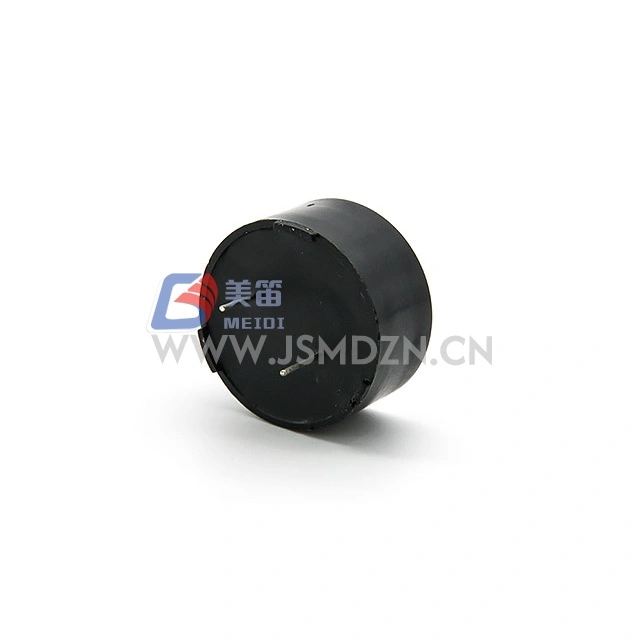
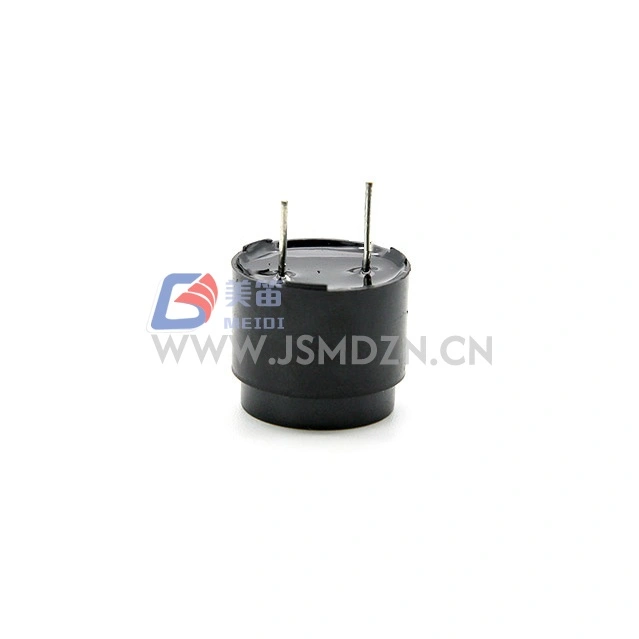
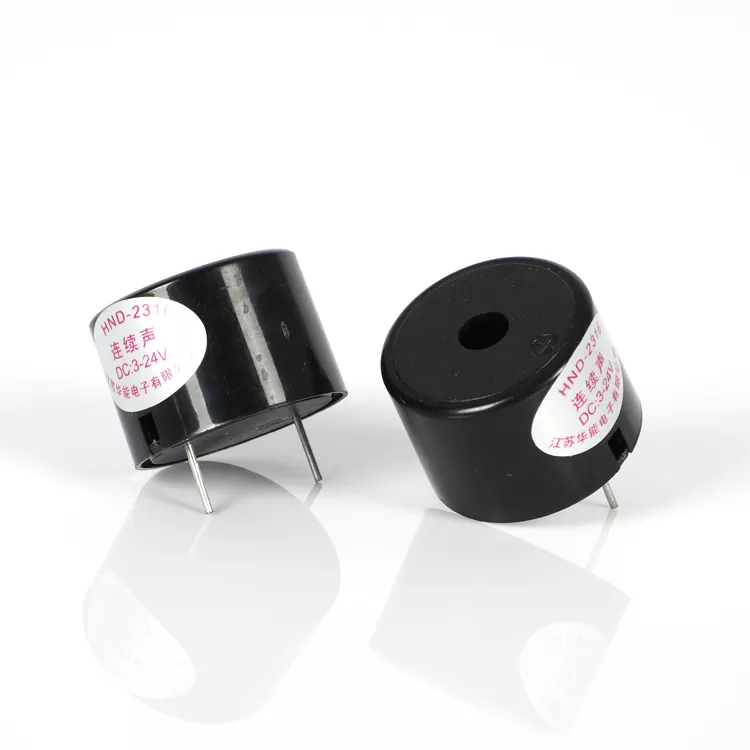
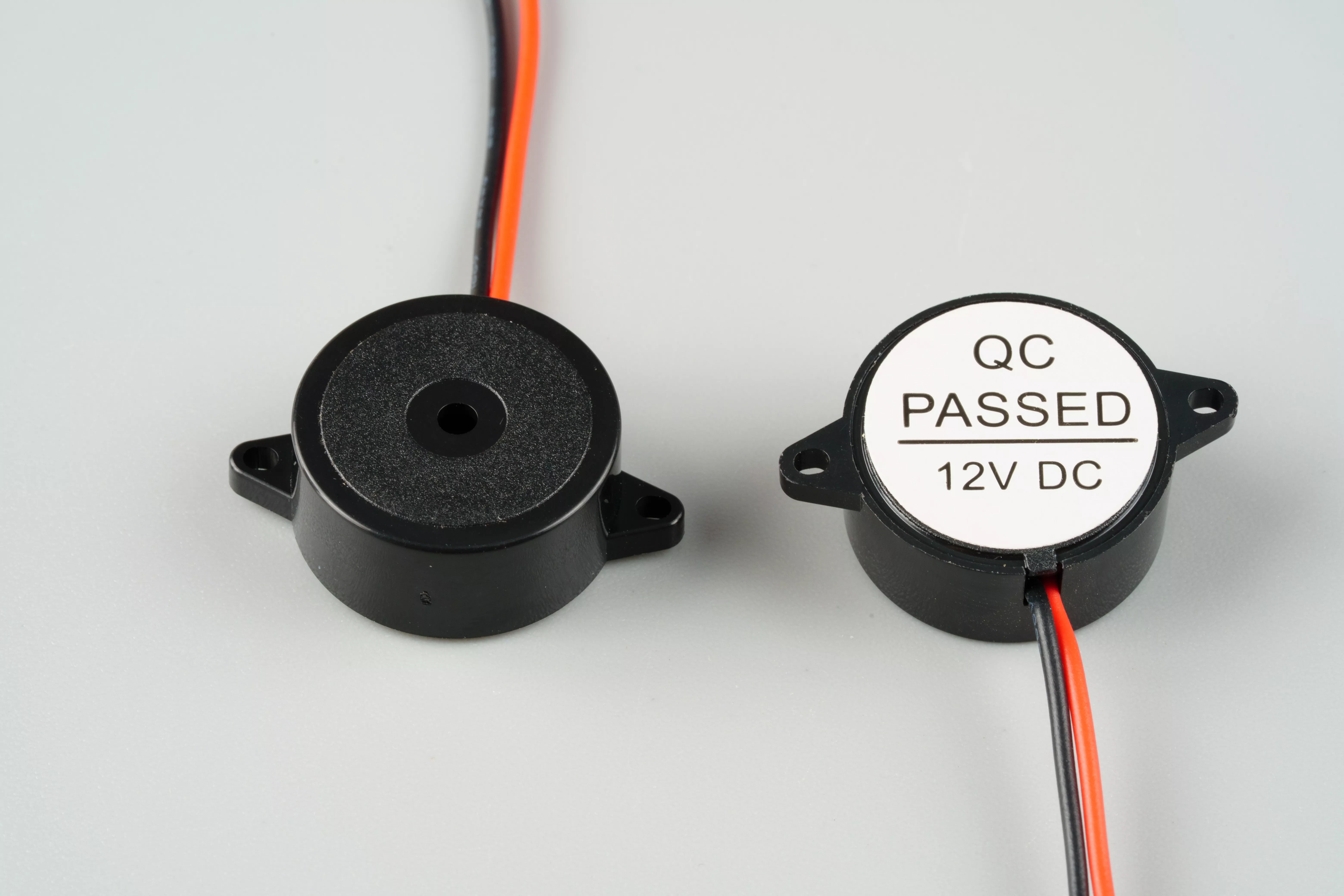
A magnetic passive buzzer strips the design down to the essential acoustic components: a coil, a permanent magnet, and a thin ferromagnetic diaphragm. There is no onboard oscillator. To generate sound, the user must supply an alternating current or a switched DC signal that matches the mechanical resonant frequency of the diaphragm assembly. This places the responsibility for tone generation on the host circuit, but in return it gives complete control over pitch, volume, and duty cycle. Because the drive waveform is generated externally, a single microcontroller PWM output can drive multiple passive buzzers at different frequencies, or a single buzzer can be used to produce a range of alert patterns.
The diaphragm inside a magnetic passive buzzer moves toward the magnetic core when current flows through the coil, then springs back when the current stops. Repeating this at the mechanical resonance produces the loudest tone. The designer sets the drive frequency, which means the same buzzer can be operated slightly off‑resonance to produce a different pitch at reduced loudness, or driven at the exact resonant point for maximum sound pressure. The voltage amplitude of the drive signal directly affects the volume, and a series resistor can be added to limit peak current during switching transients. Compared to an Active Piezoelectric Buzzer or a Magnetic Active Buzzer, which lock the frequency to a fixed internal oscillator, the passive type is the more adaptable option when the system already has a tone‑generating circuit in place.
Magnetic passive buzzers are wound to specific coil impedances, commonly 8 Ω, 16 Ω, 42 Ω, or higher, which determine the current draw at a given drive voltage. Lower‑impedance coils can deliver higher sound output but require more drive current, so the selection involves a trade‑off between loudness and power consumption. Resonant frequencies typically range from 200 Hz to 3 kHz, with larger diaphragms producing lower tones. Designers often use an Electromagnetic Buzzer of this type alongside a Piezoelectric Buzzer or a Passive Piezoelectric Buzzer in multi‑tone alarm systems, where the magnetic unit handles the low‑frequency band and the piezoelectric element covers the higher frequencies.
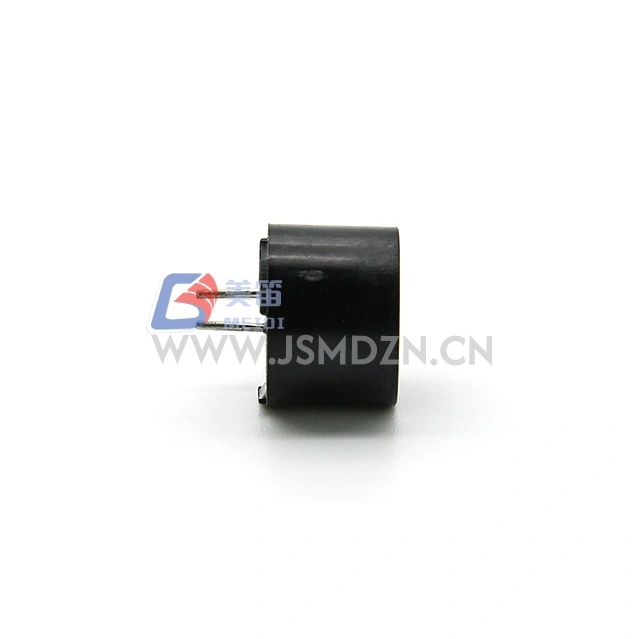
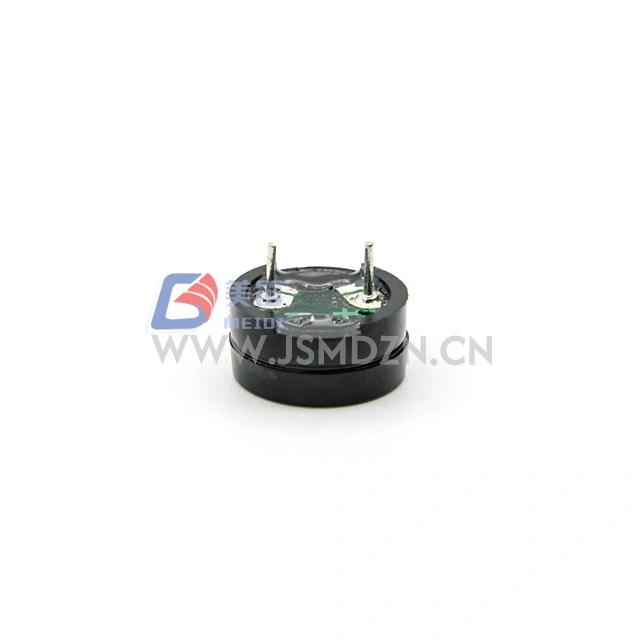
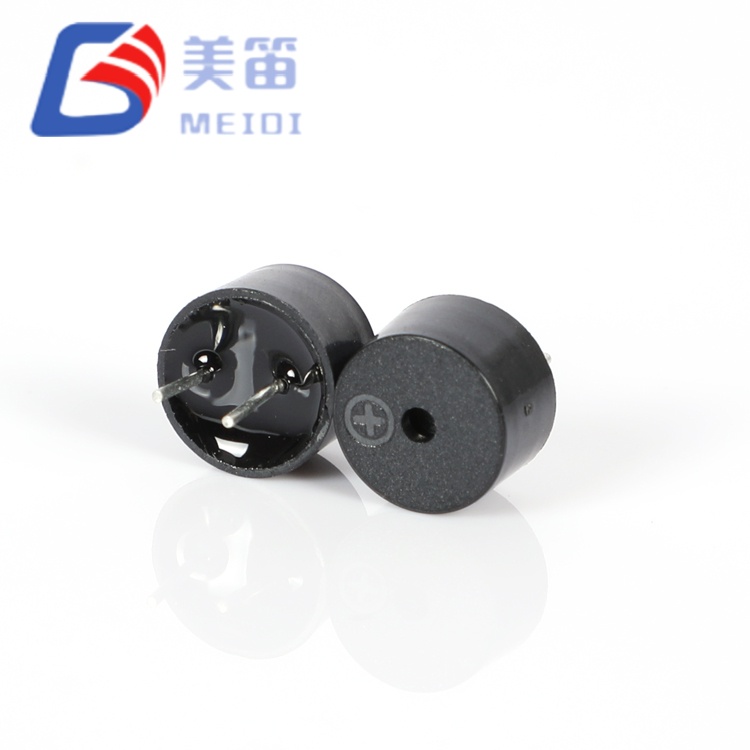
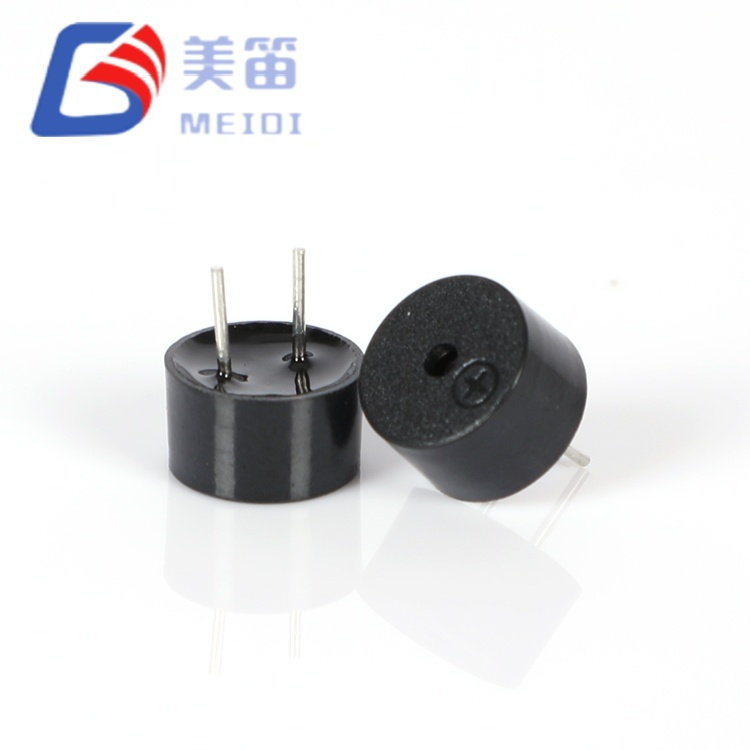
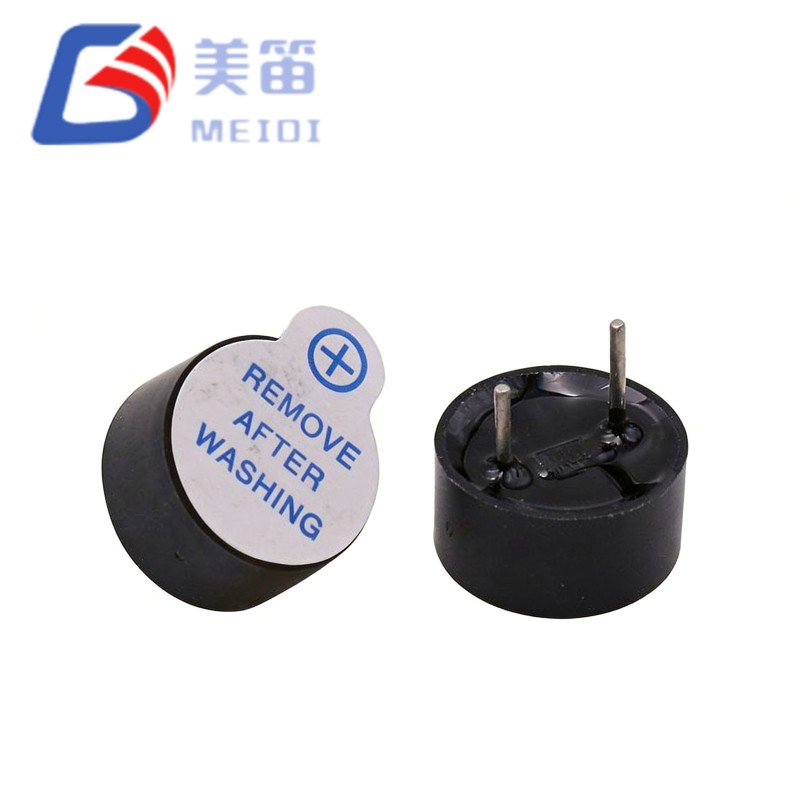
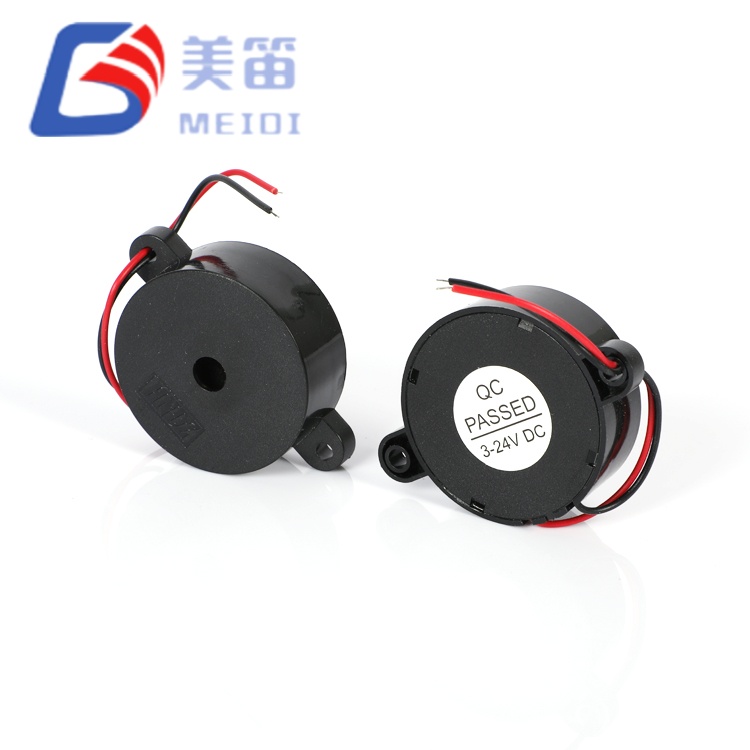
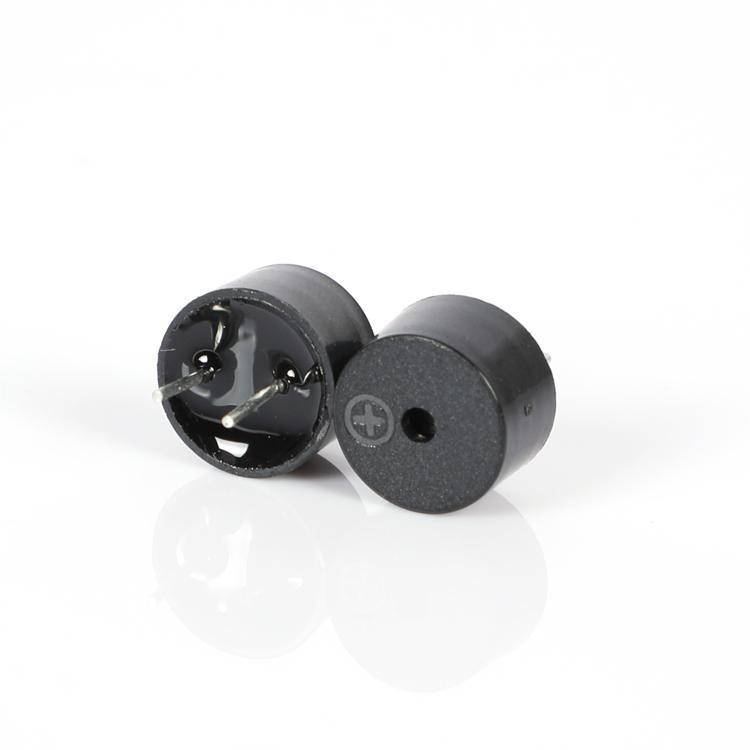
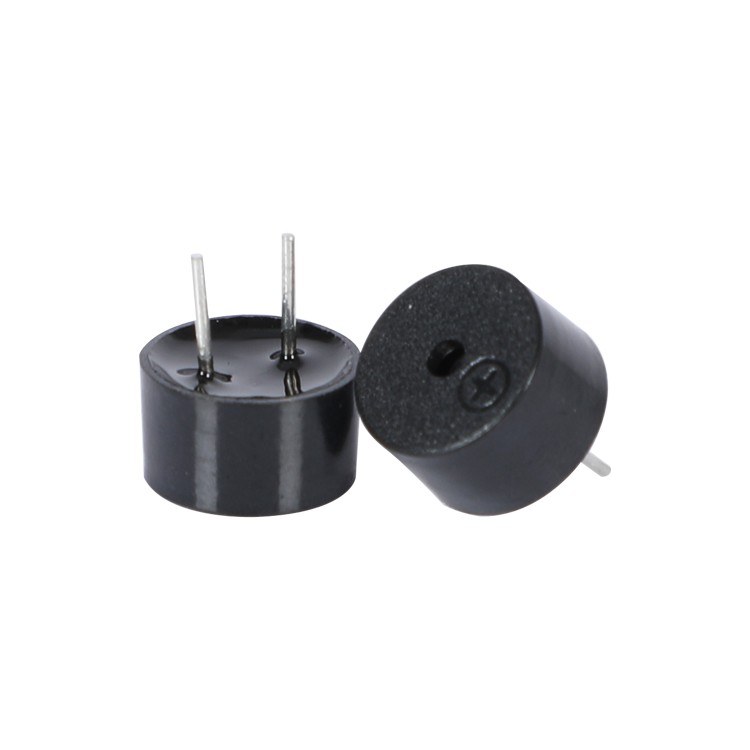
These buzzers are available in through‑hole, wire‑lead, and surface‑mount formats. The through‑hole pin version suits wave‑soldered boards, while wire‑lead models allow the buzzer to be positioned away from the main PCB for better acoustic coupling to the front panel. An SMD Magnetic Passive Buzzer provides the same external‑drive characteristics in a reflow‑compatible package, suitable for automated high‑volume assembly. When mounting, the exposed diaphragm must be kept clear of flux, conformal coating, and other contaminants that could load the vibrating surface and reduce output.
Magnetic passive buzzers are used wherever a system already generates audio‑frequency signals. In consumer electronics, they provide key‑press feedback and alarm tones in devices that have a dedicated microcontroller with spare timer outputs. Automotive dashboard modules use them for turn‑signal clicks and warning chimes, driven by the body control unit. Security alarm panels and intercom systems employ them to produce distinctive alert patterns that differentiate intrusion, fire, and status notifications. Industrial PLCs and embedded controllers also incorporate these buzzers for local fault indication, where the tone can be varied by the control program without changing hardware.
MEIDI produces magnetic passive buzzers on lines that integrate automated coil winding, diaphragm forming, and magnet assembly. Each lot is sampled for impedance, resonant frequency, and sound pressure level, with the data recorded against the production date for full traceability. The ISO 9001 quality framework also includes periodic reliability testing for thermal shock, vibration, and solder heat resistance. For OEM projects that require a specific coil impedance or a custom housing geometry, MEIDI's engineering team can provide rapid prototypes and characterisation reports before committing to volume production. This allows designers to verify the acoustic performance in their actual enclosure before finalising the bill of materials.
Can I drive a magnetic passive buzzer directly from a microcontroller pin?
Yes, provided the pin can source the required current at the intended drive voltage. Many 3.3 V and 5 V microcontrollers can drive a high‑impedance passive buzzer directly through a current‑limiting resistor. For louder output or for low‑impedance coils, a transistor buffer is recommended.
How does the sound of a magnetic passive buzzer differ from a piezoelectric passive buzzer?
Magnetic types produce a warmer, fuller tone at lower frequencies, whereas piezoelectric passive buzzers generate a sharper, higher‑pitched sound. The magnetic version also tends to have a broader resonance, making the loudness less sensitive to small frequency variations in the drive signal.
Does a magnetic passive buzzer require a flyback diode?
The coil inductance can generate voltage spikes when the drive signal is switched. In most low‑voltage applications, the internal resistance of the coil and the low supply voltage keep these spikes within safe limits. When driven at higher voltages or through a transistor, a small flyback diode across the coil terminals can protect the switching device.
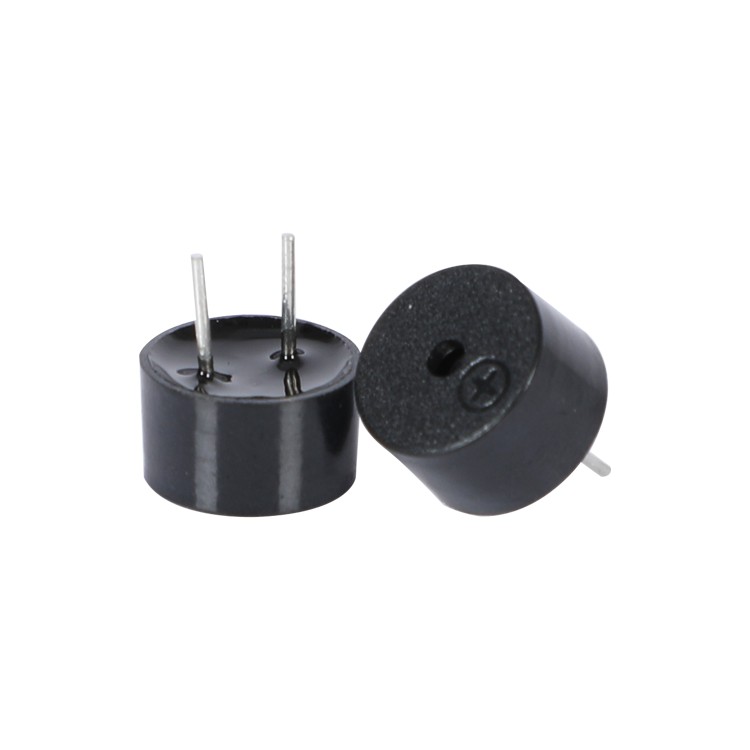
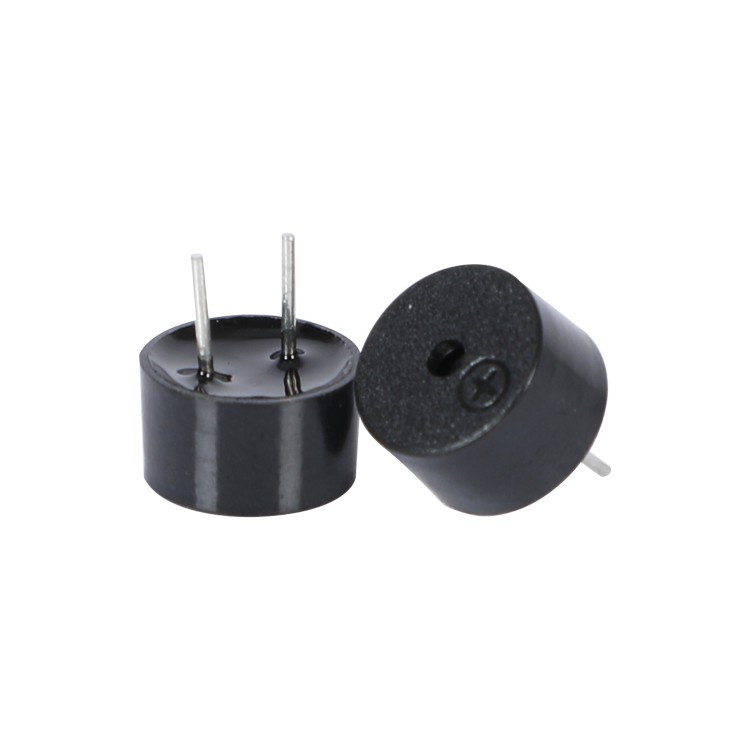
The table below lists all standard specifications of products in this series. Customized solutions are available upon your request; please feel free to contact us for further customization requirements.
| Model | Product Image | Rated Voltage (Vo-p) | Operating Voltage (Vo-p) | Sound Pressure Level @10cm (dB) | Operating Current (mA) | Coil Impedance (Ω) | Resonant Frequency (Hz) | Operating Temperature (℃) | Weight (g) | Dimensions (mm) |
| QMB-09A-03 |
|
3 | 1.5~4.5 | ≥85 | ≤80 | 16±5 | 2700±300 | -20~+70 | 0.68 | Ø9.0×4.2 |
| QMB-09A-05 |
|
5 | 3~7 | ≥85 | ≤60 | 42±5 | 2700±300 | -20~+70 | 0.68 | Ø9.0×4.2 |
| QMB-09B-03 |
|
3 | 1.5~4.5 | ≥85 | ≤80 | 16±5 | 2700±300 | -20~+70 | 0.71 | Ø9.0×5.5 |
| QMB-09B-05 |
|
5 | 3~7 | ≥85 | ≤60 | 42±5 | 2700±300 | -20~+70 | 0.71 | Ø9.0×5.5 |