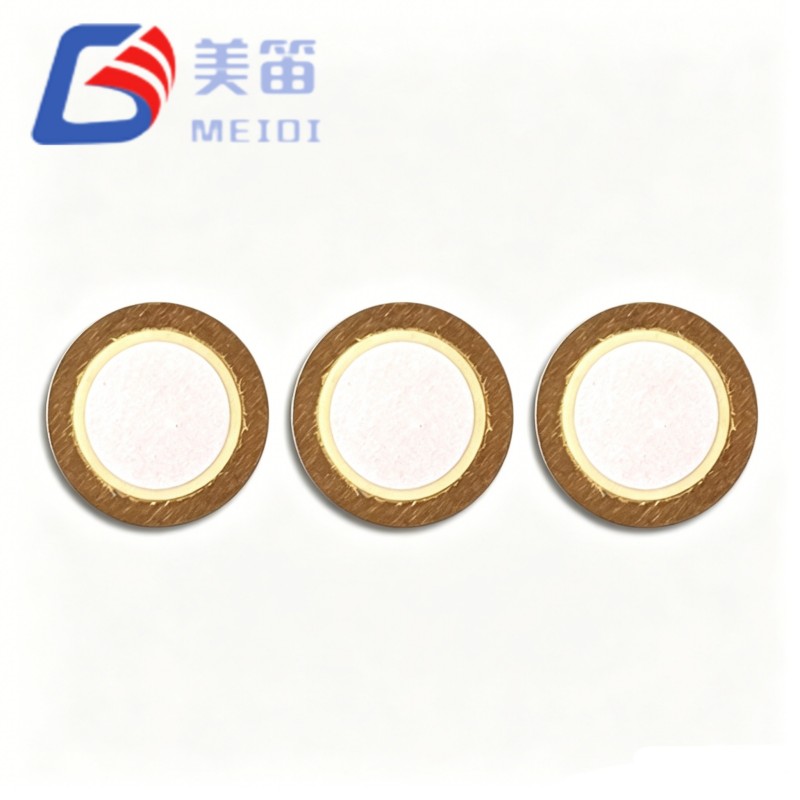
Jiangsu Meidi Intelligent Technology Co., Ltd. has specialized in piezoelectric ceramic manufacturing for over a decade. Our ISO 9001 certified facility operates advanced automated production lines, delivering exceptional consistency and reliability across every batch. A dedicated engineering team provides comprehensive technical assistance from product selection through prototype validation, ensuring your project receives expert guidance at every stage.
Piezo Ceramic Buzzer Elements serve as fundamental sound indication components across a wide range of electronic applications. These compact, cost-effective elements generate clear audible tones when driven by an external oscillation circuit, making them well-suited for DIY projects, greeting cards, toys, household appliances, and small electronic devices.
Manufactured with precision piezoelectric ceramic materials, they deliver consistent acoustic performance with minimal power consumption. Whether used in basic alarm circuits or integrated into custom sound modules, these buzzer elements offer reliable sound output in a thin, lightweight form factor.
Their versatility and ease of integration make them a popular choice for designers seeking simple yet effective audio feedback solutions for various consumer and industrial products. Available in multiple diameters and thicknesses, they support diverse mounting configurations to suit different PCB layouts and enclosure designs.
A buzzer element consists of a thin piezoelectric ceramic disc bonded to a metal substrate — typically brass or nickel alloy. When an alternating voltage at the element's resonant frequency is applied across the disc, the ceramic material expands and contracts, causing the entire assembly to bend and vibrate. This mechanical vibration displaces air around the element, producing an audible tone. The element itself is passive and requires an external oscillation circuit to drive it; the circuit frequency must match the element's natural resonant frequency, usually in the 2–6 kHz range, to achieve the loudest output.
Standard elements are offered in diameters from 12 mm to 50 mm and thicknesses from 0.2 mm to 0.6 mm. Common resonant frequencies range from 2.0 kHz to 6.5 kHz, with sound pressure levels of 75–95 dB measured at 10 cm. Elements can be supplied with or without lead wires, with pre‑tinned solder pads, or with pin terminals for through‑hole PCB mounting. For volume orders, we can adjust the diameter, thickness, resonant frequency, and capacitance to match specific design requirements.
These buzzer elements appear in a wide variety of products that need a simple, low‑power audible indicator:
The production process involves mixing piezoelectric powders, forming the ceramic layers, applying electrodes, and bonding the ceramic to the metal substrate. Each batch undergoes testing for capacitance, impedance, and resonant frequency before release. The ISO 9001 certified process includes inline dimensional checks and sample‑based acoustic verification, ensuring consistent performance across production runs.
Q: What diameters and thicknesses are available for your piezoelectric ceramic buzzer elements?
A: We offer a comprehensive range of standard sizes and can accommodate custom dimensional requirements. Contact our engineering team with your specific PCB layout or enclosure design needs for tailored recommendations.
Q: What is the difference between a passive piezoelectric buzzer element and an active buzzer?
A: A passive piezoelectric element needs an external drive circuit to produce sound — the circuit must generate an alternating signal at the element's resonant frequency. An active buzzer contains a built‑in oscillator and only requires a DC voltage to emit a continuous or pulsed tone.
Q: Can these elements be soldered directly to a PCB?
A: Yes. The metal substrate can be hand‑soldered or reflow‑soldered. We recommend a soldering temperature below 260 °C and a contact time under 3 seconds to avoid thermal depoling of the ceramic material. Pre‑tinned terminals and lead‑wire options are available to simplify the assembly process.
The table below lists all standard specifications of products in this series. Customized solutions are available upon your request; please feel free to contact us for further customization requirements.
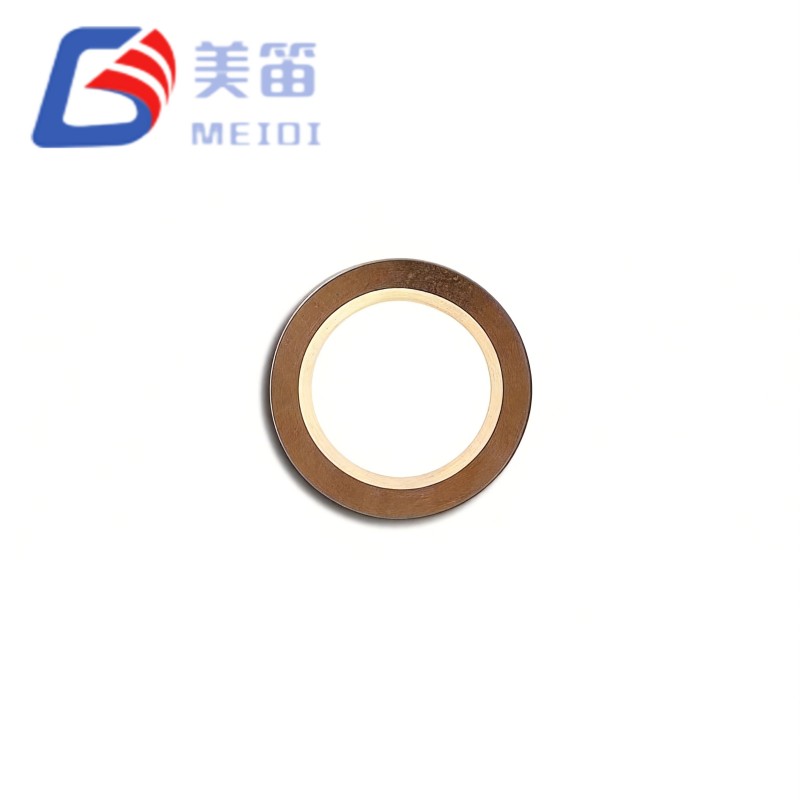
| Model | Product Image | Resonant Frequency (kHz) | Free Capacitance (pF) | Equivalent Resistance (Ω) | Dielectric Loss (tan δ) | Operating Temperature (°C) | Substrate Material | Dimensions (mm) |
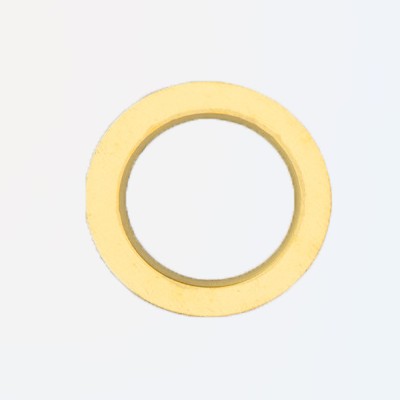
| FT-11T-7.8A1 |
|
7.8±1.0 | 12000±30% (at 120Hz) | ≤500 | ≤5% | -20~+70 | Brass | Ø11.0×0.18 |
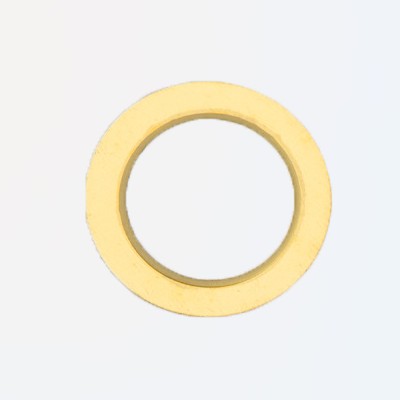
| FT-11T-9.0A1 |
|
9.0±1.0 | 12000±30% (at 120Hz) | ≤500 | ≤5% | -20~+70 | Brass | Ø11.0×0.18 |
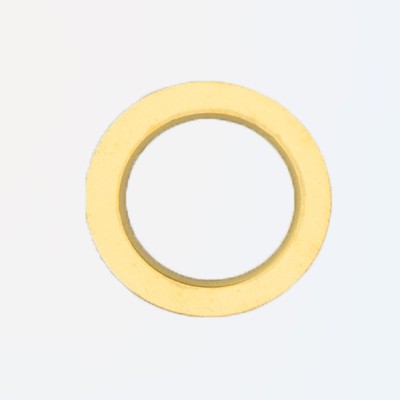
| FT-12.5T-7.8A1 |
|
7.8±0.8 | 12000±30% (at 120Hz) | ≤300 | ≤5% | -20~+70 | Brass | Ø12.5×0.19 |
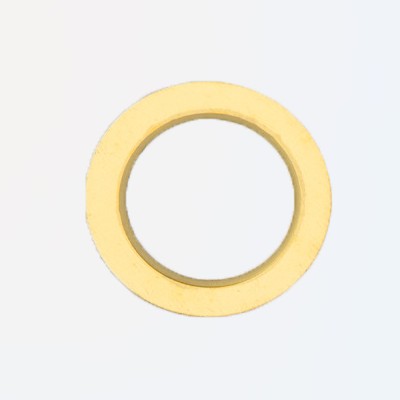
| FT-12T-8.0A1 |
|
8.0±1.0 | 17000±30% (at 120Hz) | ≤300 | ≤5% | -20~+70 | Brass | Ø12.0×0.18 |
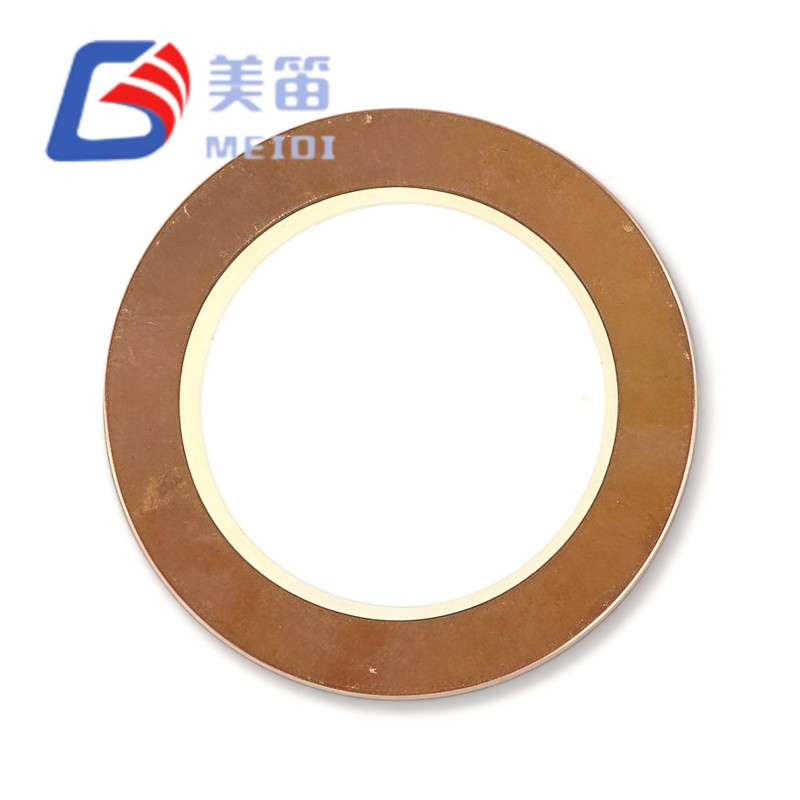
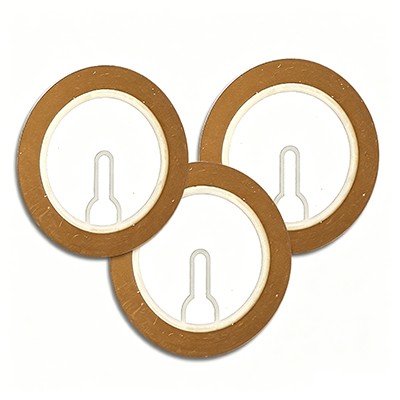
| FT-27T-4.0B1-C25 |
|
4.0±0.5 | 25000/2600±30% (at 120Hz) | ≤500 | ≤5% | -20~+70 | Brass | Ø27.0×0.44 |
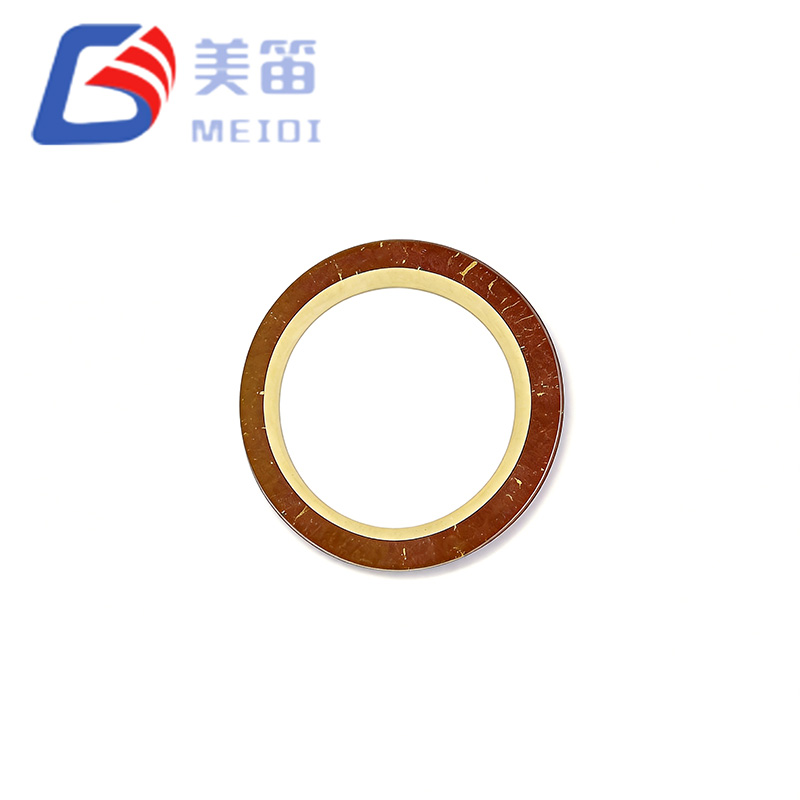
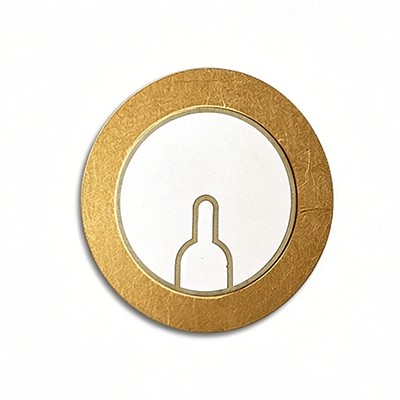
| FT-35T-2.9B1-C30 |
|
2.9±0.5 | 30000/3300±30% (at 120Hz) | ≤500 | ≤5% | -20~+70 | Brass | Ø35.0×0.55 |
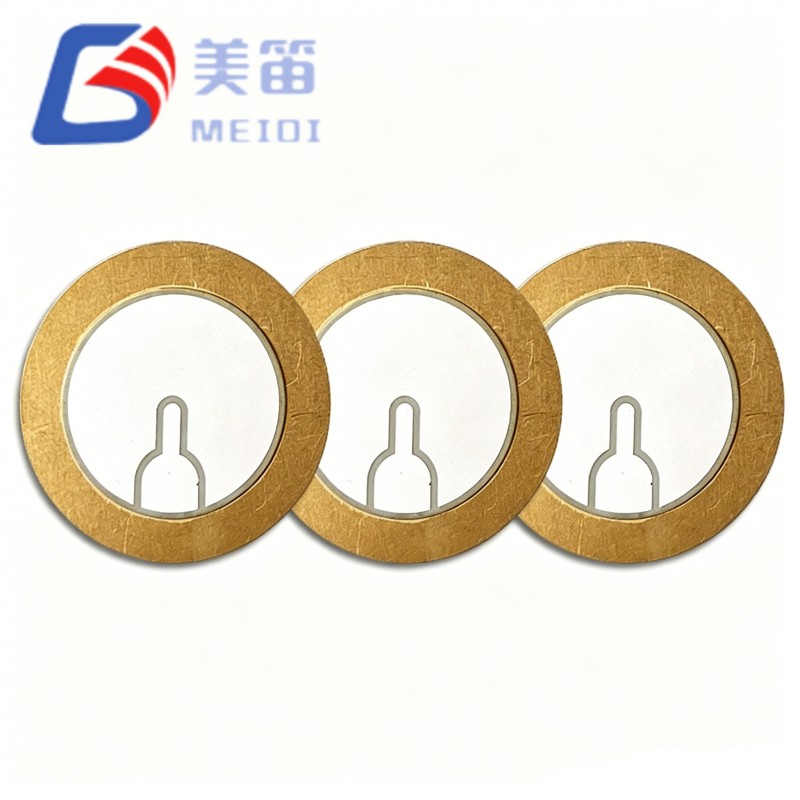
Resonant frequency: 2.9 ± 0.5 kHz.
Free capacitance: 30,000 / 3,300 pF ± 30% at 120 Hz.
Equivalent resistance: ≤ 500 Ω.
Dielectric loss: ≤ 5%.
Operating temperature: -20 °C to +70 °C.
Storage temperature: -30 °C to +80 °C.
Dimensions: T 0.55 ± 0.04 mm, T1 0.30 ± 0.02 mm, D1 35.0 +0/-0.1 mm, D2 25.0 ± 0.3 mm.
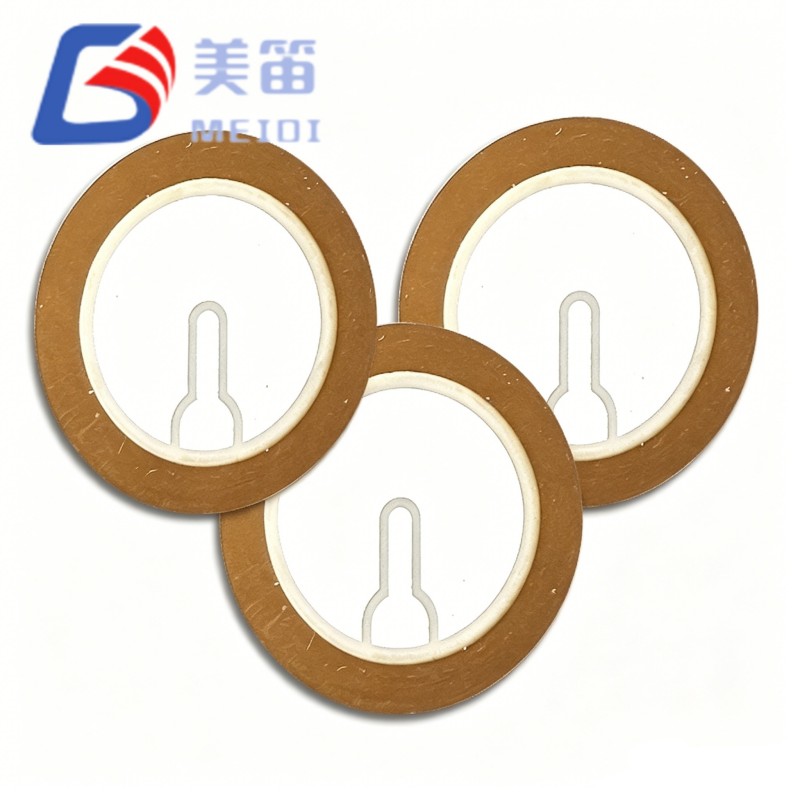
Resonant frequency: 4.0 ± 0.5 kHz.
Free capacitance: 25,000 / 2,600 pF ± 30% at 120 Hz.
Equivalent resistance: ≤ 500 Ω.
Dielectric loss: ≤ 5%. Operating temperature: -20 °C to +70 °C.
Storage temperature: -30 °C to +80 °C.
Dimensions: T 0.44 ± 0.04 mm, T1 0.20 ± 0.02 mm, D1 27.0 +0/-0.1 mm, D2 20.0 ± 0.3 mm.
Contact MEIDI for bulk pricing, free evaluation samples, or a custom configuration quote.