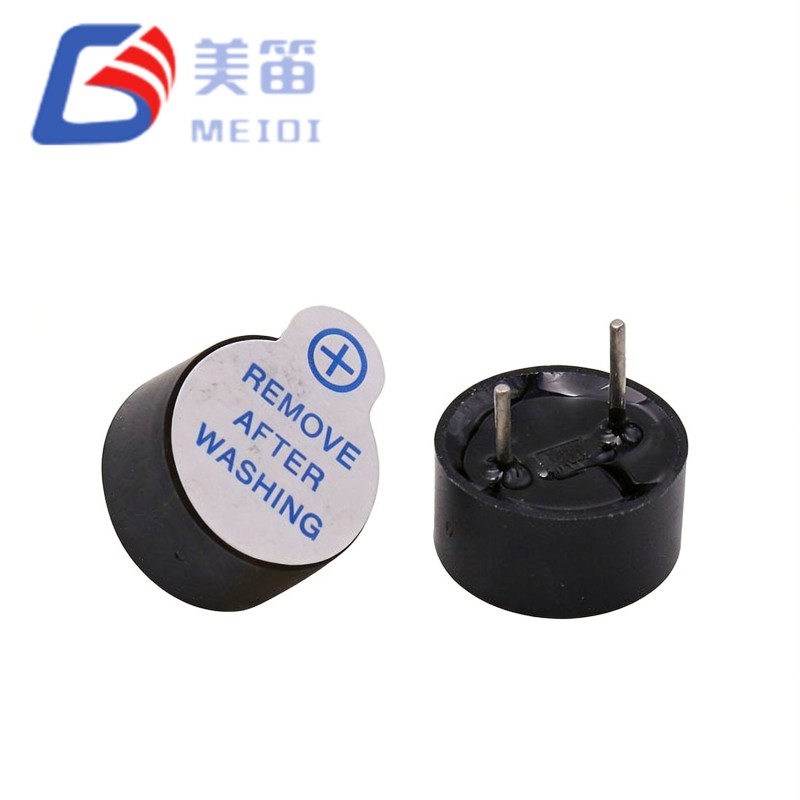
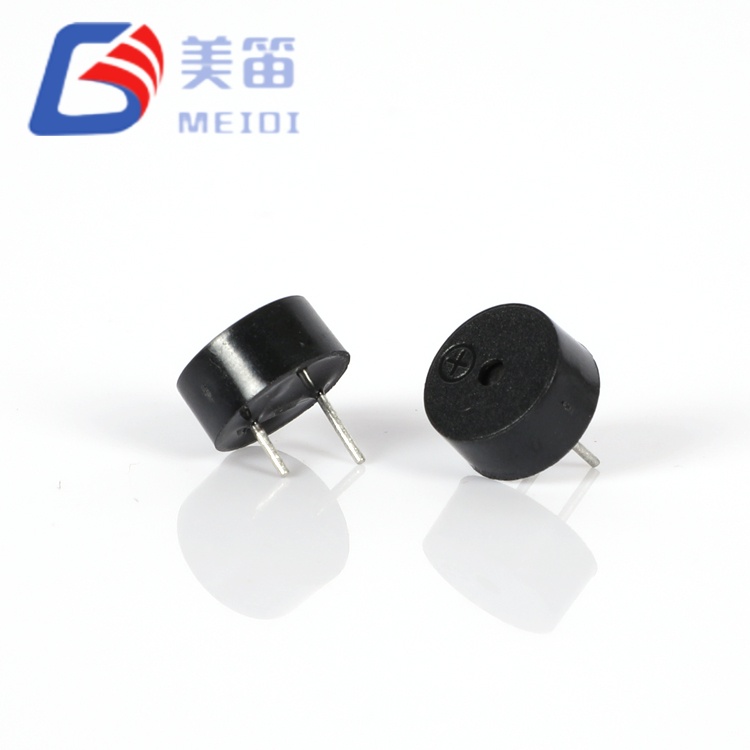
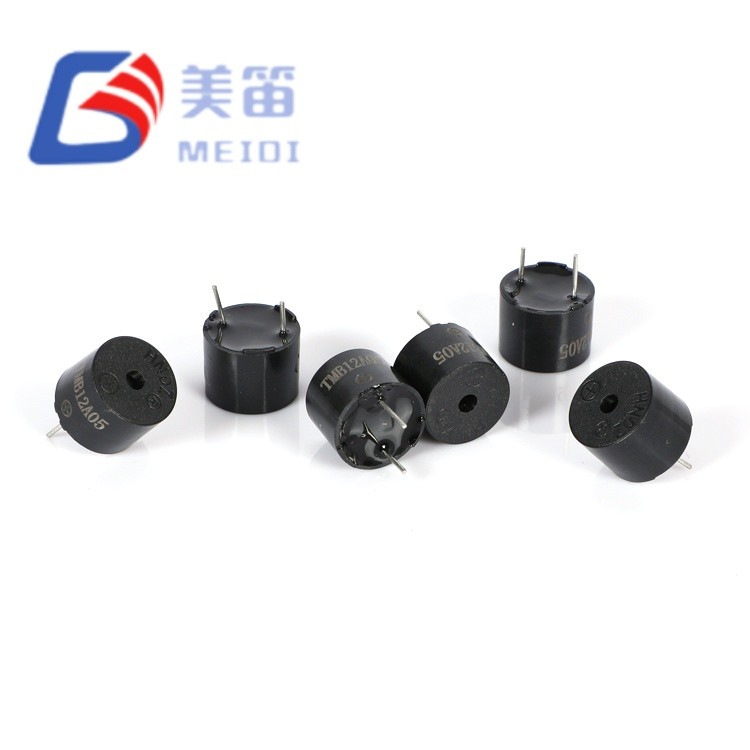
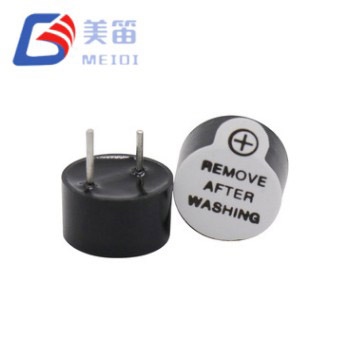
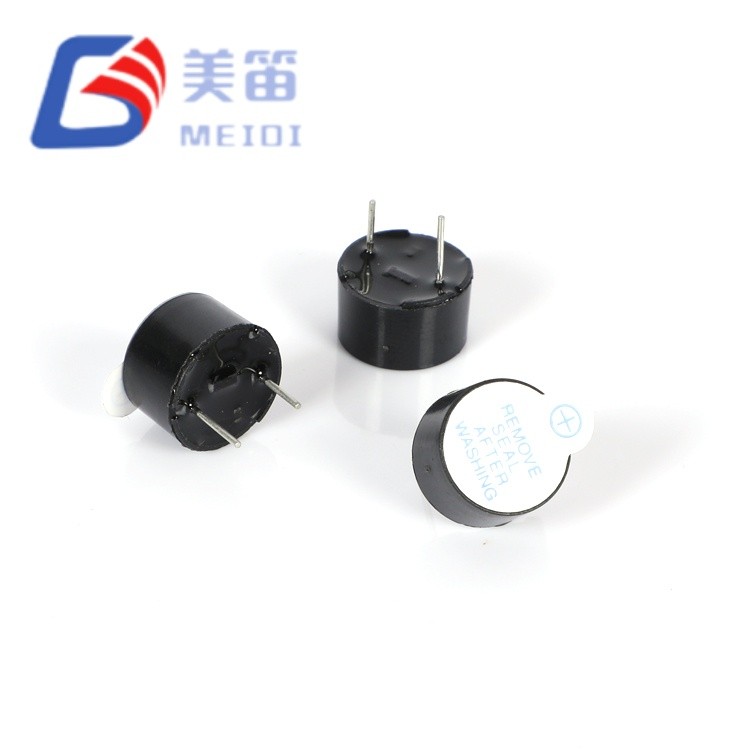
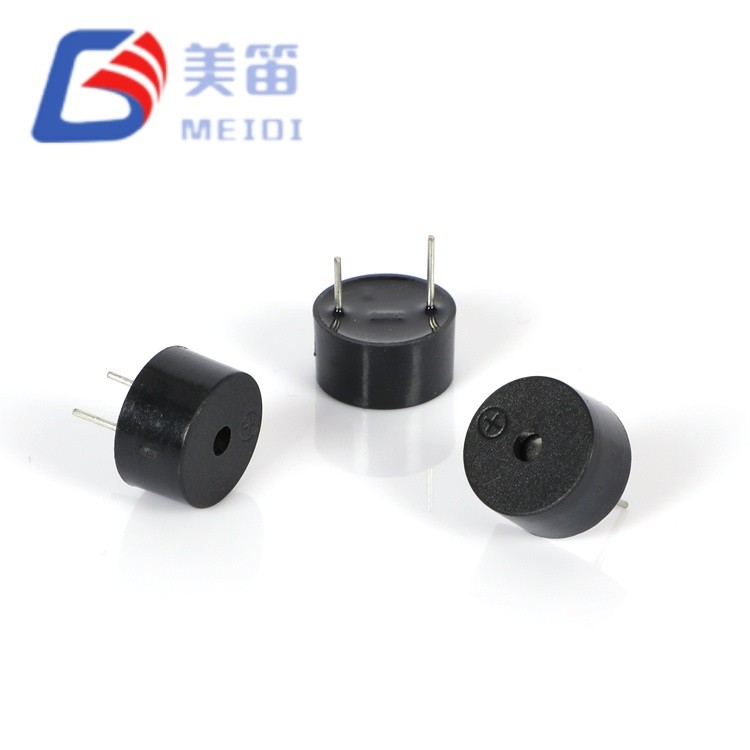
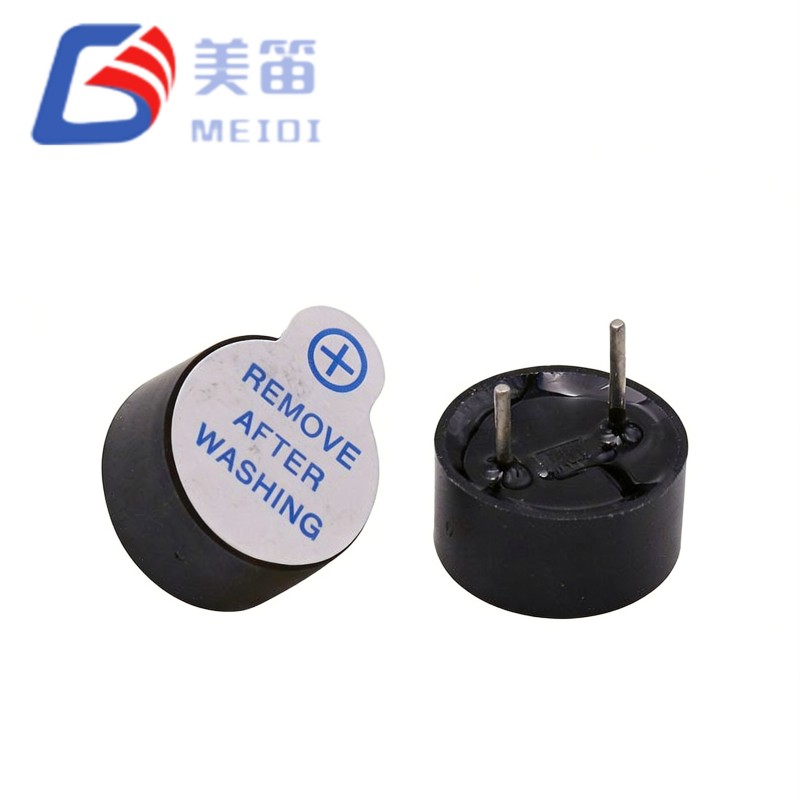
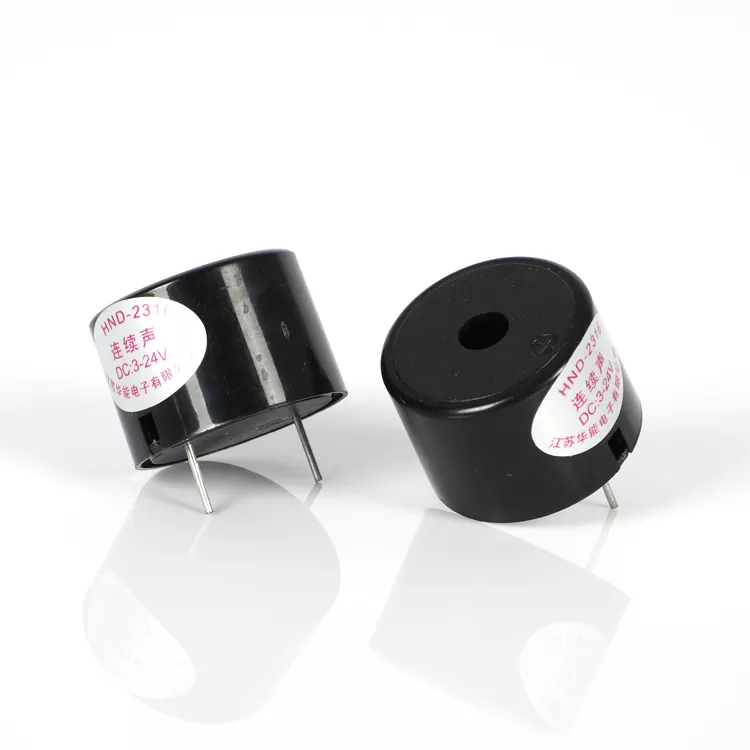
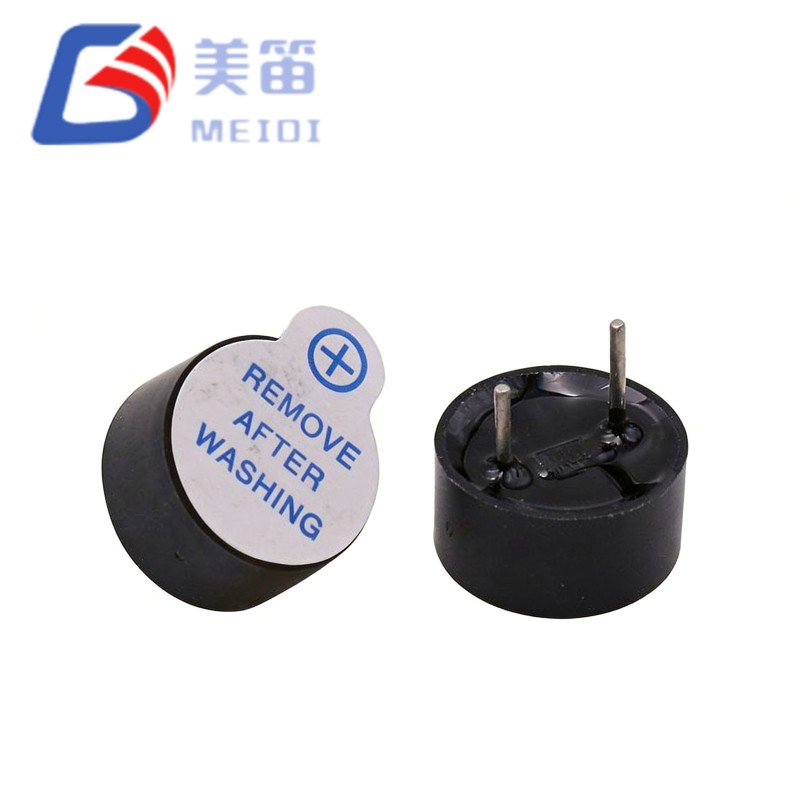
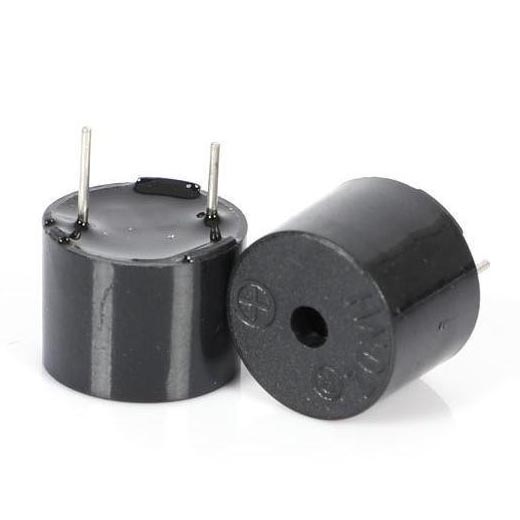
A magnetic active buzzer packages a coil, a permanent magnet, a ferromagnetic diaphragm, and an oscillator circuit into a single self‑contained unit. When a DC voltage within its rated range is applied, the onboard electronics automatically interrupt the coil current at the mechanical resonant frequency, causing the diaphragm to vibrate and emit a steady tone. No external signal generator, microcontroller PWM output, or additional driver stage is required. This plug‑and‑sound behaviour makes the magnetic active buzzer a frequent choice for equipment where a fixed‑frequency alert is all that is needed and circuit simplicity is a priority.
The built‑in oscillator is tuned to the resonant point of the diaphragm and coil assembly, which typically lies between 200 Hz and 3 kHz. Because the switching happens on the buzzer itself, the host system only needs to provide a clean DC supply. This eliminates the need for a timer peripheral on the microcontroller and reduces firmware complexity. By comparison, a Magnetic Passive Buzzer requires an external square wave or PWM signal at the resonant frequency to generate sound, giving the designer control over pitch and volume but at the cost of extra drive circuitry. In situations where the same DC rail already powers other logic, an active buzzer can be connected directly, sometimes with only a series resistor for current limiting.
Magnetic active buzzers are manufactured for nominal voltages such as 1.5 V, 3 V, 5 V, 12 V, and 24 V DC. The rated voltage determines the coil impedance and the resulting sound pressure level, which commonly falls between 80 dB and 100 dB at 10 cm. Current draw is typically in the range of 10 mA to 50 mA, with higher current generally corresponding to louder output. The resonant frequency is fixed by the mechanical design and cannot be changed in the field, though multiple tone‑pattern variants (continuous, pulsed, or alternating) can be specified at the time of order. For applications that require a surface‑mount footprint, an SMD Magnetic Active Buzzer offers the same self‑oscillating behaviour in a reflow‑compatible package.
These buzzers appear across a wide range of products that need a reliable, low‑cost audible indicator. Household appliances such as air conditioners, microwave ovens, and washing machines use them for key‑press feedback and cycle‑end alerts. Security alarm panels and smoke detectors depend on their loud, direct tone to signal danger. In the automotive environment, door‑open warnings and seatbelt reminders often employ magnetic active buzzers because they can operate directly from a 12 V battery rail without additional signal conditioning. Industrial equipment, including power supplies and programmable logic controllers, also integrates these components to provide local fault indication.
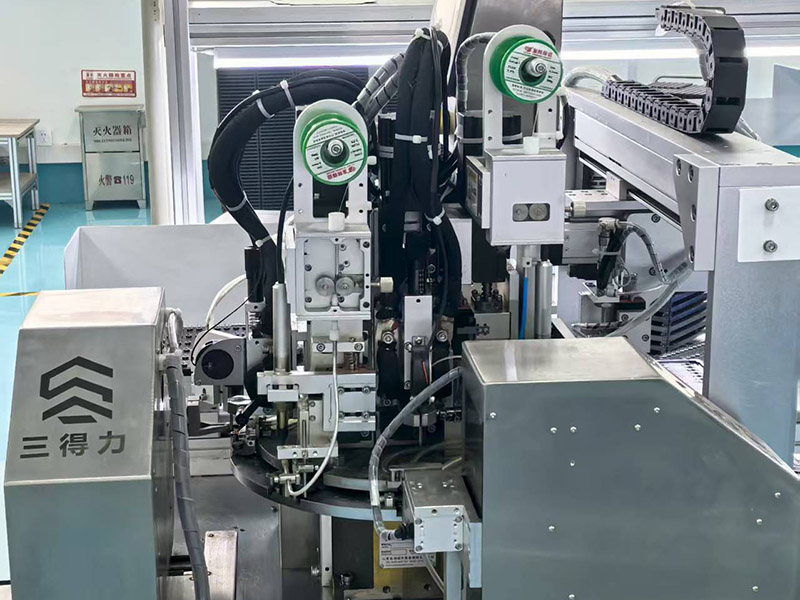
MEIDI manufactures magnetic active buzzers on dedicated assembly lines that combine automated coil winding, magnet insertion, diaphragm welding, and oscillator PCB attachment. Every unit passes an end‑of‑line acoustic check that records sound pressure level, resonant frequency, and current consumption, with the data retained for batch traceability. The ISO 9001 quality system also requires periodic sampling for temperature cycling, humidity resistance, and solder heat durability, ensuring consistent field performance across production volumes. For customers who need a custom tone pattern, a different lead length, or a specific coil impedance, the engineering team can adjust the design and provide characterisation samples before the main production run.
Can I change the frequency of a magnetic active buzzer after it is built?
No. The resonant frequency is mechanically determined by the diaphragm and coil assembly and cannot be adjusted externally. If a variable‑frequency output is required, a Magnetic Passive Buzzer driven by a microcontroller PWM signal would be a more suitable choice.
Does a magnetic active buzzer work with a fluctuating DC supply?
The internal oscillator expects a relatively stable DC voltage within the specified operating range. Large voltage swings, ripple, or reverse polarity can cause erratic operation or permanent damage. A simple decoupling capacitor and a series diode for reverse‑polarity protection are common additions to the power input.
What is the difference between a magnetic active buzzer and an active piezoelectric buzzer?
Both are self‑oscillating and require only a DC supply, but they use different transducer technologies. A magnetic active buzzer produces a lower‑frequency, warmer tone and can operate from very low voltages. An Active Piezoelectric Buzzer generates a higher‑pitched, sharper sound and typically draws less current. The choice depends on the desired tone character, power budget, and enclosure acoustics.
The table below lists all standard specifications of products in this series. Customized solutions are available upon your request; please feel free to contact us for further customization requirements.
| Model | Product Image | Rated Voltage (VDC) | Operating Voltage (VDC) | Sound Pressure Level @10cm (dB) | Operating Current (mA) | Resonant Frequency (Hz) | Operating Temperature (℃) | Weight (g) | Dimensions (mm) |
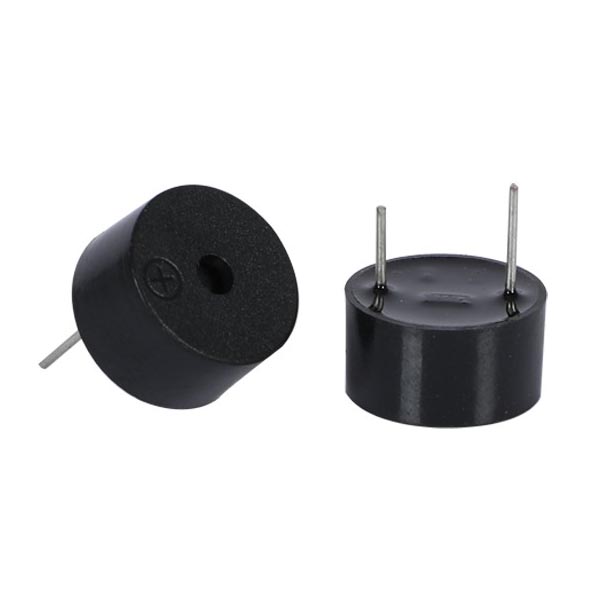
| HMB1206-03 |
|
3 | 2~5 | ≥85 | ≤30 | 2700±300 | -20~+70 | 1.7 | Ø12.0×6.5 |
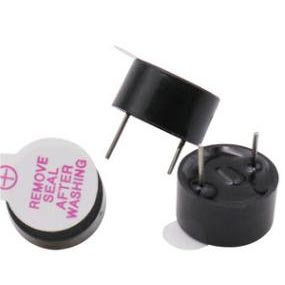
| HMB1206-05 |
|
5 | 3~7 | ≥85 | ≤30 | 2700±300 | -20~+70 | 1.7 | Ø12.0×6.5 |
| HMB1206-12 |
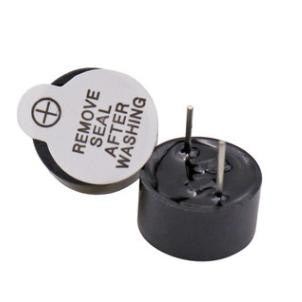
|
12 | 8~16 | ≥85 | ≤30 | 2700±300 | -20~+70 | 1.7 | Ø12.0×7.5 |
| HMB1275-03B |

|
3 | 2~5 | ≥85 | ≤30 | 2700±300 | -20~+70 | 1.7 | Ø12.0×7.5 |
| HMB1275-05B 65 |
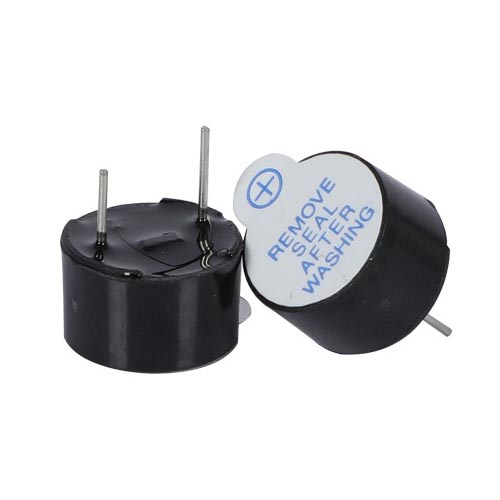
|
5 | 3~7 | ≥83 | ≤30 | 2700±300 | -20~+70 | 1.7 | Ø12.0×7.5 |
| HMB1275-05B 95 |
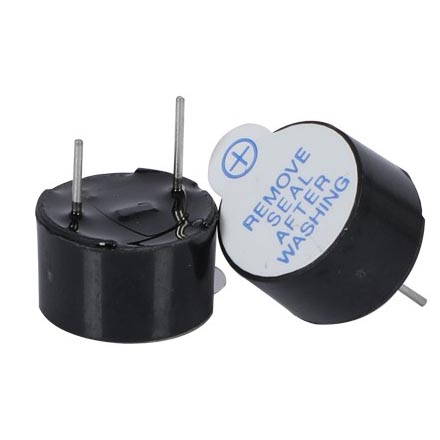
|
5 | 3~7 | ≥85 | ≤30 | 2700±300 | -20~+70 | 1.7 | Ø12.0×7.5 |
| HMB1275-05C |
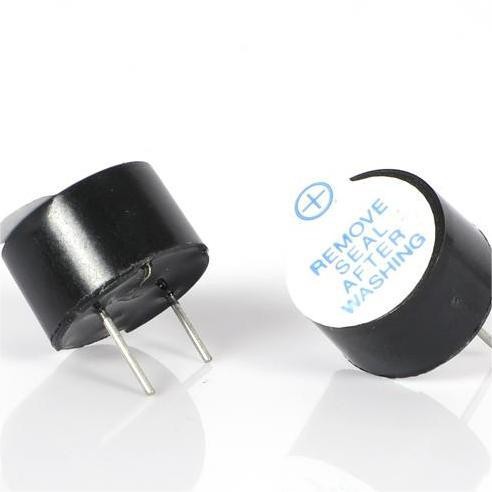
|
5 | 3~7 | ≥85 | ≤30 | 2700±300 | -20~+70 | 1.7 | Ø12.0×7.5 |
| HMB1275-12C |
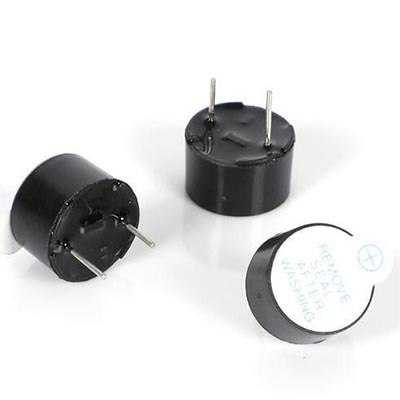
|
12 | 8~16 | ≥85 | ≤30 | 2700±300 | -20~+70 | 1.7 | Ø12.0×7.5 |
| HMB1275-24B |
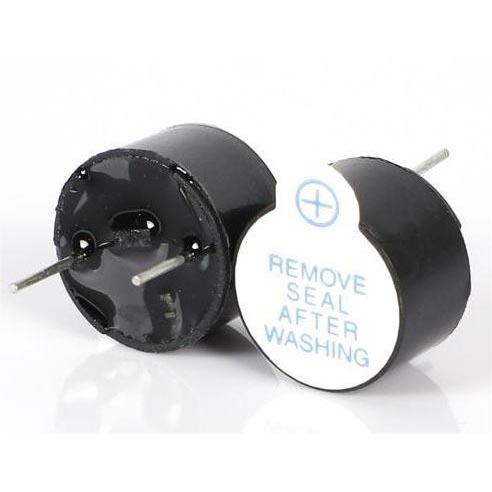
|
24 | 18~26 | ≥90 | ≤30 | 2400±300 | -20~+70 | 1.7 | Ø12.0×7.5 |
| HNB09A12 |
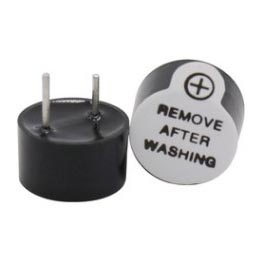
|
12 | 8~16 | ≥85 | ≤30 | 2700±300 | -20~+70 | 0.75 | Ø9.0×5.5 |
| HNT-9042-03 |
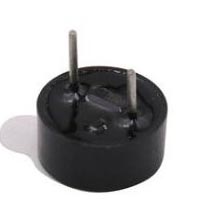
|
3 | 1.5~4.5 | ≥85 | ≤30 | 2700±300 | -20~+70 | 0.71 | Ø9.0×4.2 |
| HNT-9042-05 |
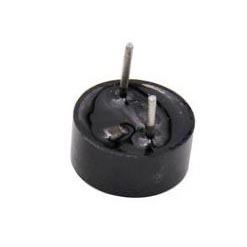
|
5 | 3~7 | ≥85 | ≤30 | 2700±300 | -20~+70 | 0.71 | Ø9.0×4.2 |
| HNT-9042-12 |
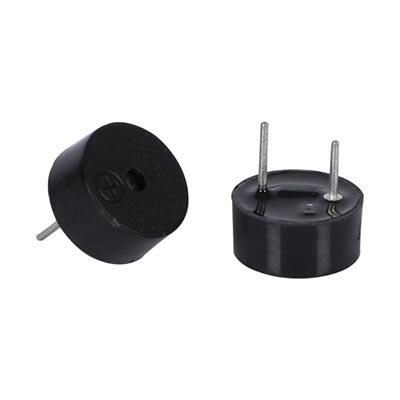
|
12 | 8~16 | ≥85 | ≤30 | 2700±300 | -20~+70 | 0.71 | Ø9.0×4.2 |
| HNT-9650-03 |
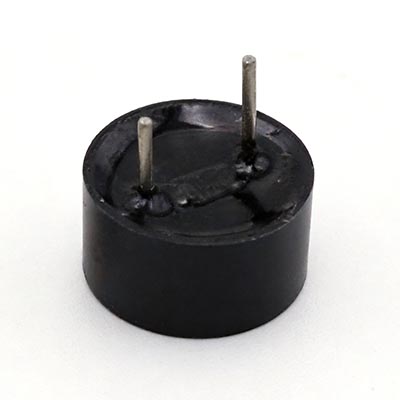
|
3 | 1.5~4.5 | ≥85 | ≤30 | 2700±300 | -20~+70 | 0.78 | Ø9.6×5.0 |
| HNT-9650-05 |
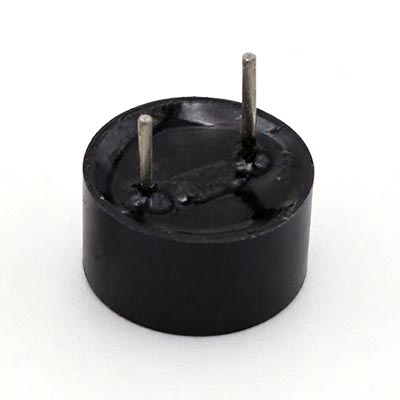
|
5 | 3~7 | ≥85 | ≤30 | 2700±300 | -20~+70 | 0.78 | Ø9.6×5.5 |
| HNT-9650-12 |
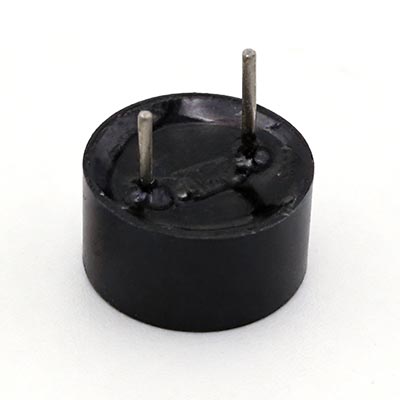
|
12 | 8~16 | ≥85 | ≤30 | 2700±300 | -20~+70 | 0.78 | Ø9.6×5.0 |
| TMB12A03 |
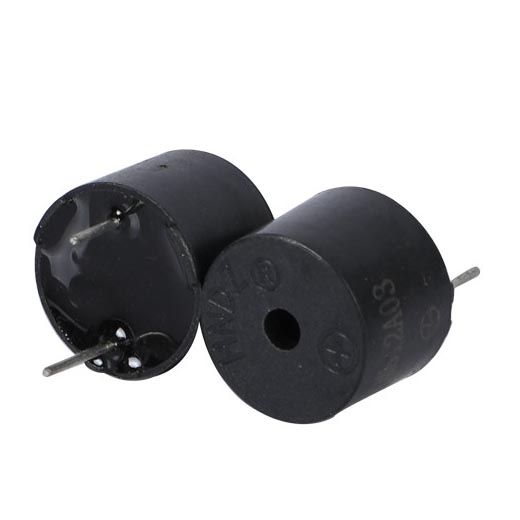
|
3 | 2~5 | ≥85 | ≤30 | 2400±300 | -20~+70 | 1.7 | Ø12.0×9.5 |
| TMB12A05 |
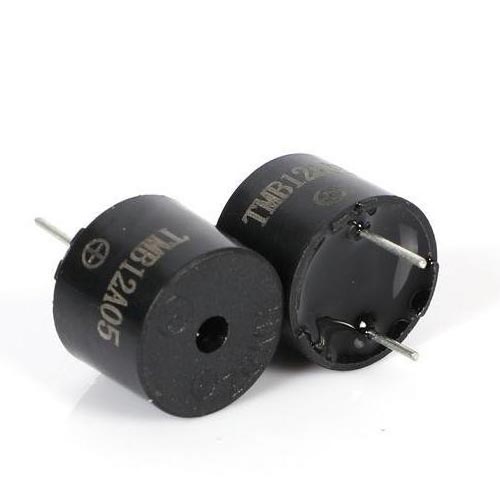
|
5 | 3~7 | ≥85 | ≤30 | 2400±300 | -20~+70 | 1.7 | Ø12.0×9.5 |
| TMB12A12 |
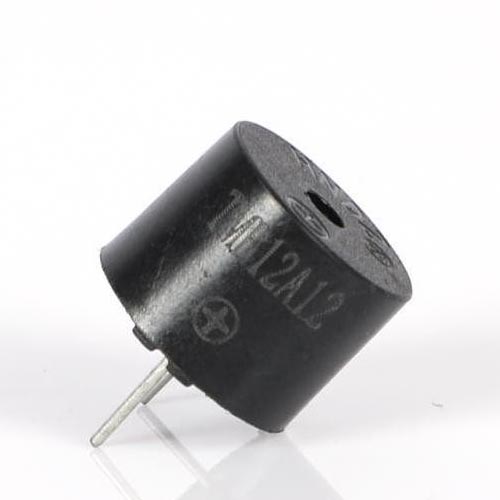
|
12 | 8~16 | ≥88 | ≤30 | 2700±300 | -20~+70 | 1.7 | Ø12.0×9.5 |
| TMB12A24 |
|
24 | 18~26 | ≥90 | ≤30 | 2400±300 | -20~+70 | 1.7 | Ø12.0×9.5 |