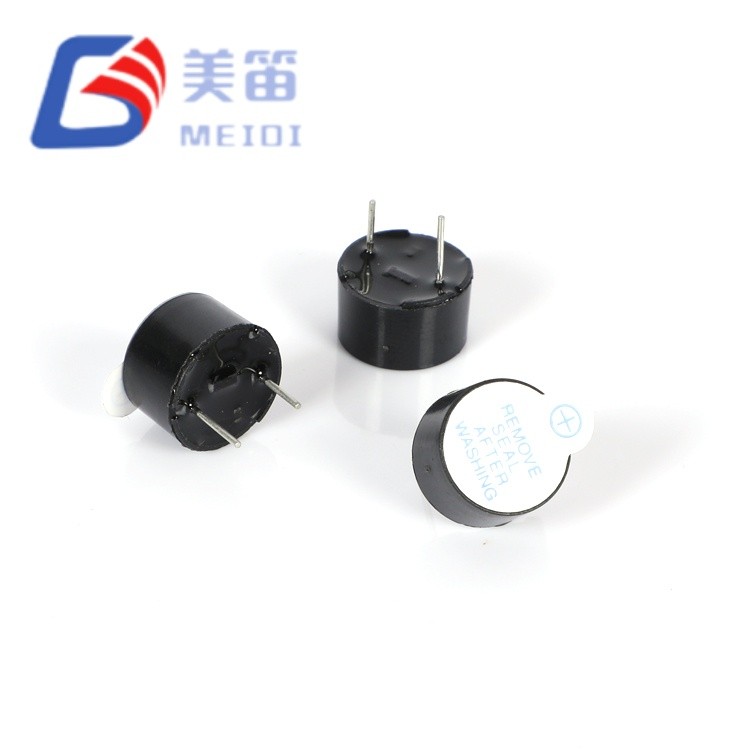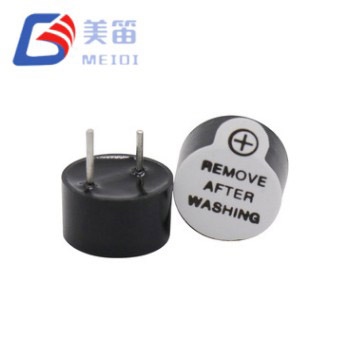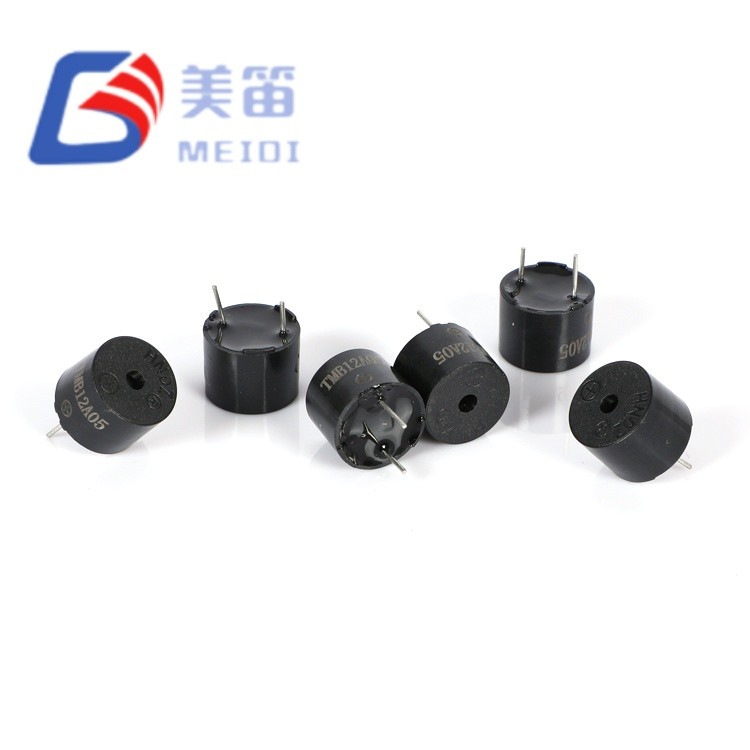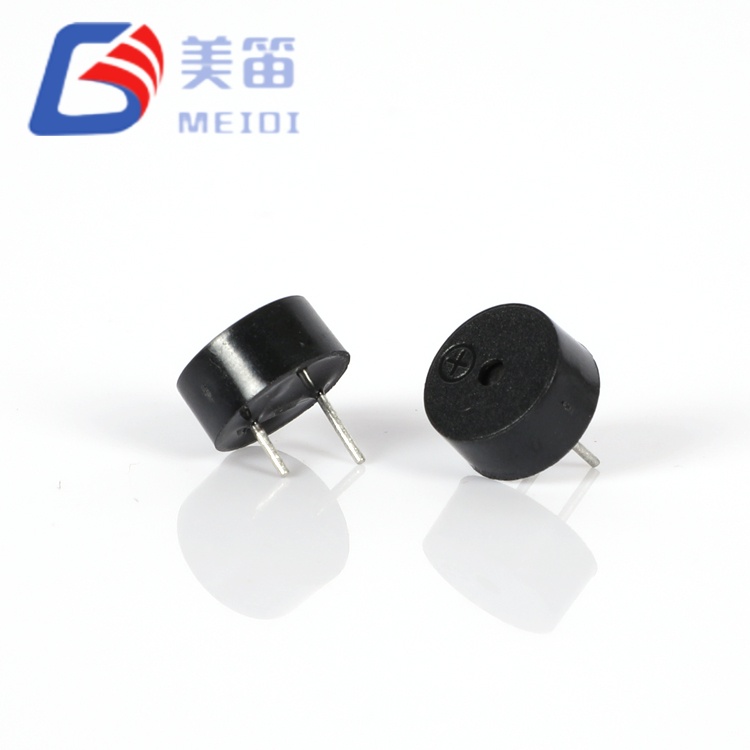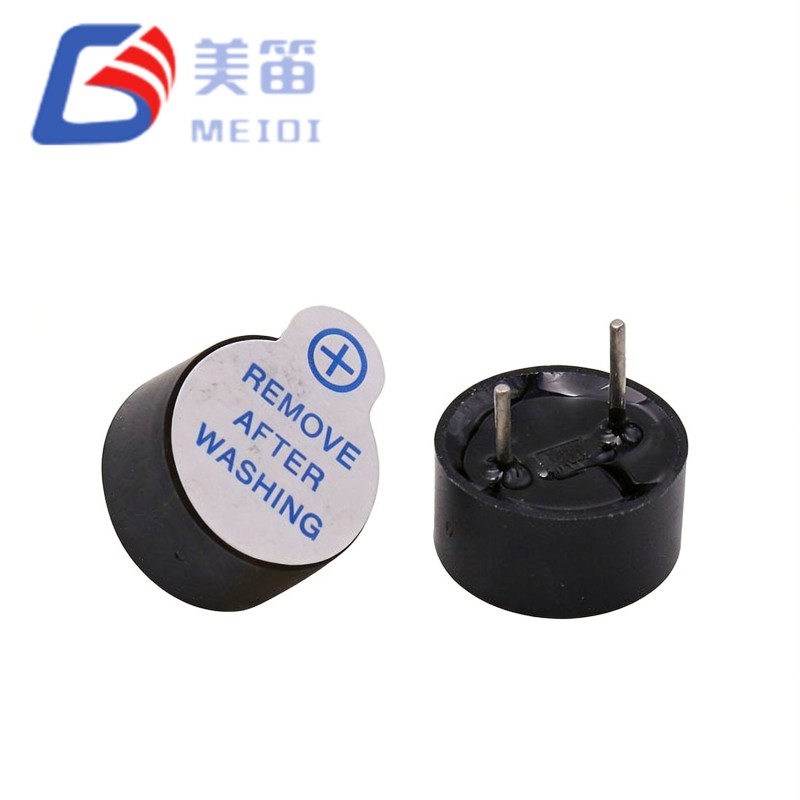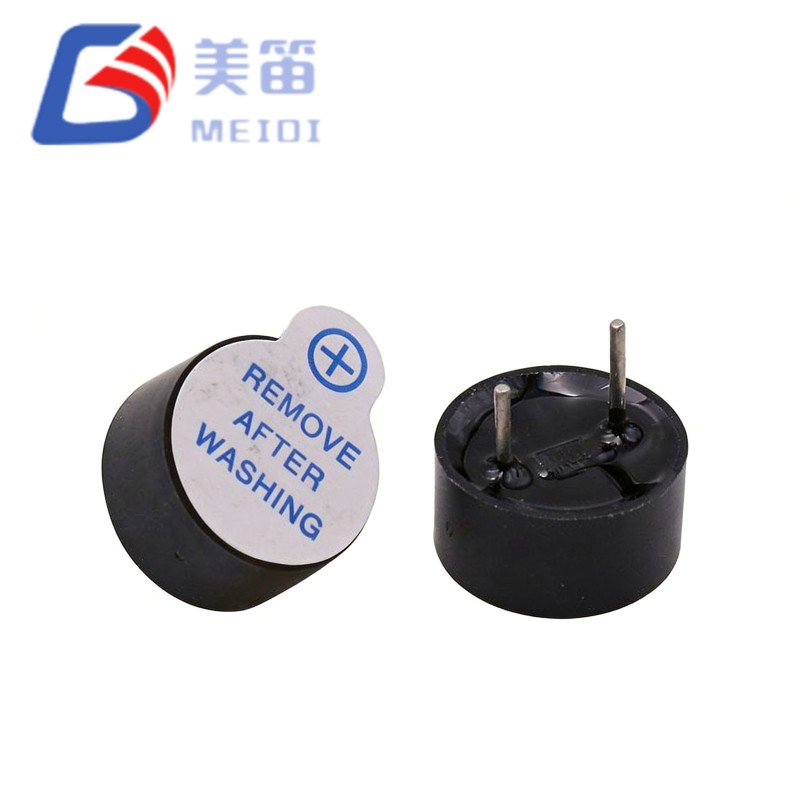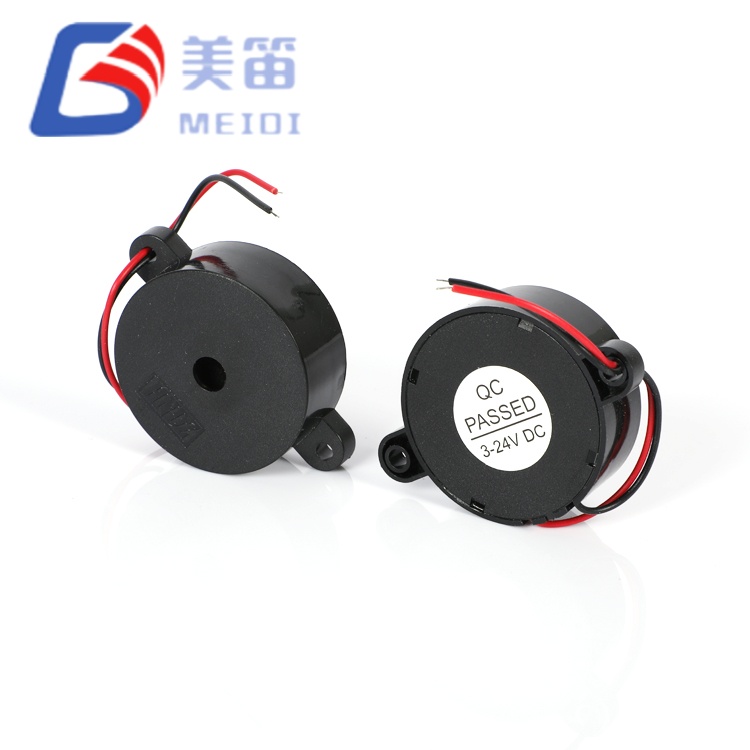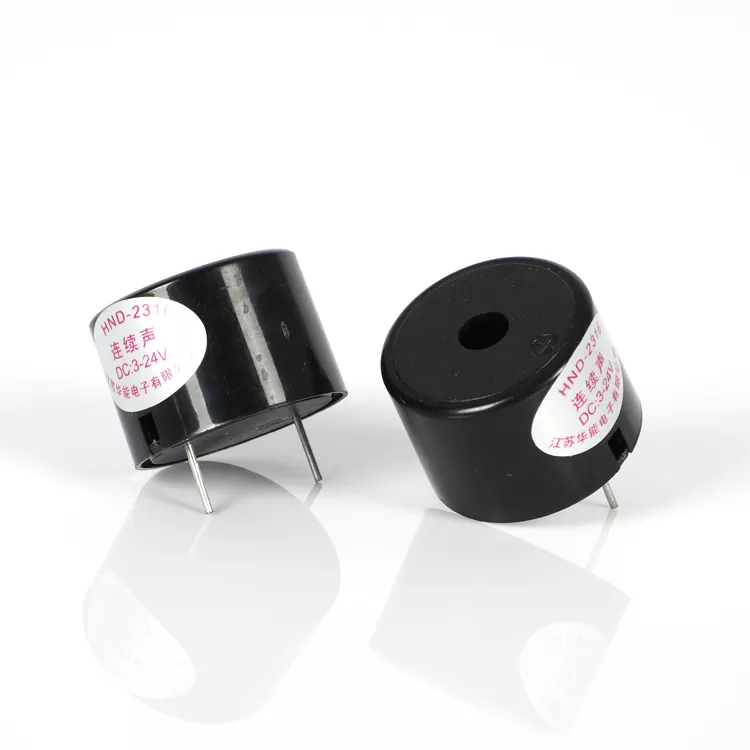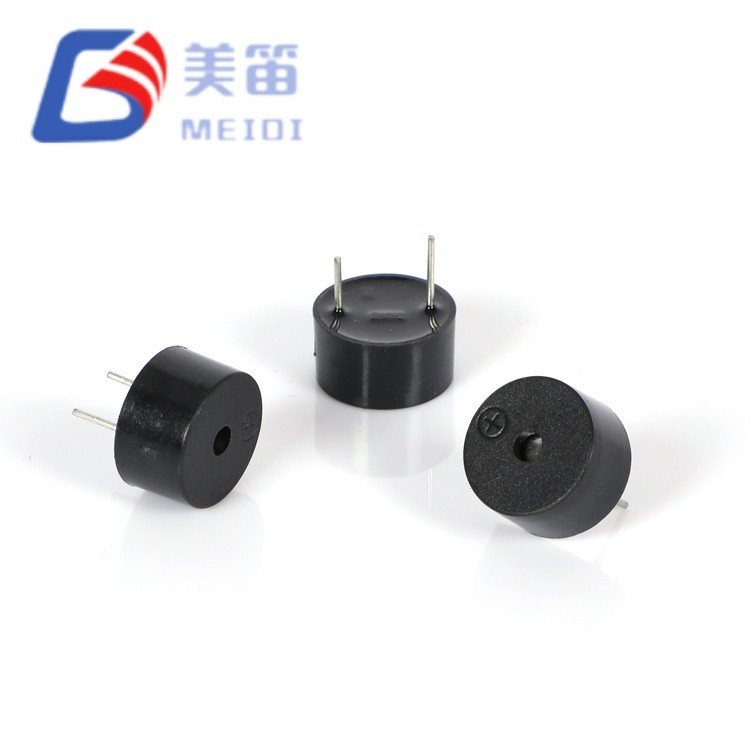
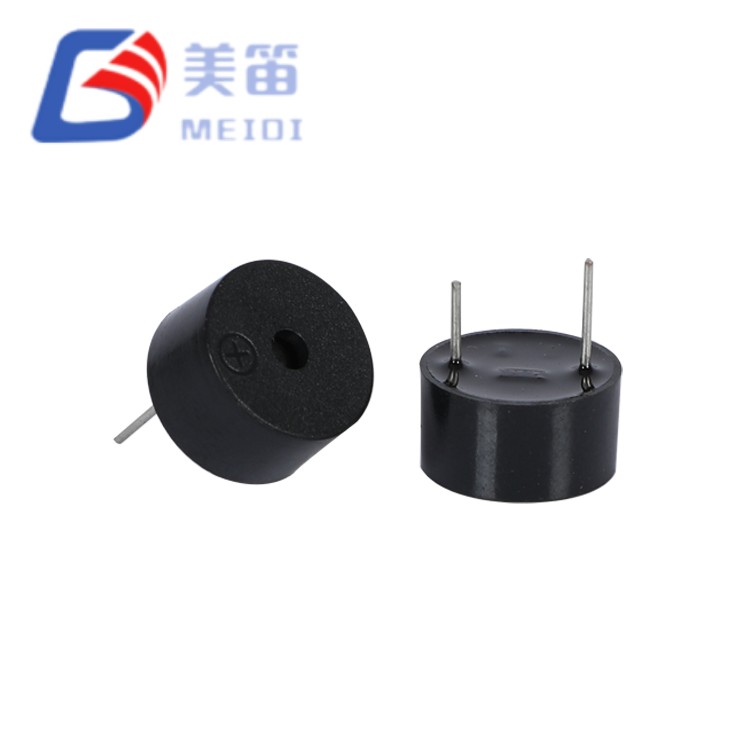
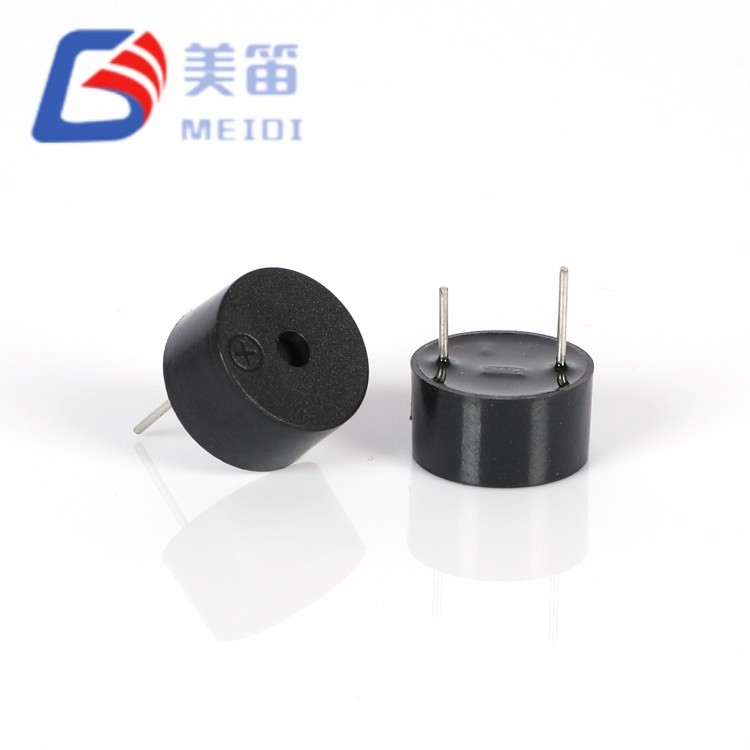
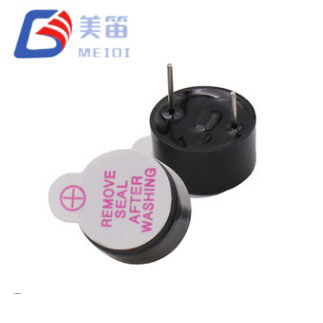
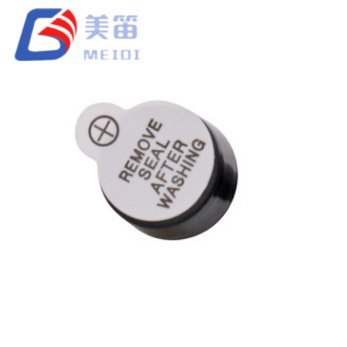
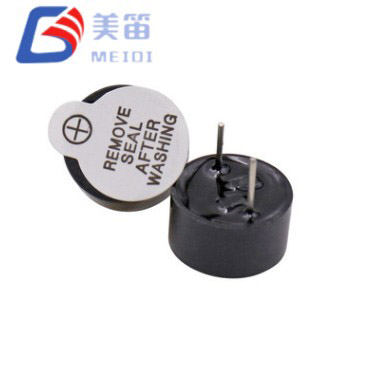
Designed for industrial control, machinery alarm, and rugged electronic systems, this through-hole active buzzer delivers a penetrating ≥85 dB alert tone at 2700 Hz with a built‑in oscillator. Its 2‑5 V wide‑voltage compatibility supports direct DC drive from 3.3 V logic rails, Li‑ion batteries, and 5 V tolerant systems without external PWM or driver transistors.
Manufactured by MEIDI in our Jiangsu facility, the HMB1206‑03 benefits from more than a decade of electromagnetic buzzer engineering expertise. Each unit undergoes 100% automated acoustic and electrical testing, ensuring consistent performance across high‑volume production. The black PBT housing withstands wave soldering peaks up to 255 °C and continuous operation from ‑20 °C to +70 °C, making it a reliable choice for factory automation, power distribution, and heavy equipment applications.
The 3V Electromagnetic Buzzer PCB Mount is engineered for industrial control panels, machinery alarm systems, and ruggedized electronics where through-hole mounting provides superior mechanical stability compared to surface-mount alternatives. The integrated oscillator circuit generates a fixed 2700 Hz tone at ≥85 dB upon DC application within 2–5 V, eliminating the need for external drive components in electrically noisy environments.
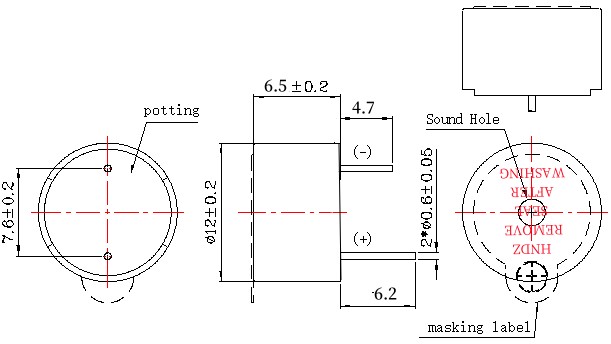
The 12.0 mm diameter with 6.5 mm height occupies a mid-size through-hole footprint that balances acoustic output with PCB density constraints. This 3V through-hole electromagnetic active buzzer is particularly suited for legacy equipment refurbishment where 12 mm buzzer cutouts and hole patterns are already established, as well as new designs in heavy industrial, transportation, and outdoor installations where long-term mechanical reliability is non-negotiable.
Unlike passive buzzers that require external PWM generation and driver circuitry, the HMB1206-03’s self-oscillating design frees microcontroller timer resources and reduces firmware complexity. The 2 V minimum operating voltage supports low-battery warning scenarios where supply voltage has sagged below nominal, while the 5 V maximum accommodates systems with relaxed regulator tolerance or transient overvoltage conditions.
The through-hole construction ensures secure PCB retention under sustained vibration, shock, and thermal expansion. The black PBT housing resists deformation during wave soldering and maintains dimensional stability across the full operating range. At 1.7 g, the mass contributes to mechanical damping that reduces microphonic effects under vibration conditions common in industrial machinery.
Vibration-resistant through-hole mounting — secure mechanical anchor on 1.6–2.0 mm FR4 PCBs, lead forming absorbs thermal expansion and mechanical shock
Built-in oscillator with wide voltage tolerance — operates from 2–5 V without frequency drift; stable 2700 Hz output across battery discharge curves
Low-current direct drive — ≤30 mA at 3 V enables MCU GPIO direct connection in many applications, eliminating external transistor or driver IC
High-temperature PBT housing — rated for 255 °C wave soldering peak and 360 °C manual soldering; no deformation or acoustic degradation
Penetrating low-frequency tone — 2700 Hz optimized for human hearing sensitivity while avoiding the 4 kHz noise band where industrial equipment concentrates interference
Polarized pin configuration — prevents reverse-voltage installation errors; compatible with standard polarized connectors and keyed headers
| Parameter | Value | Notes |
| Rated Voltage | 3 V (DC) | Nominal operating point |
| Operating Voltage | 2 – 5 V (DC) | Continuous functional range |
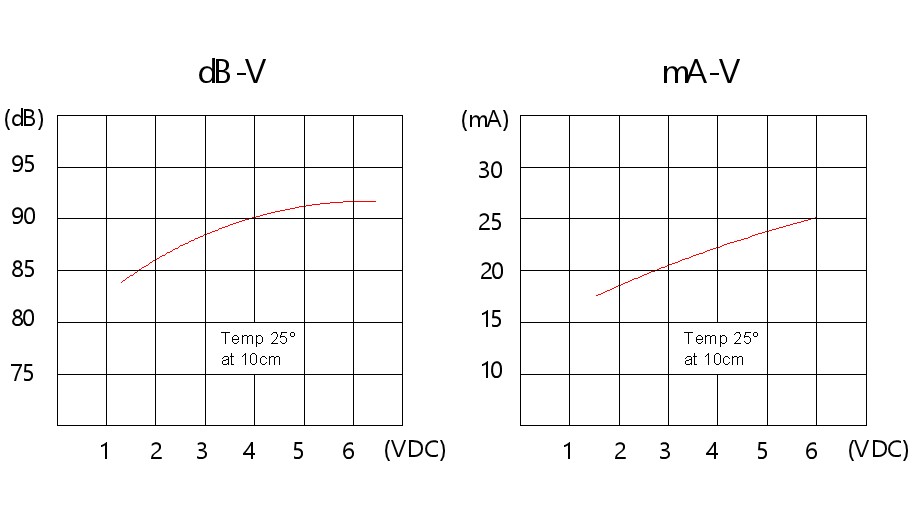
| Sound Output at 10 cm | ≥ 85 dB | At 3 V, free field |
| Resonant Frequency | 2700 ± 300 Hz | Fixed by internal oscillator |
| Operating Current | ≤ 30 mA | At 3 V |
| Operating Temperature | -20 ℃ ~ +70 ℃ | Continuous |
| Storage Temperature | -30 ℃ ~ +80 ℃ | Non-operating |
| Dimension (Dia × H) | 12.0 × 6.5 mm | Body only |
| Weight | 1.7 g | Typical |
| Housing Material | Black PBT | UL94 V-0 rated |
| Mounting Type | Through-hole | Wave / manual soldering |
| Soldering Temperature (Wave) | 255 ± 15 ℃ | 4–6 seconds, recommended |
| Soldering Temperature (Manual) | 360 ± 10 ℃ | 2–5 seconds, recommended |
| Soldering Temperature (Reflow) | 245 ± 15 ℃ | 180 ℃ preheat 40–70 s; 245 ℃ 3 s; max 3 passes |
| Environmental Stress | SMD Vulnerability | Through-Hole Advantage |
| Mechanical vibration | Solder joint fatigue, component detachment under sustained 5G+ vibration | Lead forms mechanical anchor through PCB, distributes stress across board thickness |
| Thermal cycling | CTE mismatch between ceramic substrate and FR4 causes microcracking | Compliant lead absorbs differential thermal expansion between component and board |
| Repair and field service | Desoldering risks pad damage, trace lifting, and layer delamination | Single-point removal with minimal board trauma; through-hole pads are mechanically robust |
| High-current transients | Current concentrated in small solder fillet generates localized heating | Larger lead cross-section distributes current and reduces resistive losses |
| Legacy board compatibility | SMD footprint mismatch requires PCB redesign | Standard 12 mm diameter compatible with existing front-panel cutouts and hole patterns |
The 1.7 g mass of the HMB1206-03 contributes to inertial stability that resists vibration-induced microphonic effects. The larger diaphragm area enabled by the 12 mm housing generates higher SPL with lower current draw per decibel, improving electrical efficiency in battery-powered applications.
PLC and industrial control panels — fault alarms, emergency stop audible feedback, cycle completion alerts in manufacturing automation
Machinery and factory automation — CNC tool changer warnings, conveyor fault signaling, robotic cell status indication on noisy production floors
Power distribution and electrical equipment — breaker trip alarms, transformer overload warnings, switchgear operational status tones
Security and access control panels — intrusion detection alerts, door-forced-open warnings, panel tamper alarms in commercial buildings
Transportation and heavy equipment — vehicle cabin warnings, forklift reverse alarms, marine instrument alerts in vibration-prone environments
Battery-powered portable industrial tools — low-battery warnings, overload alerts, and completion signals in cordless equipment
MEIDI operates a dedicated through-hole assembly line equipped with automated winding, soldering, and encapsulation machinery. Our Jiangsu manufacturing base follows ISO 9001 quality management protocols, with in‑process inspections at every critical stage. Each HMB1206‑03 unit is subjected to 100% electrical parameter verification and acoustic SPL measurement before packaging.




Beyond standard production, MEIDI performs rigorous environmental stress screening on sample batches: thermal shock cycling from ‑30 °C to +80 °C, humidity endurance at 50 °C / 95% RH, and vibration testing per IEC 60068‑2‑6. These procedures validate the buzzer's long-term reliability in demanding industrial settings.
Available certifications include RoHS, REACH, and UL94 V‑0 for the housing material. For high‑volume projects, we can supply IEC 60950‑1 and UL 508 compliance reports upon request. Our engineering team also supports custom lead forming, alternative pin pitches, and specialized frequencies from 2.0 to 4.0 kHz to match unique application requirements.
MEIDI manufactures the 3V Electromagnetic Buzzer PCB Mount on dedicated through-hole assembly lines with 100% automated electrical testing and acoustic verification. Each production batch undergoes:
Thermal shock cycling — 5 cycles between -30 ℃ and +80 ℃ with 30-minute dwell per extreme
Humidity endurance — 48 hours at 50 ± 5 ℃ / 90–95% RH followed by 2-hour ambient recovery
Mechanical durability — vibration testing (10–55 Hz, 1.0 mm amplitude, XYZ axes, 0.5 hours total) and 75 cm free-fall drop onto 10 mm hardwood (3 impacts)
Solderability — wetting balance test per J-STD-002, category 3 (260 ℃)
Solder heat resistance — 250 ± 5 ℃ for 10 ± 0.5 seconds with 2.0 mm body-to-solder clearance
Sample batch test data confirms sound pressure range 87.0--92.0 dB (10 samples, 3 VDC, 10 cm, free field). Note: this is sample-based measured data, not a guaranteed specification value. The datasheet guarantees minimum sound pressure ≥85 dB at rated voltage and 10 cm.
Available Certifications: RoHS, REACH, UL94 V-0 (housing material). IEC 60950-1 and UL 508 compliance reports available upon request for high-volume orders.
Q1: Is the 3V Electromagnetic Buzzer PCB Mount compatible with 5 V microcontroller logic, or does it require voltage regulation?
The 5 V maximum operating voltage is the absolute upper limit. While the buzzer will function at 5 V, continuous operation at this boundary may reduce acoustic lifetime and increase current draw beyond the ≤30 mA specification. For 5 V systems, a series resistor (typically 47–100 Ω) is recommended to drop voltage to the 3–4 V range, preserving the buzzer within its optimal operating envelope while maintaining adequate SPL. Alternatively, select a 5 V-rated active buzzer from the MEIDI portfolio if 5 V is the nominal system voltage.
Q2: Can this buzzer be mounted on standard 1.6 mm FR4 PCBs using automated axial insertion equipment?
Yes. The 12.0 mm diameter and standard through-hole pin configuration conform to axial component specifications for automated insertion machines. Radial lead forming (vertical mounting) is also available for space-constrained PCB layouts where horizontal mounting is impractical. Custom lead lengths and forming configurations are supported for high-volume orders — contact industrial sales for configuration guidance.
Q3: Can this buzzer support 24/7 continuous operation? What is the long-term acoustic lifetime?
The manufacturer datasheet does not provide long-term continuous-operation lifetime data. The specified lifetime test condition is 96 hours at 25±10 ℃ with rated voltage and 1/2 duty-cycle resonant-frequency square wave. High-temperature storage test is 96 hours at +85 ℃. For long-term continuous-operation reliability data, please contact the factory to request lifetime test data or customized reliability verification. For continuous-tone applications, enclosure thermal management should be evaluated to prevent heat accumulation around the buzzer.
Q4: Are OEM modifications such as custom lead length, lead forming, or alternative housing colours supported?
Yes. MEIDI supports custom lead trimming (straight, kinked, offset, or formed), alternative pin pitches for non-standard PCBs, and housing colour coding for voltage or frequency identification. Custom oscillator frequencies within 2.0–4.0 kHz are available for specialised tonal requirements. Minimum order quantities and lead times vary by modification complexity; submit an OEM configuration request for quotation.
Q5: How does this through-hole active buzzer compare to SMD active alternatives in high-vibration environments?
Through-hole mounting provides superior mechanical retention because the lead forms a physical anchor through the PCB thickness, distributing stress across the board. The compliant lead absorbs differential thermal expansion between the component and the PCB, reducing solder-joint fatigue under thermal cycling. In mechanically stressed environments, through-hole construction generally offers greater long-term reliability than surface-mount alternatives. The larger mass and leaded construction of through-hole buzzers contribute to inertial stability that resists vibration-induced displacement. For specific vibration-grade requirements, application-specific testing per IEC 60068-2-6 is recommended.
For volume pricing, reliability reports, custom lead configurations, or integration guidance for industrial control systems, contact MEIDI Industrial Sales.
MEIDI industrial applications engineering typically responds to technical inquiries within one business day with pinout drawings, voltage-SPL curves, and volume pricing tiers.
Address
No.6, Wenlin Road, Chenbao Town, Xinghua City, Jiangsu Province, China
Tel