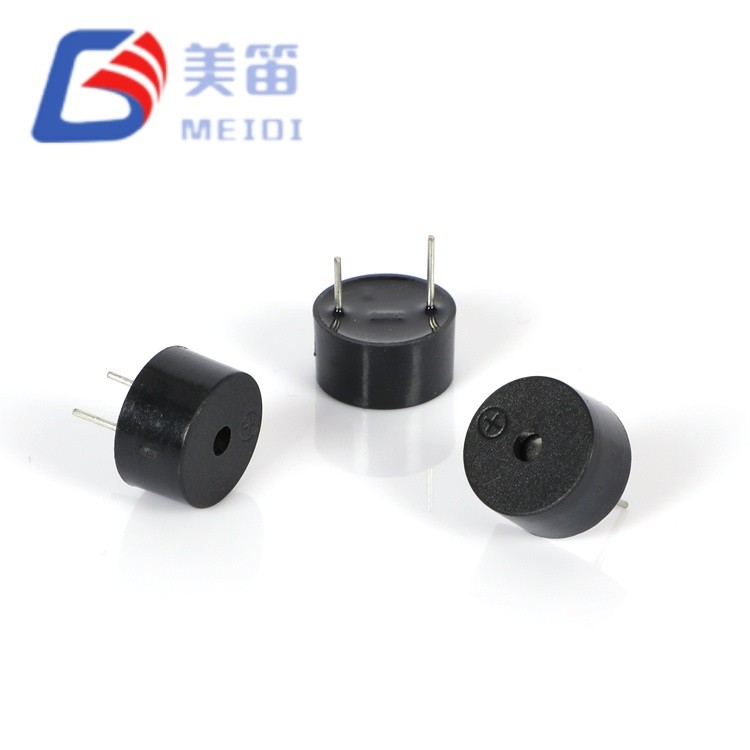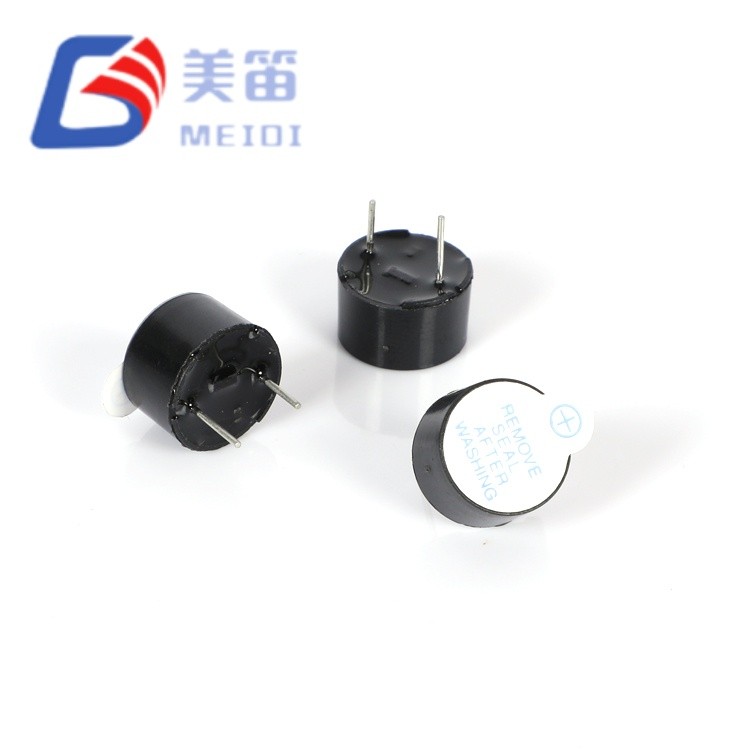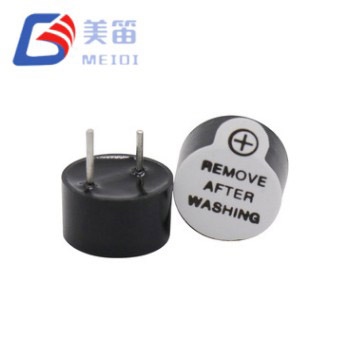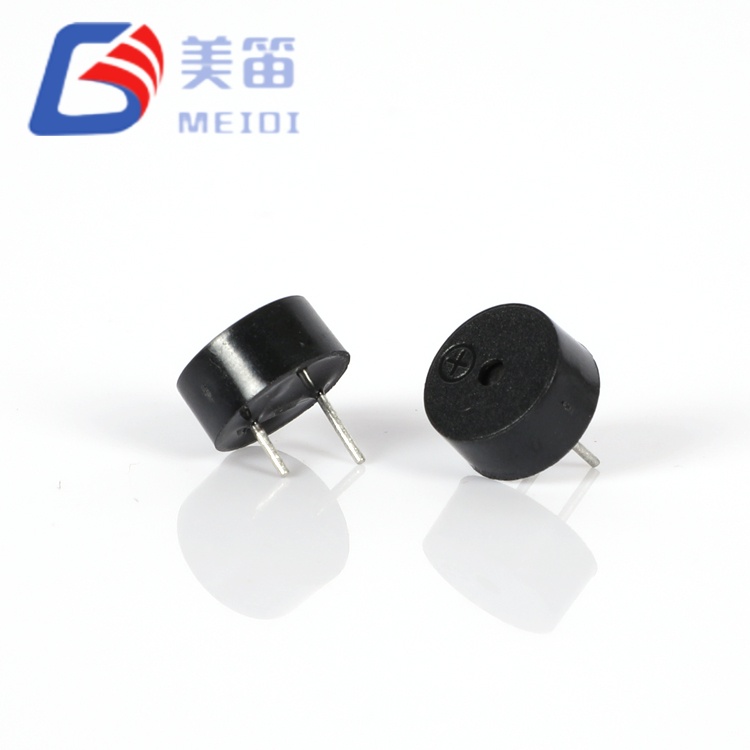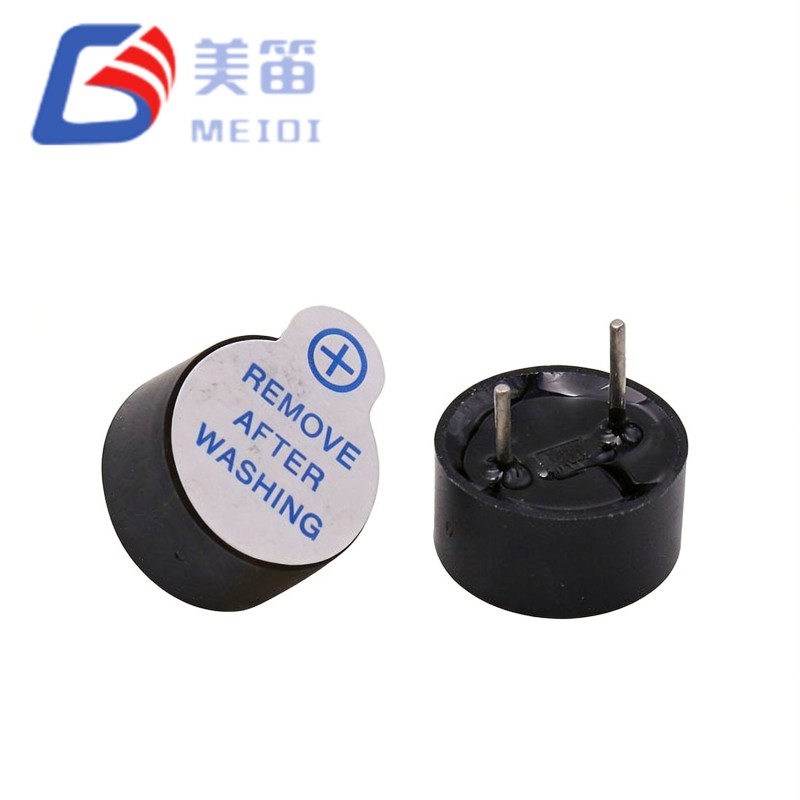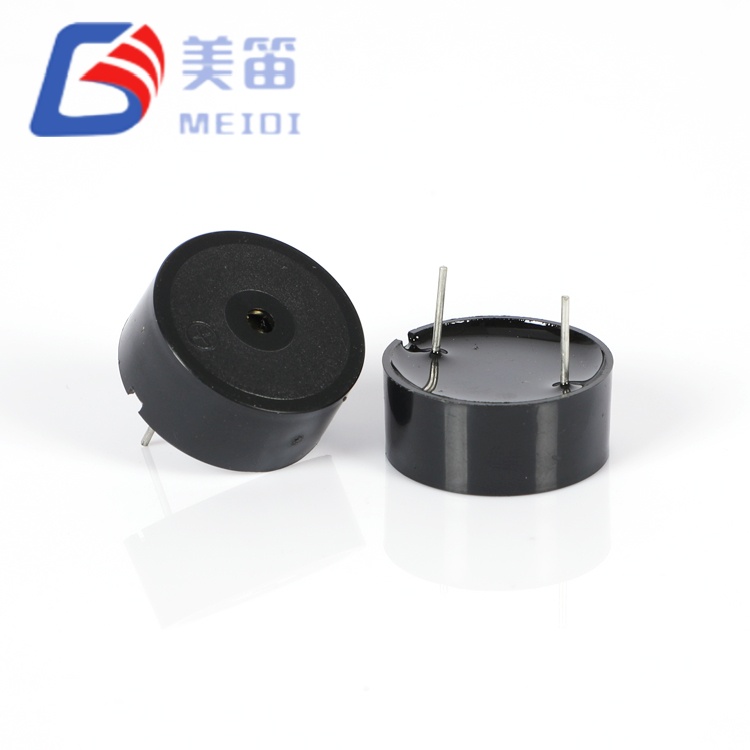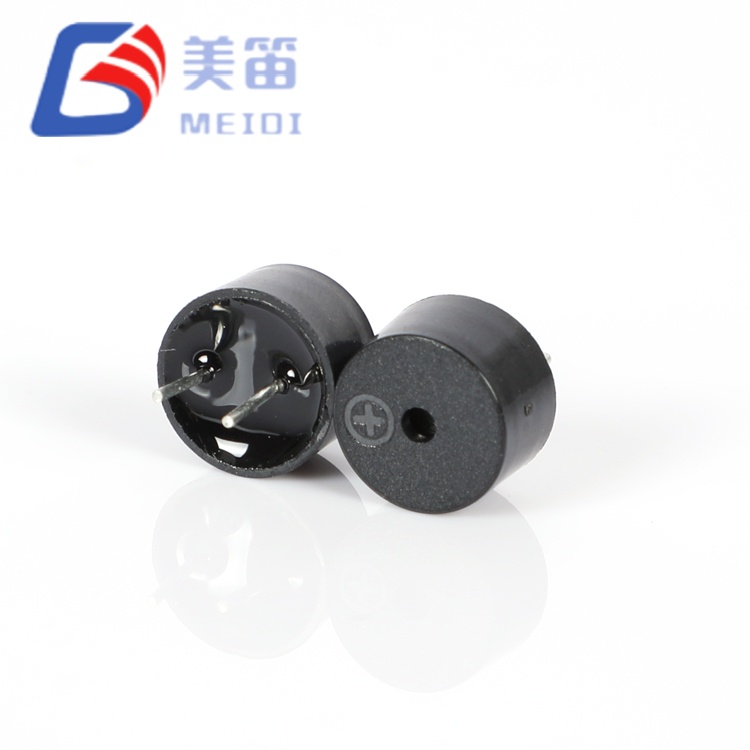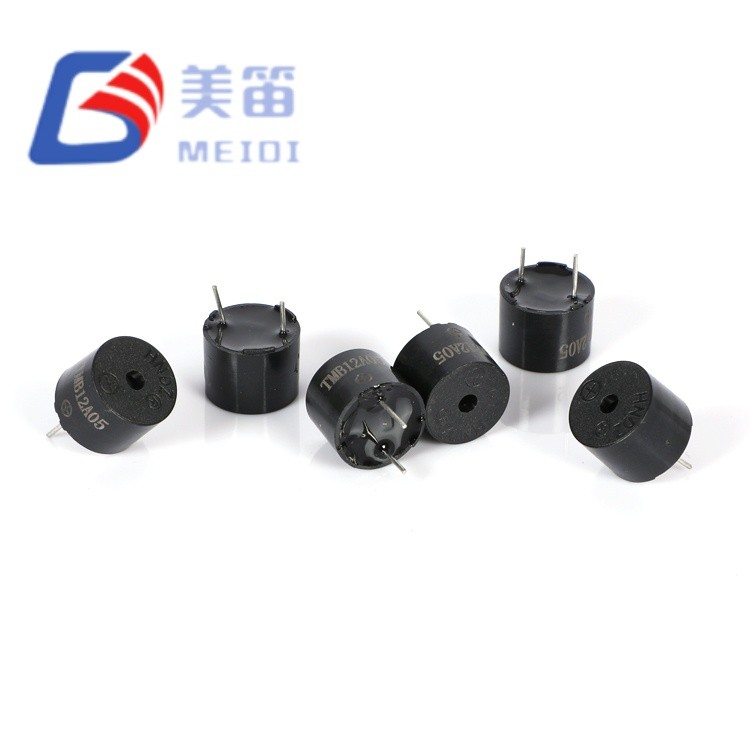
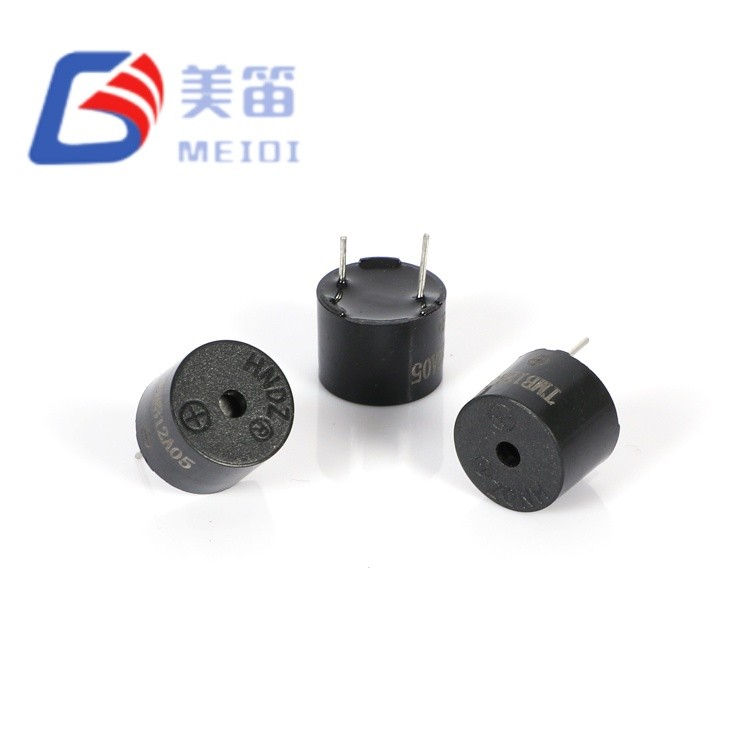
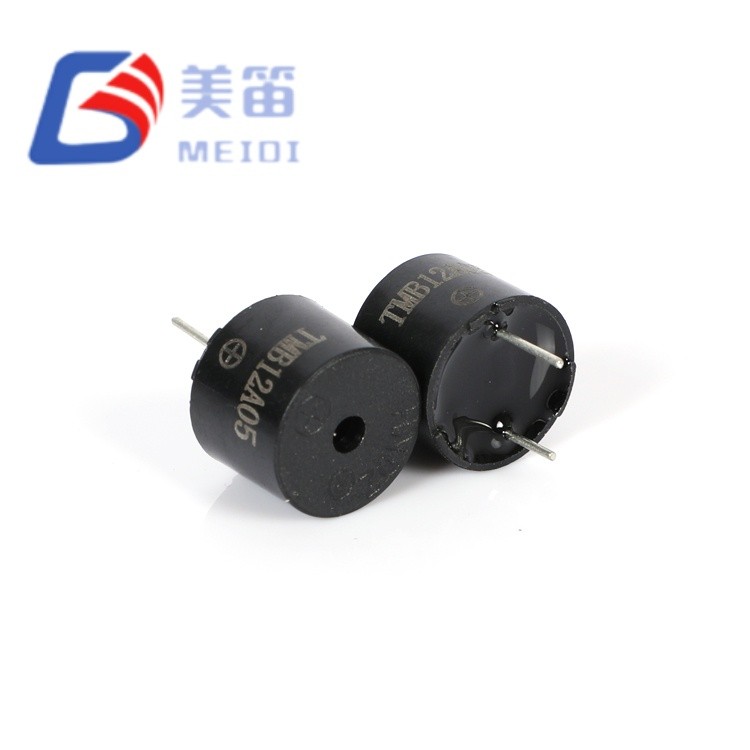
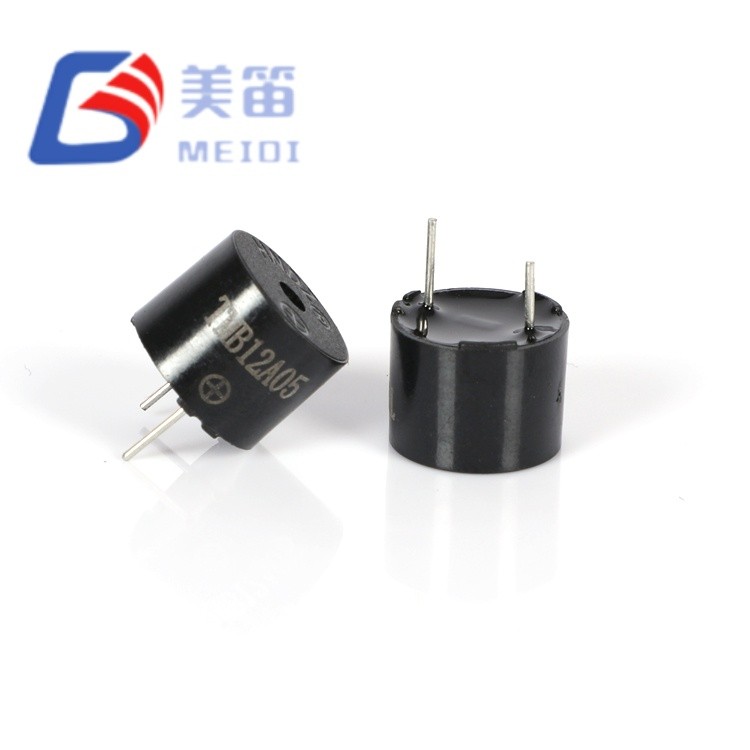
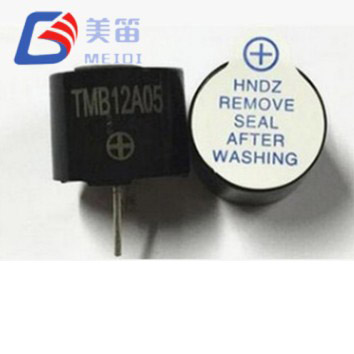
Engineered for applications where acoustic audibility is mission‑critical, the TMB12A03 delivers measured sound pressure levels of 96.4–98.7 dB from a compact 12 mm footprint. Its 9.5 mm extended cavity — the tallest in MEIDI’s 12 mm active buzzer family — maximises Helmholtz resonance efficiency, producing a low‑frequency 2400 Hz tone that cuts through industrial ambient noise without requiring larger magnetic buzzer architectures.
Manufactured at MEIDI’s Jiangsu facility, this 5 V through‑hole active buzzer operates across a 3–7 V range, supporting 5 V logic buses, Li‑ion battery discharge curves, and 6 V lantern battery systems without additional regulation. The integrated oscillator eliminates external PWM generation, while the black PBT housing withstands wave soldering at 255 °C and continuous operation from ‑20 °C to +70 °C. Each unit undergoes 100% automated SPL and current verification, with sample data showing tight parameter clustering (SPL 96.4–98.7 dB, current 21.8–24.1 mA, frequency 2400 ± 300 Hz).
The TMB12A03 Electromagnetic Active Buzzer addresses a common design challenge: achieving near‑magnetic‑buzzer output without migrating to larger 16 mm or 23 mm through‑hole packages. At 12.0 × 9.5 mm, this 5 V through‑hole electromagnetic active buzzer maintains compatibility with standard 12 mm panel cutouts while delivering empirical SPL performance that exceeds the ≥85 dB specification by more than 11 dB (mean 97.3 dB). This margin provides critical headroom for voltage sag, acoustic obstruction, and component aging.
The 2400 Hz resonant frequency sits below the dominant noise spectrum of industrial equipment (typically 3–8 kHz for motors, fans, and switching converters), improving signal‑to‑noise ratio in factory floors, vehicle cabins, and machinery control panels. The extended 9.5 mm cavity height increases internal air volume, enhancing acoustic radiation impedance and yielding higher SPL per milliwatt of input power compared to shallower variants.
Through‑hole construction provides mechanical anchoring superior to surface‑mount alternatives, with compliant leads absorbing differential thermal expansion and board flexure. The 1.7 g mass contributes to inertial stability that resists vibration‑induced microphonics — an advantage in mobile equipment and high‑shock installations. The polarized pin configuration prevents reverse‑voltage assembly errors during high‑volume production.
| Benefit | Description |
| Near‑100 dB output from 12 mm footprint | Measured 96.4–98.7 dB at 10 cm – eliminates need for larger magnetic buzzers in most applications |
| 2400 Hz low‑frequency penetration | Operates below typical industrial noise floor (3–8 kHz) for superior audibility |
| 9.5 mm extended cavity | Maximises internal resonance volume without expanding PCB footprint |
| 5 V‑centric voltage range | Native 3–7 V operation supports 5 V logic, Li‑ion (3.0–4.2 V), and 6 V battery systems |
| Integrated oscillator | Zero external components – apply DC voltage directly; no PWM, timer, or driver IC needed |
| Through‑hole mechanical anchor | Lead retention through PCB withstands vibration and shock better than SMD alternatives |
| Parameter | Value | Test Conditions |
| Rated Voltage | 5 VDC | At 25 ℃ |
| Operating Voltage | 3 – 7 VDC | Continuous |
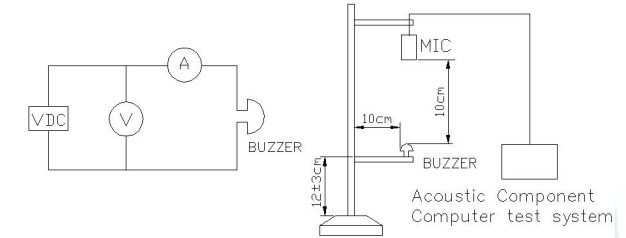
| Sound Output | ≥ 85 dB (typ. 96.4–98.7 dB) | At 5 VDC, 10 cm, free field |
| Resonant Frequency | 2400 ± 300 Hz | At rated voltage |
| Operating Current | ≤ 30 mA (typ. 21.8–24.1 mA) | At 5 VDC |
| Coil Resistance | ~200 Ω (typical) | At 25 ℃, DC |
| Rise Time | < 50 ms | To 90% SPL |
| Parameter | Value |
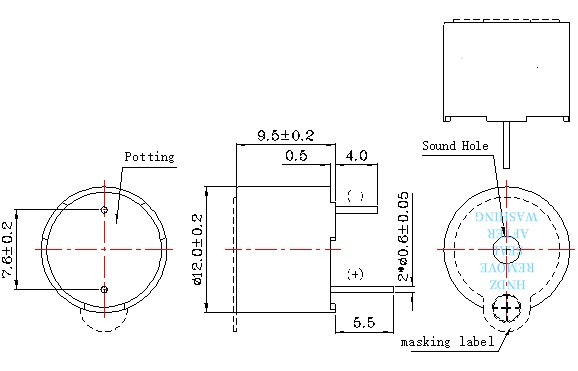
| Dimensions | 12.0 × 9.5 mm (Dia × H) |
| Weight | 1.7 g |
| Housing Material | Black PBT |
| Pin Configuration | Polarized through‑hole |
| Pin Diameter | 0.5 mm (typical) |
| Soldering Temperature (Wave) | 255 ± 15 ℃, 4–6 s |
| Soldering Temperature (Manual) | 360 ± 10 ℃, 2–5 s |
| Soldering Temperature (Reflow) | 245 ± 15 ℃, 180 ℃ preheat 40–70 s |
| Operating Temperature | -20 ℃ ~ +70 ℃ |
| Storage Temperature | -30 ℃ ~ +80 ℃ |
Heavy industrial alarm systems – emergency stop alerts, crane movement warnings, and press operation alarms in environments exceeding 85 dB ambient noise where regulatory audibility mandates high SPL
Commercial vehicle cabins – seatbelt warnings, door‑ajar alerts, and reverse proximity tones in trucks, buses, and construction equipment where engine noise masks conventional buzzers
Warehouse and logistics automation – pick‑completion alerts, AGV collision warnings, and conveyor fault signals in high‑ceiling distribution centres with significant acoustic reverberation
Agricultural machinery cabs – implement position alerts, hydraulic fault indicators, and grain tank level warnings in tractors and harvesters exposed to engine and implement noise
Public safety and evacuation systems – fire alarm audible notification, perimeter intrusion alerts, and mass notification tones in commercial buildings requiring code‑compliant SPL thresholds
Marine engine compartments – bilge pump alarms, cooling system failure alerts, and generator fault tones in high‑noise, high‑humidity maritime environments
| Requirement | TMB12A03 Advantage |
| Maximum acoustic output from 12 mm footprint | 96.4–98.7 dB measured – high acoustic output from compact footprint |
| Audibility in >85 dB ambient noise | 2400 Hz sits below typical industrial noise spectrum; 11+ dB headroom above specification |
| Eliminate larger magnetic buzzer from design | High SPL output in compact 12 mm package |
| Low‑frequency tonal preference | 2400 Hz produces deeper, more authoritative alert tone than 2700 Hz or 4 kHz alternatives |
| 5 V logic bus compatibility | Native 5 V operation; 3 V minimum supports Li‑ion and regulated 3.3 V systems |
This model occupies a unique position in MEIDI’s active buzzer portfolio: it delivers acoustic performance approaching that of larger magnetic buzzers while maintaining the assembly simplicity, supply chain efficiency, and cost structure of a 12 mm electromagnetic active component. For designers facing audibility mandates in noisy environments, the TMB12A03 eliminates the need to migrate to more expensive, physically larger buzzer architectures.
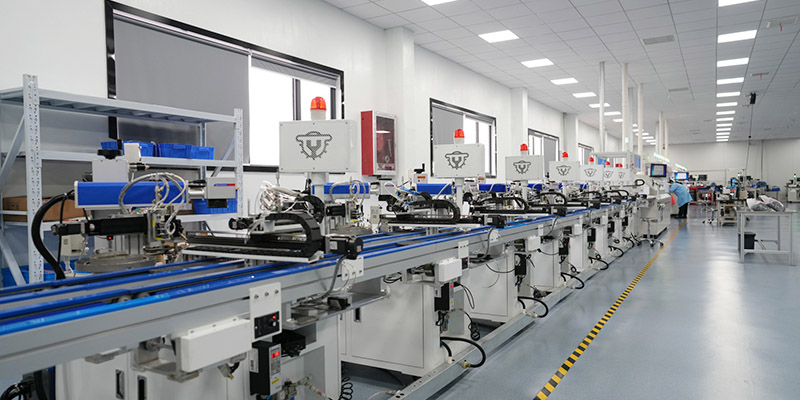
MEIDI manufactures the TMB12A03 on dedicated through‑hole assembly lines equipped with automated winding, soldering, and encapsulation equipment. Our Jiangsu manufacturing base follows ISO 9001 quality management protocols, with in‑process inspections at every critical stage – coil winding, magnet assembly, oscillator tuning, and final encapsulation.



Each production batch undergoes rigorous validation:
Acoustic consistency verification – 100% SPL test at rated voltage; sample batch 96.4–98.7 dB with typical spread <2 dB
Frequency stability check – statistical sampling at 2400 Hz ±12.5%; all samples within 2370–2430 Hz
Current draw validation – ≤30 mA maximum; sample mean 22.9 mA with standard deviation 0.8 mA
High‑temperature storage – 48 hours at +80 ± 2 ℃; full parameter recovery after 2‑hour ambient stabilisation
Low‑temperature storage – 48 hours at -30 ± 2 ℃; verified cold‑start activation at 3 V minimum
Thermal shock cycling – 5 cycles between -30 ℃ and +80 ℃ with 30‑minute dwell per extreme
Mechanical stress validation – sinusoidal vibration (10–55 Hz, 1.0 mm amplitude, XYZ axes, 0.5 hours cumulative) and 75 cm free‑fall drop onto 10 mm hardwood (3 impacts)
Humidity resistance – 48 hours at 50 ± 5 ℃ / 90–95% RH followed by 2‑hour recovery and electrical characterisation
Solder heat resistance – 250 ± 5 ℃ for 10 ± 0.5 seconds with 2.0 mm body‑to‑solder clearance
Available certifications: RoHS, REACH, and UL94 V‑0 for the PBT housing. For safety‑critical installations, IEC 60950‑1 compliance documentation can be supplied upon request.
Q1: How does the TMB12A03’s 2400 Hz frequency compare to 2700 Hz and 4 kHz alternatives in real‑world noise environments?
The 2400 Hz resonant frequency operates below the typical electromagnetic buzzer cluster at 2700 Hz and well below the 4 kHz region where many switching power supplies and digital electronics generate emissions. In industrial and vehicle environments, ambient noise from cooling fans, hydraulic pumps, and engine harmonics tends to concentrate above 3 kHz. The TMB12A03’s lower frequency often provides improved audibility in these settings because it occupies a less crowded spectral band. Additionally, lower frequencies exhibit reduced directional beaming, improving off‑axis audibility in open‑plan installations.
Q2: Can the TMB12A03 replace a 16 mm or 23 mm through‑hole magnetic buzzer in an existing design?
In many cases, yes. The measured 96.4–98.7 dB output approaches or exceeds that of typical 16 mm magnetic buzzers (95–100 dB) while occupying a significantly smaller 12 mm footprint. The primary consideration is mounting: the TMB12A03 uses standard 12 mm through‑hole pin spacing, which may not align with 16 mm or 23 mm cutouts. For retrofit applications, MEIDI provides dimensional comparison drawings and can supply adapter washer solutions for volume orders. The electrical interface is simpler than magnetic buzzers – no external oscillator is required, reducing component count and assembly cost.
Q3: What is the practical acoustic lifetime under continuous 5 V operation at elevated temperature?
The manufacturer does not publish continuous‑operation lifetime data beyond the standard test conditions (96 hours at 25 ± 10 ℃ with 1/2 duty‑cycle square wave, and 96 hours high‑temperature storage at +85 ℃). The typical current draw of 21.8–24.1 mA is well within the ≤30 mA maximum, minimising self‑heating. For extended lifetime in continuous‑tone applications, implementing a duty cycle (e.g., 1 second on, 4 seconds off) is recommended. The 9.5 mm cavity provides additional thermal mass compared to lower‑profile variants, which may slow temperature rise. For application‑specific lifetime estimates, contact factory engineering with your operating voltage, duty cycle, and ambient temperature profile.
Q4: Is the 9.5 mm height compatible with standard 12 mm buzzer enclosures and front panels?
The 12.0 mm diameter matches standard 12 mm front‑panel cutouts and PCB layouts commonly used for through‑hole buzzers. The 9.5 mm height requires additional z‑axis clearance compared to 6.5 mm or 7.5 mm variants – ensure your enclosure provides at least 11 mm clearance above the PCB to accommodate the component and allow for soldering clearance. For height‑constrained applications (≤8 mm), MEIDI offers alternative models with lower profiles. We provide 3D STEP files and enclosure integration guidelines upon request.
Q5: How does the TMB12A03 perform when driven below 5 V, such as from a 3.7 V Li‑ion battery?
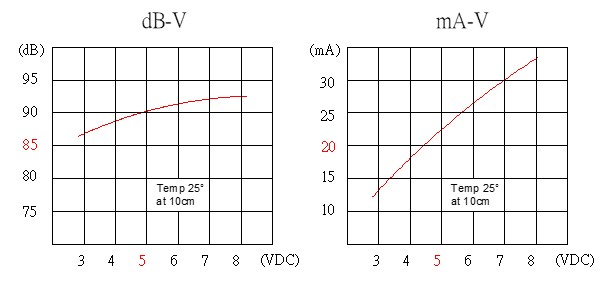
At 3.7 V, SPL decreases from the 5 V reference but remains above the ≥85 dB specification – typical SPL at 3.7 V is approximately 88–90 dB, based on characterisation data. The 2400 Hz frequency remains stable across the 3–7 V range due to the integrated oscillator design. For Li‑ion applications where 3.0 V end‑of‑discharge must still deliver audible output, the TMB12A03 maintains functional output without additional voltage boosting circuitry, making it suitable for battery‑powered portable alarms and handheld instruments.
Q6: What mounting orientation is recommended for maximum acoustic performance?
The TMB12A03 emits sound primarily through the top acoustic port. For maximum SPL, ensure the port is unobstructed and facing the intended listening direction. Mounting on the underside of a PCB or with the port facing a solid surface will attenuate output. For applications requiring 360‑degree coverage, consider multiple units or reflective surfaces. MEIDI’s applications engineering can provide acoustic simulation support for your specific enclosure geometry.
For technical datasheets, 3D CAD models, acoustic enclosure integration guidelines, or volume pricing for industrial and safety‑system programs, contact MEIDI Engineering Support.
MEIDI applications engineering typically responds to technical inquiries within one business day with driver circuit notes, enclosure clearance verification, and volume pricing for safety‑critical installations.
Address
No.6, Wenlin Road, Chenbao Town, Xinghua City, Jiangsu Province, China
Tel