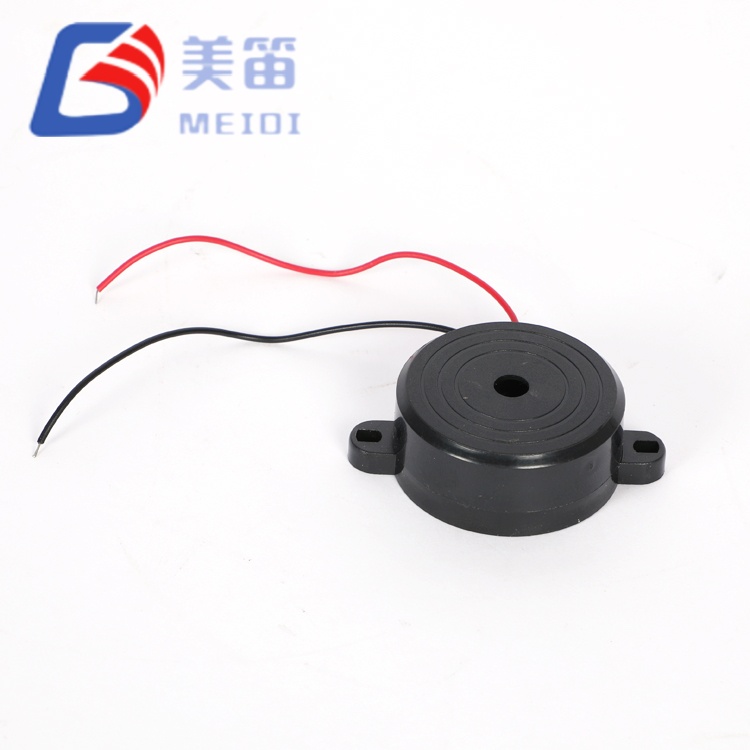
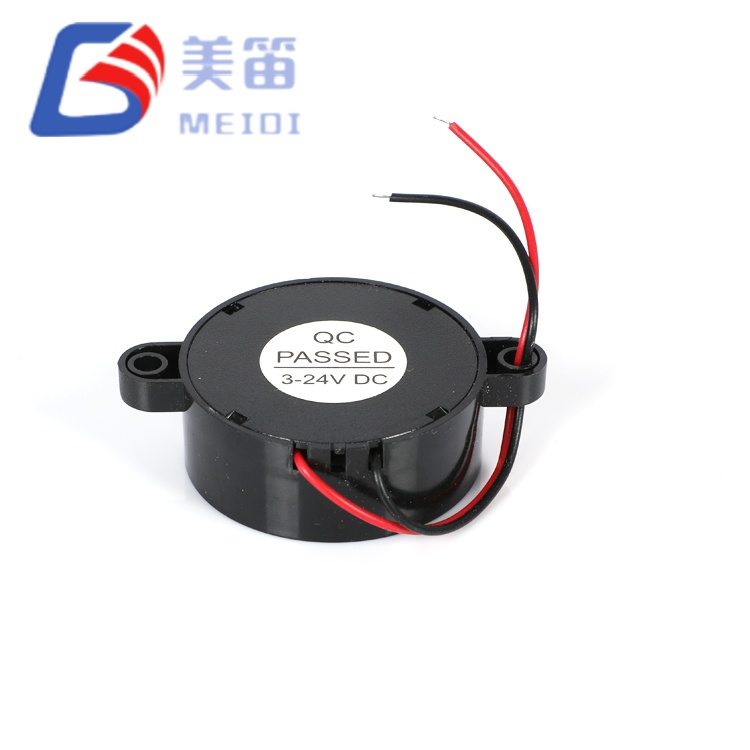
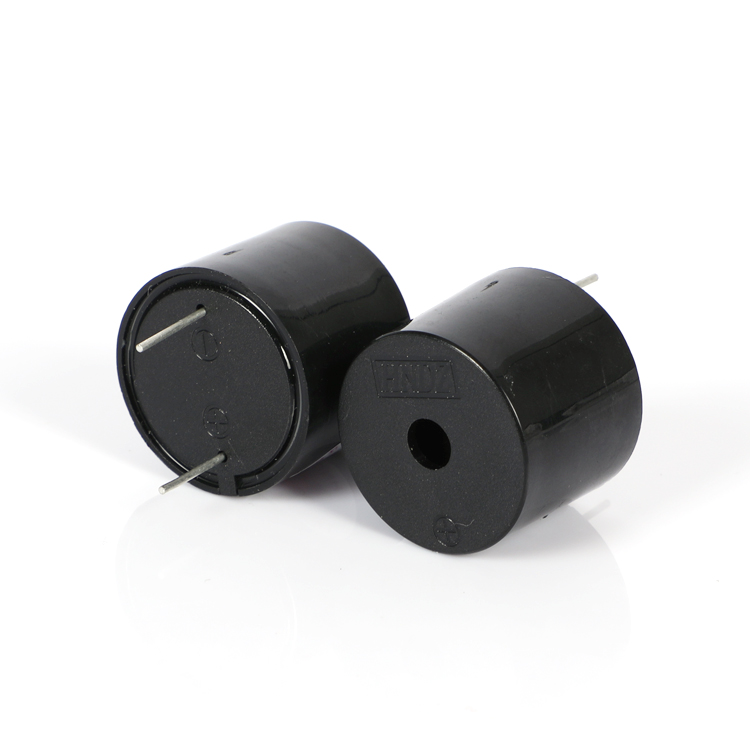
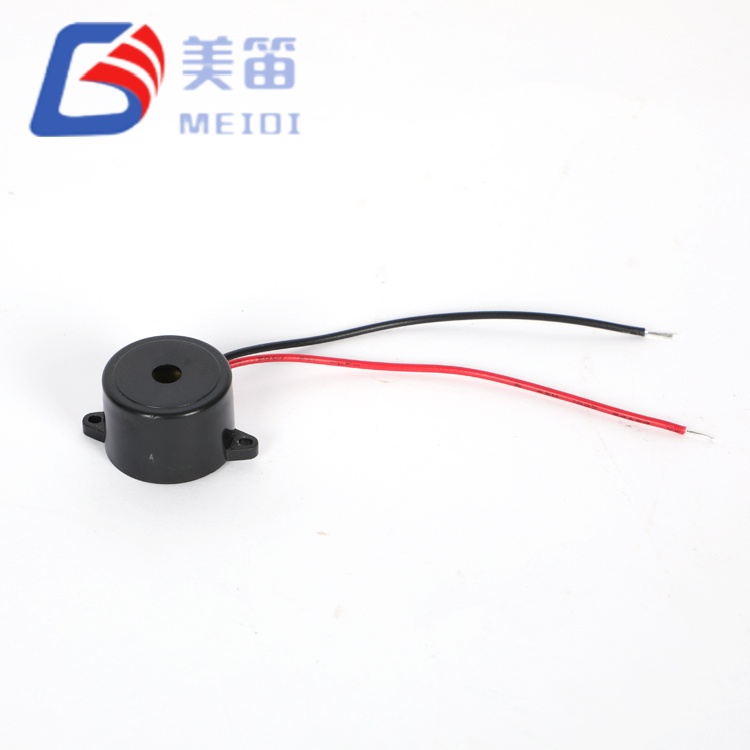
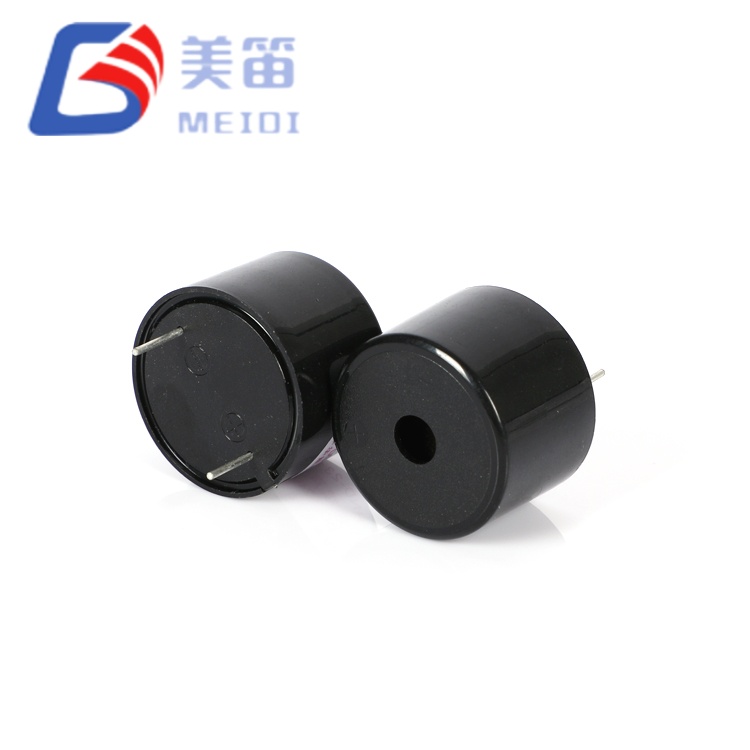
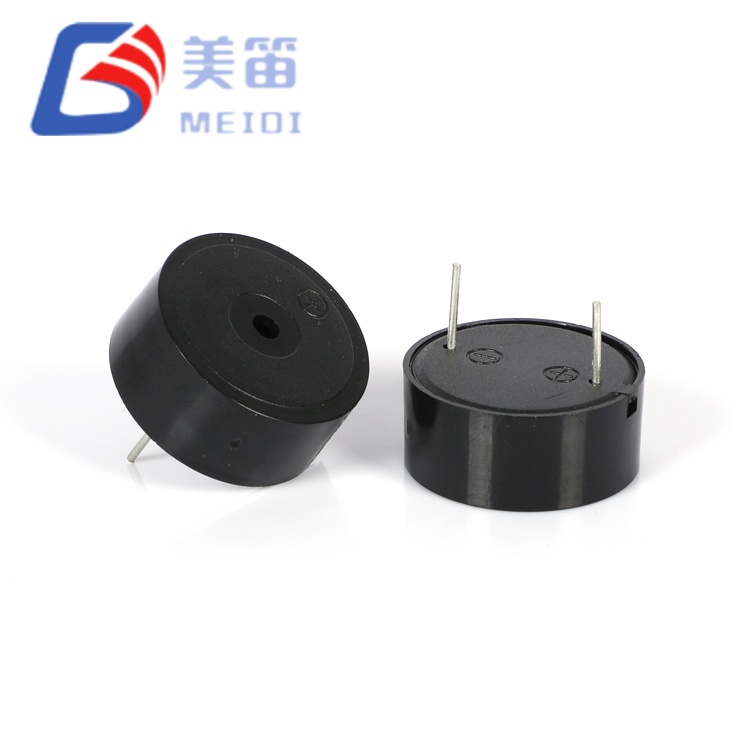
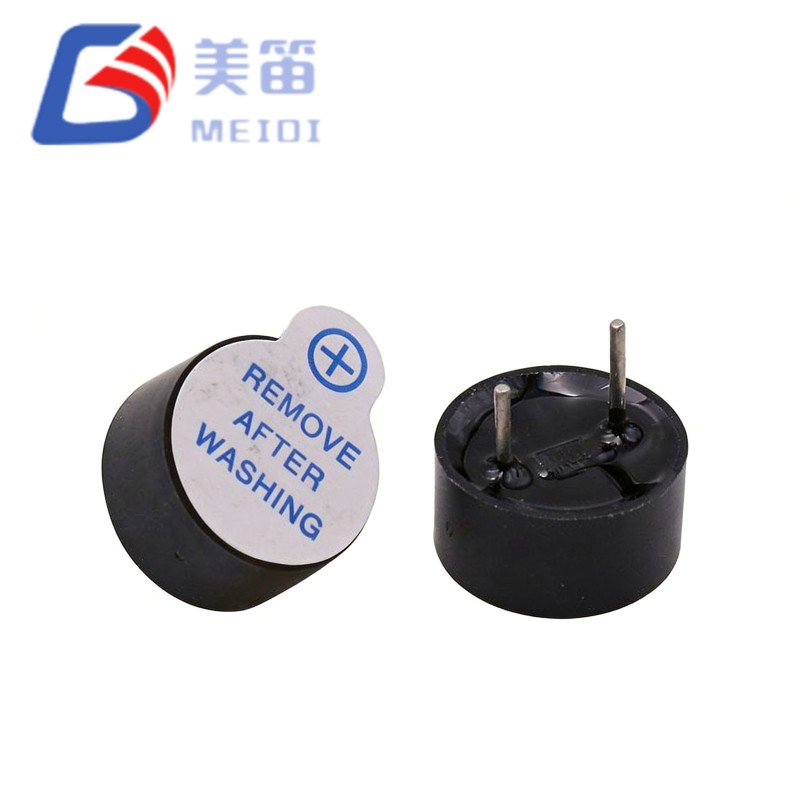
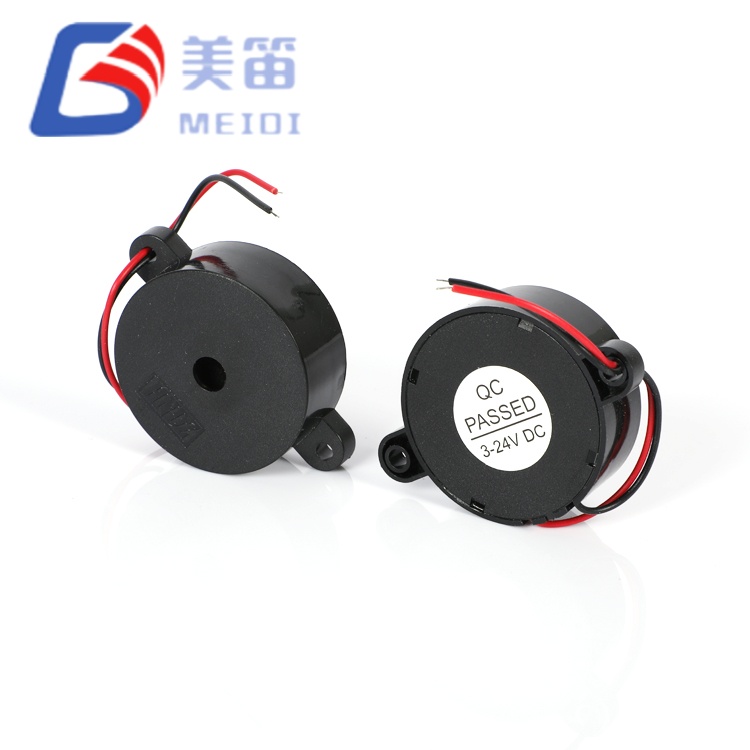
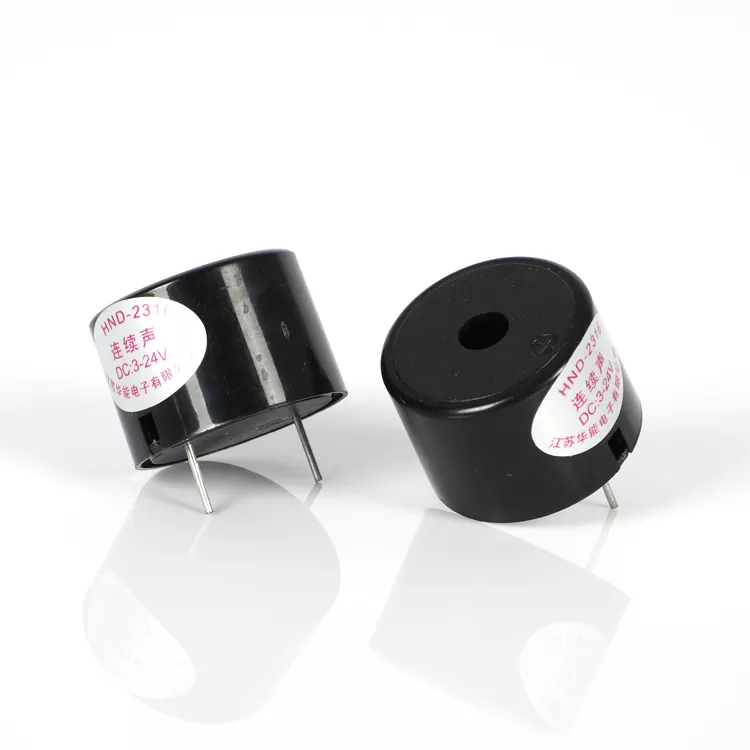
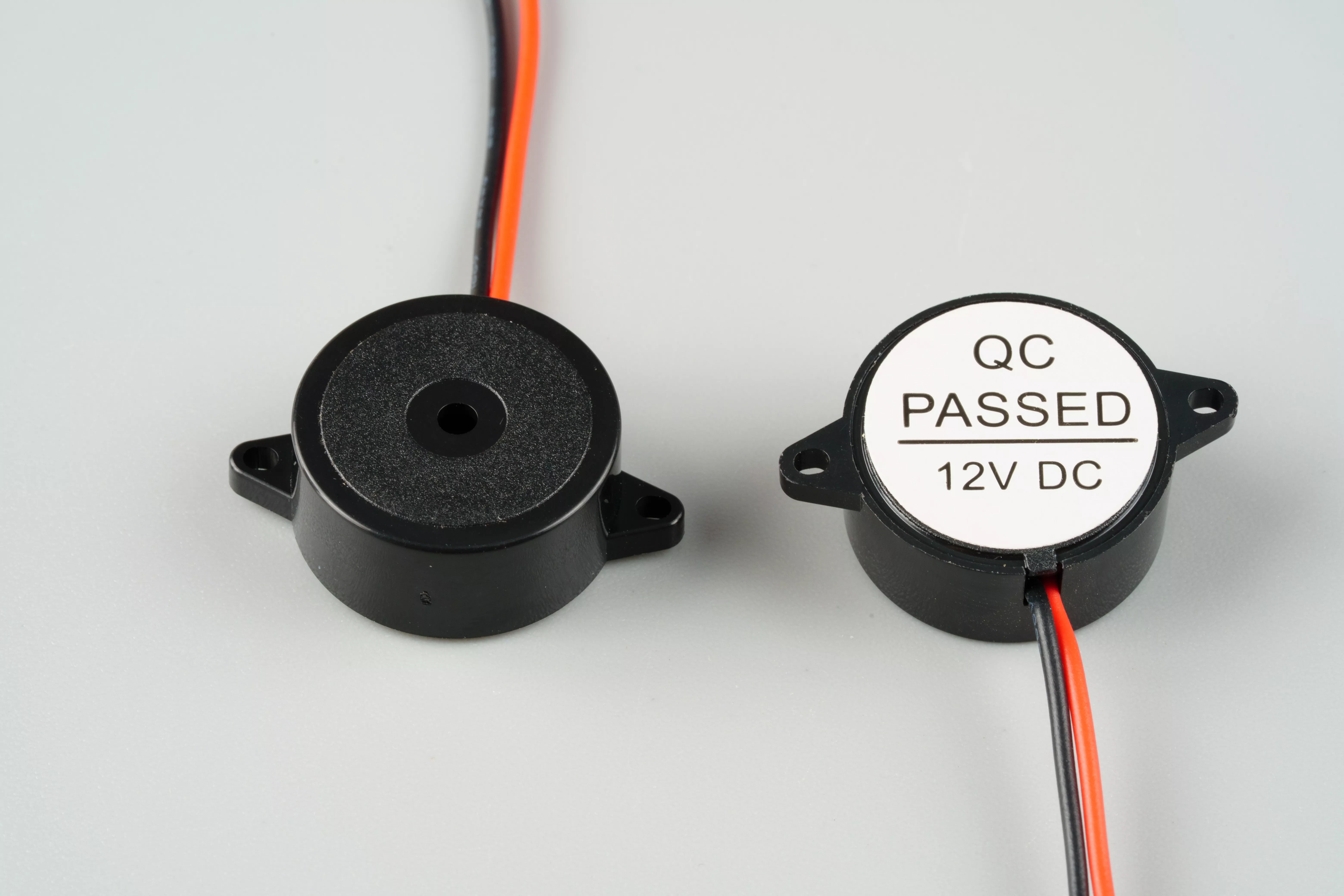
Jiangsu Meidi's active piezoelectric buzzer production combines precision oscillator calibration with automated ceramic transducer testing. Each unit undergoes acoustic characterisation across its operating voltage range, and environmental stress screening is applied to sampled batches. Technical specialists work directly with clients to fine‑tune frequency parameters, voltage thresholds, and housing dimensions for specialised deployment scenarios.
Active piezoelectric buzzers integrate a built‑in oscillator circuit with a high‑efficiency ceramic transducer, so applying a DC supply within the rated voltage range immediately produces a fixed‑frequency tone. These self‑contained components are extensively deployed in smoke detectors, gas alarms, industrial warning panels, medical alert devices, and automotive parking sensors, where a loud, low‑power alarm signal is critical for safety. Because the drive electronics are already inside the buzzer, the host system does not need a microcontroller PWM output or an external signal generator, which reduces component count and simplifies circuit layout.
The piezoelectric ceramic construction generates penetrating tones that cut through ambient noise, ensuring warnings reach their intended recipients even in acoustically challenging environments. Unlike a Magnetic Active Buzzer, which uses a coil and ferromagnetic diaphragm to produce a lower‑pitched sound, the active piezoelectric type operates at higher frequencies, typically 2 kHz to 6 kHz, and draws less current. This makes it especially suitable for battery‑powered equipment where power consumption directly affects service intervals.
The internal oscillator is tuned to the resonant frequency of the piezoelectric element, which is a thin ceramic disc bonded to a metal substrate. When powered, the circuit generates a square‑wave drive that causes the ceramic to expand and contract at the resonant point, maximising sound output. Because the oscillation frequency is mechanically fixed, an active piezoelectric buzzer is not intended for applications that need variable pitch. For designs that require a range of tones, a Passive Piezoelectric Buzzer or a Magnetic Passive Buzzer driven by a microcontroller PWM signal offers greater flexibility.
Sound pressure levels typically range from 80 dB to 100 dB at 10 cm, depending on the housing design and drive voltage. The robust ceramic element withstands temperature extremes from -20 ℃ to +70 ℃ and mechanical vibration, making active piezoelectric buzzers reliable in harsh operating environments. For extremely high ambient noise, a dedicated Alarm Buzzer with a tailored acoustic chamber can provide even higher output.
Active piezoelectric buzzers are available in a range of voltages, commonly 3 V, 5 V, 12 V, and 24 V DC. Through‑hole pin, wire‑lead, and panel‑mount configurations cover most mechanical requirements. For compact surface‑mount designs, an SMD Piezoelectric Passive Buzzer can be used, though the active oscillator version in SMD form is less common due to space constraints. For projects that need a non‑standard resonant frequency, tone pattern, or pin layout, MEIDI can customise the oscillator parameters and housing geometry. Prototype samples are supplied with an acoustic test report so the performance can be verified in the target enclosure.
Can an active piezoelectric buzzer produce multiple tones?
A standard active buzzer emits a single continuous tone or a preset alternating pattern if specified at the time of order. The tone cannot be changed by the user. For multiple distinct alerts from the same unit, an externally driven passive buzzer controlled by a microcontroller is a more suitable solution.
What is the typical current consumption compared to an electromagnetic buzzer?
Piezoelectric active buzzers generally draw less current than electromagnetic types, often under 10 mA at rated voltage. The exact value depends on the model and drive level, but this efficiency advantage makes them popular for battery‑operated safety devices.
How should the sound port be handled during assembly?
The front opening must remain unobstructed. Flux, conformal coating, or cleaning solvent entering the port can damp the diaphragm and reduce sound output. If board washing is required, a temporary protective cap or a sealed buzzer variant should be considered.
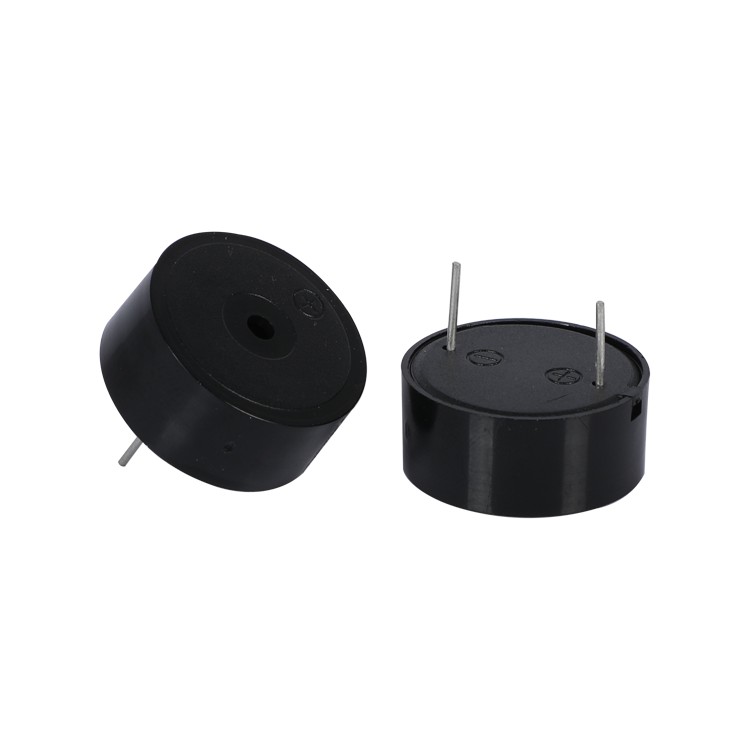
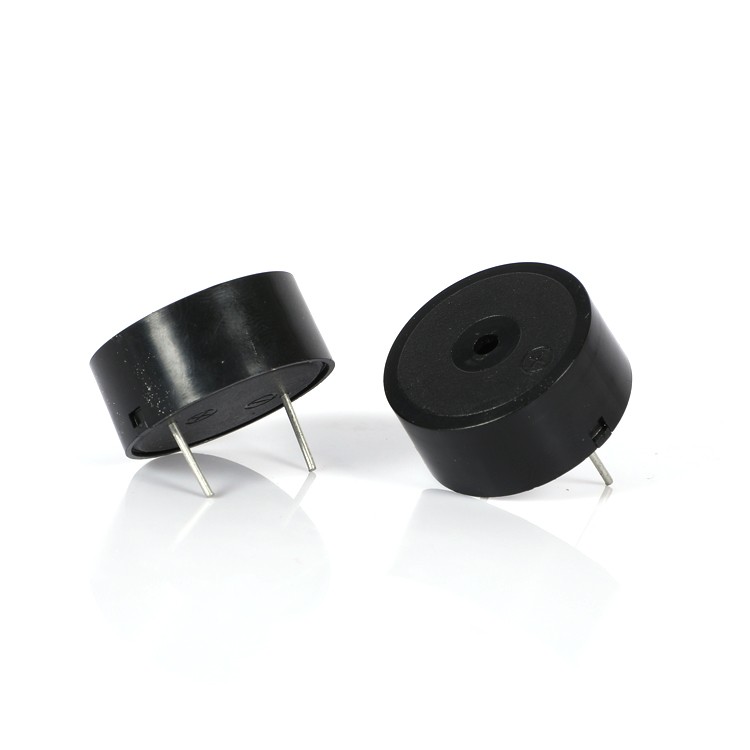
The table below lists all standard specifications of products in this series. Customized solutions are available upon your request; please feel free to contact us for further customization requirements.
| Model | Product Image | Rated Voltage (VDC) | Operating Voltage (VDC) | Sound Pressure Level @10cm (dB) | Operating Current (mA) | Resonant Frequency (Hz) | Operating Temperature (℃) | Weight (g) | Dimensions (mm) |
| HND-2310E |
|
12 | 3~24 | ≥85 @3500Hz 12Vp-p | ≤4 @3500Hz 12Vp-p | 3500±500 | -20~+75 | 4 | Ø22.8×9.8 |
| HND-2310B |
|
12 | 3~24 | ≥85 @3500Hz 12Vp-p | ≤4 @3500Hz 12Vp-p | 3500±500 | -20~+75 | 4 | Ø22.8×9.8 |
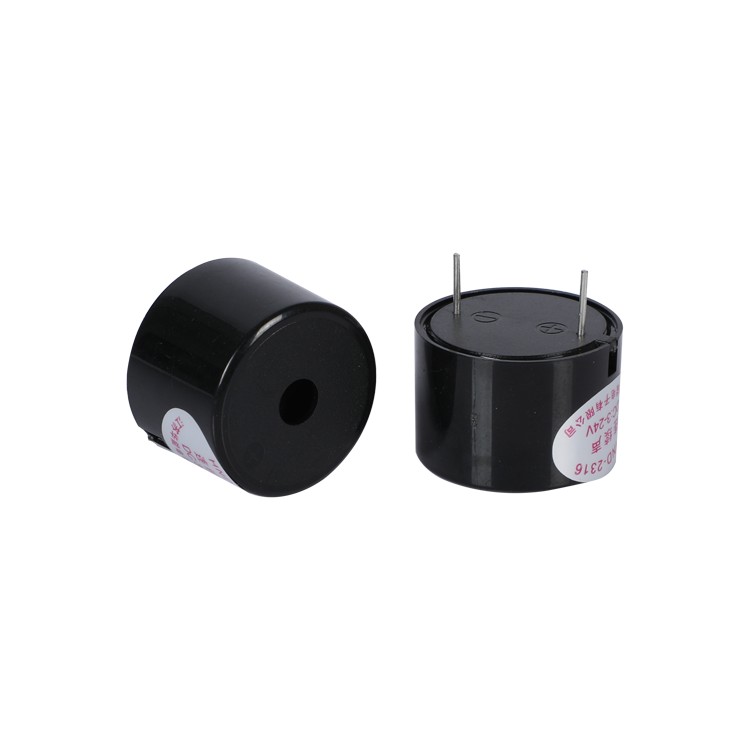
| HND-2316 |
|
12 | 3~24 | ≥90 @3000Hz 12Vp-p | ≤10 @3000Hz 12Vp-p | 3000±500 | -20~+80 | 5 | Ø23.0×16.0 |
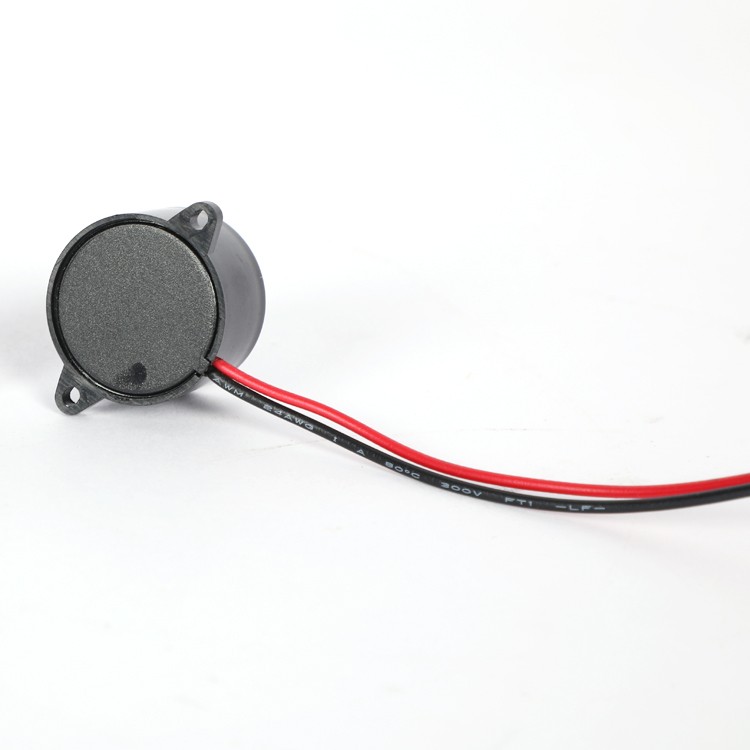
| HND-2316L |
|
12 | 3~24 | ≥90 @3000Hz 12Vp-p | ≤10 @3000Hz 12Vp-p | 3000±500 | -20~+80 | 5 | Ø23.0×16.0 |
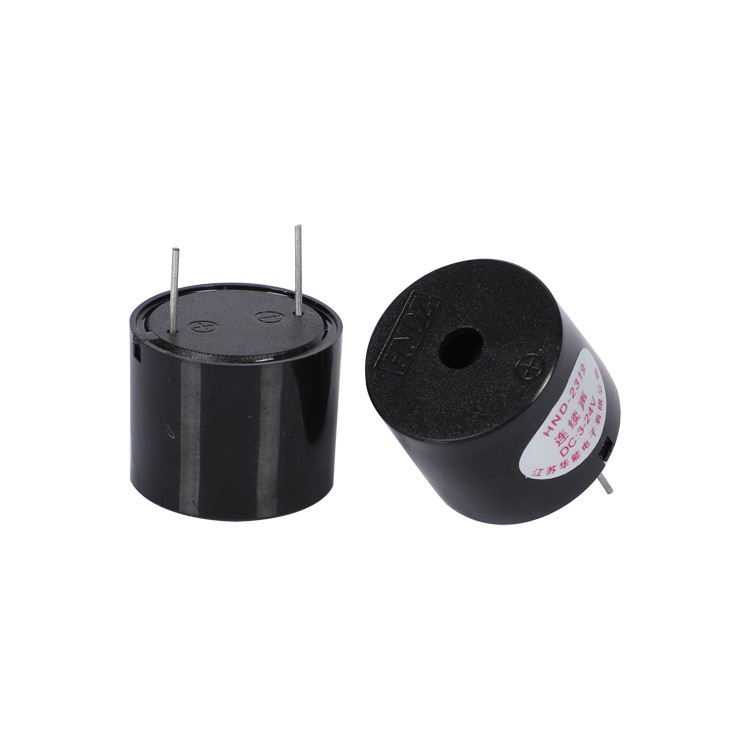
| HND-2319 |
|
12 | 3~24 | ≥90 @3700Hz 12Vp-p | ≤10 @3700Hz 12Vp-p | 3700±500 | -20~+80 | 5 | Ø23.0×19.0 |
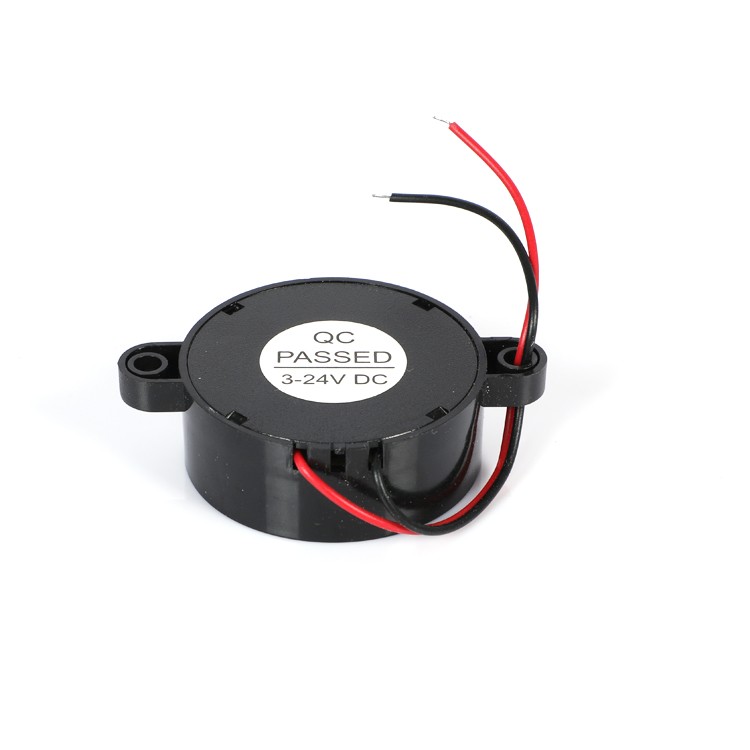
| HND-4216 |
|
12 | 3~24 | ≥90 | ≤8 | 2800±500 | -20~+80 | 12 | Ø41.8×16.0 |
| HND-4218 |
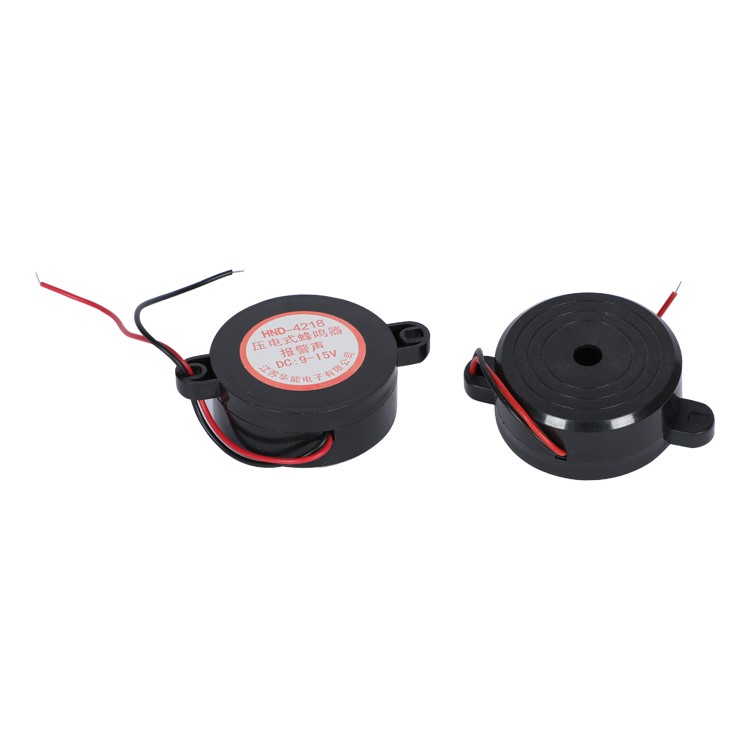
|
12 | 3~24 | ≥90 | ≤8 | 2800±500 | -20~+80 | 12 | Ø41.8×18.0 |