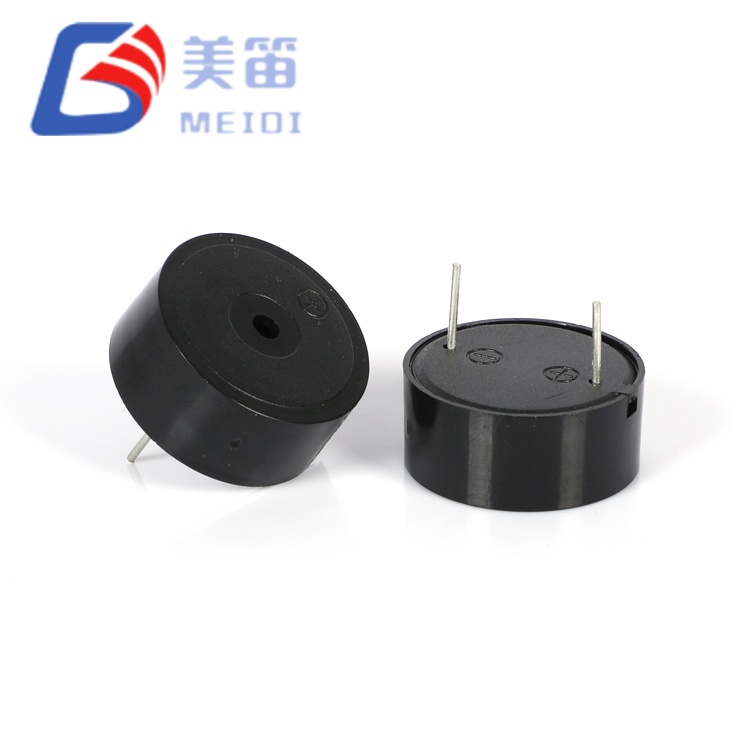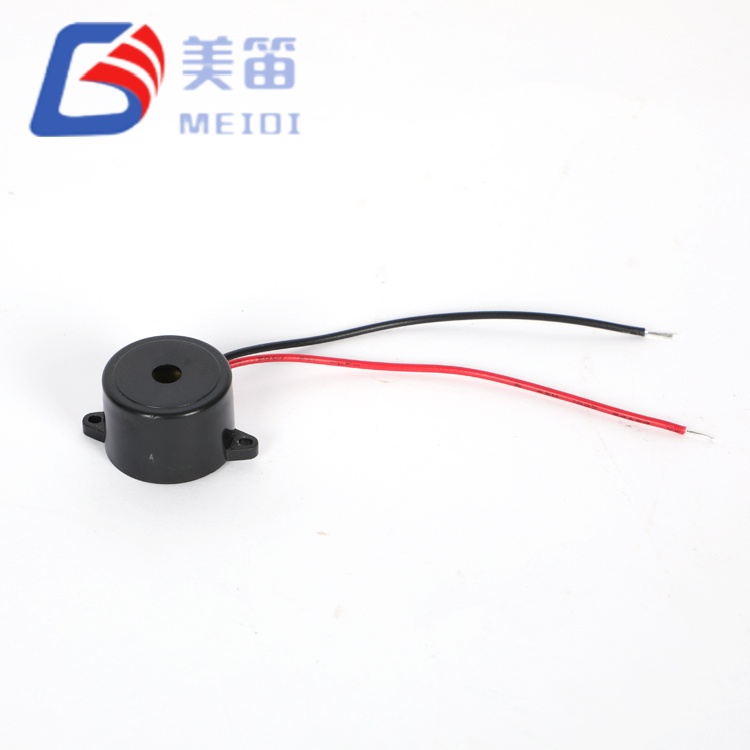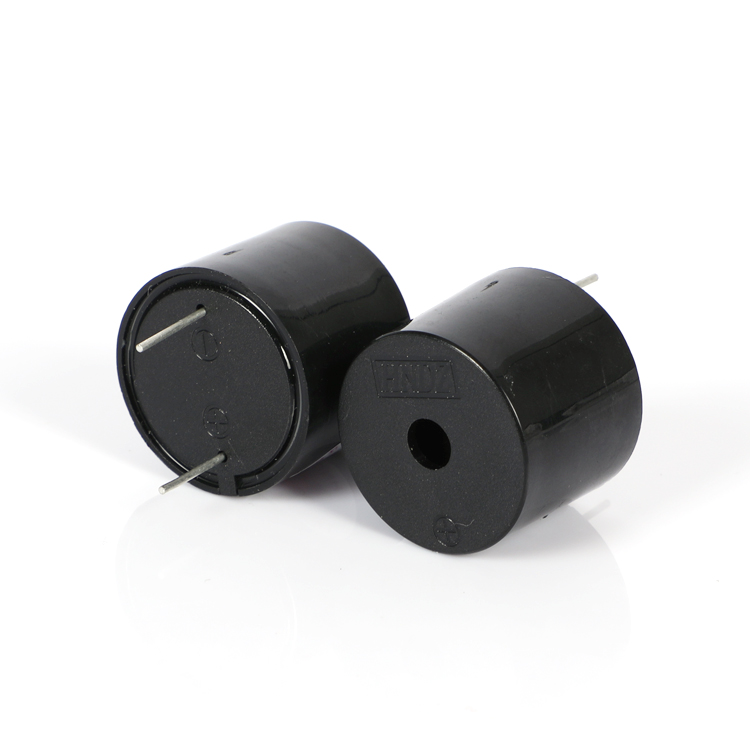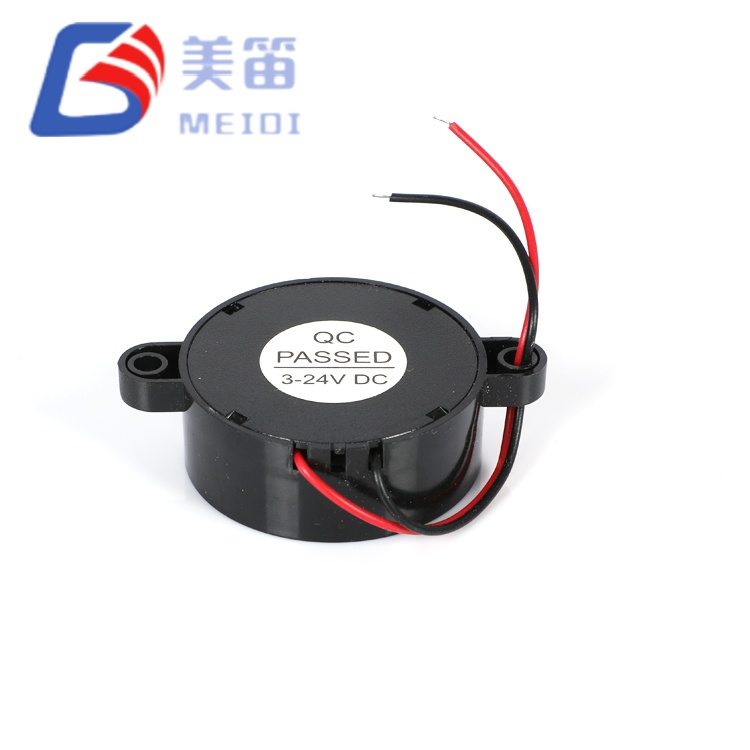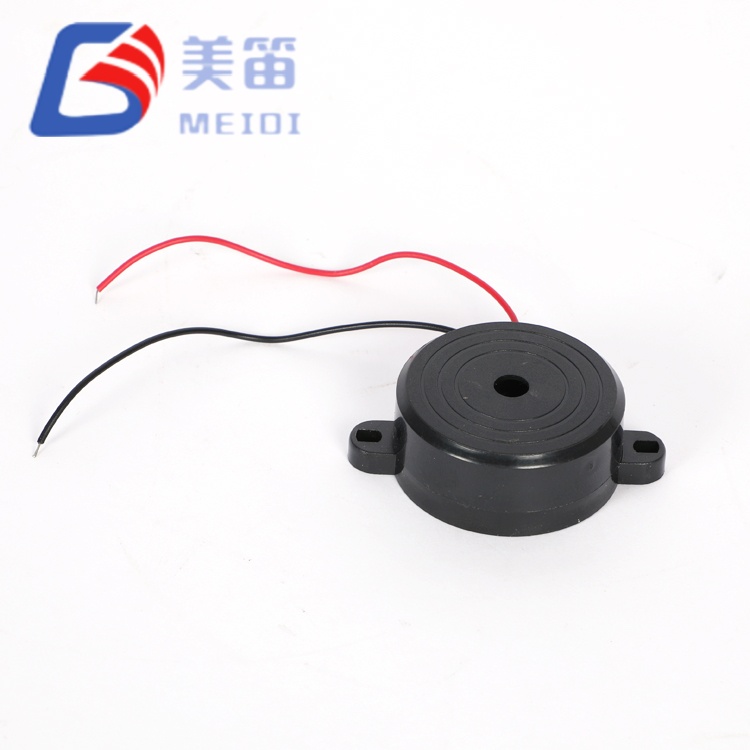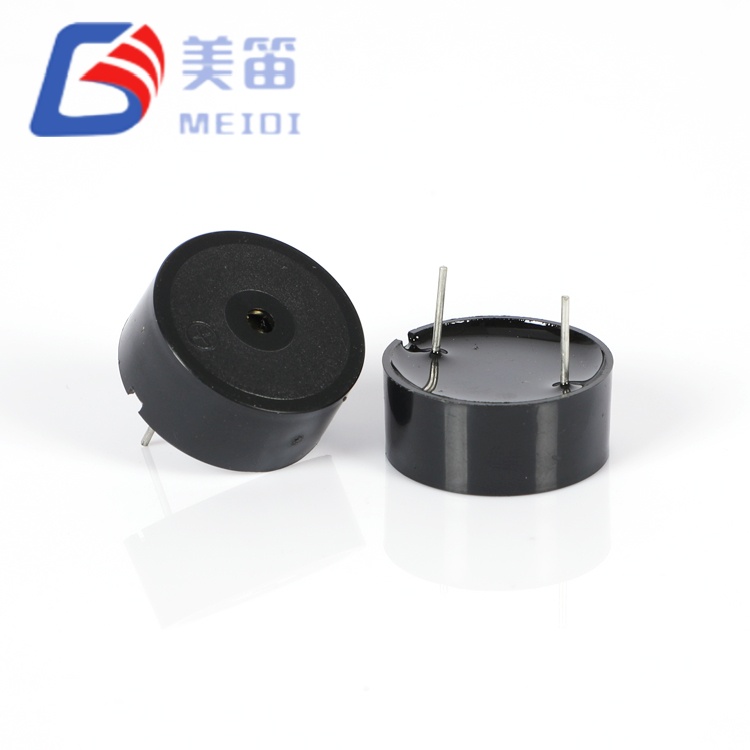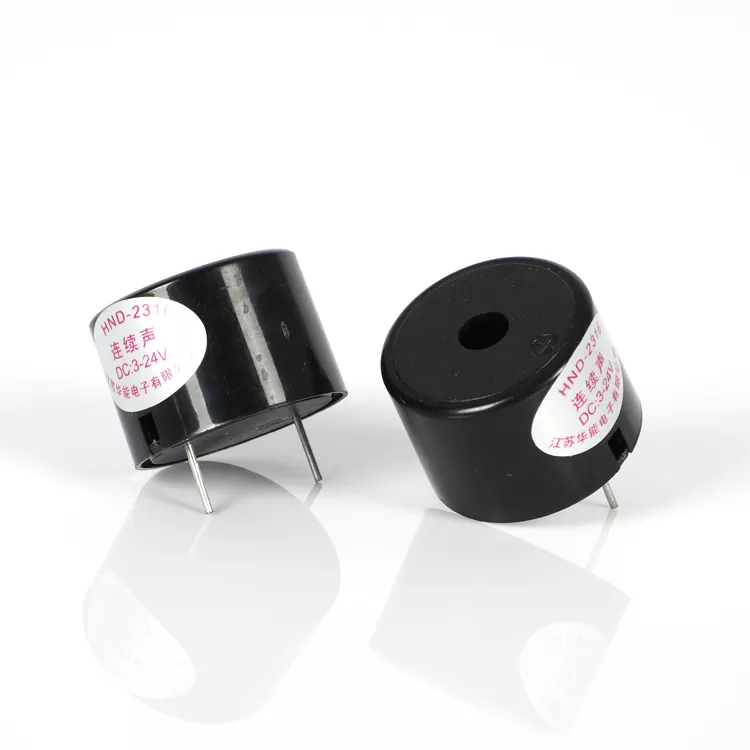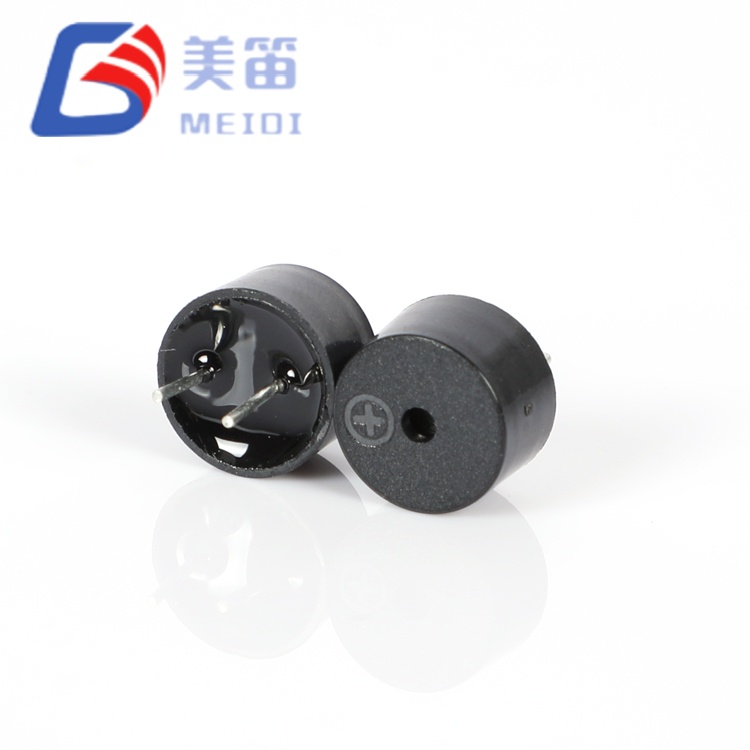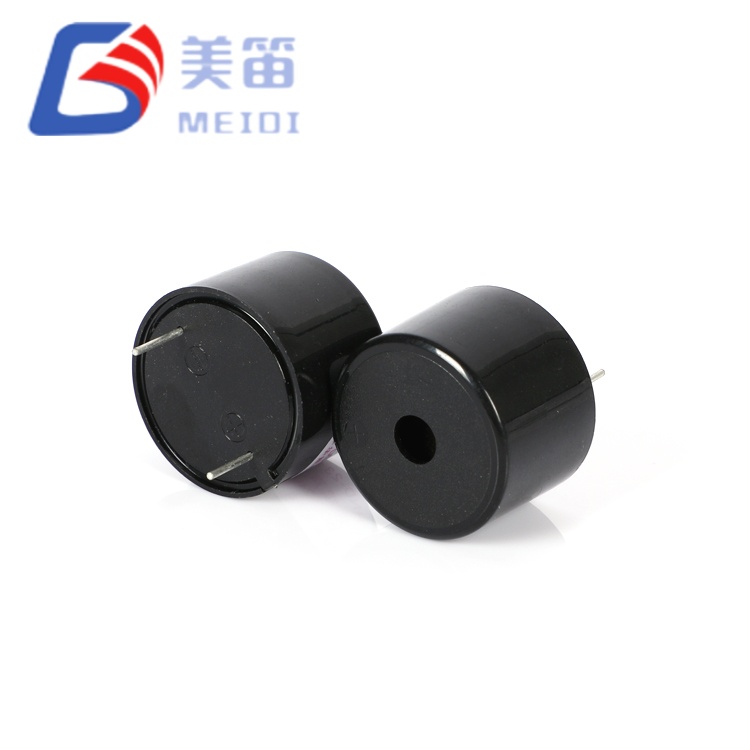
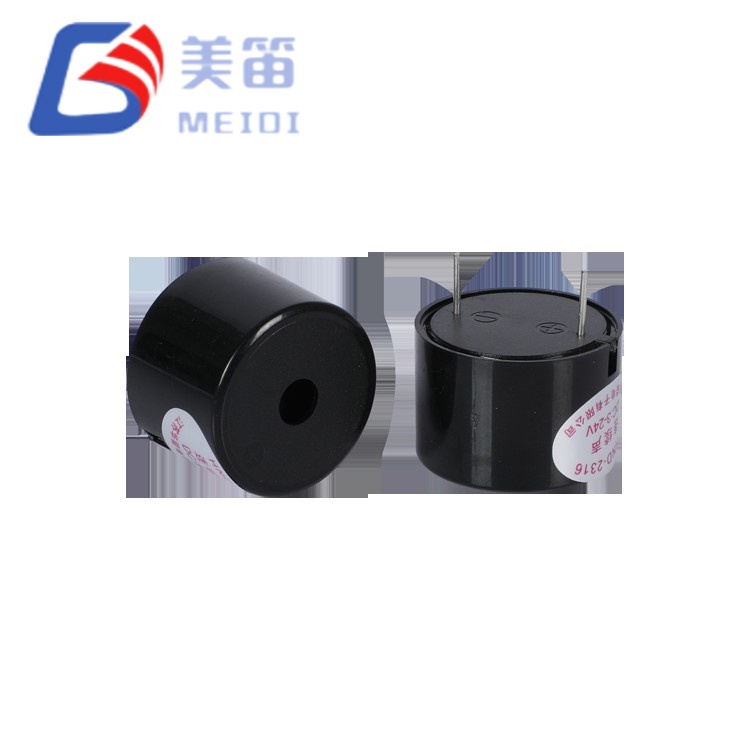
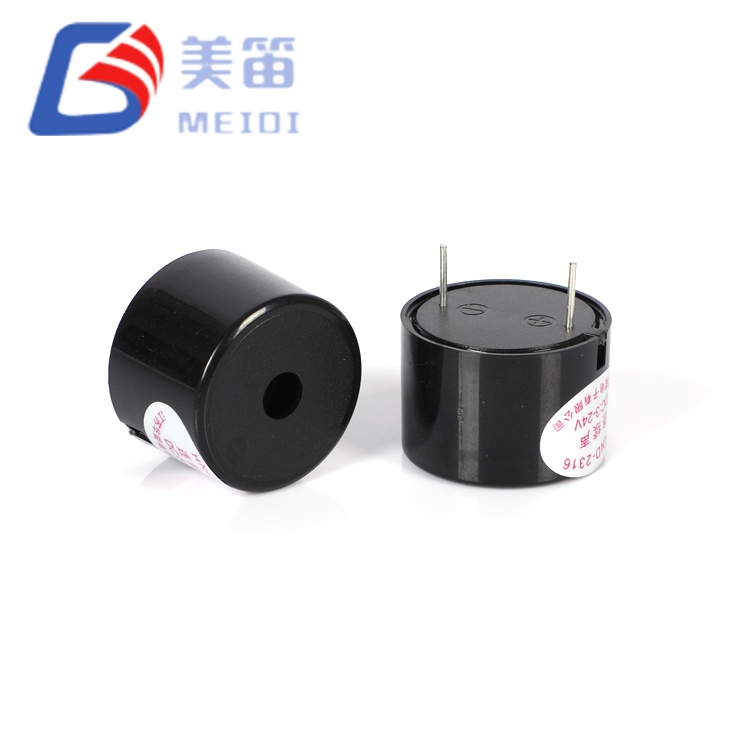
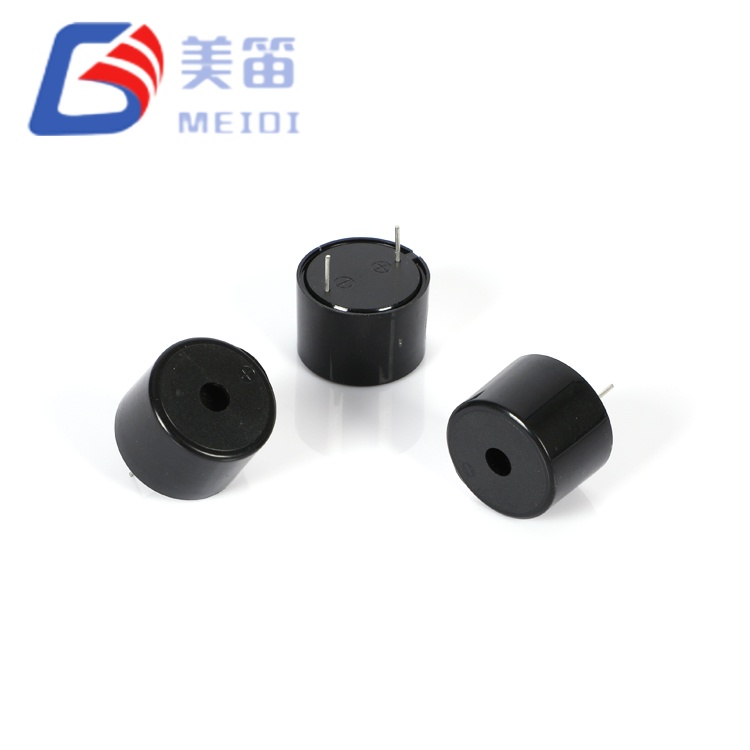
For equipment that already provides a DC power rail, the 2316 Active Piezoelectric Buzzer offers a self‑contained audible alert solution that requires no external audio driver or signal generator. Inside its black ABS housing — 23 mm in diameter and 16 mm tall — a Φ23 mm piezo diaphragm is paired with a built‑in oscillation circuit. Applying any voltage between 3 V and 24 V DC immediately produces a tone centered at 3000 Hz. When powered at the nominal 12 VDC, sound pressure level reaches at least 90 dB at a 10 cm distance, while current consumption stays below 10 mA. The unit weighs 5 g and installs through standard through‑hole pins, making it straightforward to integrate into wave‑soldered or hand‑assembled boards.
Built‑in oscillation — DC voltage directly produces 3000 Hz tone
12 VDC rated, 3–24 VDC operating range
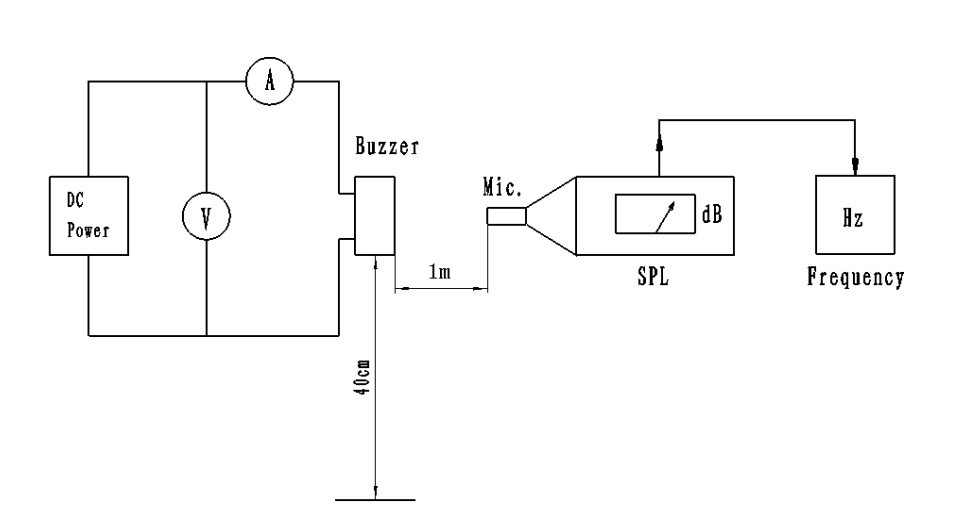
≥90 dB SPL at 10 cm, ≤10 mA consumption under specified test conditions
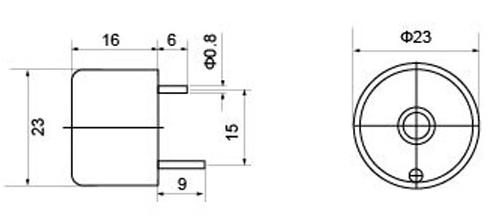
Φ23.0 × 16.0 mm through‑hole package, 5 g
Continuous operation from -20 ℃ to +80 ℃
The internal circuit of the 2316 Active Piezoelectric Buzzer is a self‑oscillating topology that excites the piezoelectric diaphragm at its mechanical resonance. The designer only needs to provide a DC voltage within 3–24 V; the on‑board IC handles frequency generation and drive waveform shaping. This eliminates the need for an external clock source and simplifies PCB layout.
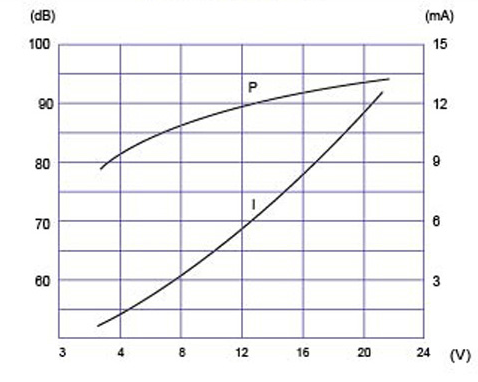
Current consumption is specified at ≤10 mA when measured with a 12 Vp‑p square wave at 3000 Hz, and actual draw under DC operation typically falls below 6 mA, as shown in the test report. The wide supply tolerance accommodates battery voltage decay, unregulated adapters, and industrial bus fluctuations without affecting tone stability.
For soldering, both wave (260 ℃, 4–6 s) and manual (350 ℃, 2–5 s) methods are compatible, with a maximum of 2–3 thermal cycles. The recommended clearance between the housing and the solder bath is 2.0 mm.
| Parameter | Value | Test Conditions / Notes |
| Product Type | Piezoelectric Active Buzzer | — |
| Rated Voltage | 12 VDC | — |
| Operating Voltage | 3–24 VDC | — |
| Resonant Frequency | 3000 ± 500 Hz | — |
| Sound Output at 10 cm | ≥90 dB | 3000 Hz square wave, 12 Vp‑p |
| Current Consumption | ≤10 mA | 3000 Hz square wave, 12 Vp‑p; specification ≤10 mA; test report header may state ≤15 mA — see Test Report |
| Operating Temperature | -20 ℃ ~ +80 ℃ | Continuous |
| Storage Temperature | -30 ℃ ~ +85 ℃ | Non‑operating |
| Dimensions (Dia × H) | Φ23 ± 0.5 × 16 ± 0.3 mm | Body only; drawing tolerance ±0.5 mm unless specified |
| Weight | 5 g | — |
| Housing Material | Black ABS | — |
| Capacitance | 12 ± 40% nF | Reference value per specification header; not verified per sample |
| Mounting Type | Through‑Hole | Wave / Manual solder |
Each production lot of the HND‑2316 is sampled for the following seven‑item reliability sequence. The conditions are part of MEIDI's ISO 9001 quality plan and are designed to represent the environmental stresses encountered during transport, storage, and operation.
| Test Item | Condition | Acceptance Criteria |
| Humidity | 50 ± 5 ℃, 90–95% RH, 48 h | All specifications satisfied after recovery |
| High Temperature | +80 ± 2 ℃, 48 h | All specifications satisfied after recovery |
| Low Temperature | -30 ± 2 ℃, 48 h | All specifications satisfied after recovery |
| Temperature Cycling | -30 ℃ ↔ +80 ℃, 30 min dwell, 5 cycles | All specifications satisfied after recovery |
| Drop | 75 cm to 10 mm hardwood, 3 drops | Appearance and electrical performance verified |
| Vibration | 10–55 Hz, 1.0 mm single amplitude, XYZ axes, 0.5 h total | No mechanical or electrical degradation |
| Solder Heat Resistance | 250 ± 5 ℃, 10 ± 0.5 s, 2.0 mm body-to-solder distance | Dimensions and performance meet specification |
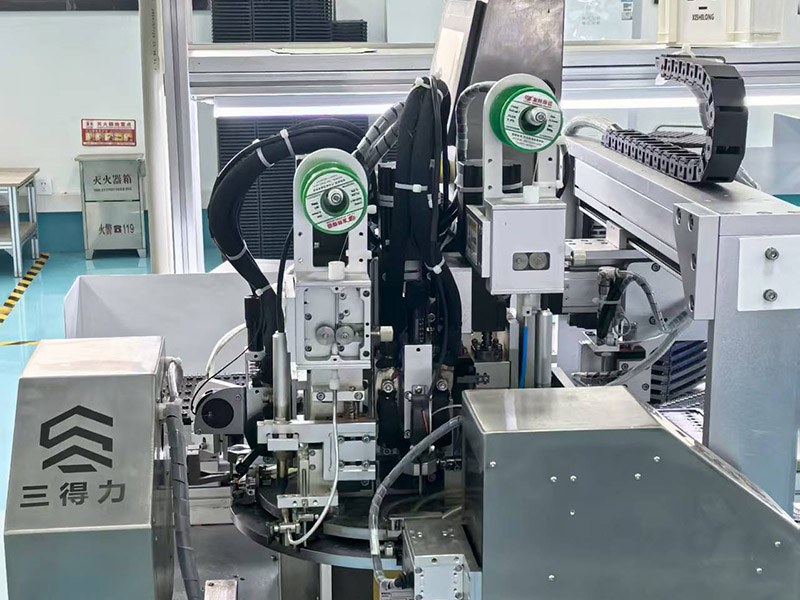
The 2316 Active Piezoelectric Buzzer is built in MEIDI's Jiangsu production site, where automated lines handle piezo element bonding, PCB assembly, housing closure, and final acoustic testing. Each unit passes an end‑of‑line check that records SPL, frequency, and current at 12 Vp‑p, 3000 Hz. The data is logged for traceability. In‑process controls include incoming material verification, solder joint inspection, and periodic reliability sampling according to the protocol described above.
With over a decade of buzzer manufacturing experience, MEIDI maintains a capacity exceeding 50 million units per month across its product lines, supported by in‑house mold fabrication and ceramic processing. This vertical integration helps ensure stable supply and consistent batch quality for customers requiring both prototyping quantities and high‑volume deliveries.

DC‑powered machine status panels in factories, operating on 12 V or 24 V bus.
Medical devices such as patient monitors or infusion pumps, where a simple DC alert tone is required without additional signal lines.
Security alarm keypads and access controllers with through‑hole PCB assembly.
Automotive cabin indicators (door‑open chime, seatbelt warning) powered from a 12 V battery rail.
Portable test instruments that run from a 3.7 V Li‑ion cell, utilizing the wide voltage range to maintain audibility as the battery discharges.
The following ten‑sample data was collected with a 12 Vp‑p square wave at 3000 Hz. Measured SPL values (99–105 dB) exceed the ≥90 dB minimum. Current readings (5.00–5.33 mA) are well within the ≤10 mA parameter limit and also below the ≤15 mA figure occasionally referenced in report headers. Frequency measurements (3050–3200 Hz) fall within the 3000 ± 500 Hz specification. Dimensions are confirmed to Φ23 × 16 mm tolerances.
| Sample | SPL (dB) | Current (mA) | Frequency (Hz) | Diameter (mm) | Height (mm) |
| 1 | 102 | 5.00 | 3100 | 22.92 | 16.01 |
| 2 | 99 | 5.25 | 3200 | 22.97 | 16.03 |
| 3 | 103 | 5.30 | 3150 | 23.01 | 16.10 |
| 4 | 101 | 5.26 | 3150 | 22.98 | 16.09 |
| 5 | 102 | 5.31 | 3180 | 23.03 | 16.05 |
| 6 | 102 | 5.27 | 3160 | 23.05 | 15.99 |
| 7 | 104 | 5.31 | 3200 | 22.98 | 16.01 |
| 8 | 105 | 5.33 | 3150 | 22.88 | 16.02 |
| 9 | 103 | 5.10 | 3050 | 23.00 | 15.98 |
| 10 | 102 | 5.13 | 3080 | 23.01 | 16.01 |
Conclusion: PASS. Appearance, polarity, and tape direction conform.
1. Apply only DC voltage within 3–24 V. Transients or reverse polarity may permanently damage the internal IC.
2. The housing is not sealed. Prevent liquids, flux residue, or cleaning solvents from entering the sound port.
3. In environments with corrosive gases (e.g., H₂S, SO₂), house the buzzer in a protected compartment or use conformal coating on the terminals only.
4. Sound output is sensitive to supply voltage. Verify that your power rail can deliver the required current, especially when multiple buzzers share the same source.
5. Do not block the acoustic opening. Even a partial obstruction can reduce SPL by several decibels and shift the frequency.
6. Store in sealed bags with desiccant until assembly. Moisture can oxidize pins and affect solderability.
1. Does the HND‑2316 need an external signal to produce sound?
No. The built‑in oscillator generates the 3000 Hz tone as soon as a DC voltage is applied. There is no need for a microcontroller, timer IC, or PWM signal.
2. Why does the test report use a square wave when the buzzer runs on DC?
The 12 Vp‑p square wave is a characterization standard used to verify acoustic performance under controlled electrical conditions. Under DC supply, the internal circuit produces a similar drive waveform. For DC‑drive SPL data, contact MEIDI.
3. The specification mentions ≤10 mA, but the test report header sometimes states ≤15 mA. Which value applies?
The product parameter table's ≤10 mA is the primary specification. The ≤15 mA figure in some test report headers is a documentation inconsistency. Actual sample measurements (typically around 5 mA) confirm the lower limit. MEIDI can provide a specification clarification for your order.
4. Can I use the HND‑2316 with a 3.3 V microcontroller supply?
Yes, as long as the 3.3 V rail is within the 3–24 V operating range and can source the required current. SPL will be lower than at 12 V; contact MEIDI for voltage‑vs‑SPL characterization curves.
5. What soldering profile is recommended for wave soldering?
Wave soldering at 260 ± 5 ℃ for 4–6 seconds, with the housing kept at least 2.0 mm from the solder wave. Up to 2–3 passes are allowed. Manual soldering at 350 ℃ for 2–5 s is also acceptable.
6. Is the HND‑2316 suitable for outdoor use?
The operating temperature range supports mild outdoor conditions, but the housing is not weatherproof. If exposure to rain or dust is possible, place the buzzer inside a ventilated water‑resistant enclosure.
For datasheets, DC‑drive characterization, reliability reports, or application support for the HND‑2316, contact MEIDI with your requirements. Engineering response is typically within one business day.
Address
No.6, Wenlin Road, Chenbao Town, Xinghua City, Jiangsu Province, China
Tel