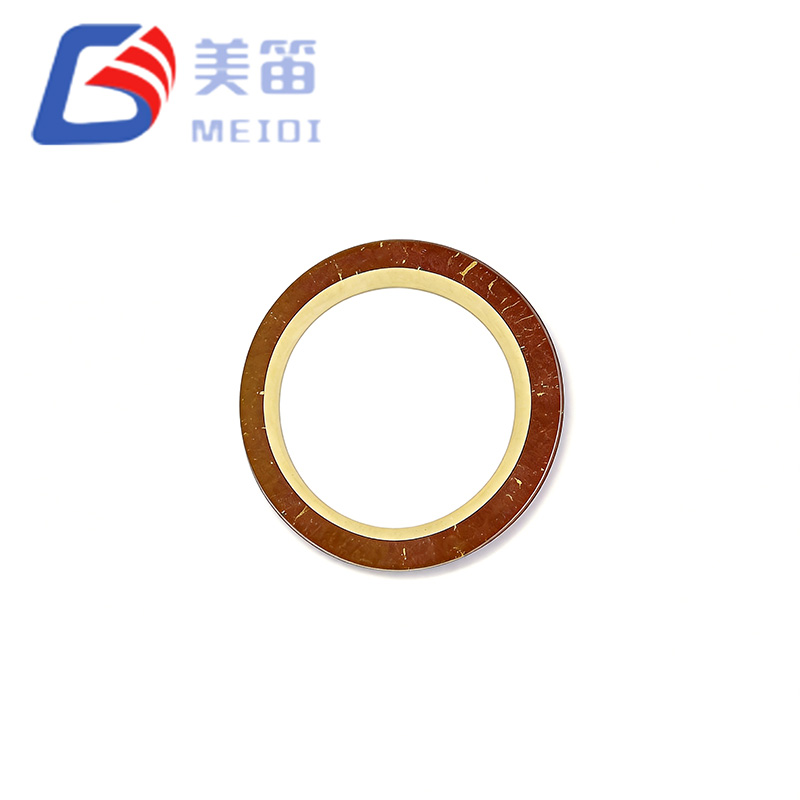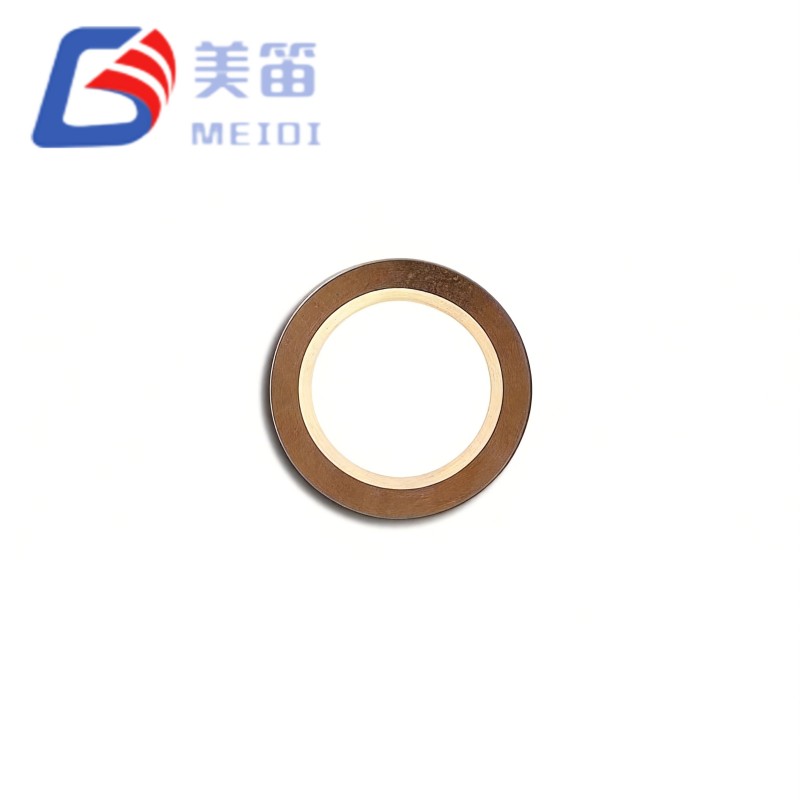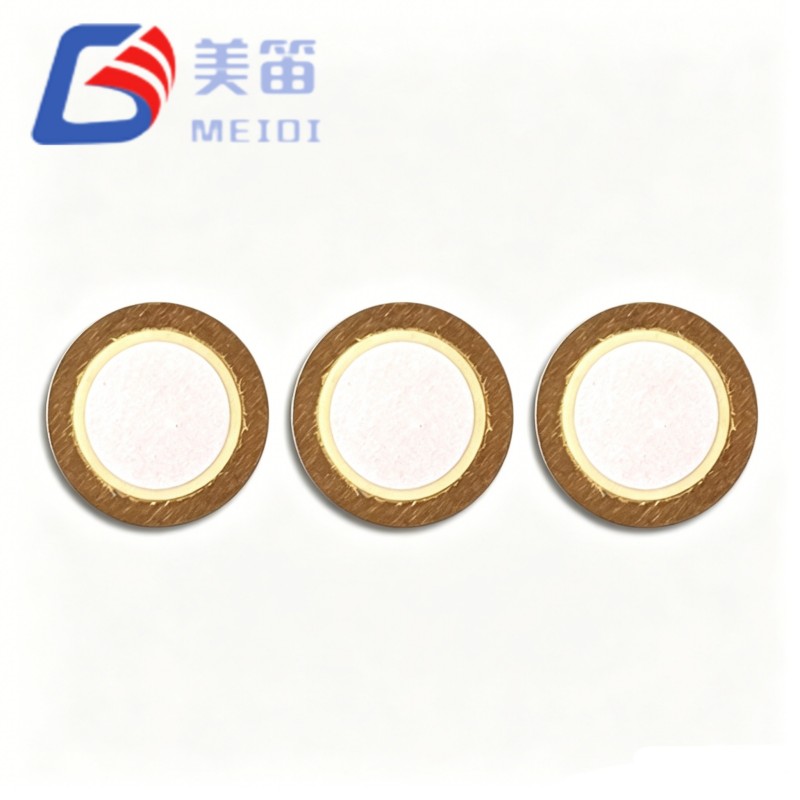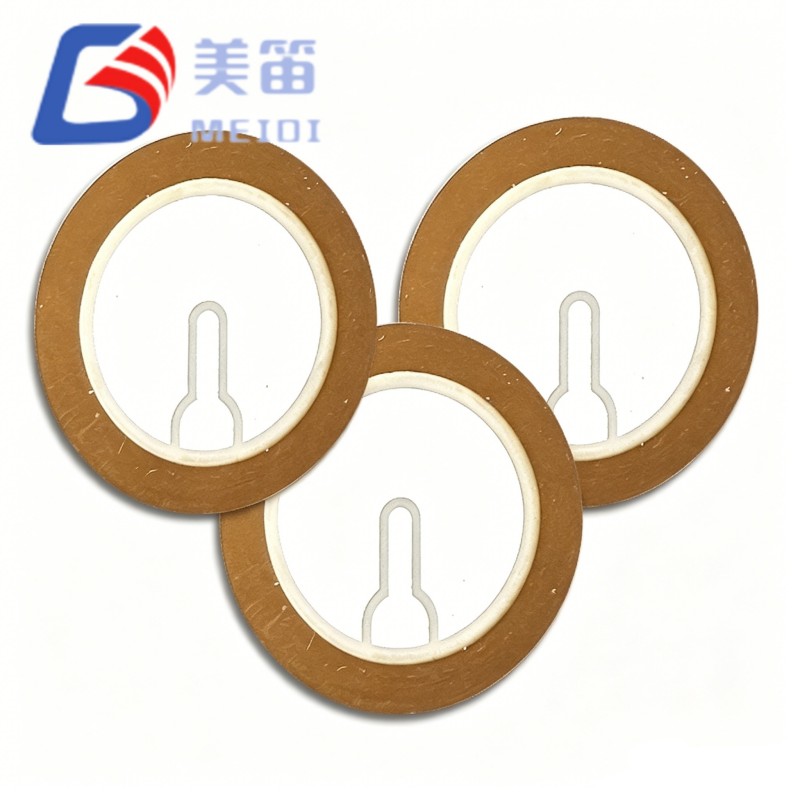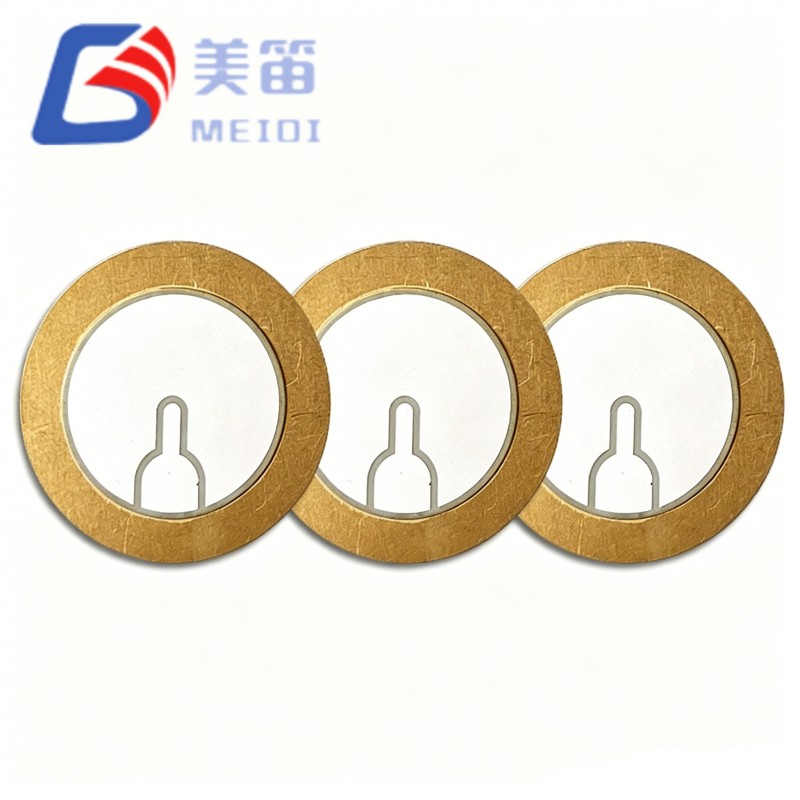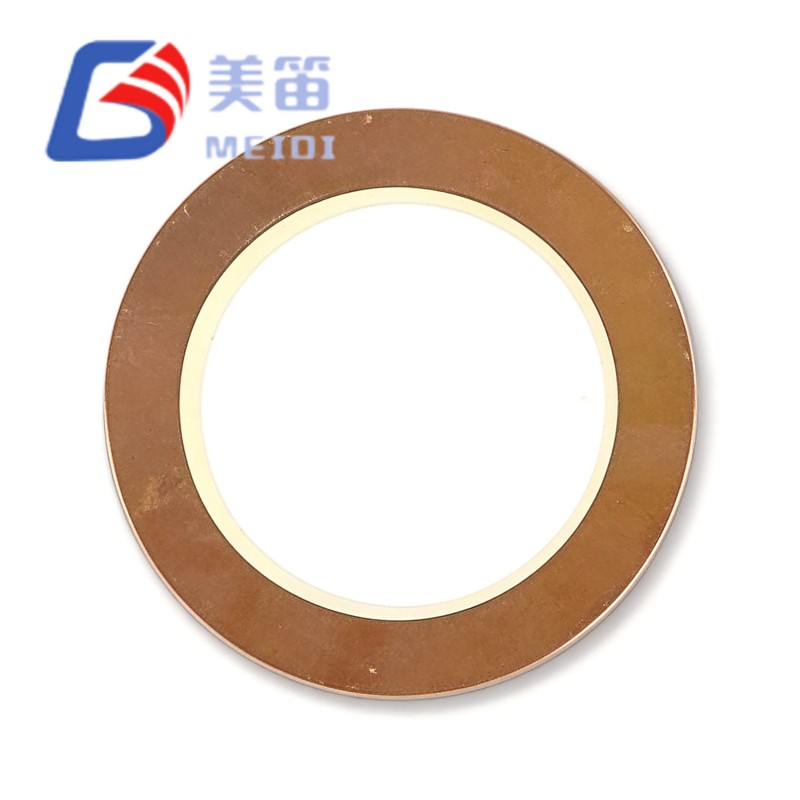
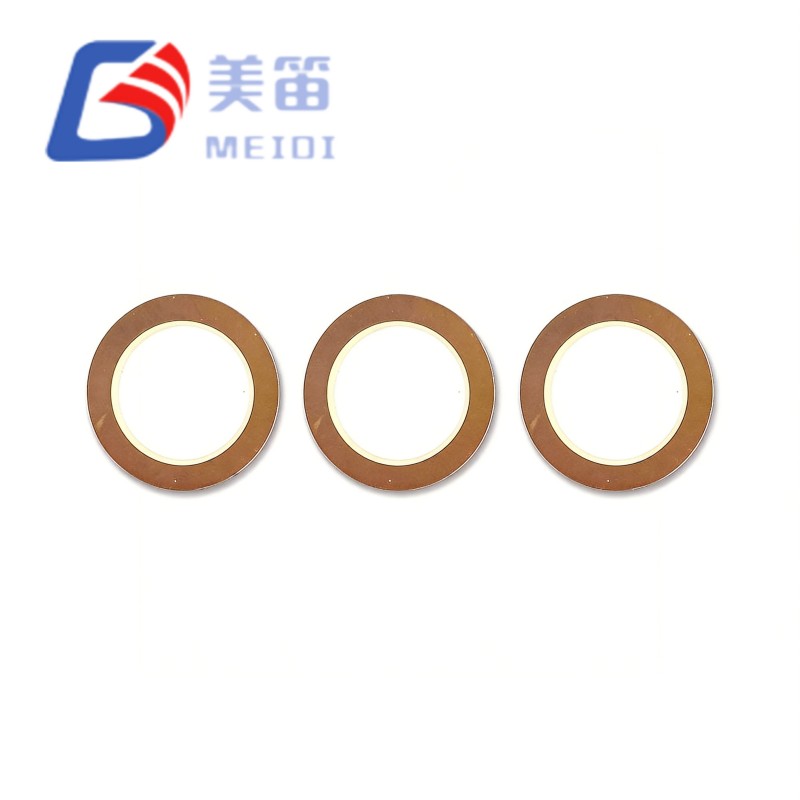
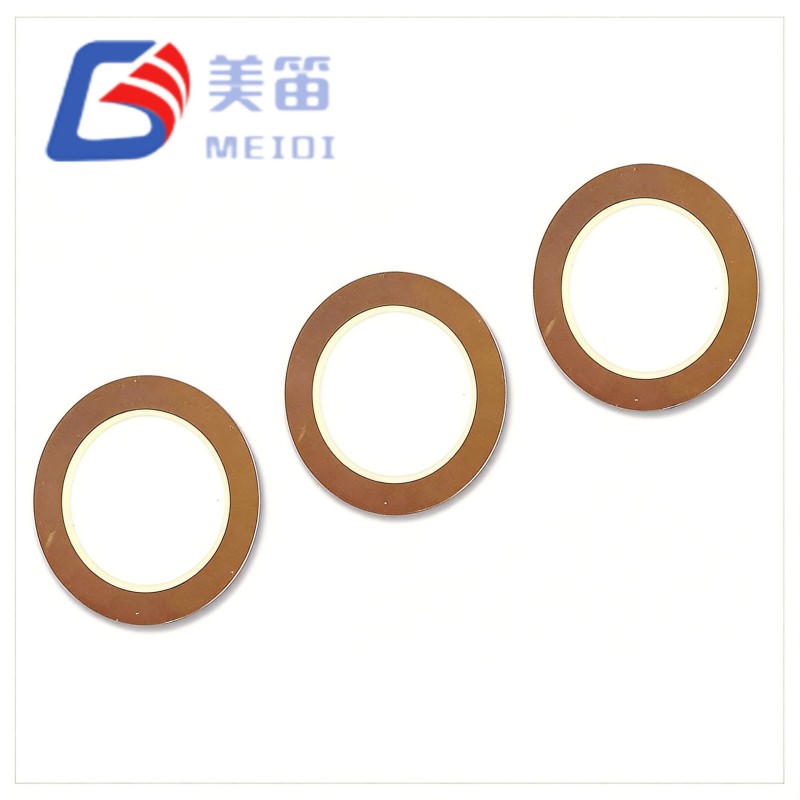
The 11mm Brass Piezo Ceramic Element is a brass‑substrate piezoelectric element tuned to 9.0 kHz, designed for embedded acoustic modules that benefit from a higher‑pitched, crisper alert tone. Its 11.0 mm diameter and 0.18 mm thickness match the mechanical footprint of the 7.8 kHz FT‑11T variant, so a single PCB layout and housing cavity can support both frequencies. The 12000 pF capacitance and ≤500 Ω equivalent resistance allow the element to be driven efficiently from a low‑voltage supply, either directly from a 3.3 V MCU pin or through a simple LC boost circuit.
The resonant frequency is set at 9.0 kHz with a batch tolerance of ±11.1 %, delivering a tone that is perceptually sharper and more urgent than lower‑frequency alternatives, which can aid alert differentiation in multi‑tone systems.
An 11.0 mm diameter and 0.18 mm total thickness make this element mechanically interchangeable with the FT‑11T‑7.8A1, enabling A/B frequency evaluation without modifying the PCB land pattern or enclosure.
The nominal capacitance of 12000 pF at 120 Hz provides a high capacitive load that reduces the drive voltage requirement, making direct 3.3 V MCU PWM feasible in space‑constrained battery‑powered modules.
An active electrode diameter of 8.0 mm, reduced from the 9.0 mm used on the 7.8 kHz model, concentrates the electric field to improve electromechanical coupling at the higher resonance.
The brass substrate with a fired silver electrode maintains the same thermal conductivity and solderability standard as the rest of the FT‑11T series, ensuring predictable assembly behaviour.
An equivalent resistance of ≤500 Ω supports high‑Q LC resonant boost circuits, allowing sound pressure levels above 75 dB to be achieved from minimal drive power.
| Parameter | Value | Test Conditions |
| Product Type | Piezoelectric Ceramic Element | — |
| Model | FT‑11T‑9.0A1 | — |
| Resonant Frequency | 9.0 ± 1.0 kHz | Free‑air, 25 ℃ |
| Frequency Tolerance | ±11.1 % | Batch consistency |
| Free Capacitance | 12000 ± 30% pF | At 120 Hz, 1Vrms, 25 ℃ |
| Equivalent Resistance | ≤ 500 Ω | At resonant frequency |
| Dielectric Loss (tanδ) | ≤ 5 % | At 120 Hz, 1Vrms |
| Substrate Material | Brass | — |
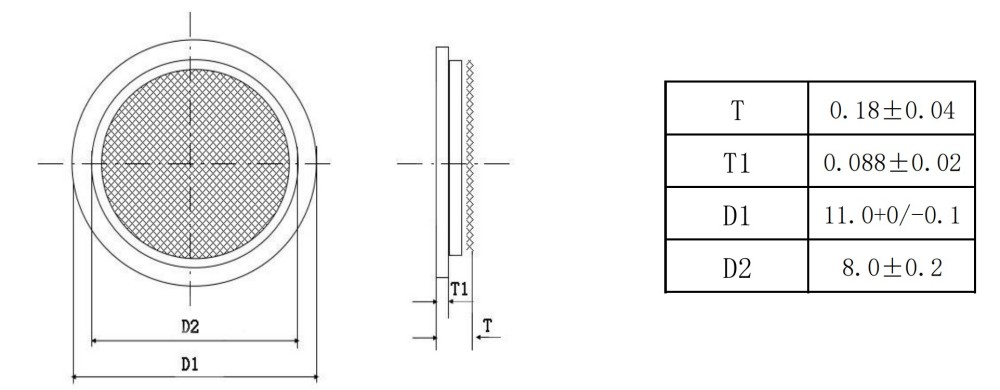
| Ceramic Disc Diameter (D1) | 11.0 +0 / -0.1 mm | — |
| Active Electrode Diameter (D2) | 8.0 ± 0.2 mm | — |
| Total Thickness (T) | 0.18 ± 0.04 mm | Ceramic + substrate |
| Ceramic Thickness (T1) | 0.088 ± 0.02 mm | PZT layer |
| Operating Temperature | -20 ℃ ~ +70 ℃ | Continuous |
| Storage Temperature | -30 ℃ ~ +80 ℃ | Non‑operating |
| Electrode Material | Silver (standard) | Fired silver paste |
| Insulation Resistance | ≥ 100 MΩ (typical) | At 100VDC, 25 ℃ |
Multi‑tone wearable devices, such as fitness trackers and smartwatches, where the 9.0 kHz tone serves as a distinct high‑frequency alert for priority notifications alongside a lower‑frequency buzzer.
Portable medical diagnostic instruments that benefit from tonal hierarchy, using 9.0 kHz for critical alarms and 7.8 kHz for informational signals on the same PCB.
High‑density IoT sensor nodes, including door/window sensors and water leak detectors, where the 9.0 kHz fundamental helps reduce acoustic interference with 2.4 GHz wireless harmonics.
Industrial HMI touch panels that employ dual frequencies for operator feedback, for example a 7.8 kHz confirmation beep and a 9.0 kHz error alarm produced from identical mechanical footprints.
Consumer appliance control boards in microwave ovens, washing machines and refrigerators, where the higher pitch penetrates kitchen ambient noise more effectively.
Educational and toy electronics that require a simple high‑note tone for musical key responses or interactive learning feedback.
| Design Goal | FT‑11T‑9.0A1 Advantage |
| Add a second tone without a mechanical redesign | The element shares its 11.0 × 0.18 mm envelope with the 7.8 kHz variant, so the same land pattern and cavity can be used for either frequency. |
| Achieve a crisper, more urgent perceptual quality | The 9.0 kHz resonance produces a sharper tone that is easily distinguished from lower‑frequency hum, making it suitable for error and priority alerts. |
| Reduce electromagnetic interference with RF systems | The fundamental and its low‑order harmonics sit well below typical ISM bands; actual EMC performance depends on drive circuit layout, but the frequency choice is inherently benign. |
| Maintain efficient coupling at higher resonance | The 8.0 mm active electrode is optimised for the 9.0 kHz mode, concentrating the electric field to keep the coupling coefficient high despite the increased frequency. |
| Simplify dual‑frequency BOM management | Both 7.8 kHz and 9.0 kHz models share the same capacitance and resistance specifications, allowing a single LC boost inductor value to be used with minor tuning adjustments. |
| Fit within ultra‑thin assemblies | The 0.18 mm profile, combined with a 0.5 mm brass substrate, allows the complete acoustic stack to remain under 1 mm in height. |
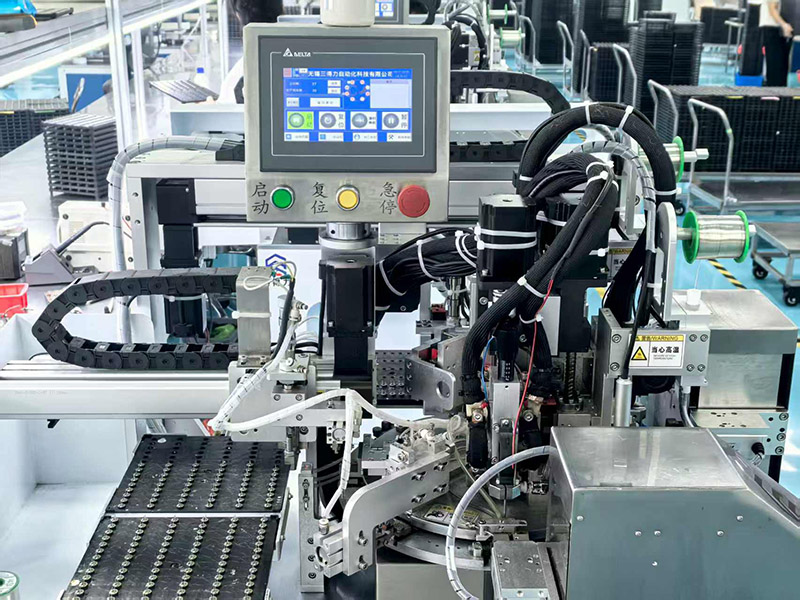
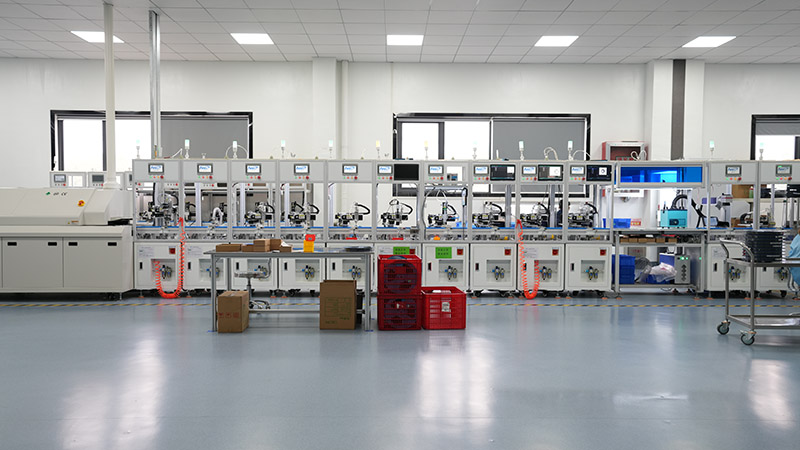
MEIDI Intelligent Technology has been producing piezoelectric ceramic components since 2011. The company operates a vertically integrated facility in Jiangsu, China, where ceramic powder processing, tape casting, electrode screen printing, high‑temperature sintering and polarisation are all carried out in‑house. This integration, coupled with an ISO 9001‑certified quality system, ensures repeatable electrical characteristics and full batch traceability for every element shipped.
The 11mm Brass Piezo Ceramic Element is manufactured on the same production platform as the FT‑11T‑7.8A1, with statistical process controls tailored to the 9.0 kHz target. Every production lot is subjected to a 100 % resonant frequency test in a free‑air impedance analyser, and units falling outside the 9.0 ± 1.0 kHz window are rejected. Capacitance is screened at 120 Hz and 1 Vrms, equivalent resistance is verified at ≤500 Ω, and dielectric loss is kept below 5 %. Dimensional checks cover the ceramic diameter, electrode diameter and total thickness. Thermal ageing at +70 °C for 48 hours confirms polarisation stability, and solderability is verified per J‑STD‑002. A lot code etched on the substrate edge links each unit to its pressing batch, sintering profile and test records, which are archived for ten years.
1. Can I drop the FT‑11T‑9.0A1 directly into a board designed for the 7.8 kHz version?
Mechanically, yes. Both elements have the same 11.0 mm diameter and 0.18 mm thickness, so no PCB or housing changes are required. Electrically, the drive circuit should be retuned. If your existing design uses a 6.8 mH inductor optimised for 7.8 kHz, a value closer to 4.7 mH will better match the 9.0 kHz resonance; alternatively, the parallel tuning capacitor can be reduced from 330 pF to 220 pF. Without retuning, the sound pressure level can drop by 8–12 dB.
2. Why is the active electrode smaller than on the 7.8 kHz model?
The 8.0 mm electrode (compared with 9.0 mm on the FT‑11T‑7.8A1) optimises the electromechanical coupling for the higher resonance. A smaller electrode area relative to the ceramic volume improves the uniformity of the electric field and reduces radial mode interference, helping the element maintain comparable acoustic output despite the higher frequency.
3. Does operating at 9.0 kHz create any EMC issues for wireless IoT devices?
The fundamental and its low‑order harmonics are far below common RF bands, so the frequency itself is not a direct source of interference. However, the fast switching edges of a square‑wave PWM drive can generate broadband noise. Standard EMC practices, such as placing a ceramic decoupling capacitor across the element and adding a series resistor on the driver output to slow the edges, are recommended. A near‑field probe scan around the drive circuit during pre‑compliance testing is a prudent step for FCC or CE certification.
4. How does the 9.0 kHz tone compare subjectively with 7.8 kHz?
The difference in perceived loudness is minimal. The 9.0 kHz tone is generally described as sharper and more attention‑grabbing, which can be useful for alarms, while the 7.8 kHz tone is somewhat softer and less intrusive. In environments dominated by low‑frequency noise, 9.0 kHz may offer slightly better audibility.
5. Is this element suitable for playing melodies or multiple frequencies?
The 11mm Brass Piezo Ceramic Element is a narrowband resonant device and its output drops significantly when driven off‑resonance. Simple beep patterns using on‑off keying of a 9.0 kHz carrier are achievable, but generating a range of musical notes with consistent volume is not practical. For melodic applications, a piezoelectric sounder with a broader frequency response or a miniature dynamic speaker would be a better choice.
For PCB integration guidance, cavity design recommendations, LC boost circuit tuning for 9.0 kHz, dual‑frequency implementation advice, or volume pricing, submit your requirements through the contact form. MEIDI applications engineering typically responds within one business day with technical documentation, simulation models and sample evaluation units accompanied by individual test data.
Address
No.6, Wenlin Road, Chenbao Town, Xinghua City, Jiangsu Province, China
Tel