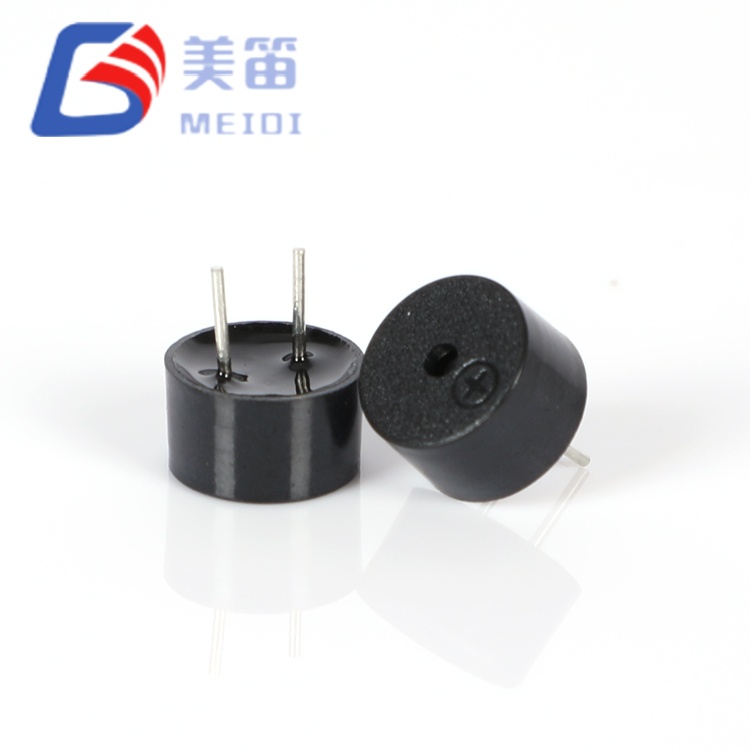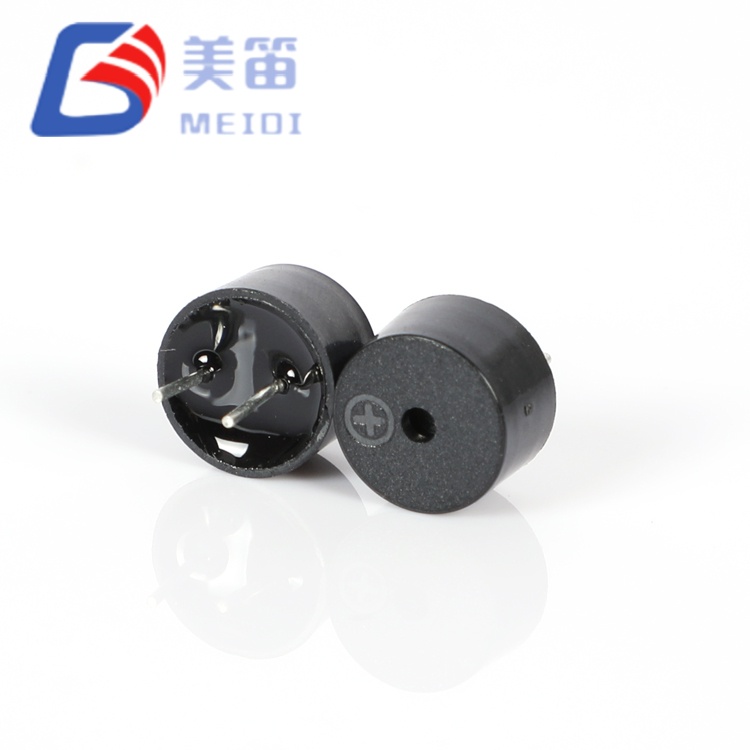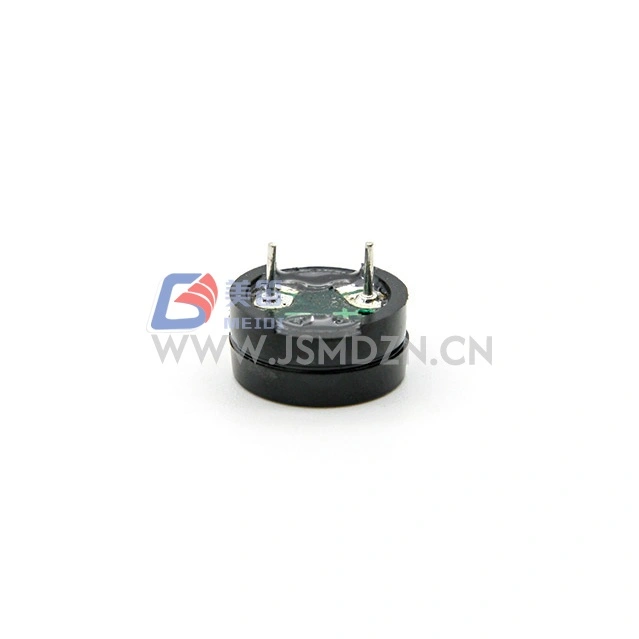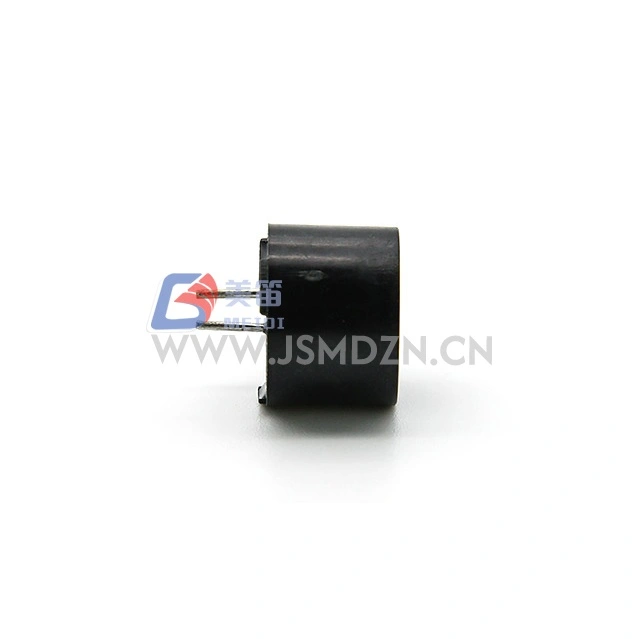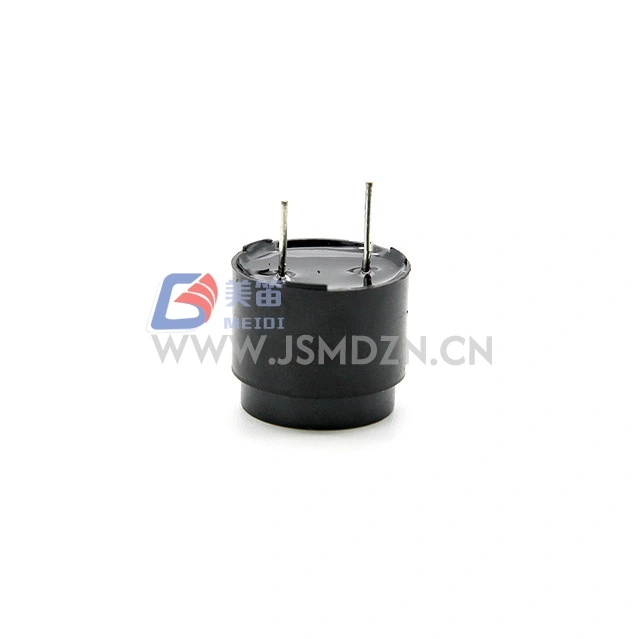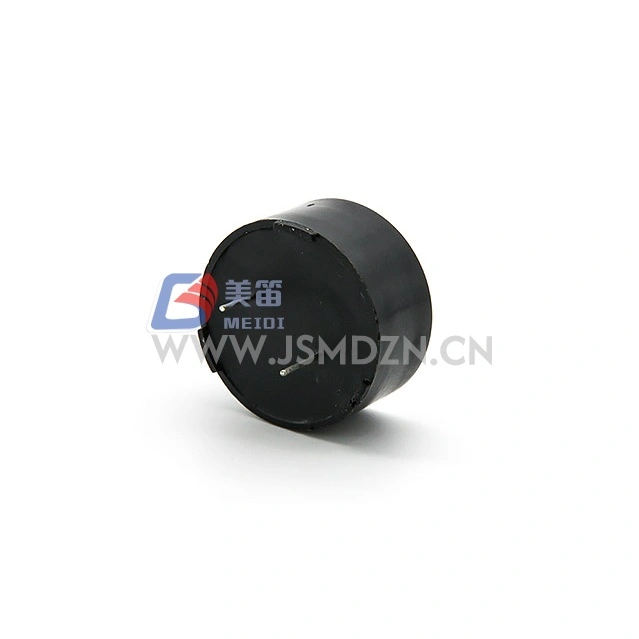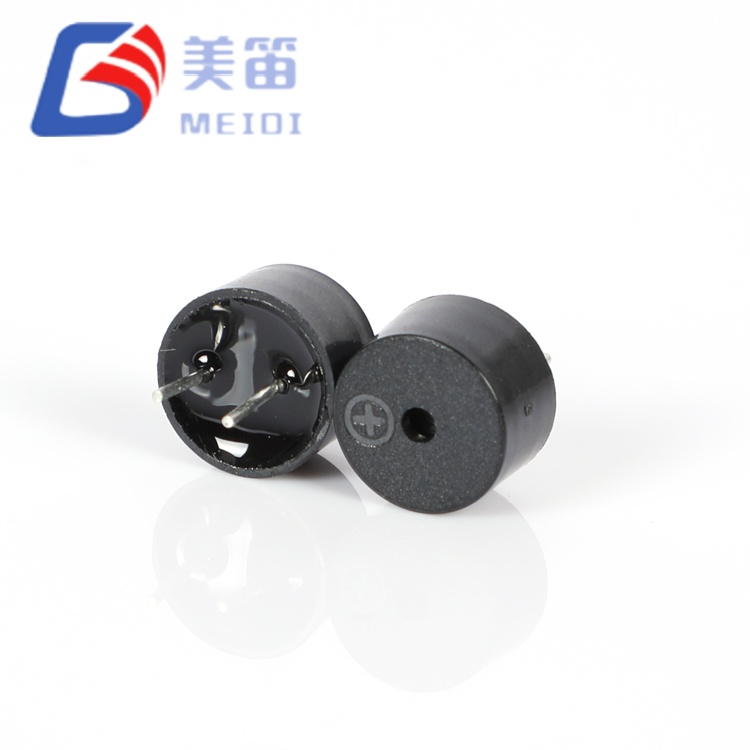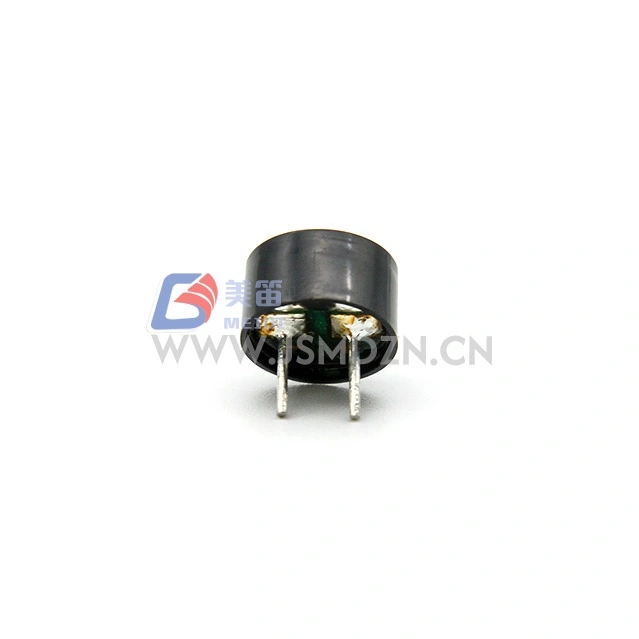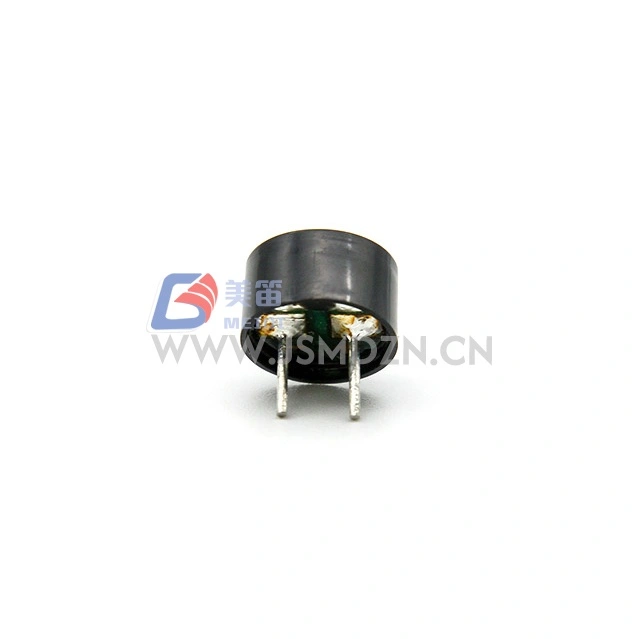
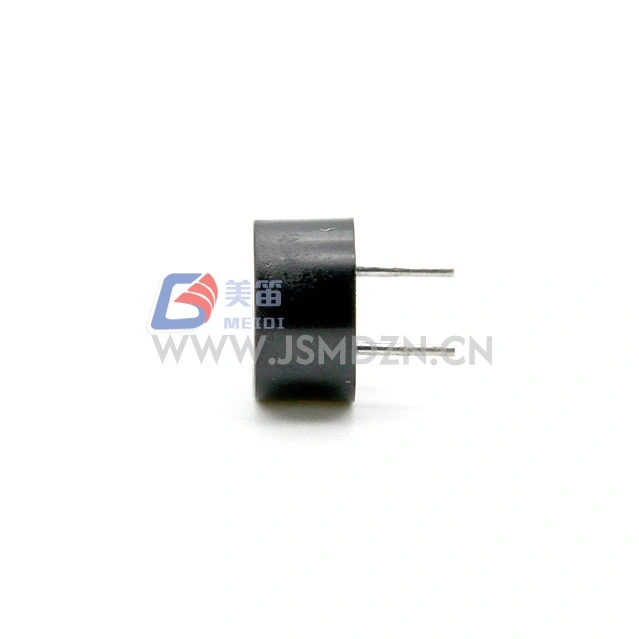
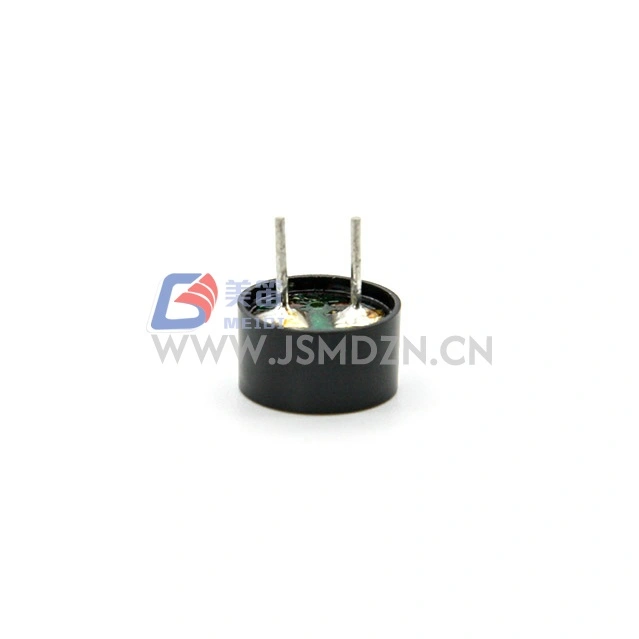
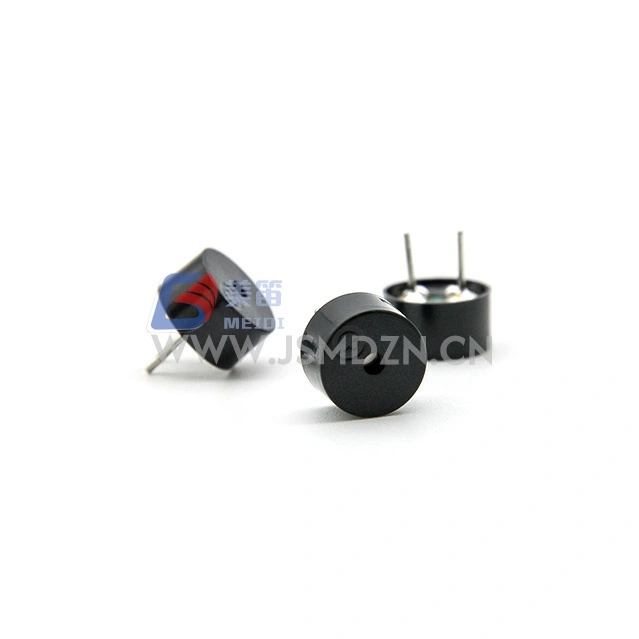
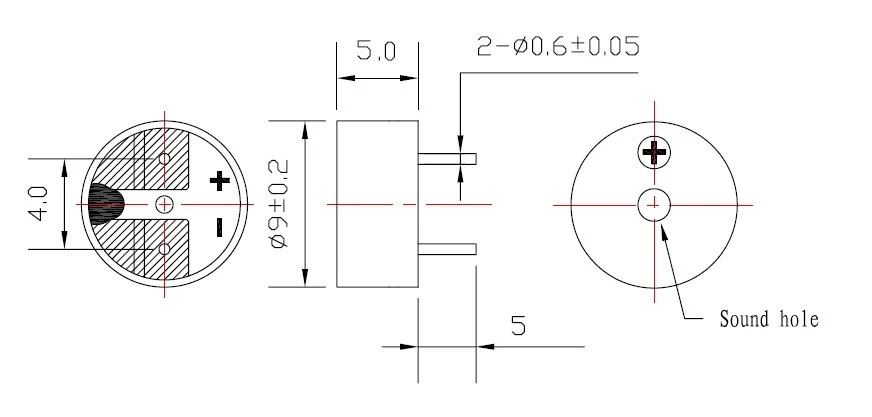
9 × 5 mm through‑hole package for direct PCB mounting
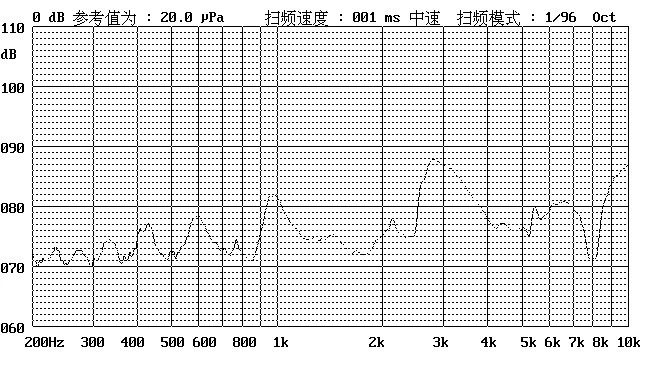
2700Hz resonant frequency for tonal output with external square wave drive
16Ω coil impedance for 3V‑class driver circuits
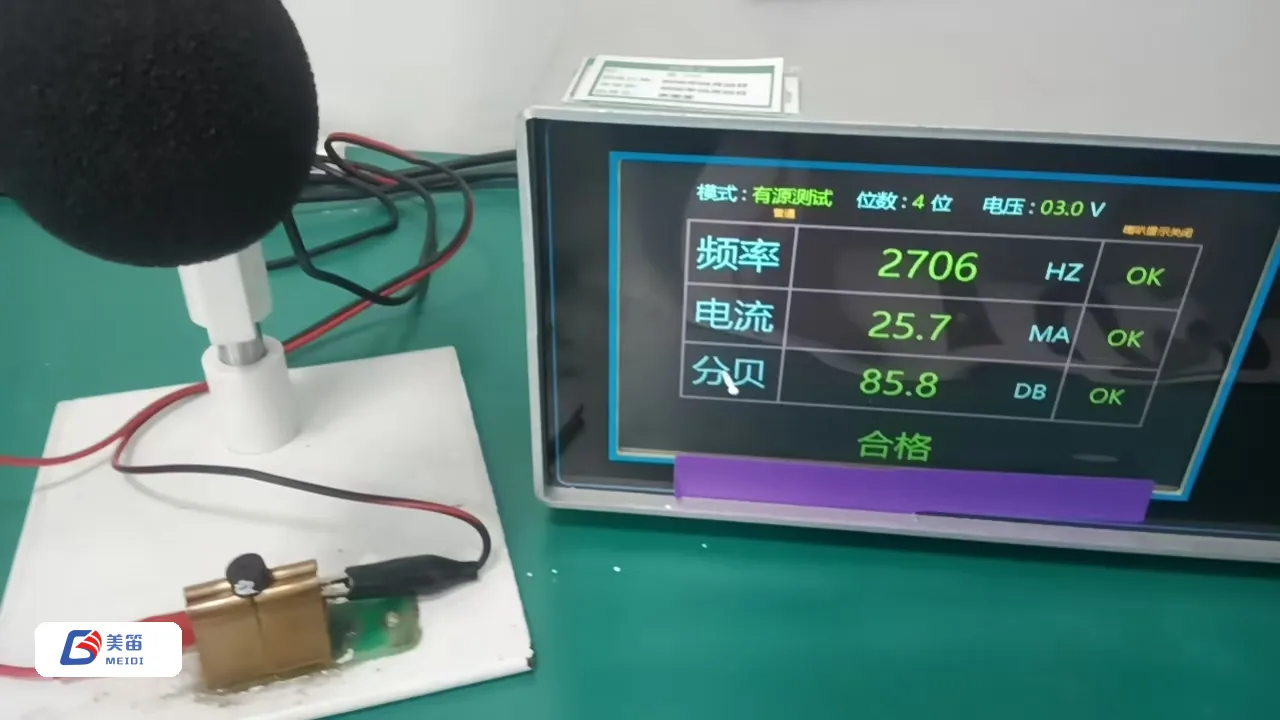
Min. 85dB sound pressure at 10cm under 3Vo‑p, 2700Hz, 50% duty cycle
3–7Vo‑p operating voltage range
Black PPO housing rated for -20℃ to +70℃ operation
The MEIDI HN‑9050 9x5mm Through-Hole Electromagnetic Passive Buzzer is a through‑hole electromagnetic passive buzzer that requires an external square wave or PWM drive signal to generate sound. With a rated voltage of 3Vo‑p and an operating range of 3–7Vo‑p, it accommodates 3V logic and buffered driver stages commonly used in industrial equipment. The 16Ω coil and 2700Hz resonant frequency provide a defined acoustic reference for alarm and status‑feedback designs. As a passive device, the HN‑9050 allows frequency and tone control through the external drive signal, supporting flexible sound generation across varied applications.
| Parameter | Value | Test Conditions |
| Product Type | Electromagnetic Passive Buzzer | — |
| Rated Voltage | 3Vo‑p | Resonant frequency reference |
| Operating Voltage | 3–7Vo‑p | Drive signal peak |
| Rated Current | Max. 80mA | At 2700Hz, 50% duty, 3Vo‑p square wave |
| Sound Pressure Level | Min. 85dB | At 2700Hz, 50% duty, 3Vo‑p, 10cm |
| Coil Resistance | 16 ± 4Ω | At 25℃, DC |
| Resonant Frequency | 2700Hz | At rated voltage |
| Operating Temperature | -20℃ ~ +70℃ | — |
| Storage Temperature | -30℃ ~ +80℃ | — |
| Net Weight | Approx. 1.5g | — |
| Housing Material | Black PPO | — |
| Environmental Protection | RoHS | — |
Standard Test Conditions: Temperature 25±3℃, Humidity 60±10% R.H., Pressure 860–1060hPa
Through‑hole PCB assemblies in industrial control units for status and fault alerts
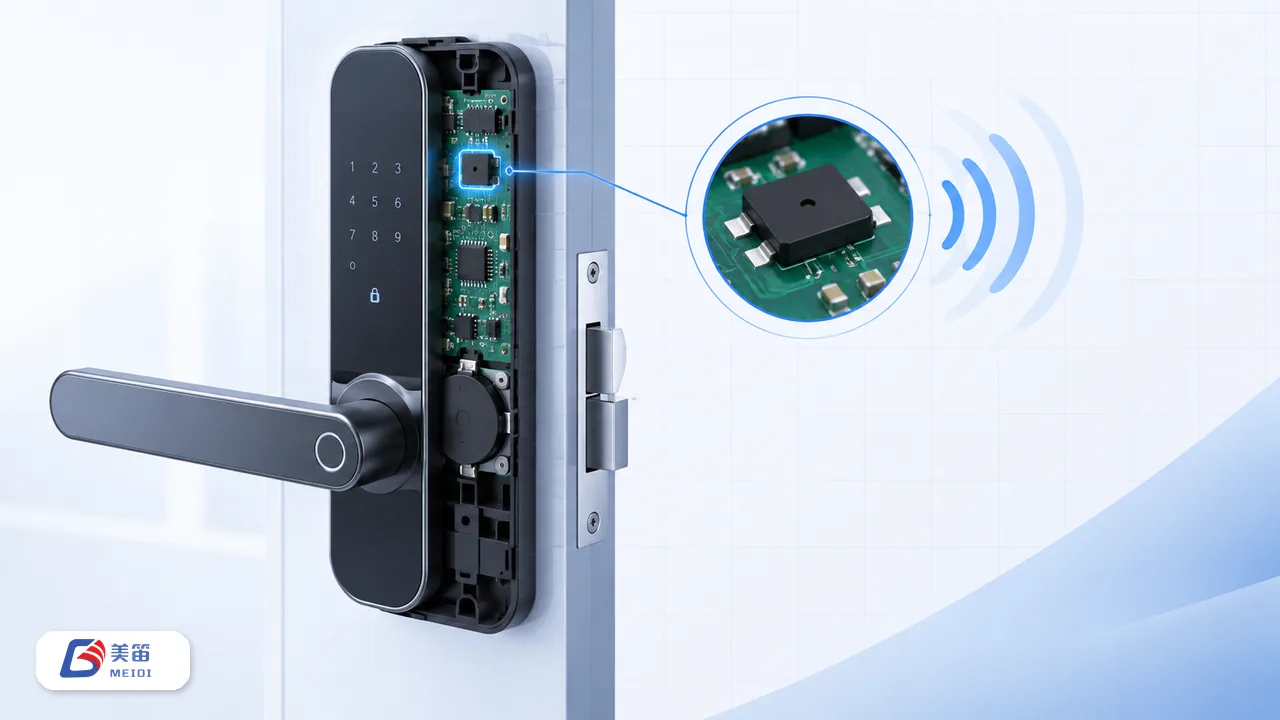
Alarm and security modules driven by external square wave sources
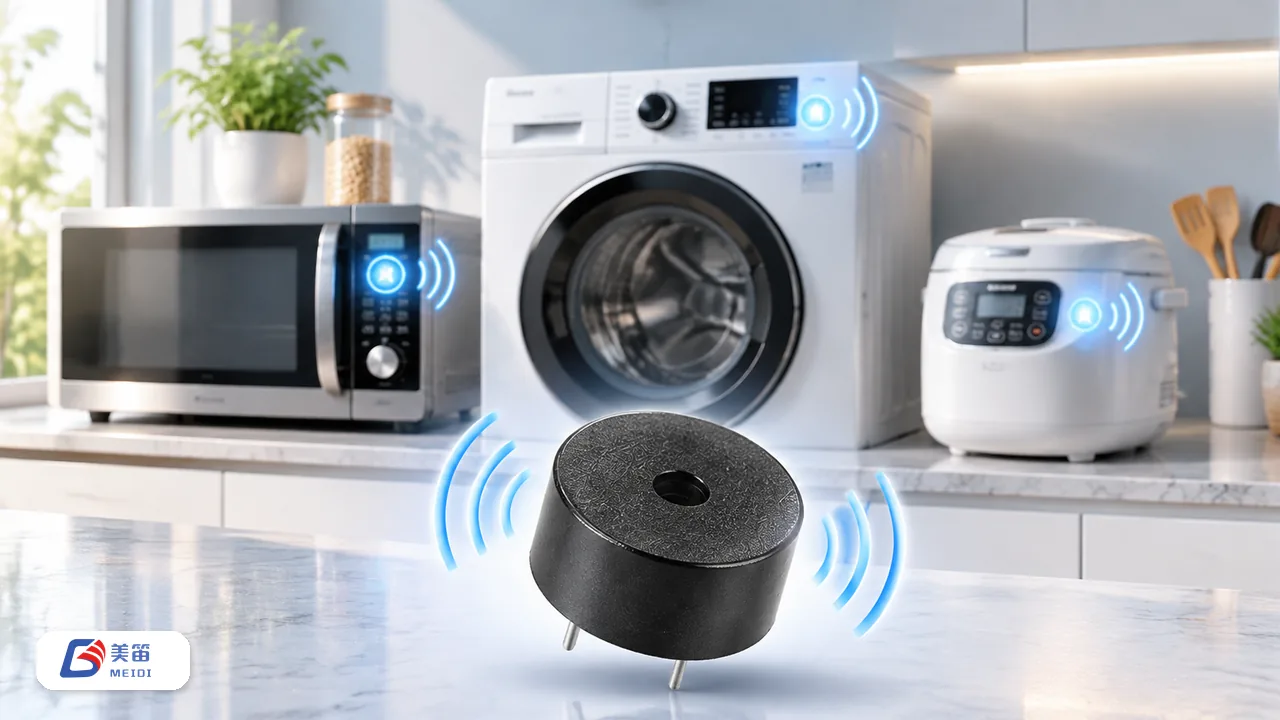
Household and commercial appliances with conventional PCB layouts
Office equipment and vending machines for timed audible signals
Measurement and instrumentation devices requiring tone feedback
Communication infrastructure for maintenance and alarm indication
| Design Requirement | HN‑9050 Advantage |
| Acoustic output in through‑hole format | Min. 85dB SPL in a 9 × 5 mm package |
| 3V system compatibility | 3Vo‑p rating with 3–7Vo‑p operating range |
| Manual and automated assembly | Through‑hole leads for hand solder and wave soldering |
| Supply variation tolerance | 7Vo‑p maximum operating voltage |
| Thermal stability | PPO housing across -20℃ to +70℃ |
MEIDI manufactures the HN‑9050 under controlled production processes, including incoming material inspection, coil resistance verification, and acoustic testing per production lot. Each lot is subjected to reliability tests covering life, high/low temperature, humidity, thermal shock, drop, and vibration. After any of these tests, the product must meet acceptance criteria with no functional degradation beyond the specified sound pressure tolerance.
| Test Item | Test Conditions |
| Life Test | 25±10℃, rated voltage, 1/2 duty resonant frequency square wave, 96 hours |
| High Temperature Test | +80℃ storage for 96 hours, recover at room temperature for 3 hours before testing |
| Low Temperature Test | ‑40℃ storage for 96 hours, recover at room temperature for 3 hours before testing |
| Humidity Test | +40±3℃, 90%–95% RH, 48 hours, recover at room temperature for 6 hours before testing |
| Thermal Shock Test | 70℃ 2 hours → -20℃ 2 hours (1 cycle), interval 1 hour between cycles, total 10 cycles |
| Drop Test | Standard packaging, all 6 faces and 3 edges, drop from 1.2m height onto thick wood board |
| Vibration Test | 1000 cycles/min, amplitude 1.5mm, 1 hour per axis, 3 axes total |
Caution: Avoid foreign materials entering the product, including magnetic materials, water‑soluble materials, and corrosive gases, as these may affect electrical performance.
1. What drive signal is required for the HN‑9050?
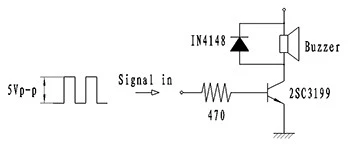
The HN‑9050 is a passive buzzer and requires an external square wave or PWM signal. A 2700Hz, 50% duty cycle square wave at 3Vo‑p produces the rated Min. 85dB output at 10cm. Contact MEIDI for drive circuit application notes.
2. Can this buzzer operate at voltages other than 3Vo‑p?
Yes. The operating voltage range is 3–7Vo‑p. Sound pressure scales with drive voltage; rated SPL is specified at 3Vo‑p. For voltages outside this range, contact MEIDI for verification.
3. How does the 16Ω coil resistance affect driver design?
The 16Ω coil draws a maximum of 80mA at 3Vo‑p. Verify your driver stage can source this current with adequate saturation voltage and heat dissipation.
4. What soldering methods are compatible with the PPO housing?
The through‑hole leads support standard hand soldering and wave soldering. Avoid prolonged thermal exposure beyond the housing temperature rating. Contact MEIDI for recommended soldering profiles.
5. Is the HN‑9050 pin‑compatible with other 9mm through‑hole buzzers?
Contact MEIDI for the mechanical drawing and recommended hole pattern to verify footprint compatibility with your PCB.
For technical datasheets, drive circuit notes, reliability test reports, or OEM customization of the HN‑9050, contact MEIDI. Our team supports evaluation units and application engineering for through‑hole buzzer integration.
Address
No.6, Wenlin Road, Chenbao Town, Xinghua City, Jiangsu Province, China
Tel