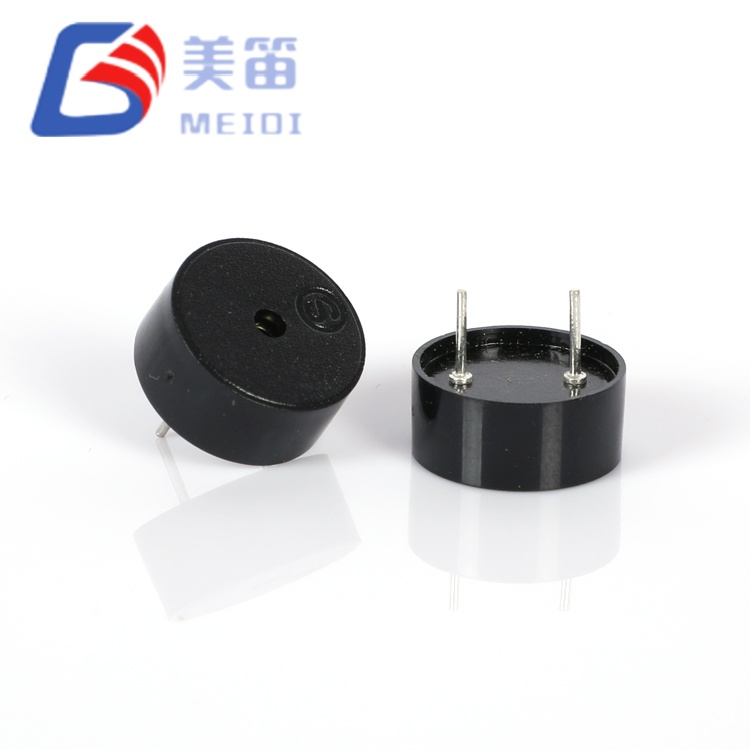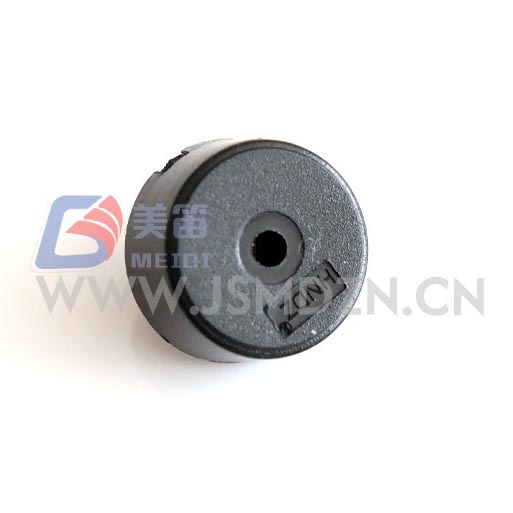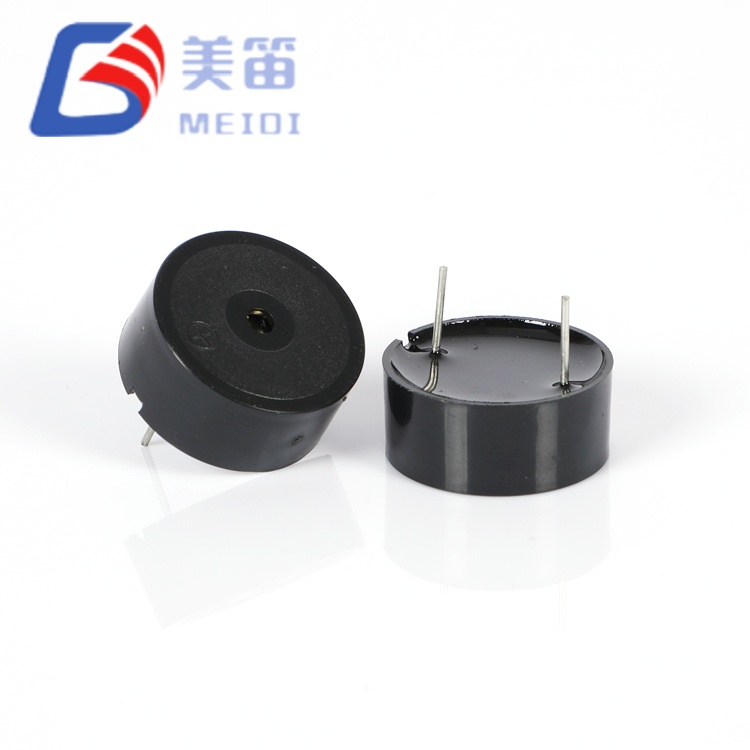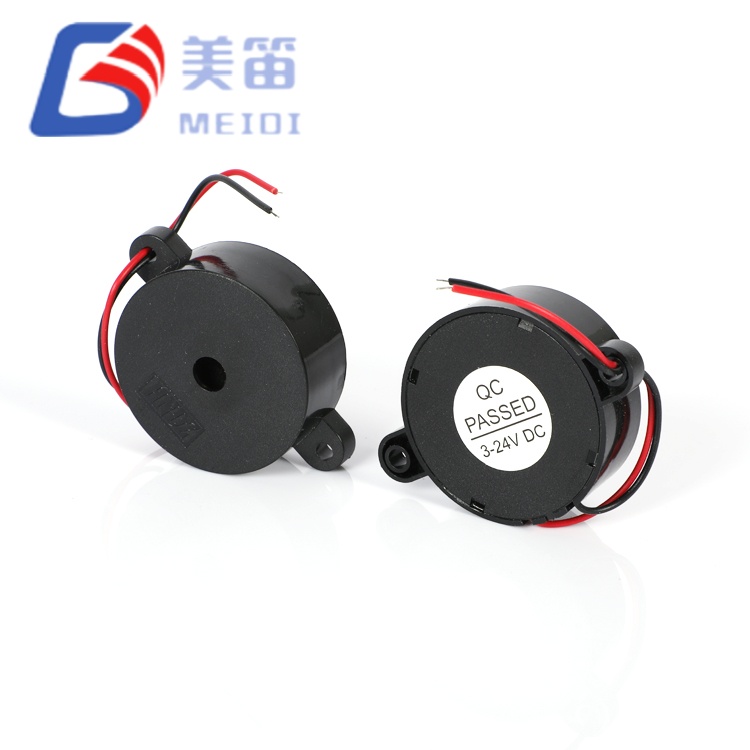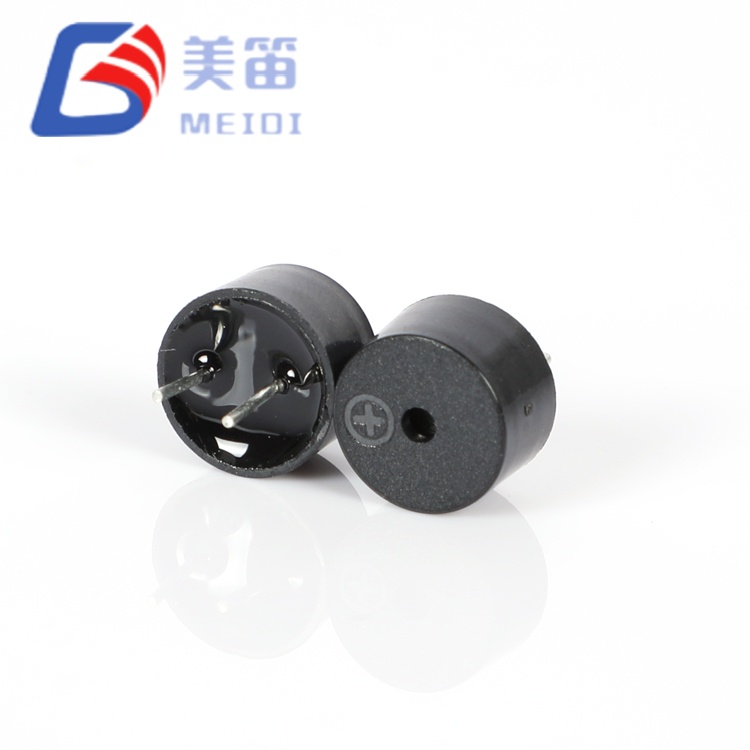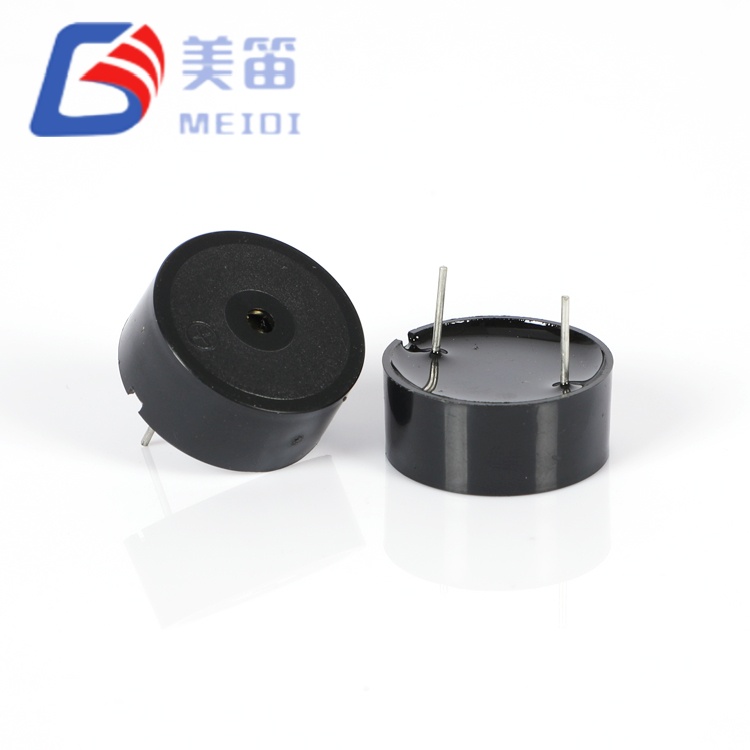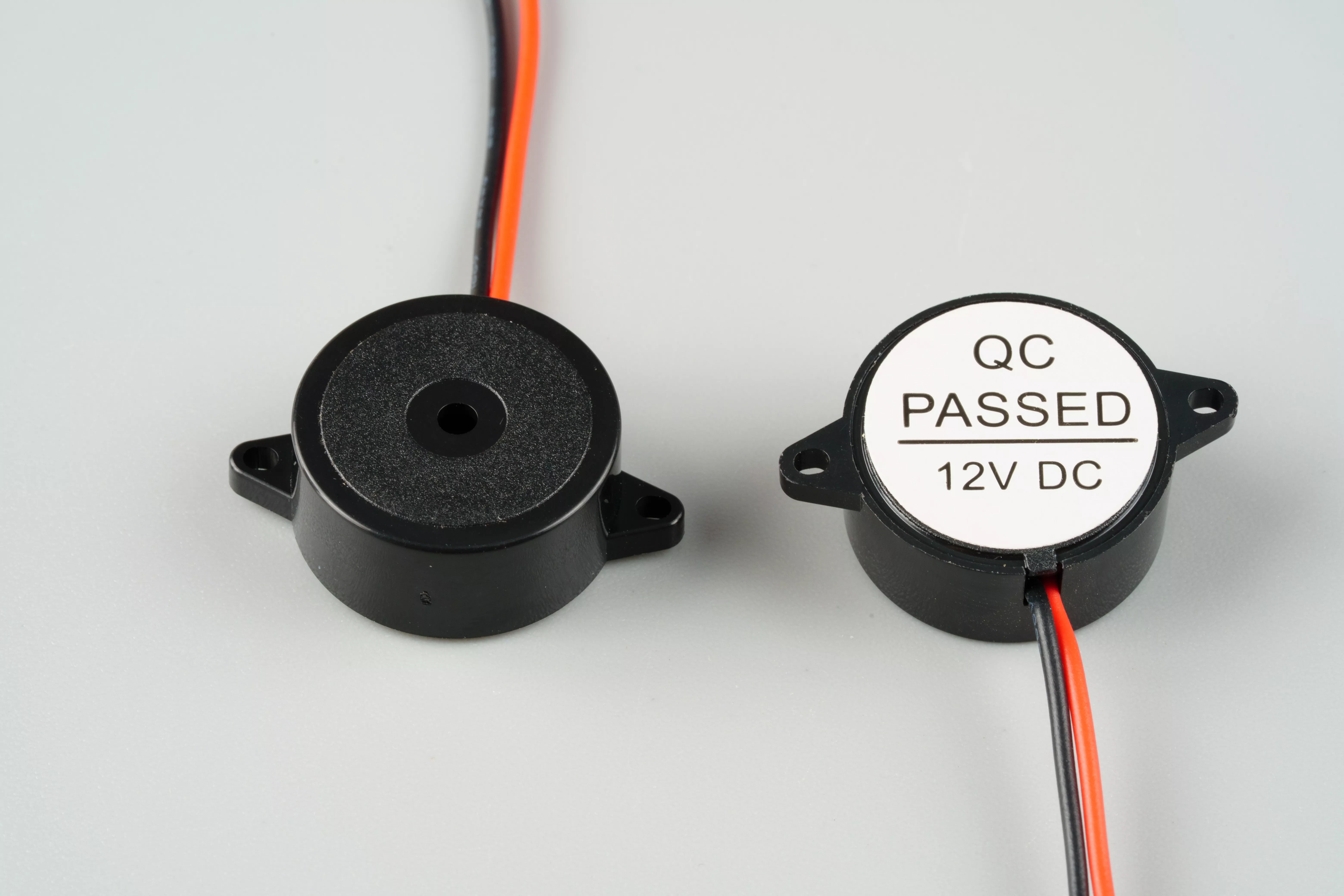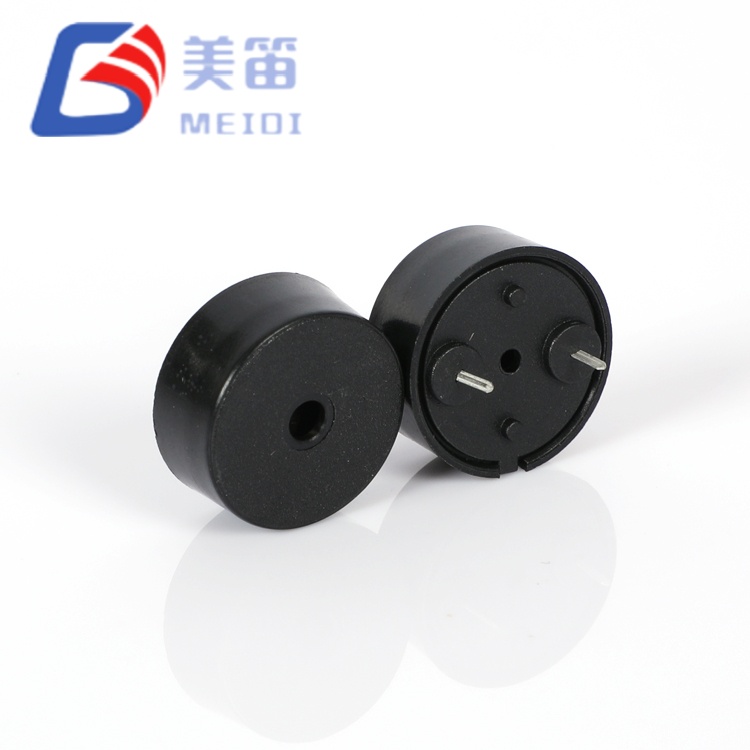
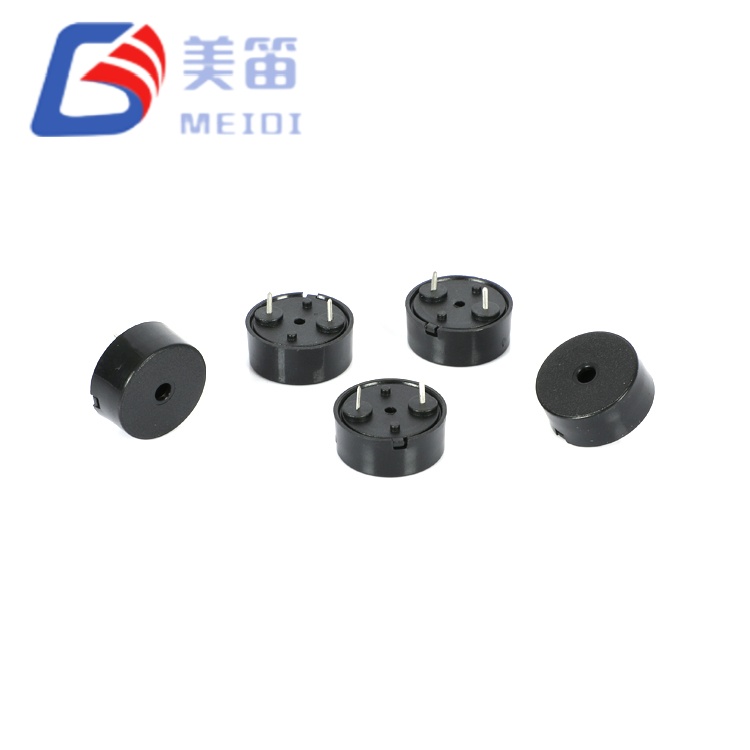
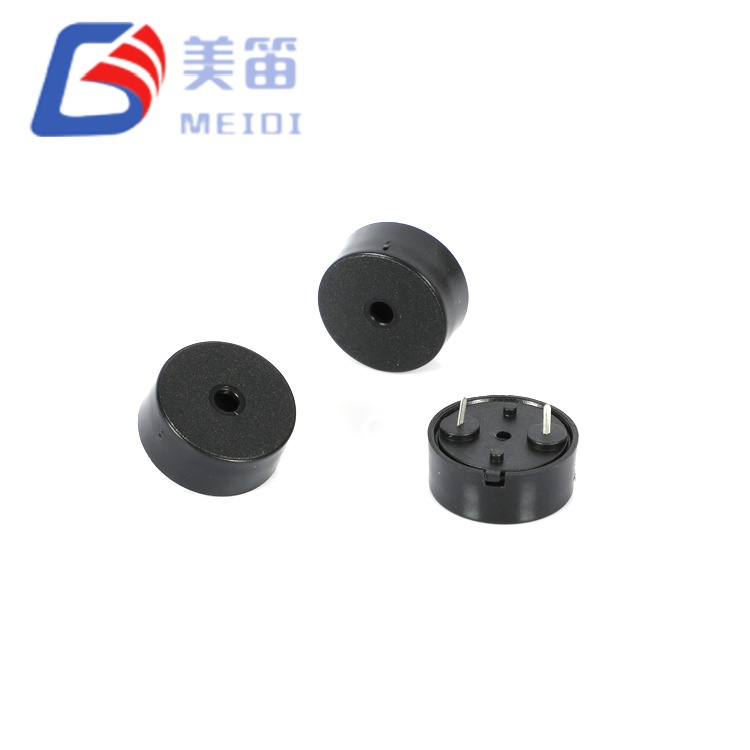
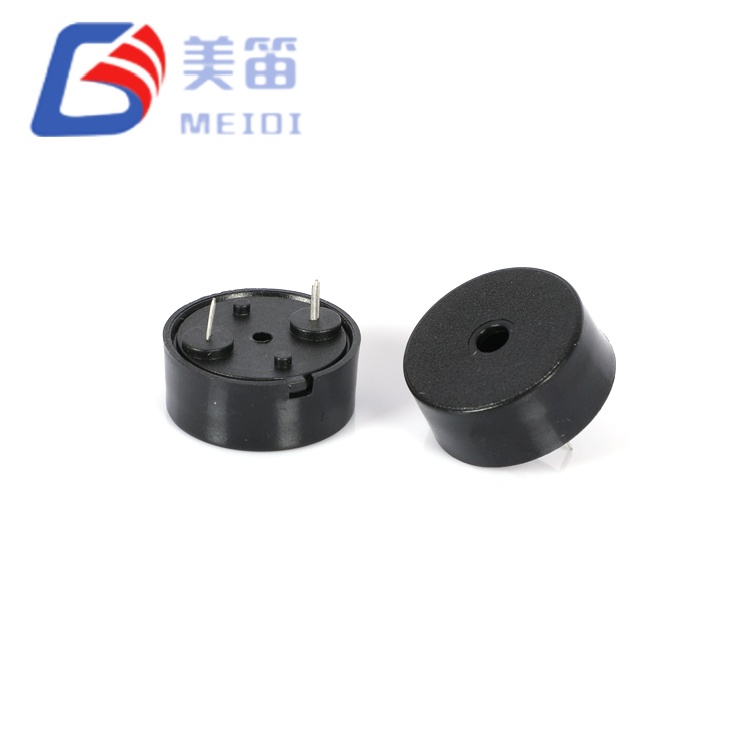
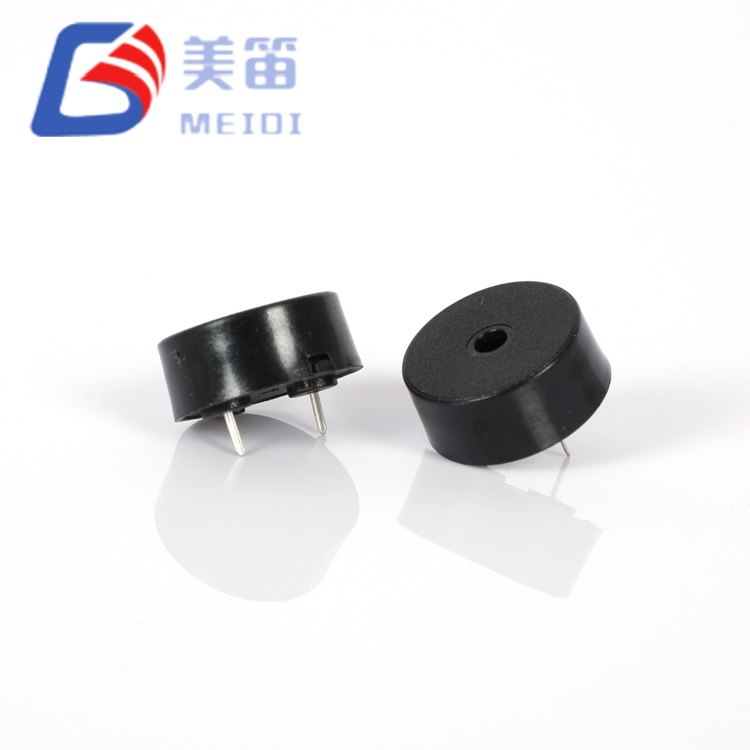
The 17*8mm Piezoelectric Passive Buzzeroffers two frequency variants — 3000 Hz and 2000 Hz — in an identical Φ17 × 8 mm through‑hole package. Both are passive piezoelectric sounders that rely on an external AC drive waveform to produce an audible tone. Because the footprint, pin spacing, and housing dimensions are shared between the two models, a single PCB layout can accommodate either frequency without mechanical changes. The HNR‑1708 delivers ≥85 dB at 3000 Hz, while the HNR‑1708 PA10 provides ≥75 dB at 2000 Hz, both measured at 10 cm with a 12 Vp‑p square wave. Current consumption for either variant stays at or below 5 mA. The black PBT housing and 1–30 Vp‑p operating range make this series suitable for a wide range of indoor equipment where the host microcontroller or dedicated oscillator supplies the driving signal.
Two frequency choices — 3000 Hz (HNR‑1708) or 2000 Hz (HNR‑1708 PA10) — from the same footprint
Passive design — requires external square wave or PWM drive at the resonant frequency
12 Vp‑p rated, 1–30 Vp‑p operating range; ≤5 mA current draw
Φ17.0 × 8.0 mm black PBT through‑hole package, wave and manual solder compatible
Operating temperature: -20 ℃ to +70 ℃ continuous
| Parameter | HNR‑1708 | HNR‑1708 PA10 | Test Conditions / Notes |
| Product Type | Piezoelectric Passive Buzzer | Piezoelectric Passive Buzzer | — |
| Rated Voltage | 12 Vp‑p | 12 Vp‑p | Peak‑to‑peak |
| Operating Voltage | 1–30 Vp‑p | 1–30 Vp‑p | Drive signal range |
| Resonant Frequency | 3000 ± 500 Hz | 2000 ± 500 Hz | At rated voltage |
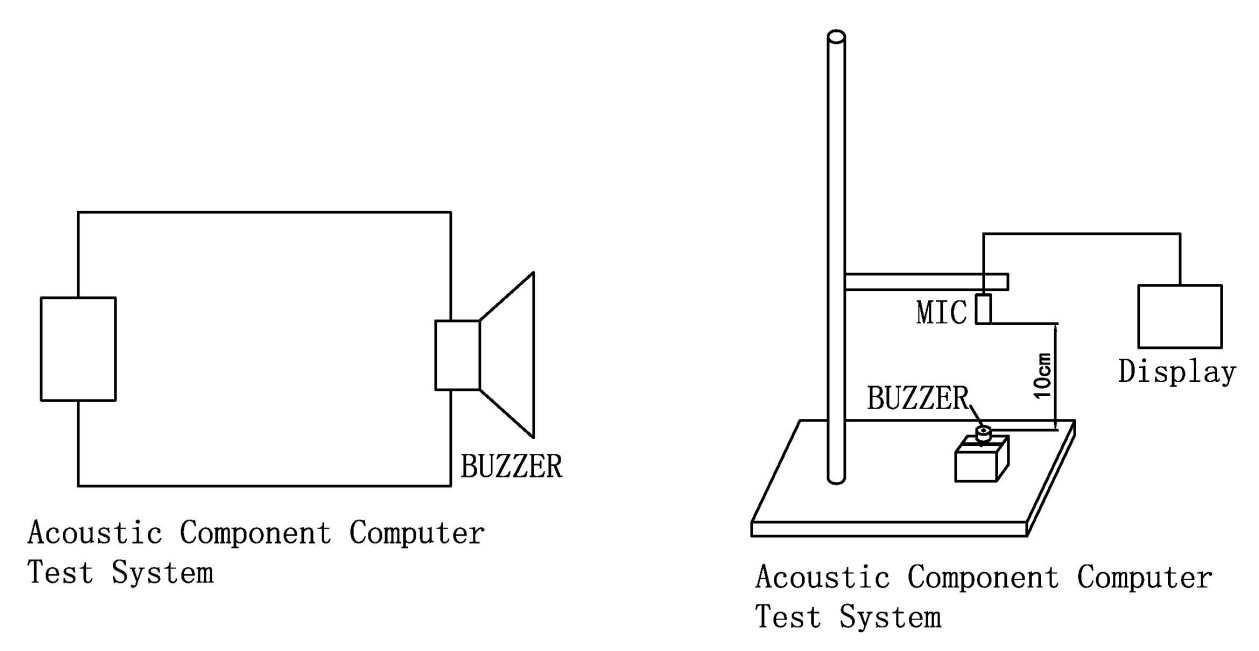
| Sound Output at 10 cm | ≥85 dB | ≥75 dB | Square wave, 12 Vp‑p, respective frequency |
| Current Consumption | ≤5 mA | ≤5 mA | At rated voltage and frequency |
| Operating Temperature | -20 ℃ ~ +70 ℃ | -20 ℃ ~ +70 ℃ | Continuous |
| Storage Temperature | -30 ℃ ~ +80 ℃ | -30 ℃ ~ +80 ℃ | Non‑operating |
| Dimensions (Dia × H) | Φ17.0 ± 0.5 × 8.0 ± 0.5 mm | Φ17.0 ± 0.5 × 8.0 ± 0.5 mm | Body only; drawing tolerance ±0.5 mm |
| Weight | 1 g | 1.4 g | Typical |
| Housing Material | Black PBT | Black PBT | — |
| Capacitance | 12 ± 40% nF (ref. only) | 25 ± 40% nF (ref. only) | Per test report header; not verified per sample |
| Mounting Type | Through‑Hole | Through‑Hole | Wave / Manual solder |
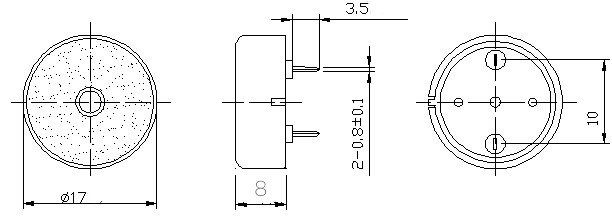
The choice between HNR‑1708 and HNR‑1708 PA10 primarily depends on the desired alert frequency and sound pressure requirement. The HNR‑1708, with its higher 3000 Hz tone and ≥85 dB output, is better suited for environments where a sharper, more penetrating sound is beneficial — such as industrial warning panels or equipment operating in areas with moderate background noise. The HNR‑1708 PA10 operates at a lower 2000 Hz with ≥75 dB, producing a tone that is less intrusive and more appropriate for quiet settings like medical device reminders or residential sensors.
Because both models share the same Φ17 mm footprint, pin layout, and 8 mm height, a single PCB design can be validated with one variant and then deployed with the other as application requirements change. Both accept a 1–30 Vp‑p drive signal and draw ≤5 mA, so the same driver circuit can be used for either model. The weight difference — 1 g for HNR‑1708 versus 1.4 g for HNR‑1708 PA10 — reflects the slightly different internal construction that produces the lower resonant frequency.
For applications that require both frequencies within the same product family, the HNR‑1708 series allows the designer to stock a single PCB and housing design while offering two acoustic signatures, reducing mechanical design overhead.
As passive piezoelectric buzzers, both HNR‑1708 variants need an external AC signal to produce sound. A microcontroller GPIO configured for PWM output at the target frequency (3000 Hz or 2000 Hz) with a 50% duty cycle is the most common approach. For 3.3 V or 5 V logic systems, a simple transistor buffer can translate the signal to the full 12 Vp‑p rated level for higher SPL.
The capacitive nature of the load — approximately 12 nF for HNR‑1708 and 25 nF for HNR‑1708 PA10 — means that current spikes occur at each edge of the driving waveform. A small series resistor (typically 100–330 Ω) can limit peak current without significantly affecting SPL. For battery‑powered designs, the ≤5 mA average current draw makes these buzzers economical to operate even from coin cells or small Li‑ion packs.
Soldering is compatible with wave (260 ℃, 4–6 s) and manual (350 ℃, 2–5 s) methods. Maintain ≥2.0 mm between the housing and the solder bath.
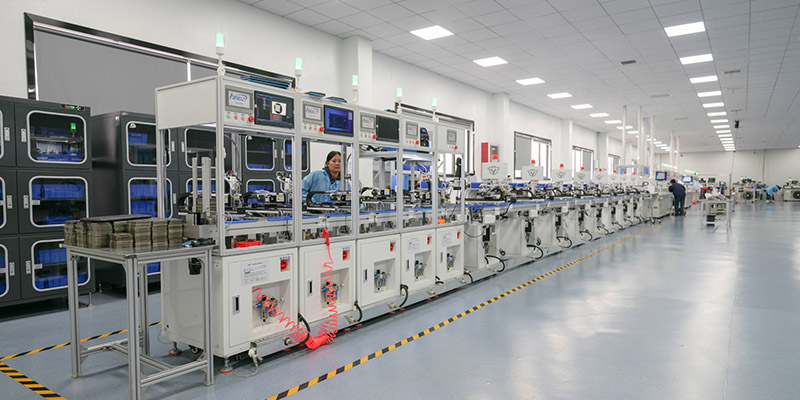
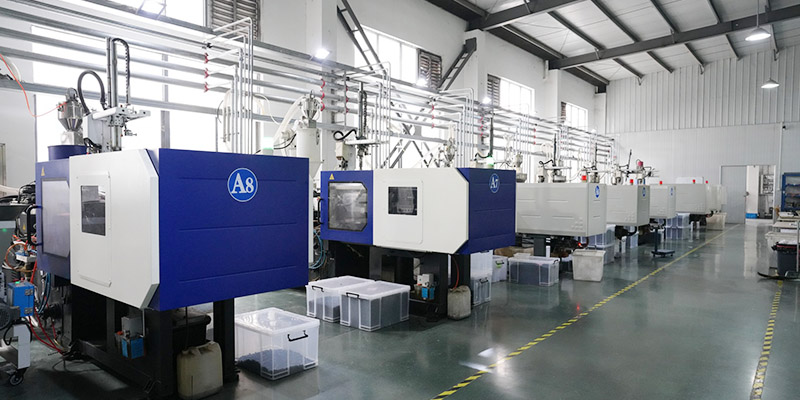
The 17*8mm Piezoelectric Passive Buzzer is produced in MEIDI's Jiangsu manufacturing facility. The assembly process includes piezo ceramic bonding, PBT housing insertion, and 100% acoustic verification at the specified frequency and voltage. Each production lot is sampled for the seven‑item reliability protocol shown below, which is part of the facility's ISO 9001 quality system.
| Test Item | Condition | Acceptance Criteria |
| Humidity | 50 ± 5 ℃, 90–95% RH, 48 h | All specifications satisfied after recovery |
| High Temperature | +80 ± 2 ℃, 48 h | All specifications satisfied after recovery |
| Low Temperature | -30 ± 2 ℃, 48 h | All specifications satisfied after recovery |
| Temperature Cycling | -30 ℃ ↔ +80 ℃, 30 min dwell, 5 cycles | All specifications satisfied after recovery |
| Drop | 75 cm to 10 mm hardwood, 3 drops | Appearance and electrical performance verified |
| Vibration | 10–55 Hz, 1.0 mm single amplitude, XYZ axes, 0.5 h total | No mechanical or electrical degradation |
| Solder Heat Resistance | 250 ± 5 ℃, 10 ± 0.5 s, 2.0 mm body-to-solder distance | Dimensions and performance meet specification |
Industrial warning indicators that benefit from the HNR‑1708's 3000 Hz tone cutting through machinery noise on a factory floor.
Medical device reminders (infusion pumps, vital sign monitors) where the HNR‑1708 PA10's 2000 Hz tone provides a less intrusive alert in quiet wards.
Smart home sensors and doorbells, where the same PCB can be populated with either variant depending on the regional preference for alert pitch.
Portable test instruments powered by a 3.7 V battery, using a transistor to boost the drive voltage and the ≤5 mA consumption to extend runtime.
Multi‑zone alarm panels requiring different tones per zone — HNR‑1708 for critical warnings and HNR‑1708 PA10 for status notifications — using a single PCB design for both.
HNR‑1708 PA10 (10‑sample data): Measured with a 12 Vp‑p square wave at 2000 Hz. SPL values range from 83–86 dB, exceeding the ≥75 dB minimum. Current readings (0.81–1.00 mA) are well below the ≤5 mA specification. Frequency measurements are stable at 2000 Hz. Dimensions confirm Φ17 × 8 mm tolerances.
HNR‑1708: The available test report uses model HNR‑1707 tested at 5 Vp‑p / 4000 Hz, which differs from the HNR‑1708's rated 12 Vp‑p / 3000 Hz specification. For HNR‑1708‑specific batch test data, contact MEIDI.
| Sample | SPL (dB) | Current (mA) | Frequency (Hz) | Diameter (mm) | Height (mm) |
| 1 | 85 | 0.83 | 2000 | 17.01 | 8.02 |
| 2 | 86 | 0.93 | 2000 | 16.98 | 7.98 |
| 3 | 84 | 1.00 | 2000 | 17.10 | 7.99 |
| 4 | 84 | 0.81 | 2000 | 17.06 | 8.03 |
| 5 | 85 | 0.98 | 2000 | 16.92 | 8.09 |
| 6 | 86 | 0.93 | 2000 | 17.01 | 7.89 |
| 7 | 83 | 0.81 | 2000 | 17.02 | 8.05 |
| 8 | 84 | 0.89 | 2000 | 16.99 | 7.94 |
| 9 | 86 | 0.93 | 2000 | 16.98 | 7.99 |
| 10 | 84 | 0.84 | 2000 | 17.01 | 7.95 |
Conclusion: PASS. Appearance, polarity, and tape direction conform.
1. Do not apply DC voltage directly. Both variants require an AC drive signal to generate sound. Continuous DC may damage the piezo element.
2. The housing is not sealed. Prevent water, flux residue, or cleaning solvents from entering the sound port.
3. In corrosive environments, install the buzzer in a protected enclosure or apply conformal coating to terminals only.
4. SPL depends on drive voltage and waveform. Verify that the driver stage meets the required voltage swing under the capacitive load.
5. Keep the acoustic port unobstructed. Even partial covering can reduce output by several decibels.
6. Store in sealed, dry packaging until assembly to avoid pin oxidation.
1. How do I choose between HNR‑1708 and HNR‑1708 PA10?
Select HNR‑1708 for 3000 Hz, ≥85 dB — suited to industrial or noisier environments. Select HNR‑1708 PA10 for 2000 Hz, ≥75 dB — better for medical or residential settings. Both share identical dimensions and pinout, so the PCB layout does not change.
2. Can I drive these buzzers directly from a microcontroller pin?
Yes, if the pin can supply sufficient current and the logic level falls within the 1–30 Vp‑p range. For 3.3 V or 5 V microcontrollers, a transistor buffer is recommended to achieve higher voltage swing and louder output.
3. What frequency should I use for the driving signal?
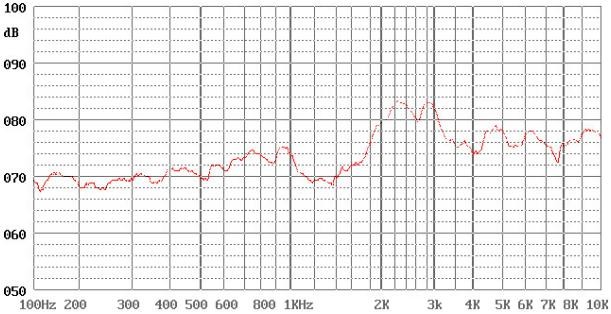
Use 3000 Hz for HNR‑1708 and 2000 Hz for HNR‑1708 PA10. Due to the ±500 Hz tolerance, a frequency sweep during prototyping can identify the exact peak SPL for a given batch. MEIDI can provide characterization curves.
4. Why is the HNR‑1708 test report based on a different model?
The currently available report uses HNR‑1707 data at 5 Vp‑p / 4000 Hz as a reference. Contact MEIDI for HNR‑1708‑specific test data at 12 Vp‑p / 3000 Hz.
5. Is the HNR‑1708 series suitable for battery‑powered devices?
Yes. The ≤5 mA current draw and 1–30 Vp‑p operating range make it practical for battery operation. A boost converter or transistor buffer can raise the drive voltage if higher SPL is needed from a low‑voltage battery.
For datasheets, drive circuit reference designs, frequency sweep data, or variant selection support for the HNR‑1708 series, contact MEIDI with your application details. Engineering response is typically within one business day.
Address
No.6, Wenlin Road, Chenbao Town, Xinghua City, Jiangsu Province, China
Tel