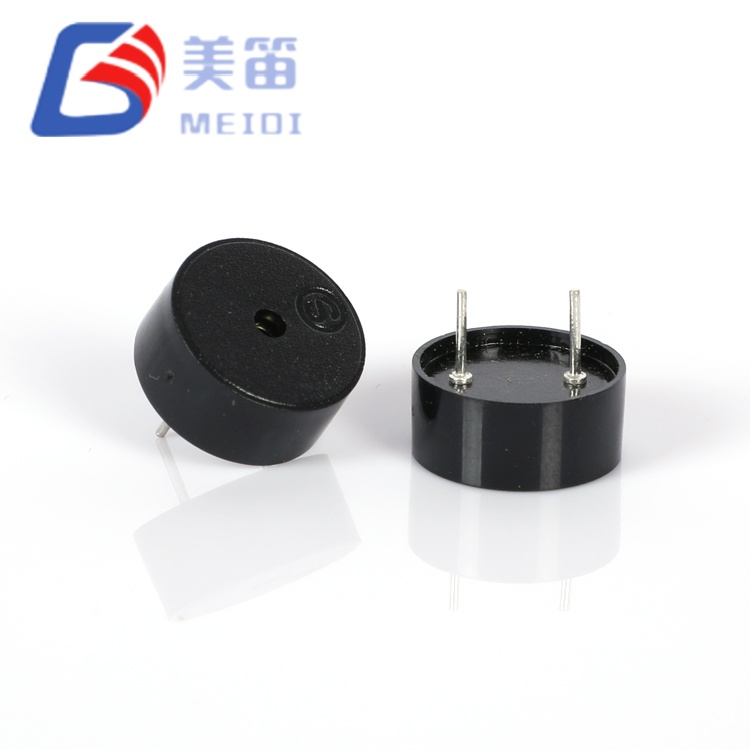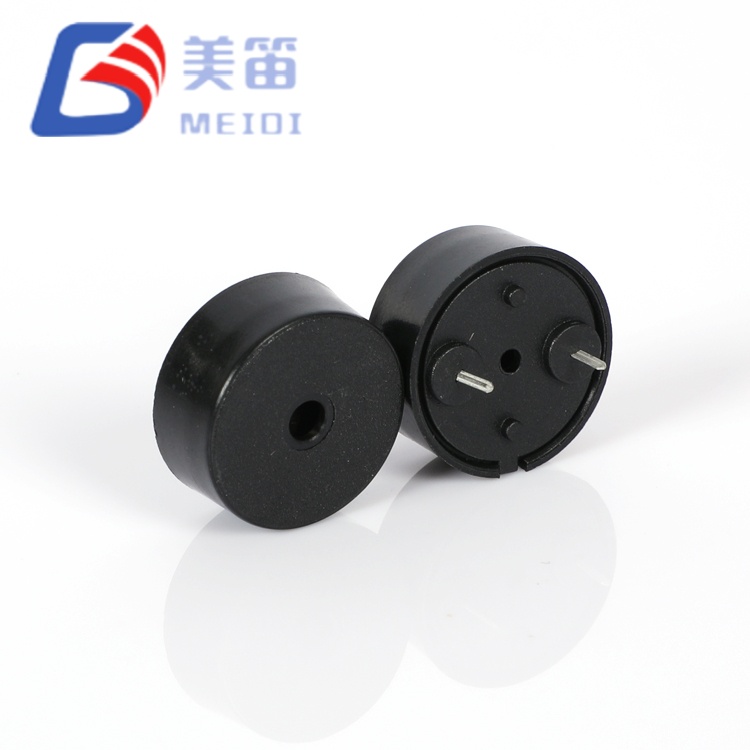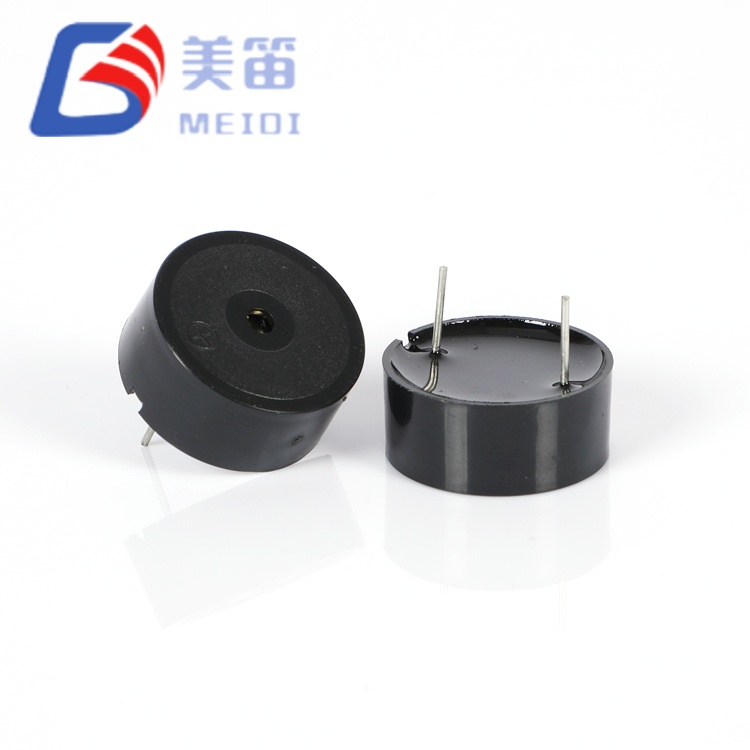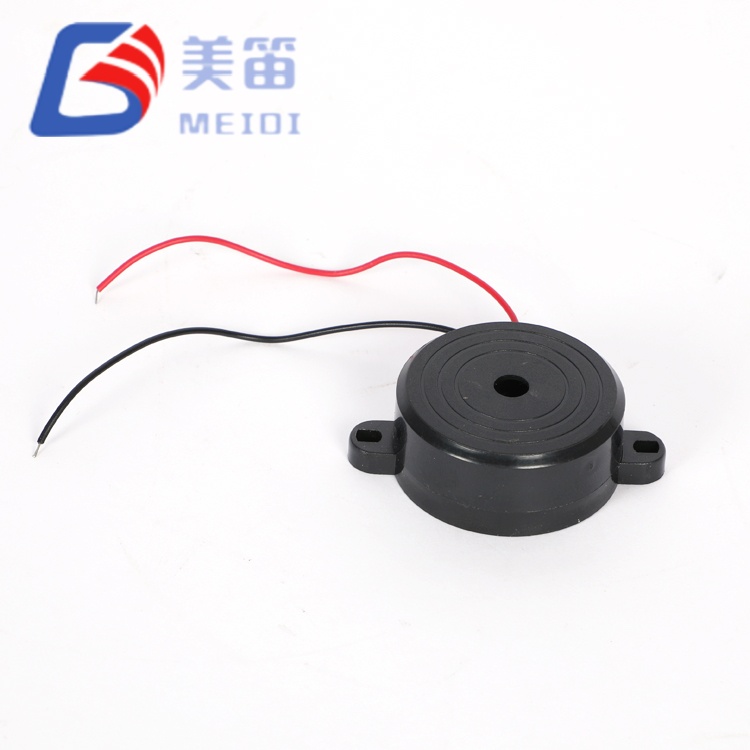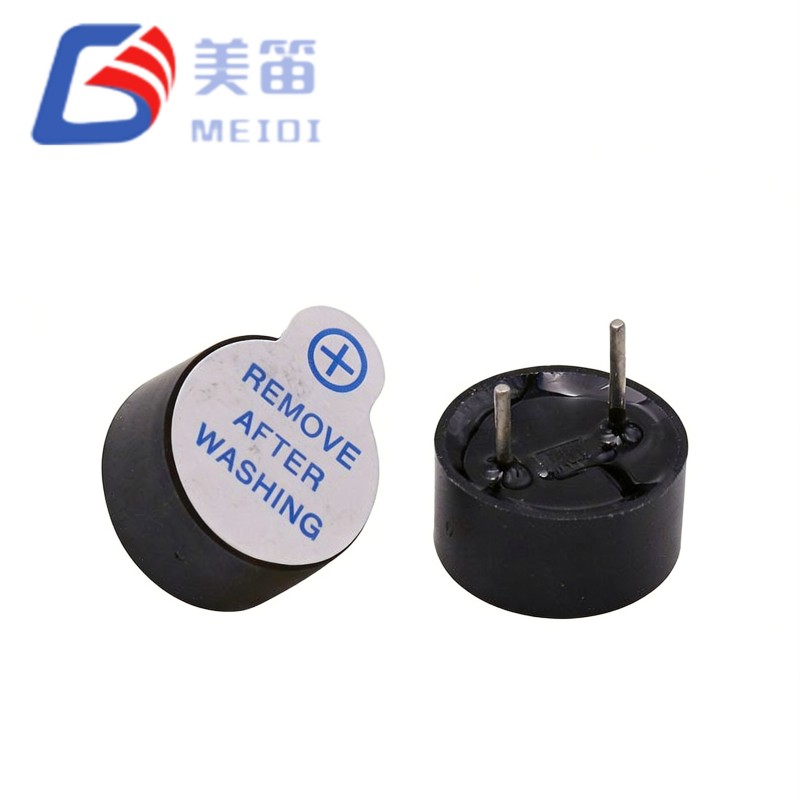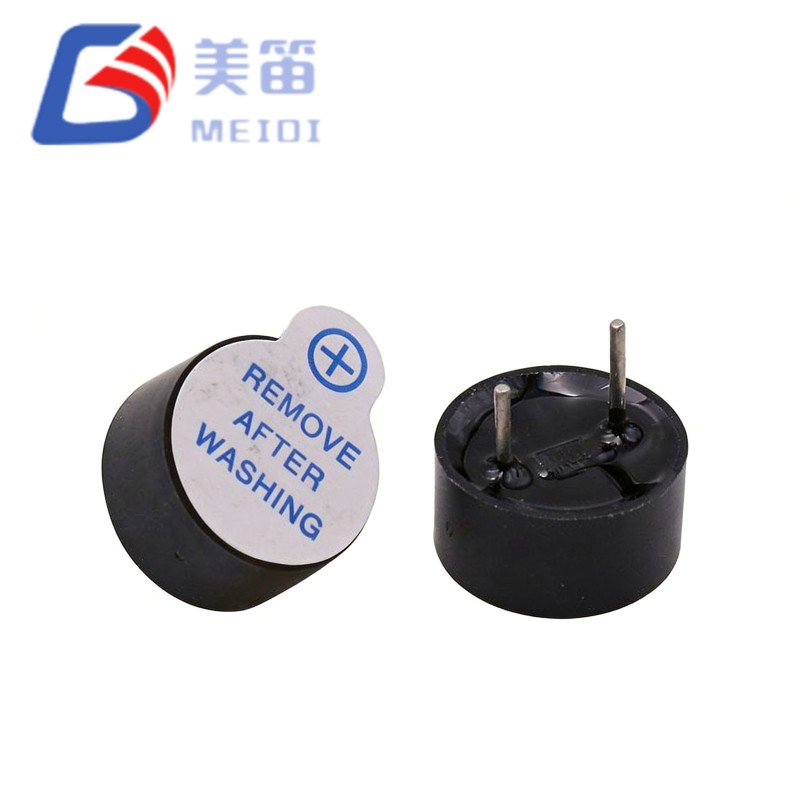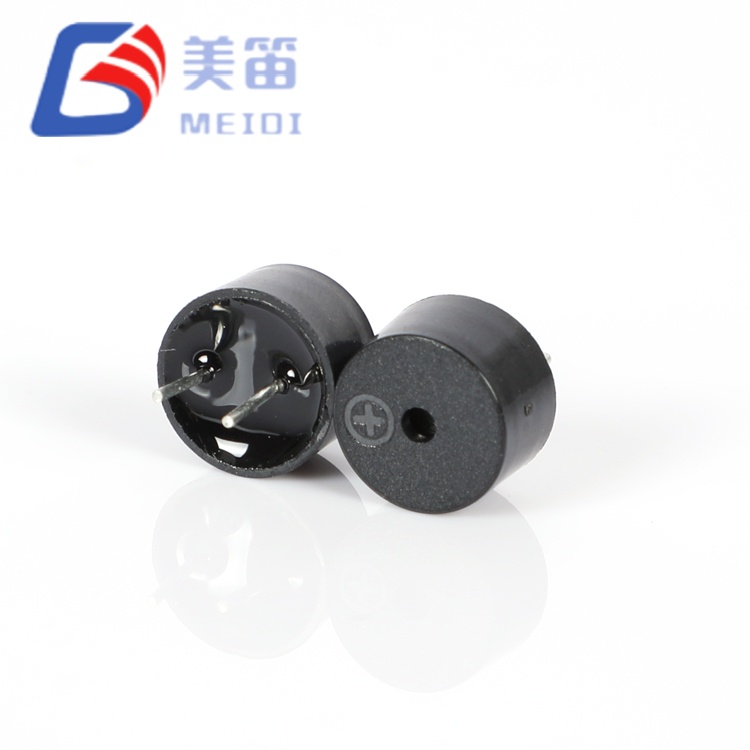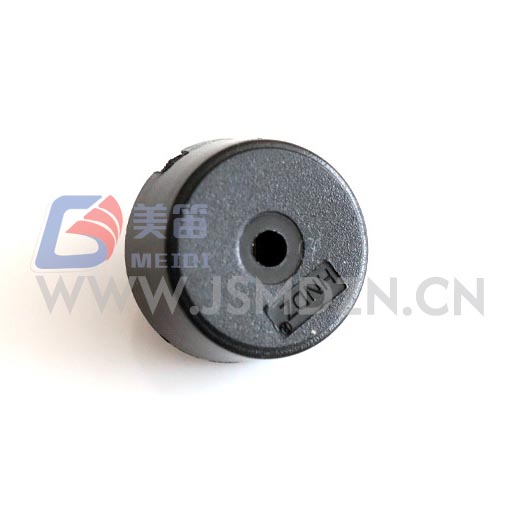
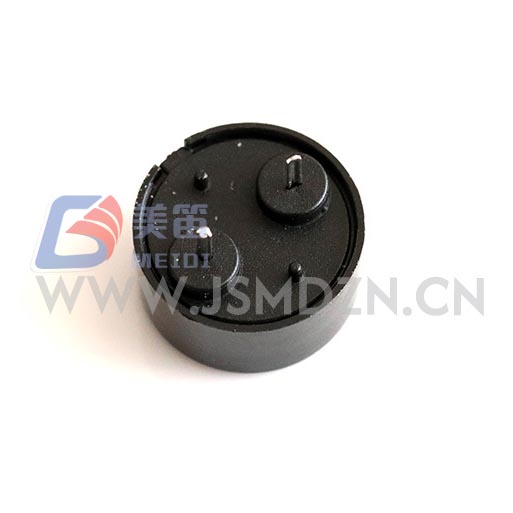
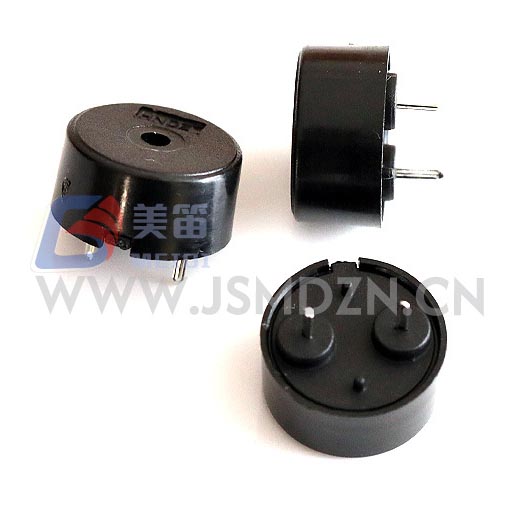
For designs where board space is limited but a clear audible alert is still required, the 14*4mm Piezoelectric Passive Buzzer provides a 4000 Hz passive buzzer in a Φ13.8 × 4.0 mm through‑hole package. Two SPL options share the same footprint: the standard variant outputs ≥70 dB while drawing ≤5 mA, and the HNR‑1404 PA7.5 increases the sound level to ≥80 dB at ≤10 mA. Both models accept a 1–30 Vp‑p AC drive signal, giving the designer full control over the frequency and volume via the external waveform. The black PBT housing and sub‑1‑gram weight suit portable instruments, compact sensors, and space‑critical industrial indicators where a microcontroller or dedicated oscillator is already available to generate the tone.
Two SPL ratings from one footprint — ≥70 dB (standard) or ≥80 dB (PA7.5)
Passive design — requires external square wave or PWM at 4000 Hz
5 Vp‑p rated, 1–30 Vp‑p operating range
Φ13.8 × 4.0 mm black PBT through‑hole, 0.6 g (standard) / 0.67 g (PA7.5)
| Parameter | HNR‑1404 / HNR‑1404L | HNR‑1404 PA7.5 | Test Conditions / Notes |
| Product Type | Piezoelectric Passive Buzzer | Piezoelectric Passive Buzzer | — |
| Rated Voltage | 5 Vp‑p | 5 Vp‑p | Peak‑to‑peak |
| Operating Voltage | 1–30 Vp‑p | 1–30 Vp‑p | Drive signal range |
| Resonant Frequency | 4000 Hz | 4000 Hz | At rated voltage |
| Sound Output at 10 cm | ≥70 dB | ≥80 dB | 4000 Hz square wave, 5 Vp‑p |
| Current Consumption | ≤5 mA | ≤10 mA | 4000 Hz square wave, 5 Vp‑p |
| Operating Temperature | -20 ℃ ~ +60 ℃ | -20 ℃ ~ +70 ℃ | Continuous |
| Storage Temperature | -30 ℃ ~ +70 ℃ | -30 ℃ ~ +80 ℃ | Non‑operating |
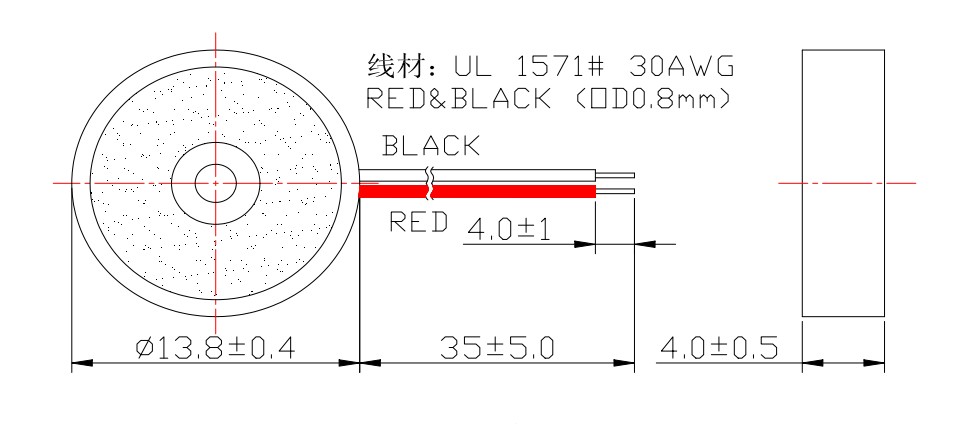
| Dimensions (Dia × H) | Φ13.8 ± 0.4 × 4.0 ± 0.5 mm | Φ13.8 ± 0.4 × 4.0 ± 0.5 mm | Body only |
| Weight | 0.6 ± 0.1 g | 0.67 ± 0.1 g | Typical |
| Housing Material | Black PBT | Black PBT | — |
| Capacitance | 12 ± 40% nF | 12 ± 40% nF | Reference only; not per‑sample |
| Mounting Type | Through‑Hole | Through‑Hole | Manual solder recommended |
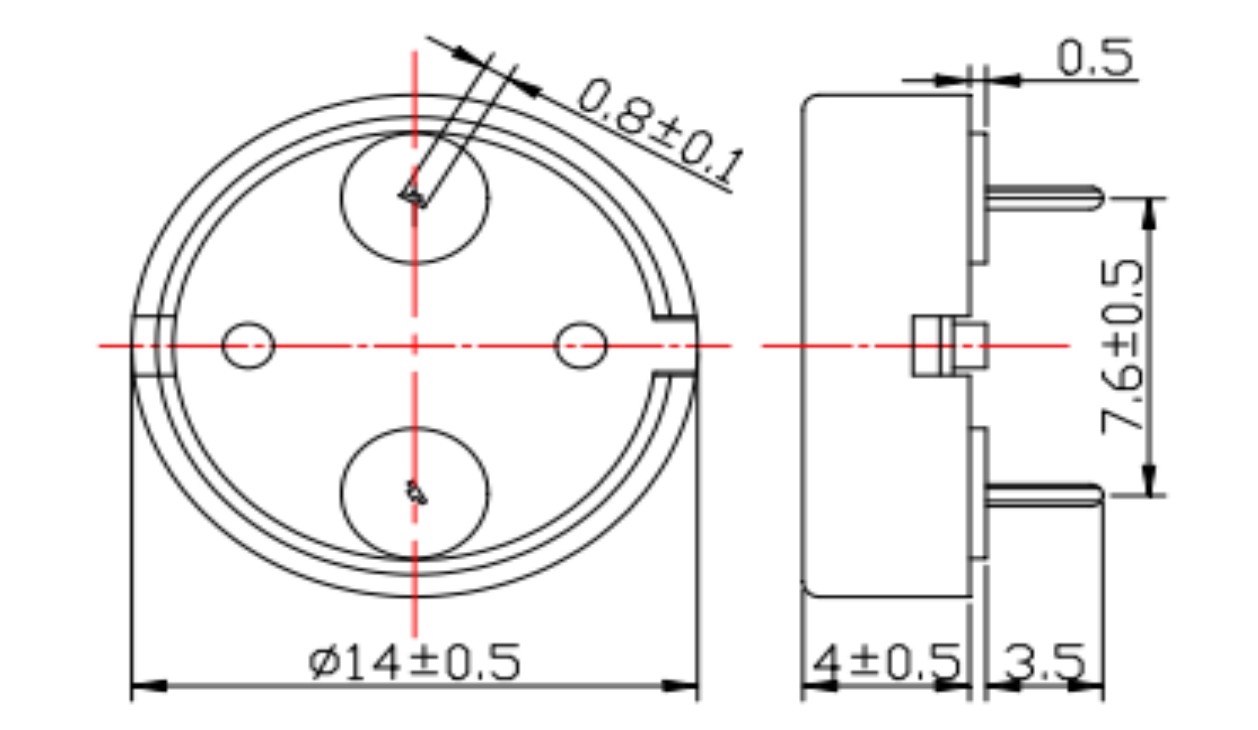
The core distinction between the two models lies in sound pressure and temperature range. The standard HNR‑1404/L is designed for low‑current indicators (≤5 mA, ≥70 dB) and operates up to +60 ℃. The HNR‑1404 PA7.5 trades higher current (≤10 mA) for a 10 dB increase in output and extended operating temperature to +70 ℃, making it more suitable for environments where audibility or thermal margin is a priority. Both share the same resonant frequency, pinout, and housing dimensions, so the choice does not affect the PCB layout.
As passive sounders, these buzzers need an external AC waveform. A microcontroller GPIO generating a 4000 Hz square wave with 50% duty cycle is the typical configuration. The capacitive load (≈12 nF) draws current spikes at each edge; a small series resistor (100–220 Ω) can limit peak current without noticeable SPL loss. The 1–30 Vp‑p input range allows direct connection to 3.3 V or 5 V logic, though a transistor buffer is advised when higher SPL is needed.
Manual soldering: iron temperature 350 ± 10 ℃, 2–5 s dwell, up to 2–3 cycles. Maintain ≥2.0 mm from the housing to the solder joint.
| Test Item | Condition | Acceptance Criteria |
| Humidity | 50 ± 5 ℃, 90–95% RH, 48 h | All specs satisfied after recovery |
| High Temperature | +80 ± 2 ℃, 48 h | All specs satisfied after recovery |
| Low Temperature | -30 ± 2 ℃, 48 h | All specs satisfied after recovery |
| Temperature Cycling | -30 ℃ ↔ +80 ℃, 30 min dwell, 5 cycles | All specs satisfied after recovery |
| Drop | 75 cm to 10 mm hardwood, 3 drops | Appearance and electrical performance verified |
| Vibration | 10–55 Hz, 1.0 mm amplitude, XYZ, 0.5 h | No mechanical or electrical degradation |
| Solder Heat Resistance | 250 ± 5 ℃, 10 ± 0.5 s, 2.0 mm clearance | Dimensions and performance meet spec |
MEIDI performs 100% acoustic check on each unit and samples every production lot for the above protocol under its ISO 9001 system.


Compact IoT sensors and wearables where the ≤5 mA standard variant minimizes power drain, driven directly by a low‑voltage MCU pin.
Industrial handheld terminals and portable medical devices that need a louder alert; the PA7.5 model delivers ≥80 dB while still fitting within the same 4 mm‑height envelope.
Multi‑tone alarm boards using the same PCB for both variants to differentiate warning levels by SPL rather than frequency.
Reference data from model HNR‑1407 (same platform) shows SPL values between 83–86 dB at 4000 Hz, 5 Vp‑p, exceeding the ≥70 dB minimum. Current readings stay below 1 mA. Capacitance measurements fall within 11.2–12.9 nF, consistent with the 12 nF nominal. Contact MEIDI for HNR‑1404‑specific batch data.
| Sample | SPL (dB) | Current (mA) | Capacitance (nF) | Diameter (mm) | Height (mm) |
| 1 | 85 | 0.73 | 11.5 | 14.01 | 4.10 |
| 2 | 84 | 0.82 | 12.0 | 13.90 | 4.05 |
| 3 | 83 | 0.74 | 12.1 | 14.00 | 4.00 |
| 4 | 85 | 0.76 | 11.2 | 13.98 | 4.01 |
| 5 | 84 | 0.78 | 12.5 | 13.92 | 3.98 |
| 6 | 85 | 0.72 | 12.1 | 14.02 | 4.02 |
| 7 | 83 | 0.80 | 12.3 | 13.89 | 4.02 |
| 8 | 84 | 0.79 | 12.1 | 14.03 | 3.99 |
| 9 | 85 | 0.80 | 12.4 | 13.95 | 4.01 |
| 10 | 86 | 0.76 | 12.9 | 13.98 | 4.02 |
Conclusion: PASS. Appearance, polarity, and tape direction verified.
1. Apply AC drive only. DC voltage will not produce sound and may damage the element.
2. The housing is not sealed. Keep the sound port dry and free of contaminants.
3. In corrosive atmospheres, mount inside a protected enclosure.
4. SPL depends on drive voltage and waveform; verify under actual load conditions.
5. Do not block the acoustic opening.
6. Store in dry packaging to prevent pin oxidation.
1. How do I choose between the standard HNR‑1404 and the PA7.5?
Select the standard model for lower current (≤5 mA) and ≥70 dB output; choose PA7.5 when 10 dB more sound pressure or a +70 ℃ operating limit is needed. Both fit the same PCB pads.
2. Can I drive these buzzers with a DC source?
No. They require an external AC signal (square wave/PWM) at 4000 Hz to generate sound.
3. What drive frequency gives the highest SPL?
The resonant frequency is 4000 Hz. A frequency sweep near this value will identify the exact peak for a given lot.
4. What are the recommended soldering settings?
Manual soldering: 350 ± 10 ℃ iron, 2–5 s per joint, max 2–3 cycles. Keep the housing at least 2.0 mm from the solder point.
For datasheets, frequency response curves, or batch‑specific test reports, contact MEIDI with your application details. Engineering response typically within one business day.
Address
No.6, Wenlin Road, Chenbao Town, Xinghua City, Jiangsu Province, China
Tel