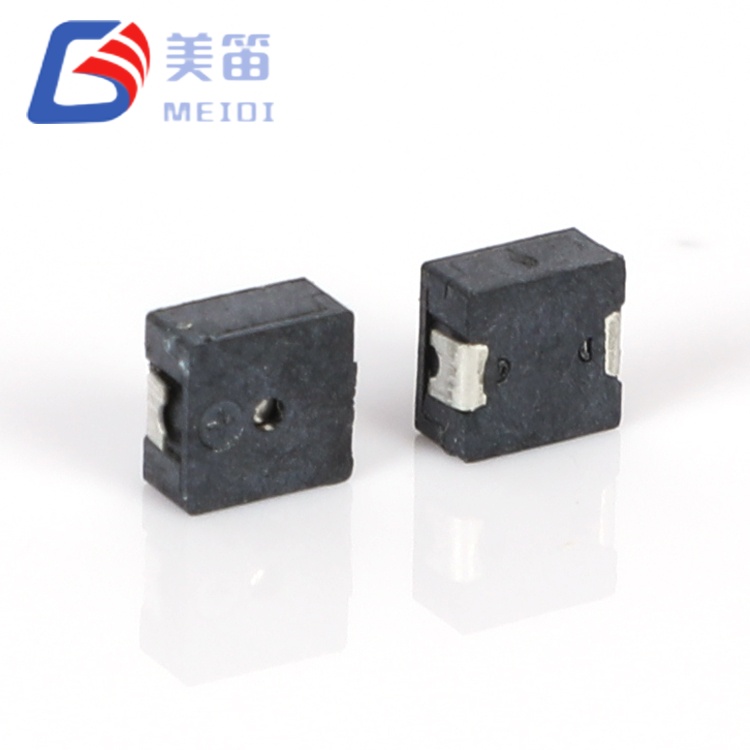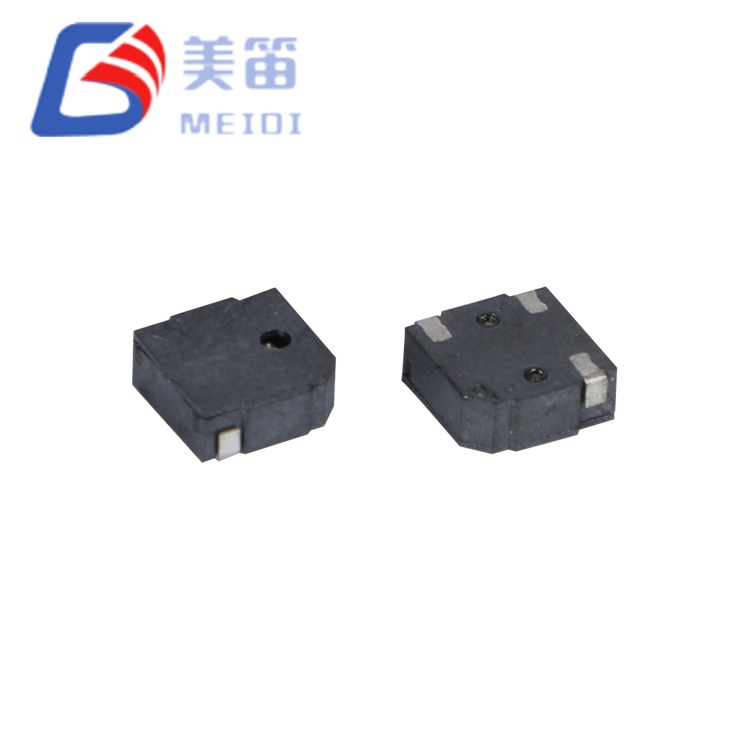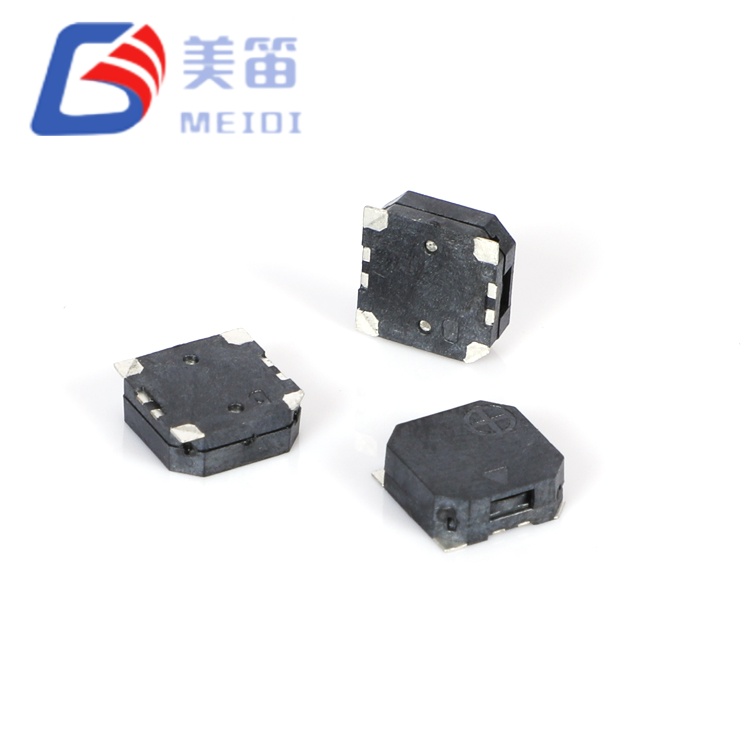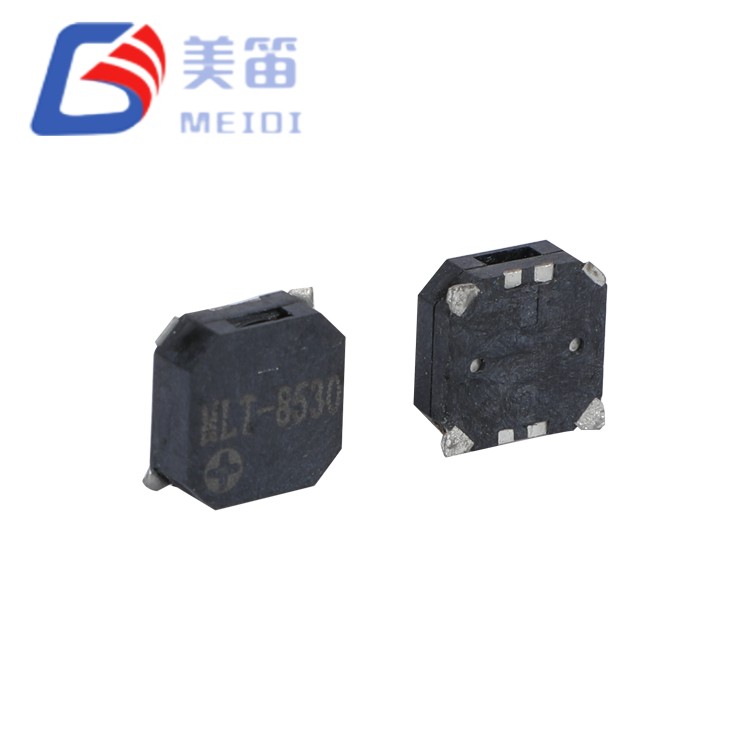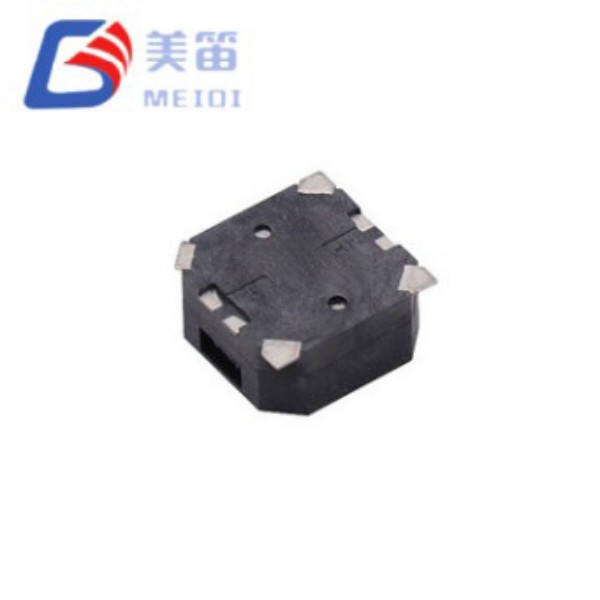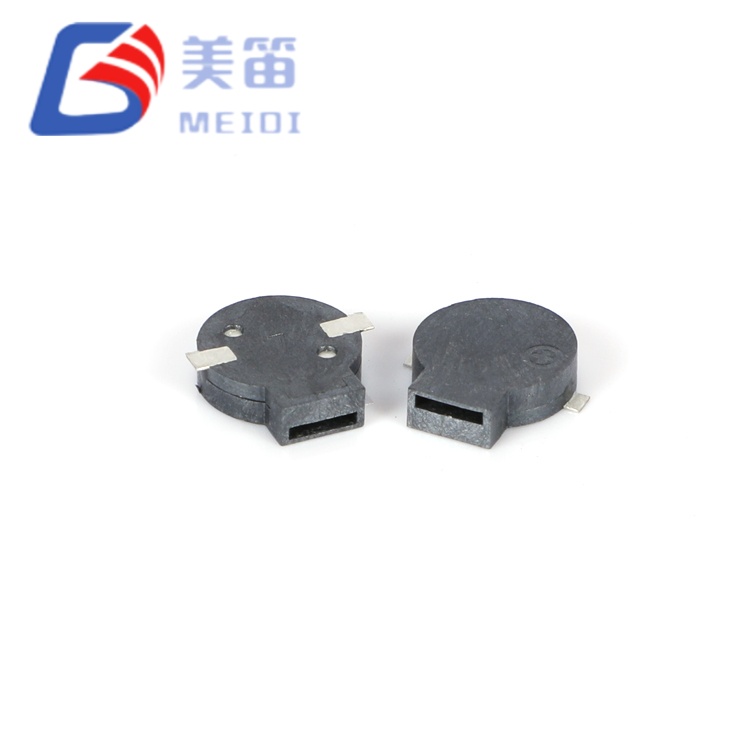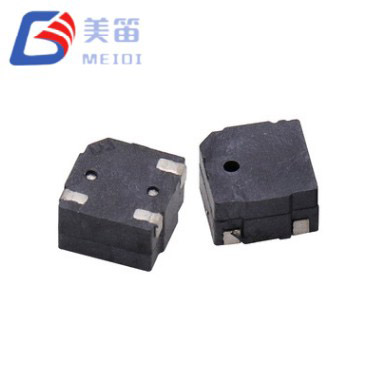
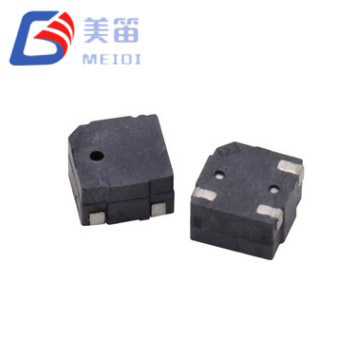
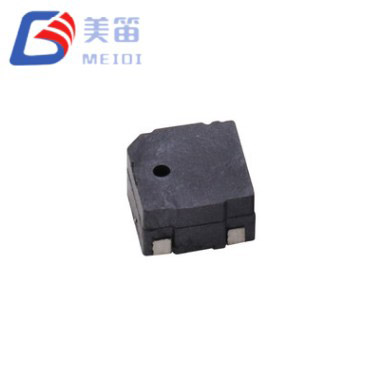
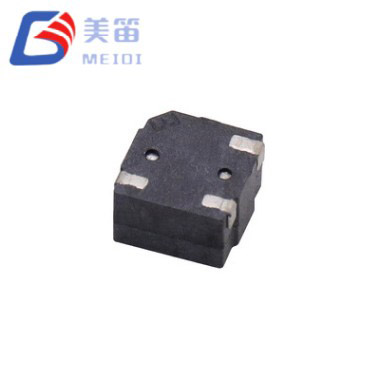
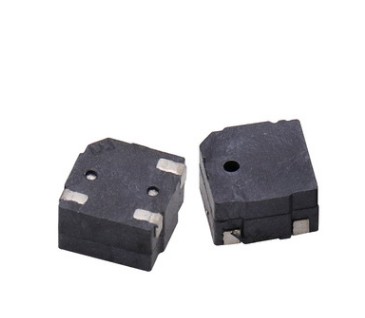
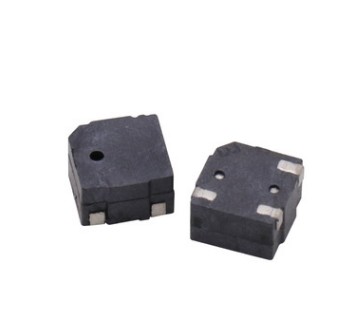
The 5*3mm SMD Magnetic Passive Buzzer is a surface-mount passive electromagnetic buzzer that increases the cavity height to 3.0mm within the compact 5.0×5.0mm package of the MLT-5000 series. This additional internal volume allows the transducer to deliver higher sound pressure levels without increasing PCB area, providing a practical upgrade for designs requiring more prominent alarms but limited by board layout constraints. The buzzer is driven by an external 4000Hz square wave or PWM signal, and its 12Ω coil impedance allows direct connection to the GPIO pins of many 3.3V microcontrollers, simplifying the bill of materials.
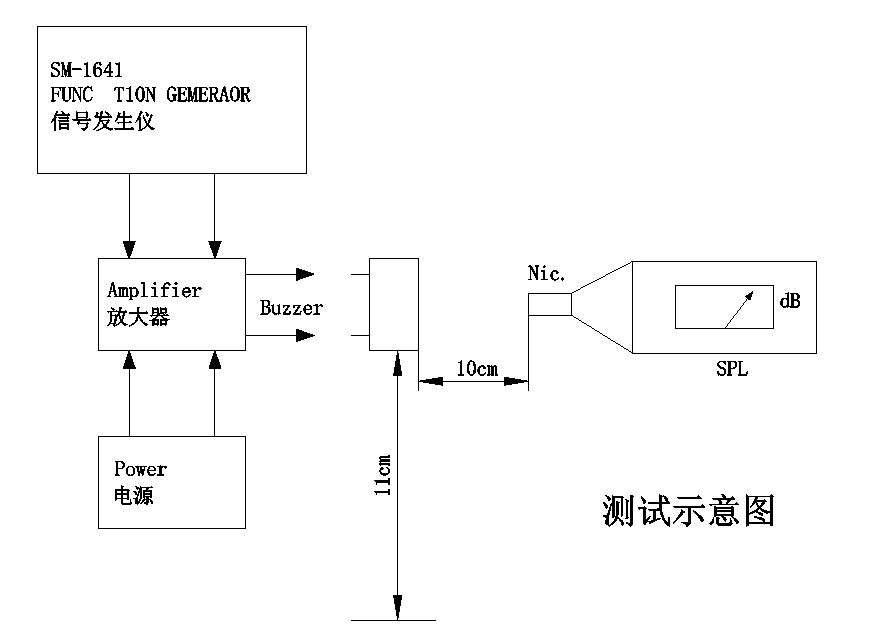
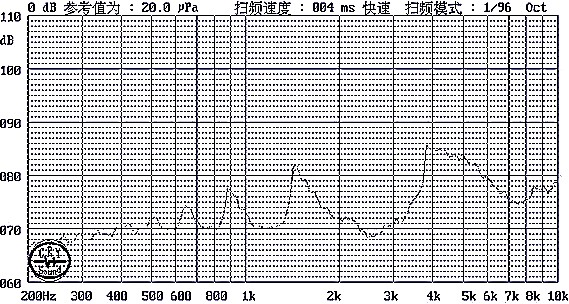
MEIDI developed the MLT‑5030 for applications where enclosure acoustics or ambient noise demand greater output than what 2.0 mm‑high alternatives can provide. Test data from a ten‑unit production sample shows sound pressure levels between 87.8 dB and 89.5 dB at 10 cm, with a current draw of 86.7 mA to 89.0 mA. These measured results are consistent with the guaranteed minimum of 80 dB and a maximum current of 100 mA, giving engineers a clear performance envelope to work within.
The 3.0 mm profile height increases the resonance chamber volume, translating directly into higher sound pressure compared with the 2.0 mm variants in the same series, while the 5.0 × 5.0 mm footprint remains unchanged.
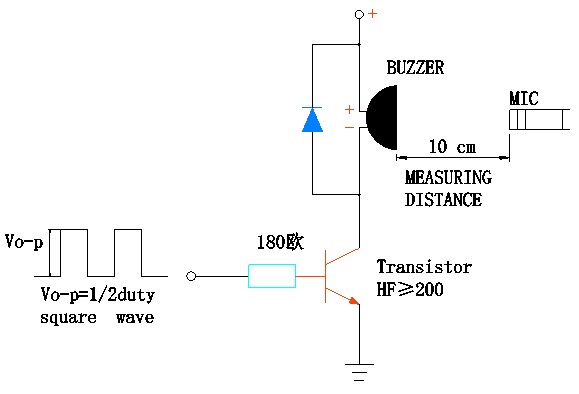
A coil resistance of 12 Ω makes it possible to drive the buzzer directly from a standard 3.3 V microcontroller output, eliminating the need for a separate transistor stage in many designs and reducing component count.
The operating voltage range extends from 2 V to 4 V, covering single‑cell lithium‑ion batteries, coin cells and regulated 3.3 V rails without additional voltage conditioning.
Acoustic output is specified at a minimum of 80 dB at 10 cm under 3 V drive, with a resonant frequency of 4000 Hz and a tolerance of ±300 Hz.
The black LCP housing is rated for continuous operation from −20 °C to +70 °C and is compatible with standard lead‑free reflow soldering up to 255 °C peak.
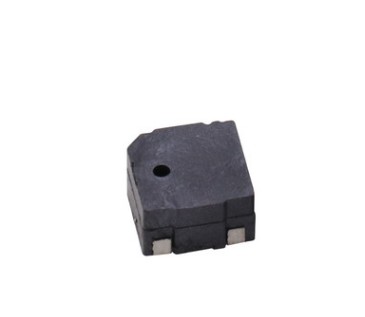
As a passive electromagnetic component, the 5*3mm SMD Magnetic Passive Buzzer requires an AC excitation signal, typically a 4000 Hz square wave, to produce sound. The 12 Ω coil presents a load that can be driven by many 3.3 V GPIO pins capable of sourcing up to 100 mA, although a transistor buffer remains a recommended option when pin current capacity is uncertain or when multiple buzzers share a rail. The 2 V to 4 V operating window provides headroom for battery discharge curves and supply tolerances; at the rated 3.0 V, sound pressure reaches at least 80 dB, and production samples consistently exceed 87 dB, confirming the benefit of the enlarged cavity.
The resonant frequency is fixed at 4000 Hz, which sits in a range where human hearing is most sensitive, making the tone clearly audible even in moderately noisy environments. The offset sound aperture is designed to project the tone forward, which is useful when the buzzer is placed behind a grille or a directional opening in the enclosure. At 0.1 g, the component adds negligible mass to the board and can be placed by standard pick‑and‑place equipment.
MEIDI performs acoustic testing on every production batch, and the typical performance figures quoted in the datasheet are derived from such measurements. The guaranteed specifications provide a reliable baseline for system design, while the sample data give a realistic view of what can be expected in volume production.
The increased cavity height of 3.0 mm provides a measurable acoustic advantage over thinner 2.0 mm alternatives, without expanding the PCB footprint, making it a drop‑in upgrade for existing 5 mm layouts that have the required vertical clearance.
A 12 Ω coil resistance enables direct GPIO drive on many 3.3 V microcontrollers, simplifying the drive circuit and saving board space.
The supply voltage tolerance of 2 V to 4 V accommodates a variety of low‑voltage sources, from single‑cell lithium packs to regulated logic rails.
The LCP housing maintains its shape and solder pad integrity through reflow cycles, with a specified peak of 255 °C and up to three passes, supporting double‑sided assembly where needed.
Directional sound emission through an offset hole helps focus the alert towards the user, improving perceived loudness in face‑on installations.
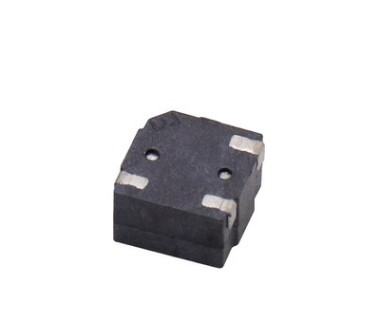
| Parameter | Value |
| Product Type | Electromagnetic SMD Passive Buzzer |
| Rated Voltage | 3.0 V (o‑p) |
| Operating Voltage | 2 – 4 V (o‑p) |
| Sound Output at 10 cm | ≥ 80 dB |
| Operating Current | ≤ 100 mA |
| Resonant Frequency | 4000 ± 300 Hz |
| Coil Resistance | 12 ± 3 Ω |
| Operating Temperature | -20 °C ~ +70 °C |
| Storage Temperature | -30 °C ~ +80 °C |
| Dimensions (L × W × H) | 5.0 × 5.0 × 3.0 mm |
| Weight | 0.1 g |
| Housing Material | Black LCP |
| Soldering Method (Recommended) | Reflow: 255 ± 5 °C, 3 s; Preheat 180 °C, 40–70 s |
The following use‑case descriptions are based on the MLT‑5030’s electrical and acoustic characteristics. They are provided as integration guidance and should be validated for the specific end‑product and regulatory environment.
Industrial alarm panels and process controllers benefit from the 85 dB+ output and the 5 mm square footprint, which fits dense I/O boards where multiple alert points are needed. The 3.0 mm height is typically compatible with the clearance above standard DIN‑rail enclosures.
Security and access control keypads, intrusion detectors and fire alarm sounders can use the buzzer’s directional emission to direct the tone towards the user, while the direct GPIO drive simplifies multi‑zone installations.
Medical diagnostic equipment such as benchtop analysers and patient monitors often require a clear, frequency‑stable alert for cycle‑completion or error conditions. The 4000 Hz tone is distinct from lower‑frequency ambient noise common in clinical settings.
Commercial appliances, including industrial dishwashers, laundry machines and vending equipment, can rely on the MLT‑5030 for end‑of‑cycle and fault alerts, with the wide supply range accommodating the voltage variations typical of appliance control boards.
Automotive auxiliary systems, such as reverse proximity sensors, seat‑belt reminders and EV charging indicators, can use the buzzer in 12 V systems when a series resistor is added to drop the voltage, or directly in 3.3 V sub‑circuits.
Outdoor IoT devices, environmental sensors and smart city infrastructure nodes exposed to wind and background noise can take advantage of the higher sound pressure available from the 3.0 mm cavity to maintain audibility.
The 5*3mm SMD Magnetic Passive Buzzer addresses a common hardware conflict: the need for more acoustic output without increasing PCB area. By raising the buzzer height from 2.0 mm to 3.0 mm, MEIDI created a component that fits the same solder pads as the thinner MLT‑5020 and MLT‑5020H, allowing an acoustic performance upgrade with no layout changes. The additional internal volume consistently delivers sound pressure levels in the high 80 dB range, as confirmed by production sample measurements.
The 12 Ω coil resistance was chosen to keep drive requirements simple. A 3.3 V MCU pin that can source 100 mA can operate the buzzer directly, which is useful in cost‑sensitive designs where every transistor counts. For designers who prefer a buffer, a small NPN transistor or MOSFET works with standard logic levels and adds minimal area.
The black LCP housing has been proven through reliability testing that includes temperature cycling, vibration and drop tests, giving confidence in long‑term stability. The component is compatible with automated SMT lines and can withstand the thermal stress of double‑sided reflow processes. Samples are available to verify acoustic performance in your enclosure before committing to production volumes.
MEIDI Intelligent Technology has been manufacturing acoustic components since 2011. The company’s factory in Jiangsu, China, operates under an ISO 9001‑certified quality management system and integrates in‑house LCP moulding, automated coil winding, SMD assembly and 100 % inline acoustic testing. This vertical integration allows MEIDI to control the entire production chain, from raw material to finished component, and to maintain consistent quality at high volumes.
The MLT‑5030 is produced on the same automated SMD lines that serve MEIDI’s automotive and industrial customers. Each batch undergoes a reliability verification programme as defined in the product specification. Environmental stress screening includes a 48‑hour high‑temperature exposure at +80 °C, a 48‑hour cold soak at −30 °C, and five thermal shock cycles between these temperatures. Mechanical robustness is confirmed by vibration testing from 10 Hz to 55 Hz with 1.0 mm amplitude on all axes, followed by three 75 cm free‑fall drops onto a hardwood surface. Humidity resistance is evaluated at 50 °C and 90–95 % relative humidity for 48 hours, and soldering integrity is validated through a 250 °C solder heat test and full reflow profiling.
Typical production performance for the MLT‑5030, as recorded from a ten‑unit sample, shows sound pressure between 87.8 dB and 89.5 dB, current between 86.7 mA and 89.0 mA, and a stable 4000 Hz resonant frequency. These figures demonstrate the uniformity achieved by the manufacturing process and are available for customer review along with full batch test reports.


1. How does the MLT‑5030 compare acoustically with the 2.0 mm MLT‑5020 models?
The 3.0 mm cavity gives the MLT‑5030 a larger internal resonance volume, which translates into higher sound pressure. While the guaranteed minimum is 80 dB, production samples routinely measure 87 dB to 89 dB. The 5.0 × 5.0 mm footprint is identical, so the MLT‑5030 can replace a 2.0 mm buzzer without PCB changes as long as the additional 1.0 mm of height is available above the board.
2. What is the minimum clearance needed above the MLT‑5030?
The buzzer body extends 3.0 mm above the PCB surface. To avoid acoustic obstruction, it is advisable to keep a clear zone of at least 4–5 mm total from the board surface, including the sound port. A nearby surface too close to the aperture can reduce the perceived loudness and shift the frequency response.
3. Can I replace a through‑hole magnetic buzzer with the MLT‑5030?
Yes, the 5*3mm SMD Magnetic Passive Buzzer provides a surface‑mount alternative in a 5.0 mm square footprint. The PCB will need to be redesigned for SMD pads, but the 12 Ω coil and 3 V drive are compatible with many 3.3 V logic circuits that previously drove through‑hole parts. A transistor buffer may still be used if the existing circuit already includes one.
4. Is the MLT‑5030 suitable for battery‑powered devices?
With a maximum current draw of 100 mA at 3.0 V, the buzzer is manageable for most battery configurations, including single‑cell Li‑ion and 3 V coin cells. The 2 V to 4 V operating range covers the discharge curve of a lithium cell without regulation. For ultra‑low‑power applications, reducing the PWM duty cycle below 50 % can lower the average current further, at the cost of some sound pressure.
5. What reflow profile is recommended for the MLT‑5030?
The black LCP housing withstands standard lead‑free reflow with a peak of 255 ± 5 °C for 3 seconds, following a preheat at 180 °C for 40–70 seconds. Up to three reflow passes are permitted. The detailed profile is included in the product specification, and MEIDI can provide guidance for specific oven settings.
To request a quotation, order engineering samples or discuss OEM/ODM customisation, contact MEIDI through the inquiry form. The applications engineering team can assist with enclosure acoustics, drive circuit optimisation and reflow profile validation for your production environment. MEIDI’s vertically integrated manufacturing and ISO 9001 quality system provide the consistency needed for high‑volume programmes.
Address
No.6, Wenlin Road, Chenbao Town, Xinghua City, Jiangsu Province, China
Tel