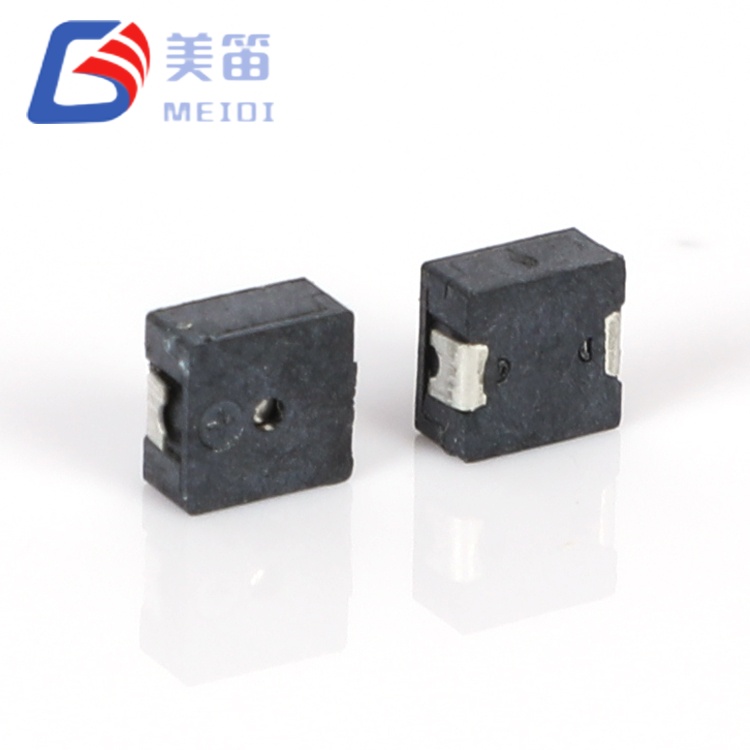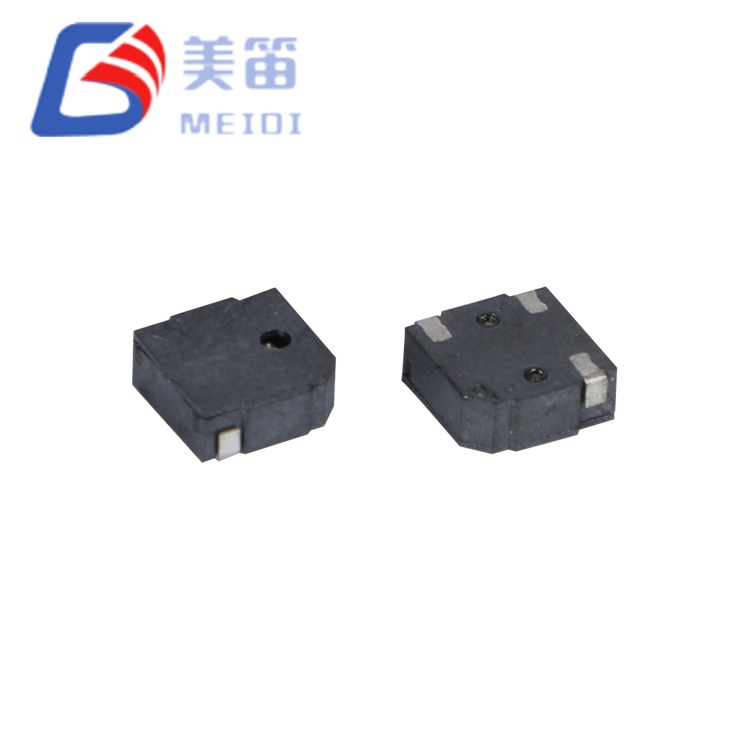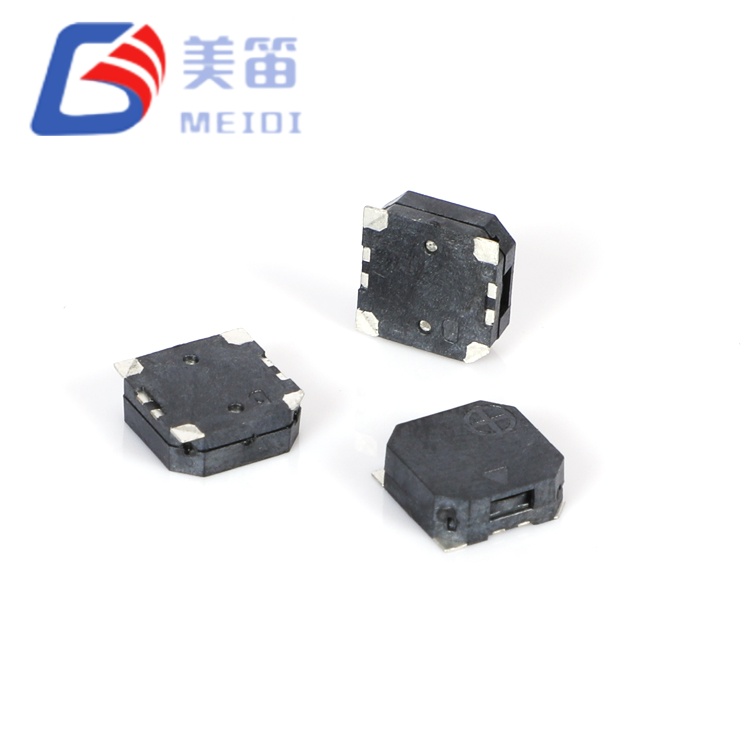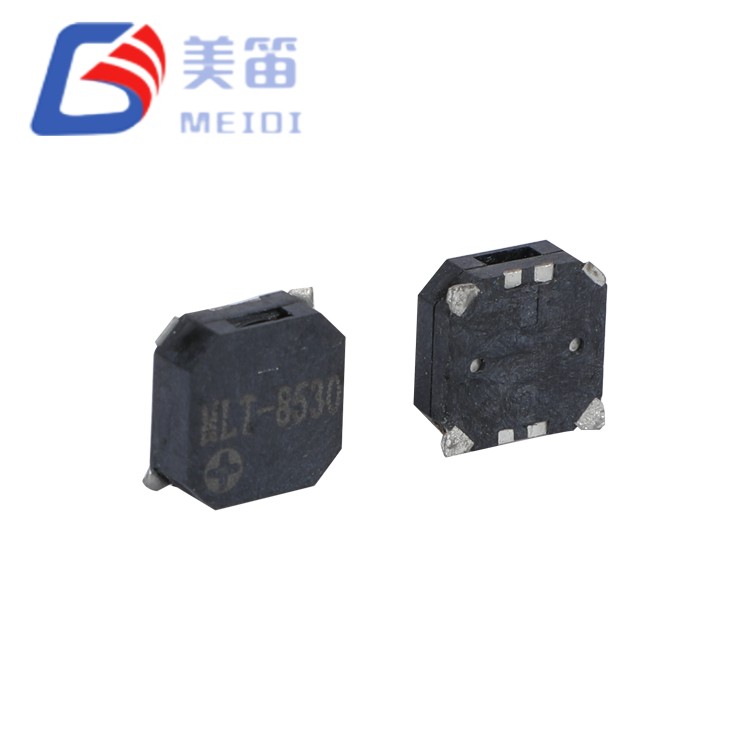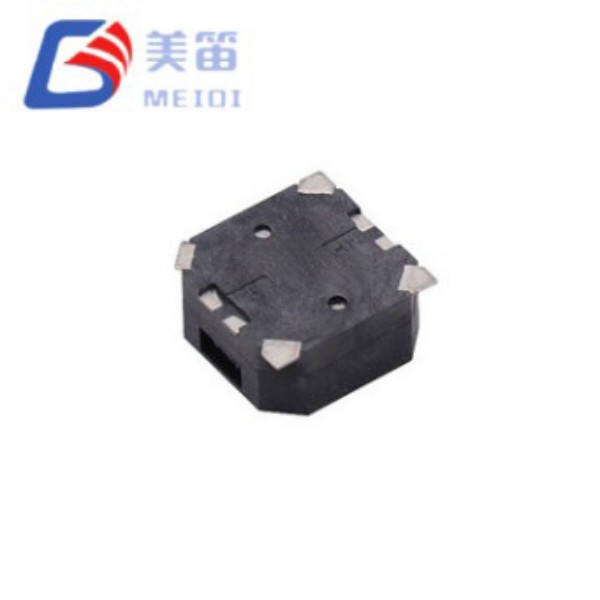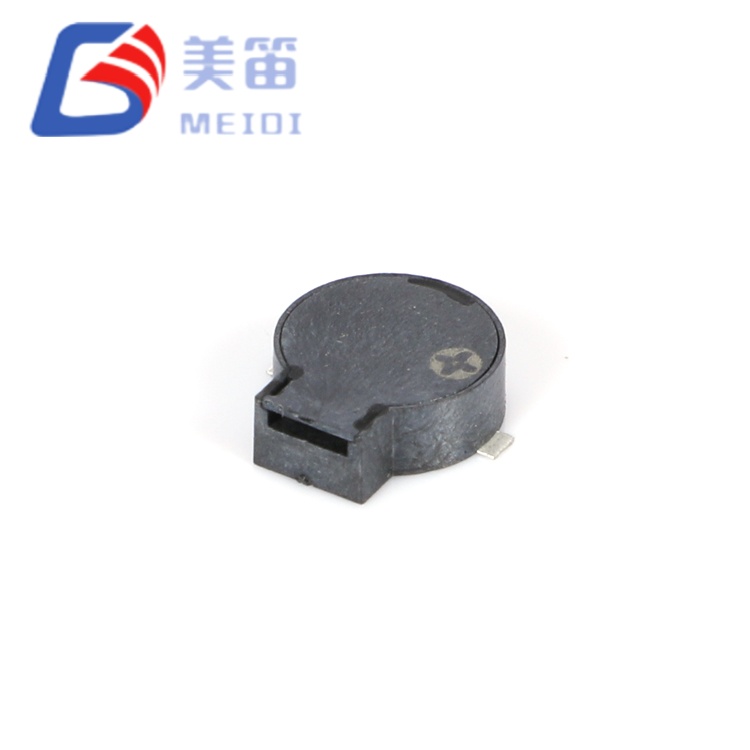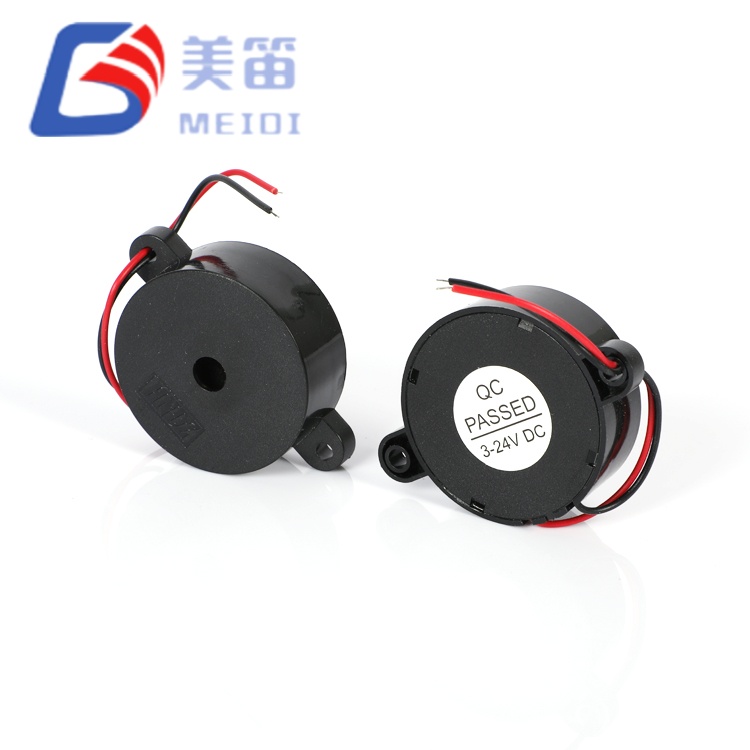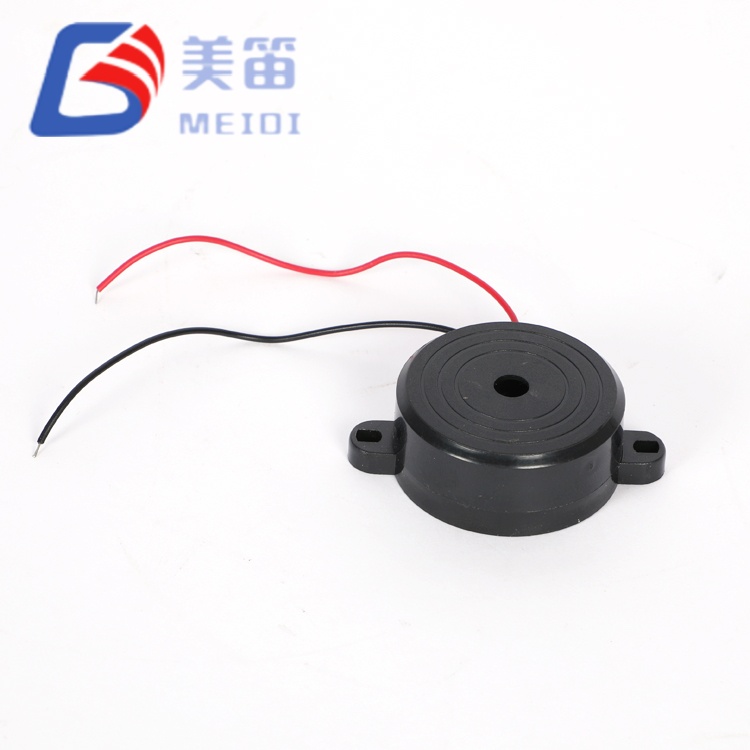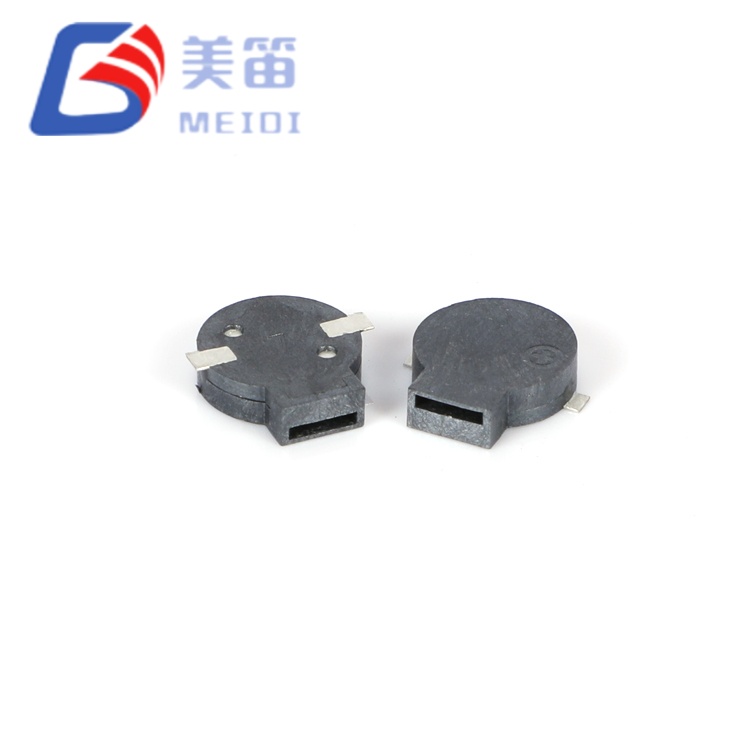
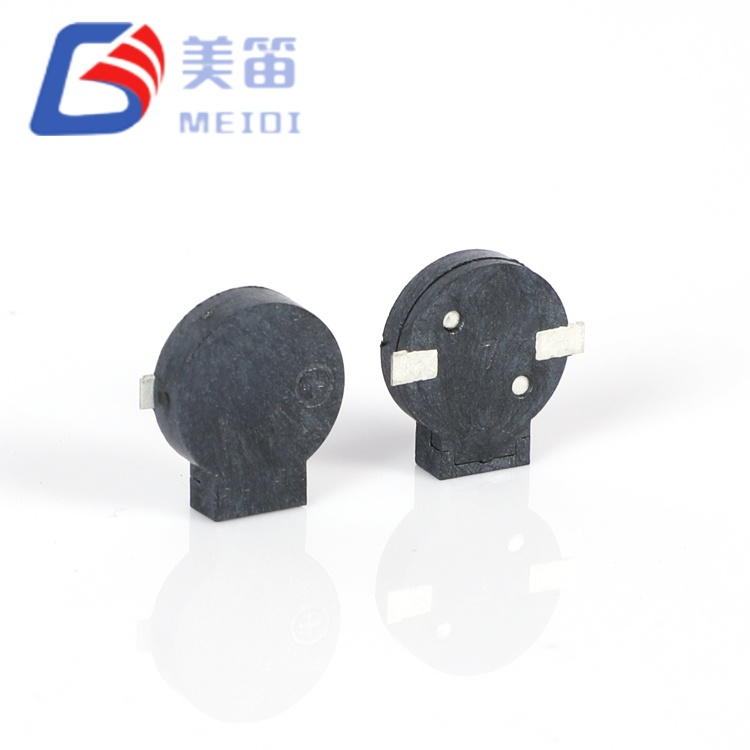
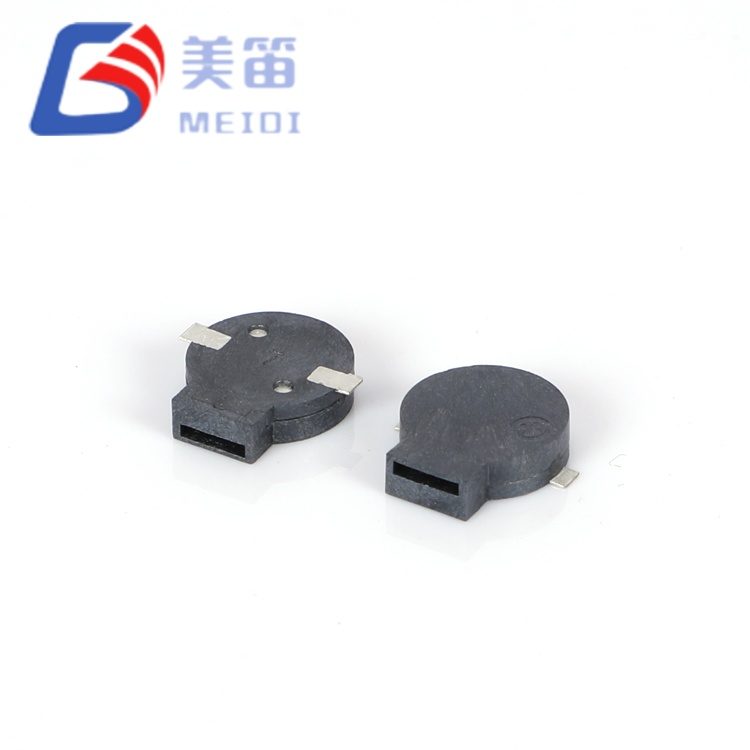
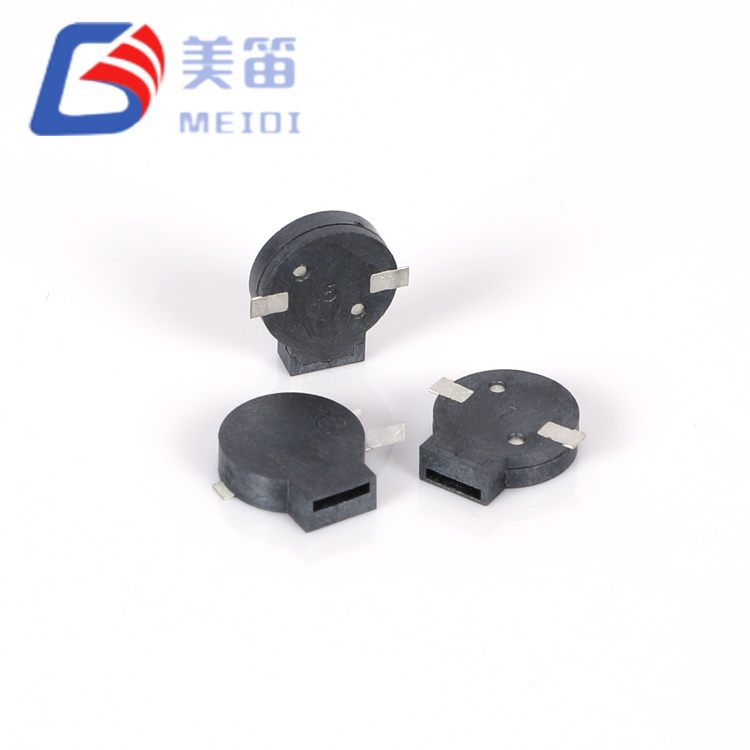
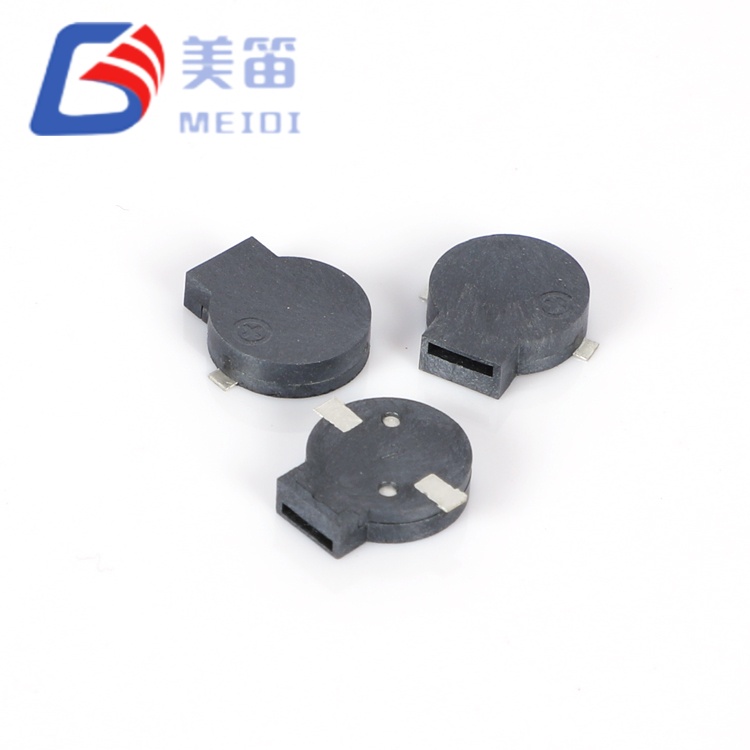
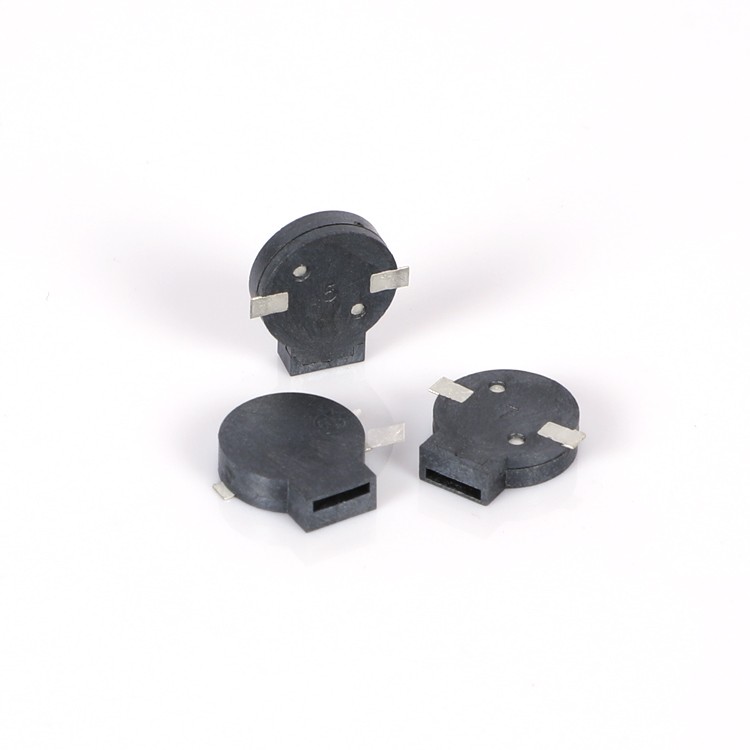
The 9*2.5mm SMD Magnetic Passive Buzzer comprises two electromagnetic passive buzzers sharing a 9.0 mm circular footprint with a 2.5 mm ultra‑low profile, differentiated by coil impedance: the 16 Ω variant (MLT‑9025‑16R) for 2.5–4.5 V systems, and the 32 Ω variant (MLT‑9025‑32R) for 4.5–6.5 V buses. This unified mechanical platform enables engineers to evaluate both drive architectures without PCB layout changes, while the slim 2.5 mm height addresses severe z‑axis constraints in ultra‑slim enclosures and stacked PCB assemblies.
Manufactured at MEIDI’s ISO‑9001 certified facility in Jiangsu Province, the 9*2.5mm SMD Magnetic Passive Buzzer features a circular diaphragm that maximises membrane area within the 9 mm diameter footprint. Sample batch verification confirms SPL values ranging from 91.8 dB to 98.5 dB, substantially exceeding the 85 dB minimum specification. The black LCP housing supports lead‑free reflow at 255 °C and operates from -30 °C to +70 °C, with storage capability from -40 °C to +85 °C for cold‑chain logistics and winter transport applications.
| Parameter | MLT‑9025‑16R | MLT‑9025‑32R |
| Product Type | Electromagnetic SMD Passive Buzzer | Electromagnetic SMD Passive Buzzer |
| Rated Voltage | 3.6 V (o‑p) | 5.0 V (o‑p) |
| Operating Voltage | 2.5 – 4.5 V (o‑p) | 4.5 – 6.5 V (o‑p) |
| Sound Output at 10 cm | ≥ 85 dB | ≥ 85 dB |
| Operating Current | ≤ 100 mA | ≤ 80 mA |
| Resonant Frequency | 2700 ± 300 Hz | 2700 ± 300 Hz |
| Coil Resistance | 16 ± 3 Ω | 32 ± 3 Ω |
| Operating Temperature | -30 °C ~ +70 °C | -30 °C ~ +70 °C |
| Storage Temperature | -40 °C ~ +85 °C | -40 °C ~ +85 °C |
| Dimensions (Dia × H) | 9.0 × 2.5 mm | 9.0 × 2.5 mm |
| Weight | 0.8 g | 0.8 g |
| Housing Material | Black LCP | Black LCP |
| Soldering Method (Recommended) | Reflow: 255 ± 5 °C, 3 s; Preheat 180 °C, 40–70 s | Reflow: 255 ± 5 °C, 3 s; Preheat 180 °C, 40–70 s |
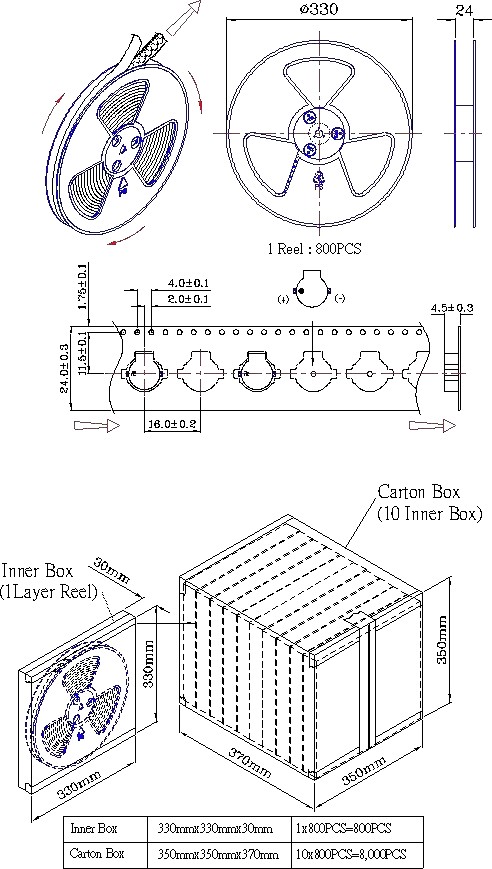
The 9*2.5mm SMD Magnetic Passive Buzzer introduces a circular 9.0 mm form factor distinct from the square‑footprint MLT‑8540 and MLT‑7525 families. The circular geometry maximises diaphragm area for a given footprint – a 9.0 mm circle encloses 63.6 mm², providing 30% more membrane area than 8.5 mm square alternatives of equivalent height. This increased diaphragm area contributes to the high SPL measurements observed during production testing.
The 2.5 mm profile – 1.5 mm thinner than the MLT‑8540 series – resolves severe z‑axis constraints in ultra‑slim enclosures, stacked PCB assemblies, and battery‑compartment‑adjacent mounting locations. The 0.8 g mass – 60% heavier than 5 mm variants – contributes to vibration damping and mechanical stability under shock conditions, an important consideration for vehicle and portable equipment applications.
The dual‑impedance architecture offers the same prototyping flexibility and platform scalability as the MLT‑8540 series, but within a lower‑profile package. The 16 Ω variant enables direct evaluation on 3.3 V logic and Li‑ion platforms without voltage regulation overhead; the 32 Ω variant integrates cleanly into 5 V automotive accessory buses, industrial PLC I/O modules, and PoE‑powered endpoints where higher rail voltage reduces current‑induced EMI and wiring losses.
Maximum diaphragm‑to‑height ratio – 9.0 mm circular housing delivers the largest vibrating membrane area in the 2.5 mm height class, optimising acoustic output per unit z‑axis clearance
Dual‑impedance unified platform – 16 Ω and 32 Ω options from identical 9.0 × 2.5 mm mechanical envelope, eliminating PCB layout redesign when evaluating drive voltage architectures
Low‑frequency noise penetration – 2700 Hz resonant centre targets the 2–3 kHz band where industrial ambient noise spectral density is minimised, improving alert perceptibility in machinery environments
Voltage‑optimised current efficiency – 16 Ω draws ≤100 mA at 3.6 V for battery‑powered portable devices; 32 Ω draws ≤80 mA at 5 V for reduced thermal stress in enclosed automotive modules
Extended cold‑weather storage – -40 °C storage rating supports arctic logistics, high‑altitude equipment, and winter‑stored machinery without degradation
Reflow‑compatible LCP housing – black liquid crystal polymer withstands 255 ± 5 °C lead‑free reflow peaks with up to 3 passes, maintaining dimensional stability across full thermal range
Commercial vehicle fleet management – driver alert and cargo status tones in delivery vans, refrigerated trucks, and long‑haul trailers operating on 12 V/24 V systems with 5 V regulated sub‑circuits
Smart metering and utility endpoints – tamper detection, communication status, and low‑battery warnings in gas meters, electricity monitors, and water flow sensors deployed in outdoor cabinets
Industrial handheld diagnostics – pass/fail audible feedback in vibration analysers, thermal imagers, and portable oscilloscopes used in field maintenance across variable noise floors
Agricultural automation controllers – irrigation threshold alarms, greenhouse climate alerts, and livestock feeding system notifications in solar‑powered remote installations
Medical transport and emergency vehicles – equipment‑ready tones in ambulances, mobile clinics, and patient transport where 5 V vehicle bus architecture dominates
Renewable energy inverter systems – grid fault, grounding error, and maintenance alerts in photovoltaic string inverters and small wind turbine controllers
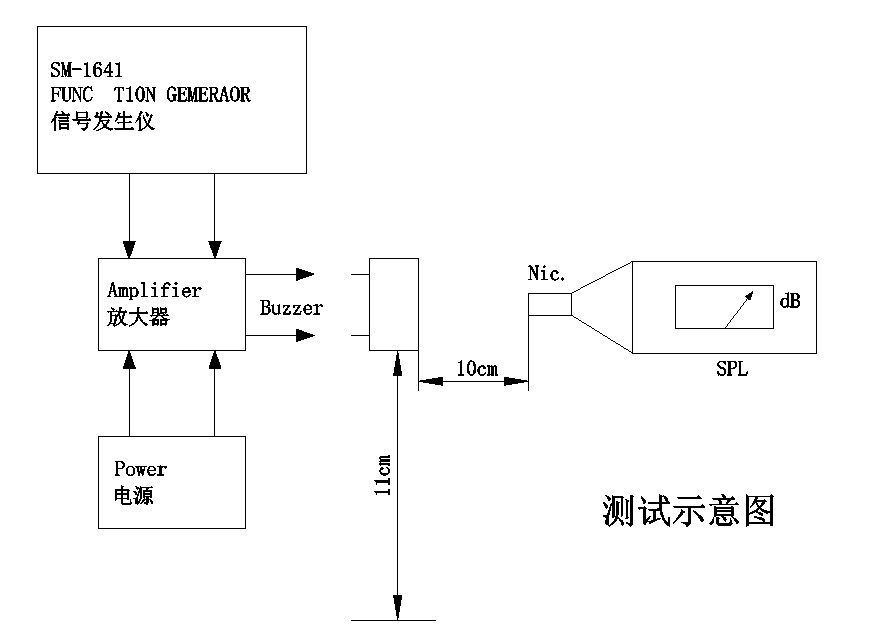
Production testing (n=10 per variant) under standard conditions – square wave at rated voltage, resonant frequency, 50% duty cycle, 10 cm free‑field measurement – confirms the following distributions:
| Variant | SPL Range (dB) | Current Range (mA) | Frequency (Hz) | Impedance (Ω) |
| MLT‑9025‑16R | 91.8–95.0 | 66.5–71.6 | 2700 (all samples) | 15.4–17.1 |
| MLT‑9025‑32R | 93.9–98.5 | 62.2–65.7 | 2700 (all samples) | 28.1–32.1 |
All samples across both variants measured at exactly 2700 Hz, indicating exceptional manufacturing control over diaphragm tension and magnetic gap parameters. The 16 Ω variant demonstrates SPL of 91.8–95.0 dB, while the 32 Ω variant achieves 93.9–98.5 dB – both providing substantial margin above the 85 dB minimum. The SPL headroom ranges from 6.8 dB to 13.5 dB, accommodating system‑level attenuation from enclosures, grilles, and component aging.
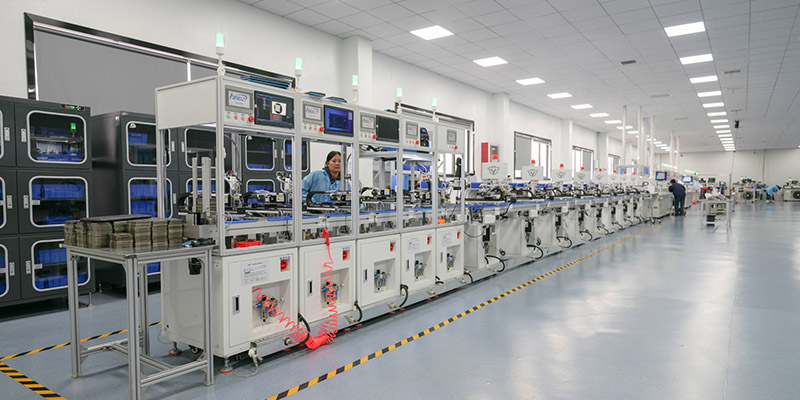
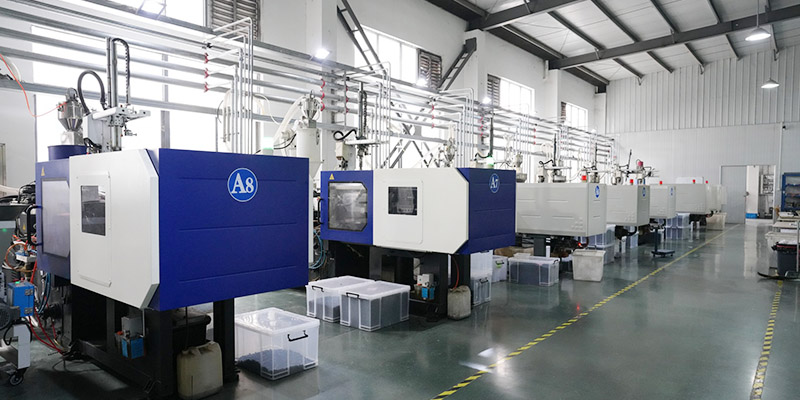
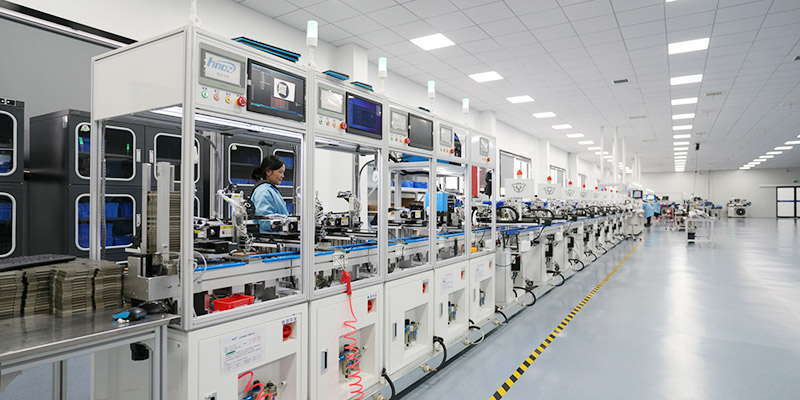
MEIDI produces both MLT‑9025 variants on dedicated SMD assembly lines with automated coil winding, soldering, and acoustic calibration. Our Jiangsu facility maintains ISO 9001:2015 certification, with statistical process control applied at every production stage.

Each production batch undergoes uniform qualification testing:
Electrical characterisation – 100% verification of coil resistance, operating current, and resonant frequency
Acoustic validation – statistical sampling confirms SPL ≥ 85 dB; measured results consistently exceed 91 dB
Climatic endurance – 48‑hour high‑temperature storage at +80 °C, 48‑hour low‑temperature storage at -30 °C, and 5‑cycle thermal shock (-30 °C ↔ +80 °C, 30‑minute dwell per extreme)
Mechanical stress – sinusoidal vibration (10–55 Hz, 1.0 mm amplitude, XYZ axes, 0.5 hours total) and 75 cm free‑fall drop onto 10 mm hardwood (3 impacts)
Humidity resistance – 48 hours at 50 °C / 95% RH with 2‑hour recovery and electrical characterisation
Solder heat resistance – 250 °C for 10 seconds with 2.0 mm body‑to‑solder clearance, plus reflow profile compliance
RoHS and REACH conformity documentation is available. Lot identification codes provide full traceability to production date, test results, and raw material certificates.
Q1: How does the circular 9.0 mm MLT‑9025 compare to square 8.5 mm alternatives like the MLT‑8540?
The MLT‑9025’s circular geometry maximises diaphragm area for a given footprint – a 9.0 mm circle encloses 63.6 mm² versus 72.3 mm² for an 8.5 mm square. However, the 2.5 mm height (versus 4.0 mm for MLT‑8540) makes the MLT‑9025 the preferred choice when z‑axis clearance is severely constrained. Acoustic output is comparable (both ≥85 dB), but the MLT‑9025’s lower profile sacrifices some low‑frequency resonance efficiency. Select the MLT‑9025 for slim enclosures; select the MLT‑8540 for maximum acoustic headroom where vertical space is available.
Q2: What drive circuit is recommended for each variant?
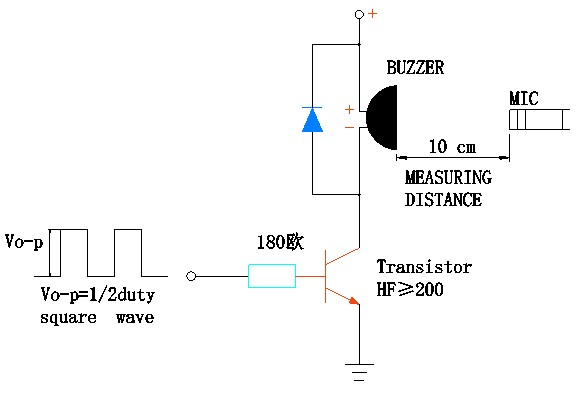
The 16 Ω variant at 3.6 V draws ≤100 mA and can be driven directly from capable MCU GPIO pins (verify pin current rating) or through a simple NPN transistor switch with 180 Ω base resistor. The 32 Ω variant at 5 V draws ≤80 mA but requires a driver stage when driven from 3.3 V logic; from 5 V logic, a 330 Ω base resistor with general‑purpose transistor (hFE ≥ 200) provides adequate drive. A flyback diode (1N4148 or similar) across the coil is mandatory for both variants to protect the driving element from inductive kickback during switching transitions.
Q3: Is the 2.5 mm height sufficient for reliable acoustic output?
Yes. While taller cavities (3.0–4.0 mm) offer enhanced Helmholtz resonance efficiency, the MLT‑9025’s 2.5 mm profile achieves ≥85 dB through optimised diaphragm tension and magnetic gap geometry. Sample measurements confirm SPL above 91 dB, demonstrating that the slim profile does not compromise acoustic performance. The trade‑off is frequency bandwidth: the 2.5 mm height maintains strong 2700 Hz resonance but offers less off‑resonance response than taller alternatives. For pure‑tone alarm applications, this is not a limitation.
Q4: Can both variants survive automotive under‑hood temperature excursions?
The operating range is -30 °C to +70 °C, which covers most automotive interior and cabin applications. Under‑hood environments exceeding +70 °C require thermal management or alternative high‑temperature buzzer families. The -40 °C storage rating supports cold‑start logistics and winter transport without degradation, but sustained operation below -30 °C is not guaranteed. For engine‑bay applications, contact MEIDI for high‑temperature variant recommendations.
Q5: Are custom resonant frequencies or impedance values available for OEM programs?
Yes. MEIDI supports OEM/ODM customisation including intermediate impedance values (20–24 Ω for split‑voltage architectures), modified resonant frequencies (2.0–3.5 kHz range), alternative housing colours for visual identification, and custom tape‑and‑reel packaging. Minimum order quantities and lead times apply. Contact our sales team to discuss specific requirements and request a quotation for custom configurations.
Q6: What is the recommended PCB footprint for the circular 9.0 mm package?
A circular pad pattern matching the 9.0 mm housing diameter with 0.25 mm clearance per side is recommended. The SMD terminals are located on the underside of the circular housing; the PCB footprint should include two rectangular pads beneath the component, positioned according to the terminal spacing specified in the datasheet. MEIDI provides IPC‑compliant footprint recommendations and 3D STEP files upon request.
For complete technical documentation, PCB footprint recommendations, reference driver circuits for both impedance variants, or volume pricing, contact MEIDI Engineering Support. Engineering samples of both 16 Ω and 32 Ω variants are available for qualified development projects.
Our applications engineering team typically responds within one business day with reflow profile guidance, acoustic enclosure integration notes, and design‑in support tailored to your specific voltage and current requirements.
Address
No.6, Wenlin Road, Chenbao Town, Xinghua City, Jiangsu Province, China
Tel