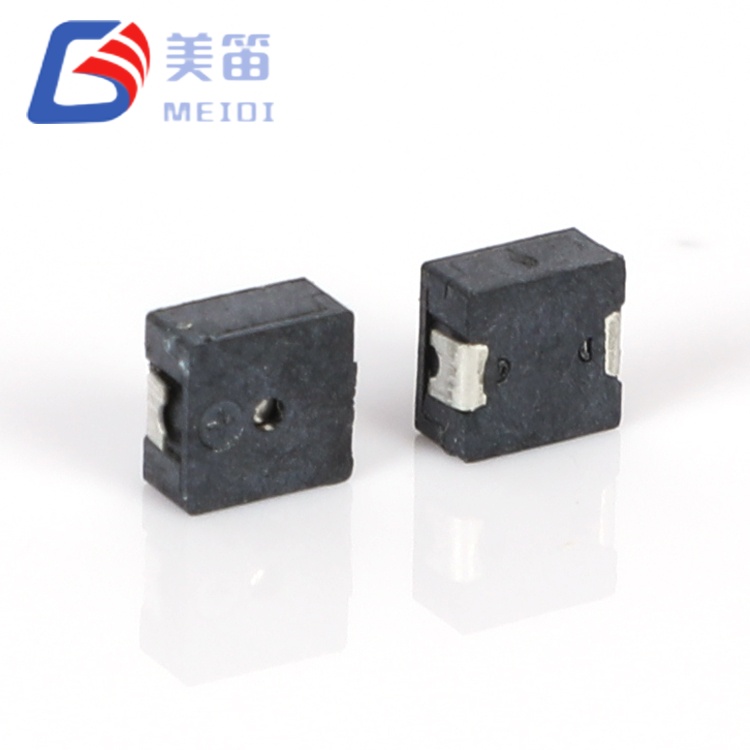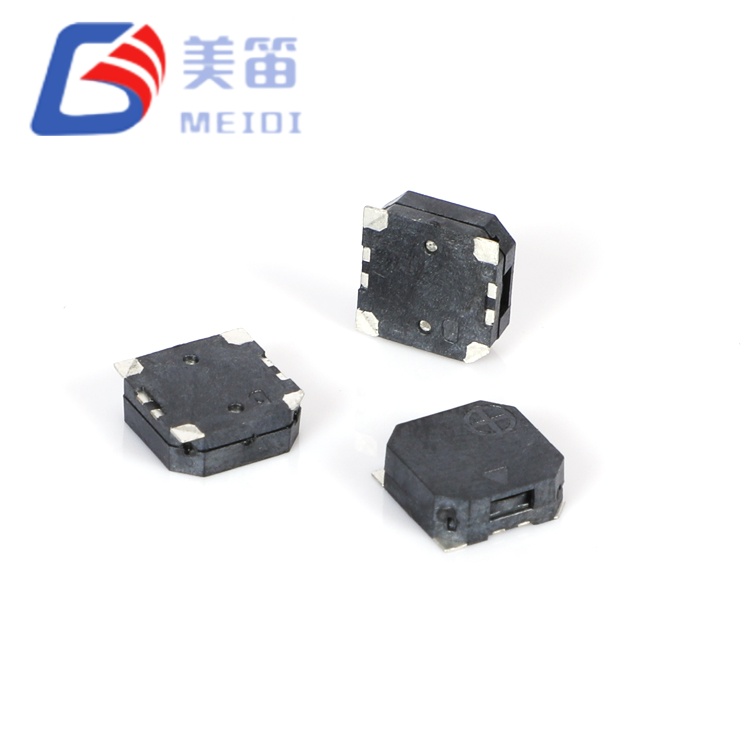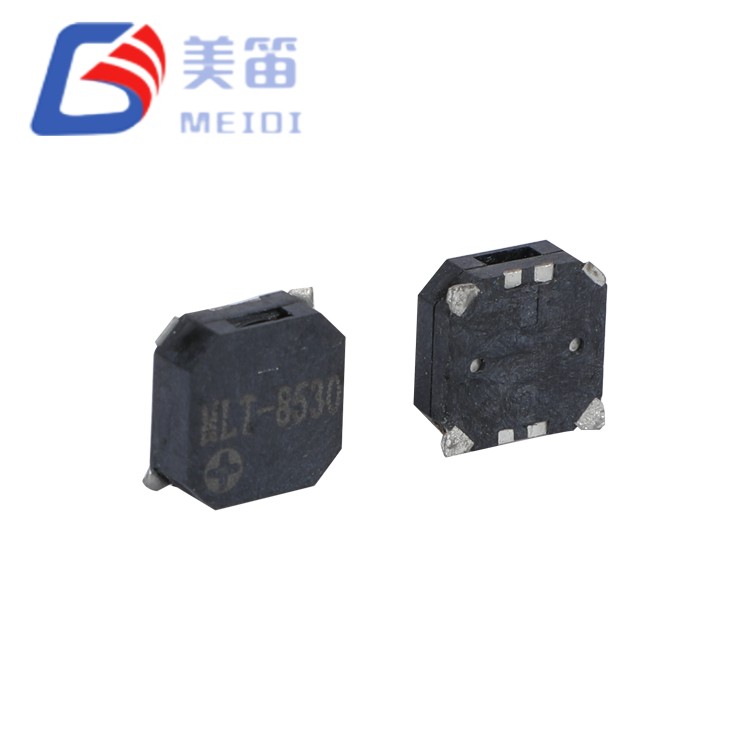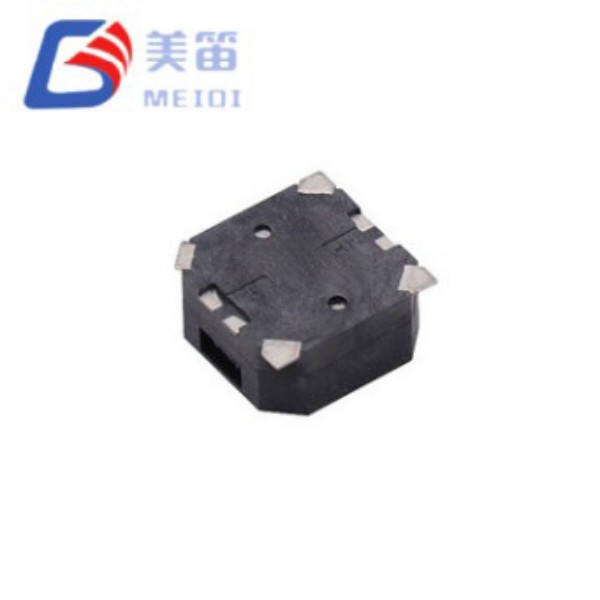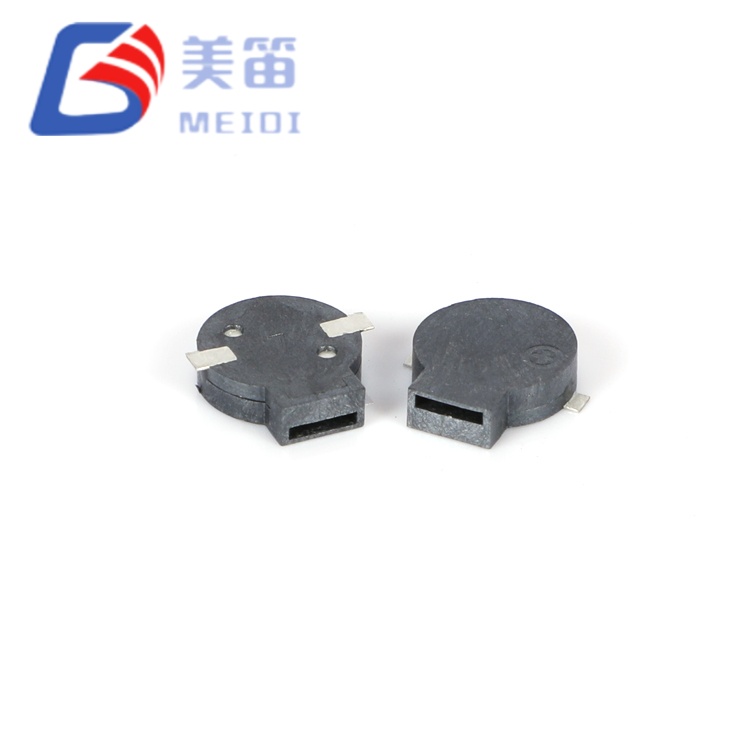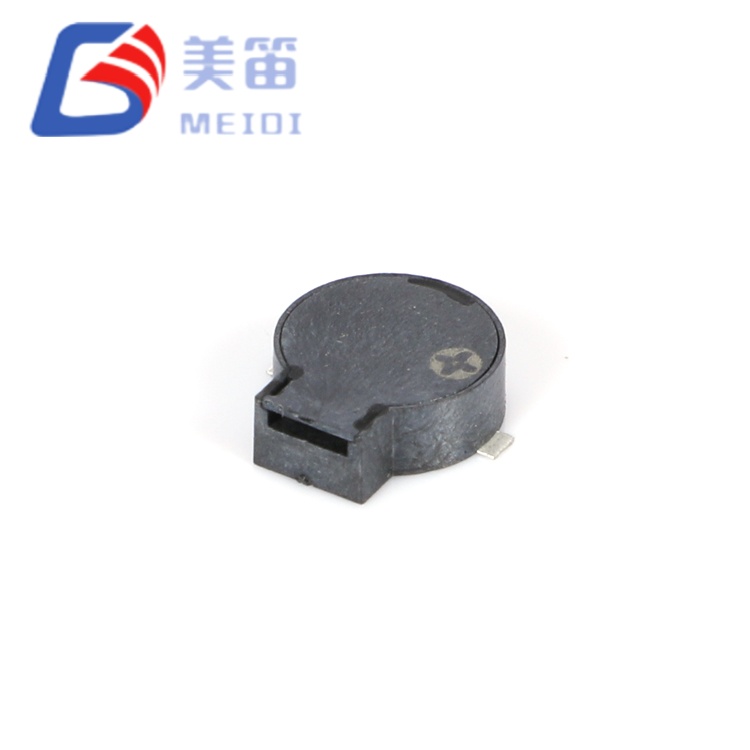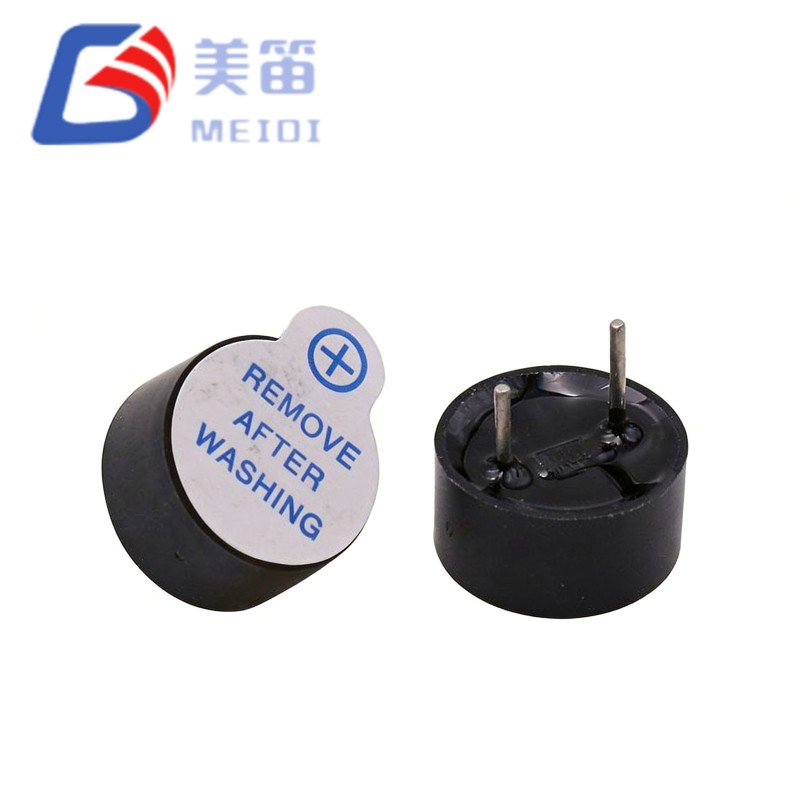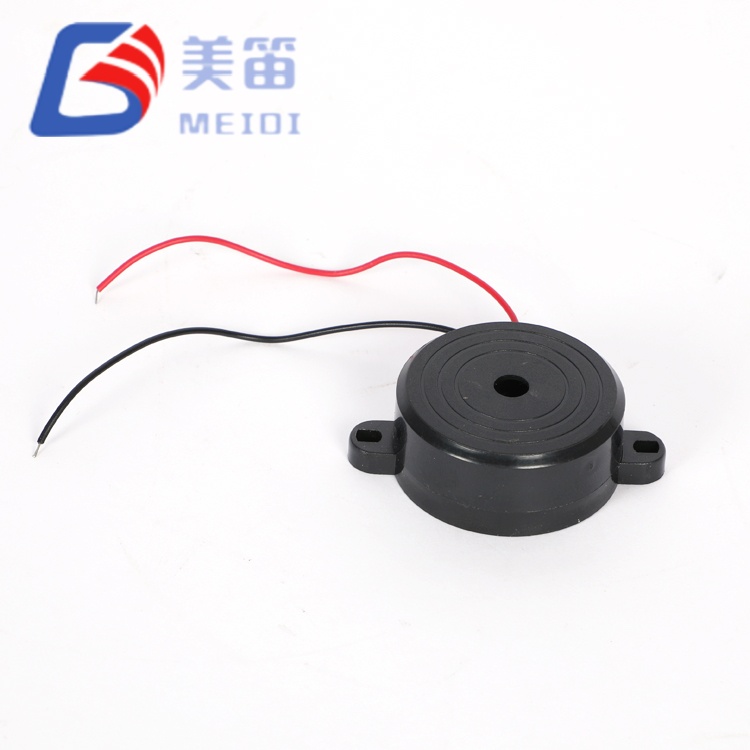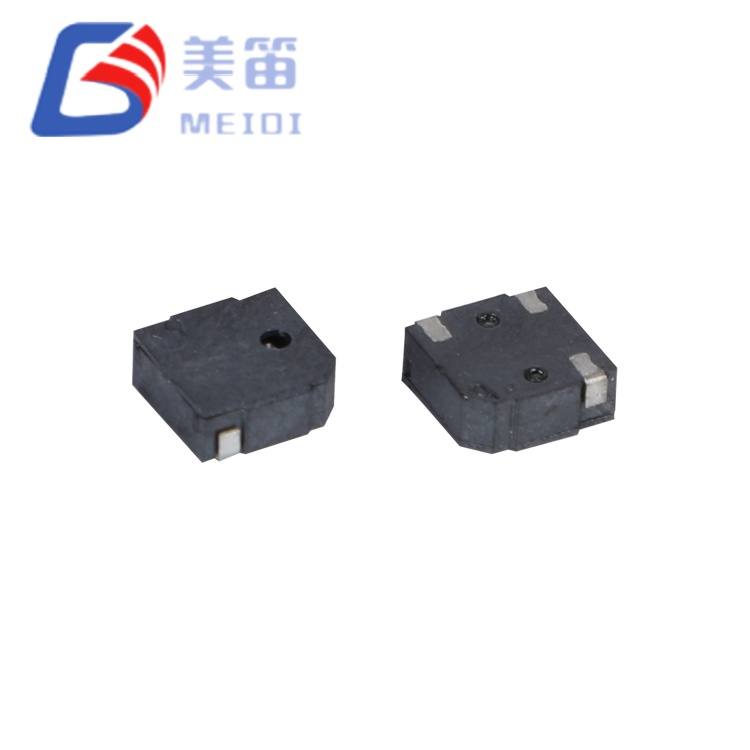
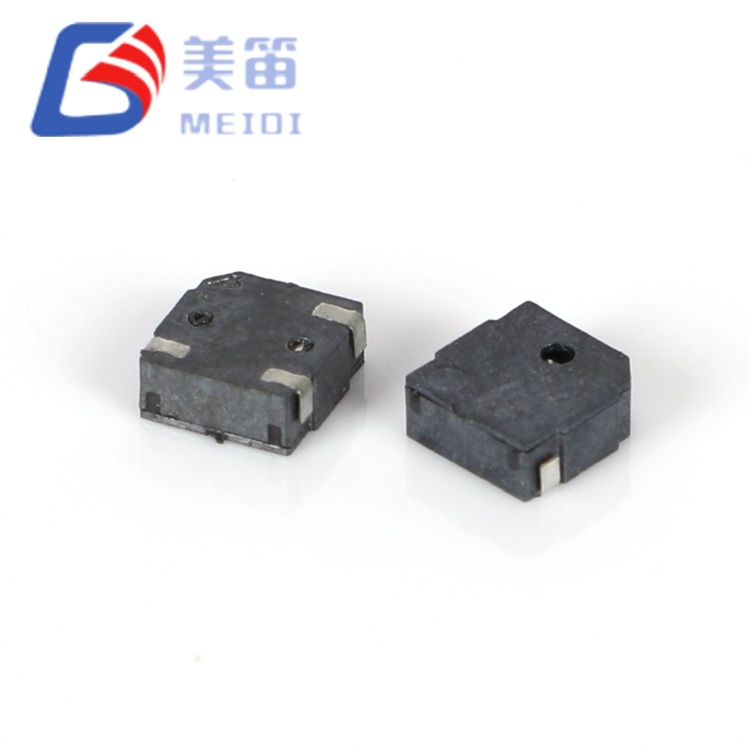
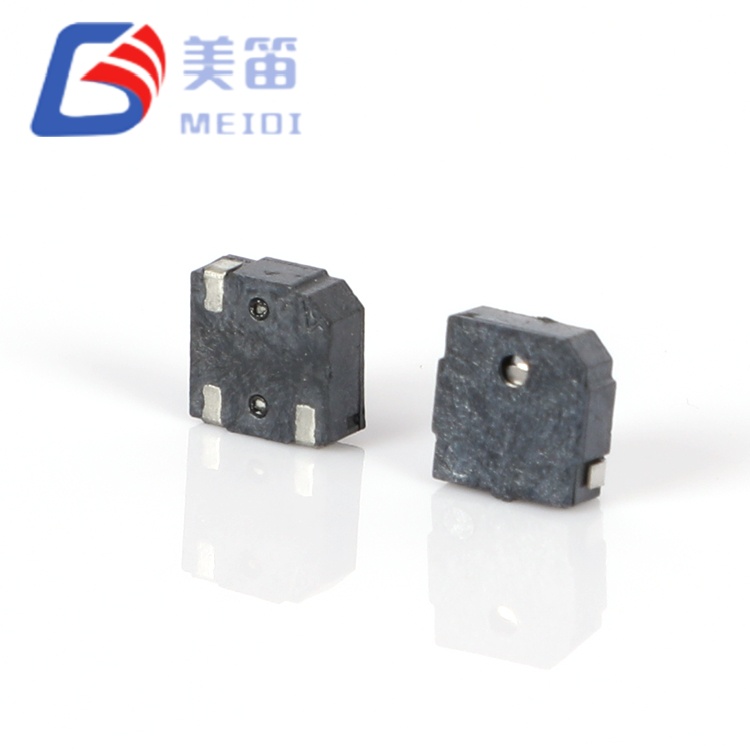
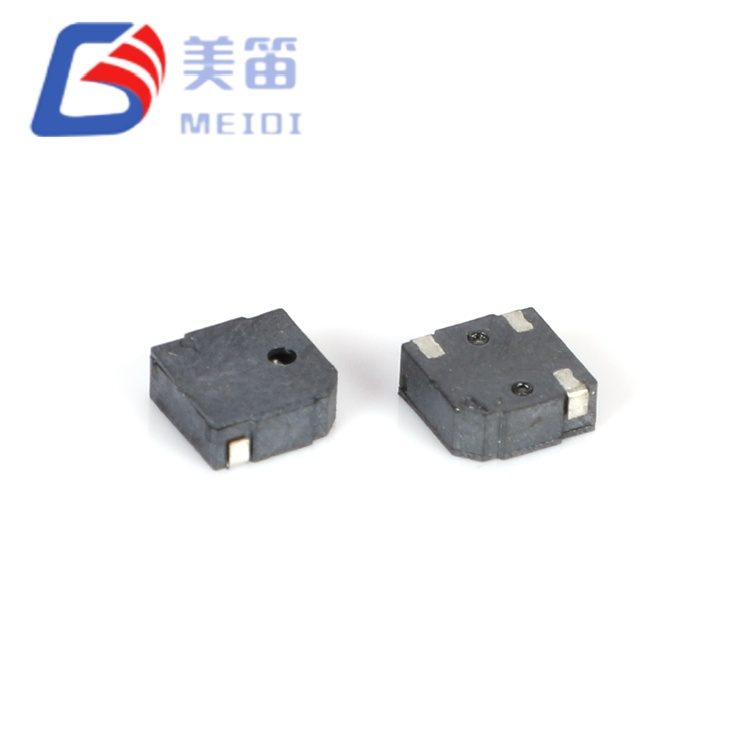
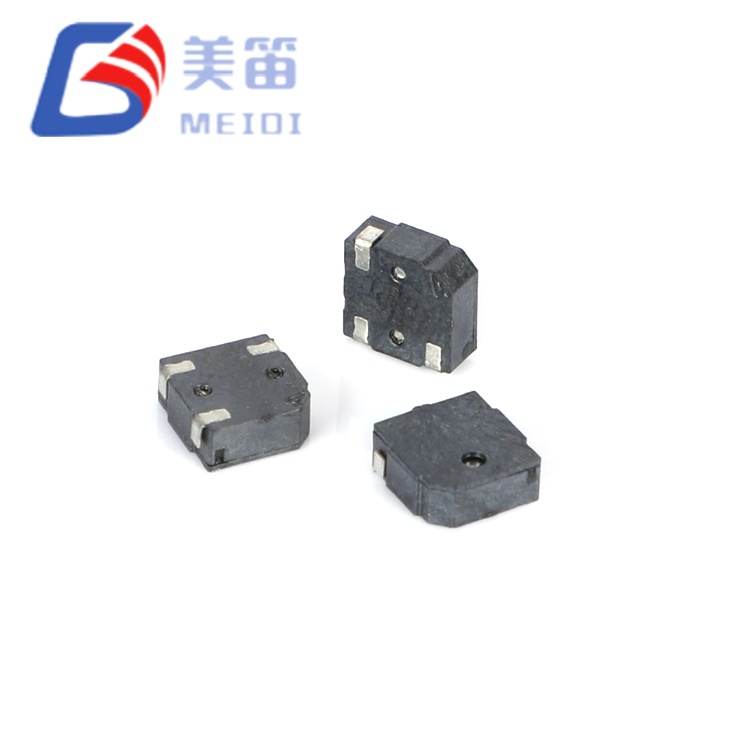
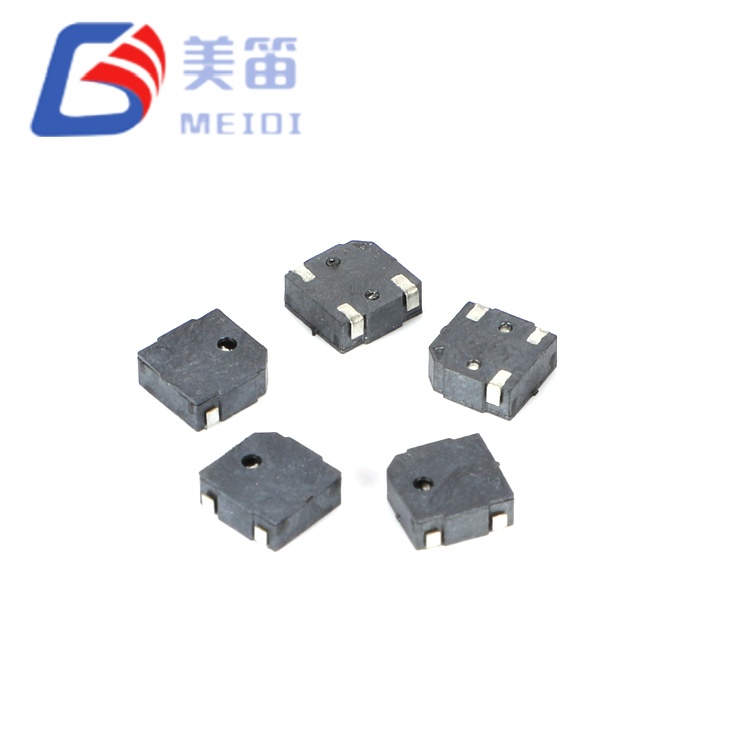
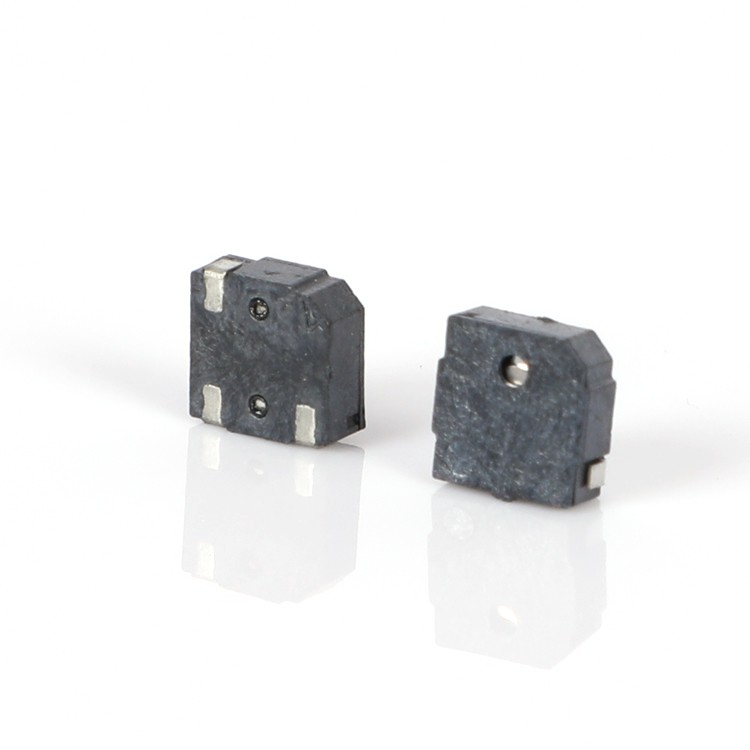
The MLT‑5020 is a 5*5*2mm SMD Magnetic Passive Buzzer delivering a minimum of 80 dB sound pressure at 10 cm under 3.0 V drive. This 5mm component provides a 15 dB acoustic advantage over 4mm alternatives while maintaining SMD assembly compatibility, making it suitable for applications where audible alerts must compete with moderate ambient noise – including industrial control panels, security systems, and portable medical instruments.
Manufactured by MEIDI in Jiangsu Province, the MLT‑5020 incorporates a 12 ± 3 Ω coil and 4000 Hz resonant frequency, sharing electrical characteristics with smaller variants for unified drive circuit design. The black LCP housing supports lead‑free reflow at 255 °C peak, enabling automated SMT assembly. Sample batch verification shows SPL values ranging from 84.6 dB to 87.1 dB, providing generous margin above the minimum specification.
The 5*5*2mm SMD Magnetic Passive Buzzer addresses a common engineering trade‑off: achieving sufficient acoustic output without committing to through‑hole components or oversized SMD packages. Its 5mm square footprint occupies 56% more board area than 4mm variants, yet delivers a 15 dB increase in sound pressure – a perceptual doubling of loudness that significantly improves alert audibility in real‑world conditions. This makes it the preferred choice when PCB space allows for the slightly larger footprint and acoustic performance is non‑negotiable.
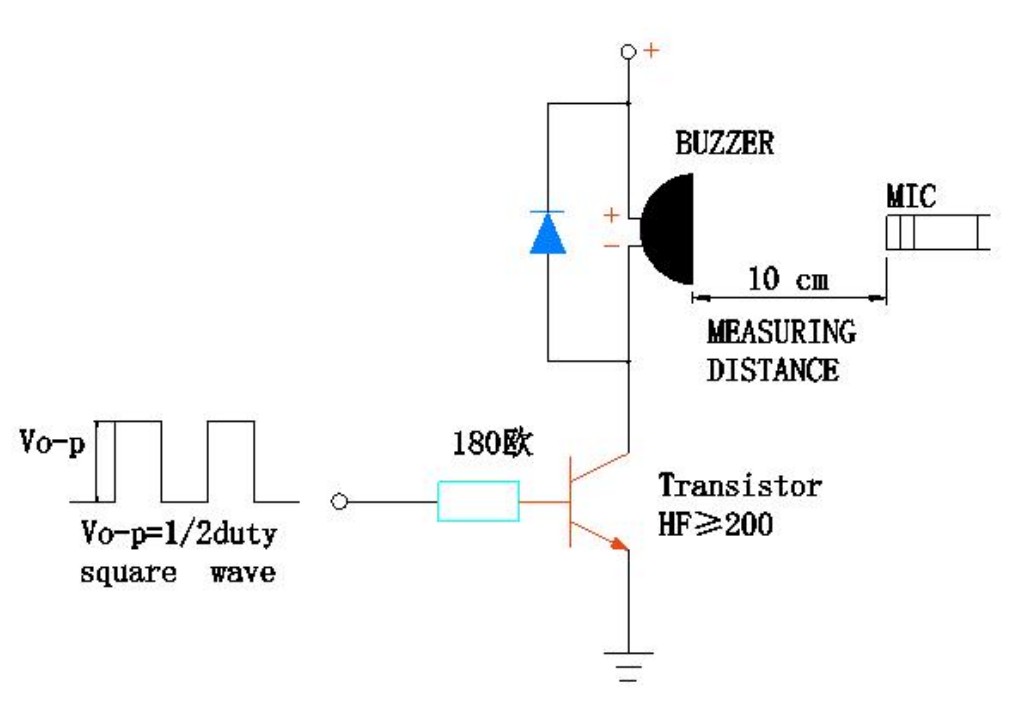
The passive drive architecture requires an external AC excitation – typically a 4 kHz square wave from a microcontroller PWM output. This design choice grants firmware engineers full control over alert patterns, frequency modulation, and duty‑cycle‑based volume scaling. The 12 Ω coil impedance permits direct connection to standard 3.3 V and 5 V GPIO pins in most applications, eliminating the need for dedicated driver ICs and reducing overall system cost.
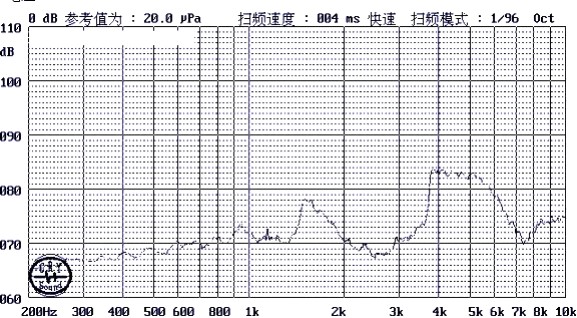
The 4000 Hz resonant frequency occupies the upper portion of the human auditory sensitivity range (2–4 kHz), producing a tone that remains perceptible even in environments with significant HVAC, computing, or machinery noise. The 2.0 mm profile height and square pad geometry provide stable mechanical mounting and consistent solder joint formation during reflow processing.
Enhanced acoustic output – 5.0 × 5.0 mm footprint delivers ≥ 80 dB SPL, providing clear audible alerts in moderately noisy environments
4 kHz resonant frequency – mechanically tuned to 4000 ± 300 Hz, aligning with peak human auditory sensitivity for maximum perceived loudness
MCU‑compatible impedance – 12 ± 3 Ω coil resistance enables direct drive from standard microcontroller GPIO pins without external buffering
2–4 V supply compatibility – supports single‑cell Li‑ion, 3 V coin‑cell, and 3.3 V logic rail configurations
LCP housing for SMT processing – black liquid crystal polymer construction rated for 255 °C reflow peak and stable operation from -20 °C to +70 °C
Manufacturing‑ready design – compatible with standard lead‑free reflow profiles and supports up to 3 soldering passes for high‑volume production
| Parameter | Value |
| Product Type | Electromagnetic SMD Passive Buzzer |
| Rated Voltage | 3.0 V (o‑p) |
| Operating Voltage | 2 – 4 V (o‑p) |
| Sound Output at 10 cm | ≥ 80 dB |
| Operating Current | ≤ 100 mA |
| Resonant Frequency | 4000 ± 300 Hz |
| Coil Resistance | 12 ± 3 Ω |
| Operating Temperature | -20 °C ~ +70 °C |
| Storage Temperature | -30 °C ~ +80 °C |
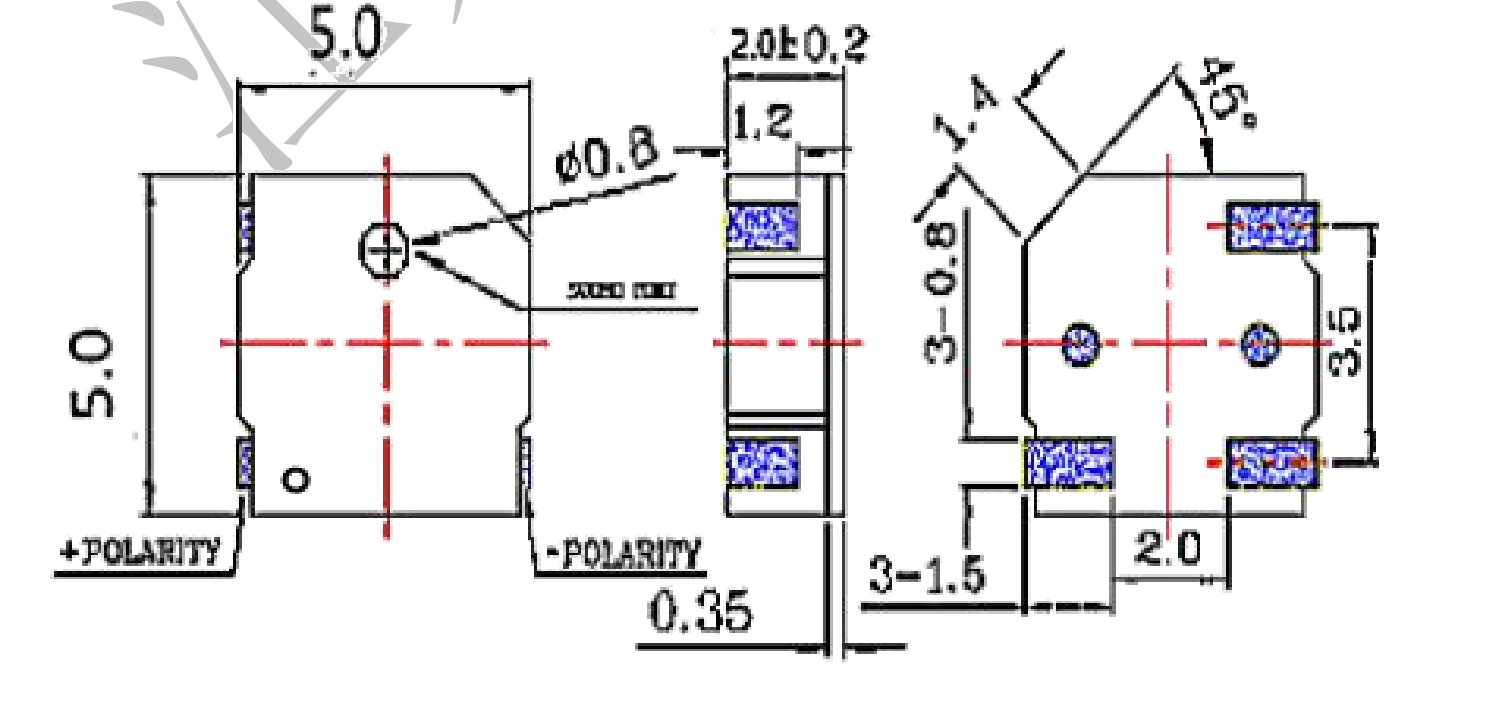
| Dimensions (L × W × H) | 5.0 × 5.0 × 2.0 mm |
| Weight | 0.1 g |
| Housing Material | Black LCP |
| Soldering Method (Recommended) | Reflow: 255 ± 5 °C, 3 s; Preheat 180 °C, 40–70 s |
Industrial control equipment – fault annunciation and cycle‑completion tones in PLCs, operator panels, and process monitoring stations
Physical access systems – keypad feedback and intrusion alerts in card readers, electronic locks, and perimeter detection panels
Home automation devices – status notifications and warning tones in smart thermostats, lighting controllers, and security hubs
Handheld diagnostic tools – test‑complete signals and error alerts in portable glucose monitors, pulse oximeters, and vital‑sign measurement devices
Portable power accessories – charge status and connection indicators in power banks, wireless charging pads, and battery packs
Vehicle interior electronics – seatbelt reminders, door status tones, and dashboard warning chimes in automotive applications
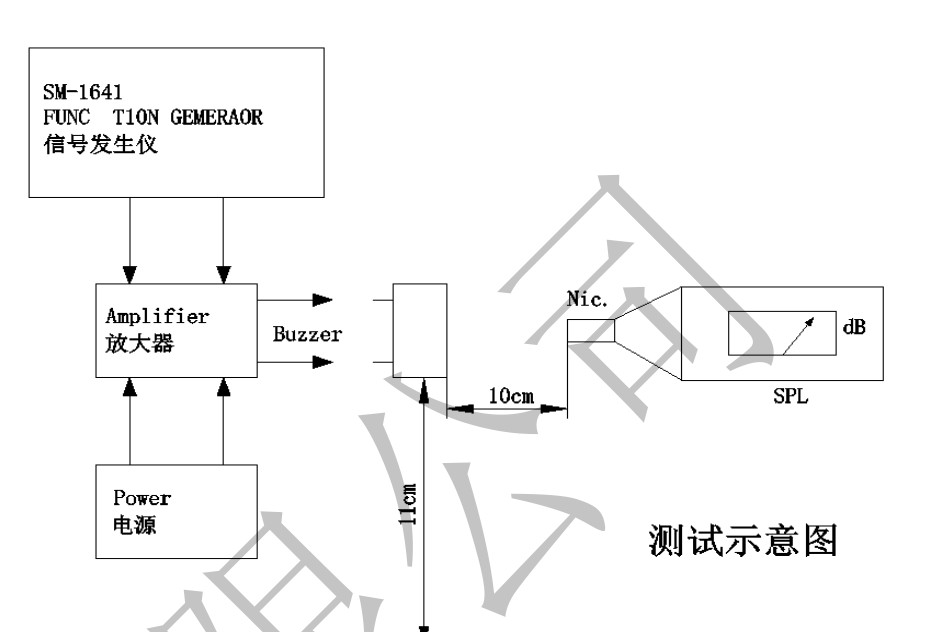
Production verification data from a representative batch (n=10) under standardised conditions (3.0 V square wave, 4 kHz, 50% duty cycle, 10 cm free‑field measurement) shows the following performance distribution:
| Parameter | Min | Max | Mean |
| Sound Pressure Level | 84.6 dB | 87.1 dB | 85.8 dB |
| Operating Current | 85.4 mA | 88.1 mA | 86.7 mA |
| Coil Resistance | 11.4 Ω | 12.6 Ω | 12.0 Ω |
These figures demonstrate consistent manufacturing quality and provide engineers with reliable design parameters. The SPL margin above the 80 dB specification (approximately 4.6–7.1 dB) accommodates voltage variation, acoustic obstructions, and component aging throughout the product lifecycle.
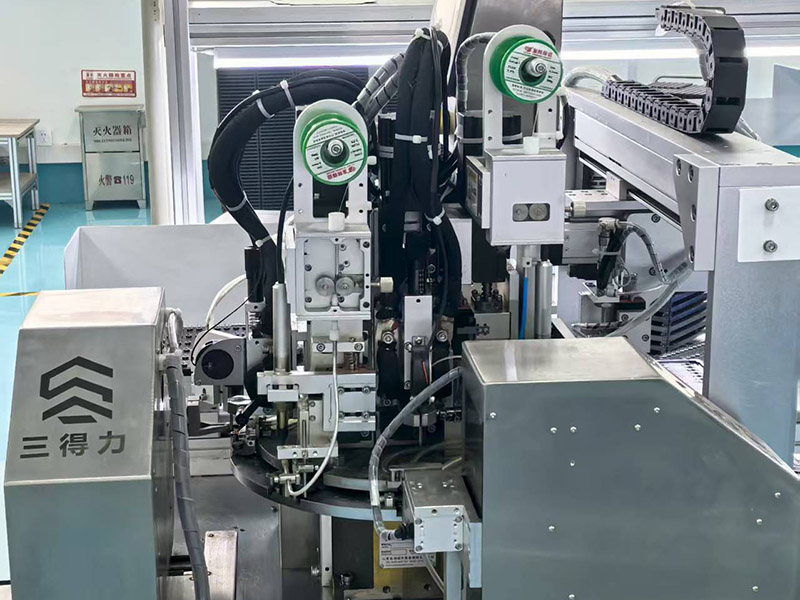
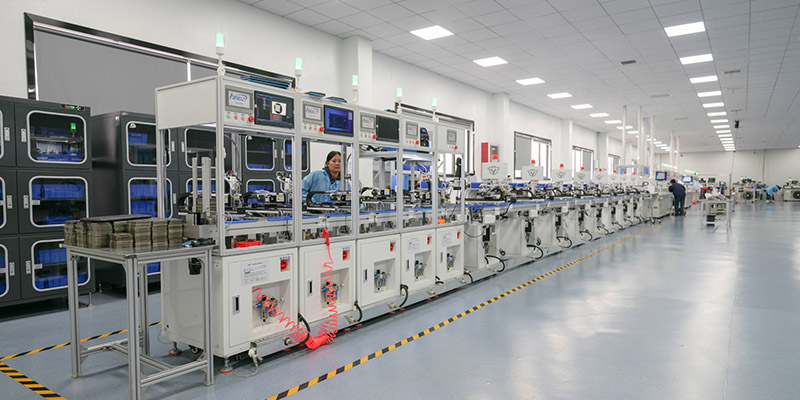
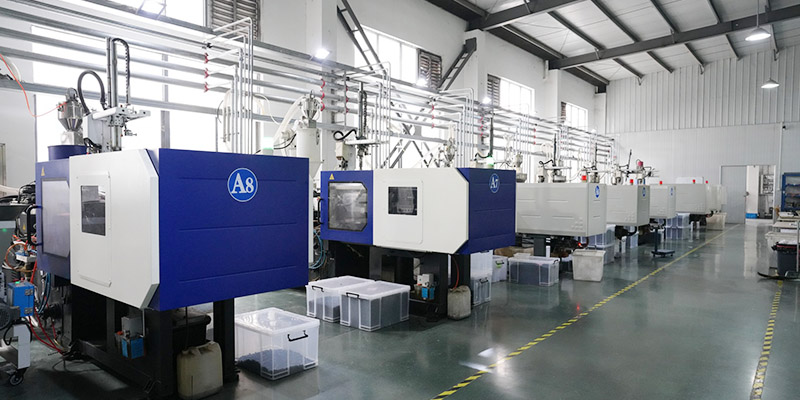
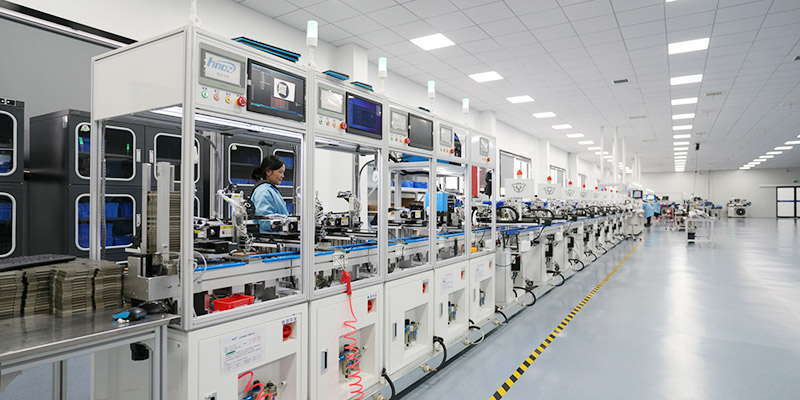
MEIDI produces the MLT‑5020 using automated SMD assembly lines with integrated coil winding, soldering, and acoustic calibration. Our Jiangsu manufacturing facility maintains ISO 9001:2015 certification, with statistical process control applied at each production stage.

Each manufacturing lot undergoes the following qualification procedures:
Electrical characterisation – 100% verification of coil resistance (12 ± 3 Ω) and operating current (≤ 100 mA) at rated conditions
Acoustic validation – statistical sampling confirms SPL ≥ 80 dB at 10 cm; typical results range from 84.6 dB to 87.1 dB
Frequency screening – resonant frequency measured at 4000 ± 300 Hz; production samples cluster between 3950 Hz and 4050 Hz
Thermal exposure testing – 48‑hour storage at +80 °C with full parameter recovery after ambient stabilisation, and 48‑hour storage at -30 °C with verified cold‑start activation
Temperature cycling – 5 transitions between -30 °C and +80 °C with 30‑minute dwell periods at each extreme
Mechanical integrity – vibration testing (10–55 Hz, 1.0 mm amplitude, XYZ axes, 0.5 hours total) and 75 cm drop tests onto 10 mm hardwood (3 impacts)
Humidity exposure – 48 hours at 50 °C / 95% RH with subsequent electrical verification
Solder process validation – heat resistance verified at 250 °C for 10 seconds with 2.0 mm body‑to‑solder clearance
RoHS and REACH conformity documentation is available upon request. Lot identification codes on the housing provide full traceability to production date, test results, and raw material certificates.
Q1: Can the MLT‑5020 operate directly from a 3.3 V microcontroller pin?
Yes, provided the GPIO pin can source at least 100 mA peak current. Many ARM Cortex‑M and similar MCUs offer this capability through dedicated high‑drive pins or by paralleling multiple outputs. For microcontrollers with limited current sourcing, a simple NPN transistor buffer (e.g., 2N3904) with a 1 kΩ base resistor provides a cost‑effective solution. Always verify the specific GPIO current capability in the MCU datasheet before finalising the design.
Q2: What is the optimal drive signal for maximum acoustic output?
A square wave at 4000 Hz with 50% duty cycle and 3.0 V amplitude produces the highest SPL. The rapid voltage transitions maximise coil current and diaphragm displacement. Lower duty cycles (e.g., 25% or 75%) reduce average power and consequently reduce SPL by approximately 3–6 dB. For volume‑adjustable alerts, duty‑cycle modulation provides a simple method for varying perceived loudness without changing frequency.
Q3: Is the MLT‑5020 compatible with 5 V logic systems?
The MLT‑5020 is rated for 2–4 V operation. Applying 5 V continuously risks coil overheating and may exceed the maximum current specification. For 5 V systems, add a series resistor (47–100 Ω) to limit current to ≤ 100 mA. Alternatively, use a voltage divider or a 3.3 V regulator dedicated to the buzzer circuit. MEIDI also offers 5 V‑rated variants in the same footprint – contact our engineering team for selection guidance.
Q4: How does the MLT‑5020 compare with the 4mm MLT‑4020H in practice?
Both components share identical electrical parameters (12 Ω, 2–4 V, 4 kHz), enabling the same drive circuit and firmware. The MLT‑5020 provides approximately 15 dB higher SPL (≥80 dB vs ≥65 dB) on a 1 mm larger footprint (5 mm vs 4 mm square). The decision is straightforward: choose the MLT‑4020H when PCB space is extremely constrained and SPL requirements are modest; choose the MLT‑5020 when audibility is critical and board area permits the larger footprint.
Q5: What customisation options are available for OEM volume orders?
MEIDI offers several customisation paths for qualified projects: alternative resonant frequencies (2.7 kHz, 3.0 kHz, or 5.0 kHz), custom coil impedance values, specialised housing colours for brand differentiation, and modified tape‑and‑reel packaging configurations. Minimum order quantities and lead times vary by customisation scope. Contact our OEM support team with your requirements for a feasibility review and quotation.
Q6: What is the expected operational lifetime under continuous use?
The standard qualification includes 96 hours of continuous operation at 25 °C with a 50% duty‑cycle square wave. For indefinite continuous‑tone applications, MEIDI recommends limiting duty cycle to 50% or implementing periodic off‑periods to reduce coil heating. Extended lifetime testing data is available upon request for specific operating conditions – please contact our applications engineering team with your target duty cycle and ambient temperature profile.
For complete technical documentation, reference driver circuits, PCB footprint recommendations, or volume pricing, contact MEIDI Engineering Support. Engineering samples are available for qualified development projects.
Our applications engineering team typically responds within one business day with reflow profile guidance, acoustic integration notes, and design‑in support tailored to your specific product requirements.
Address
No.6, Wenlin Road, Chenbao Town, Xinghua City, Jiangsu Province, China
Tel