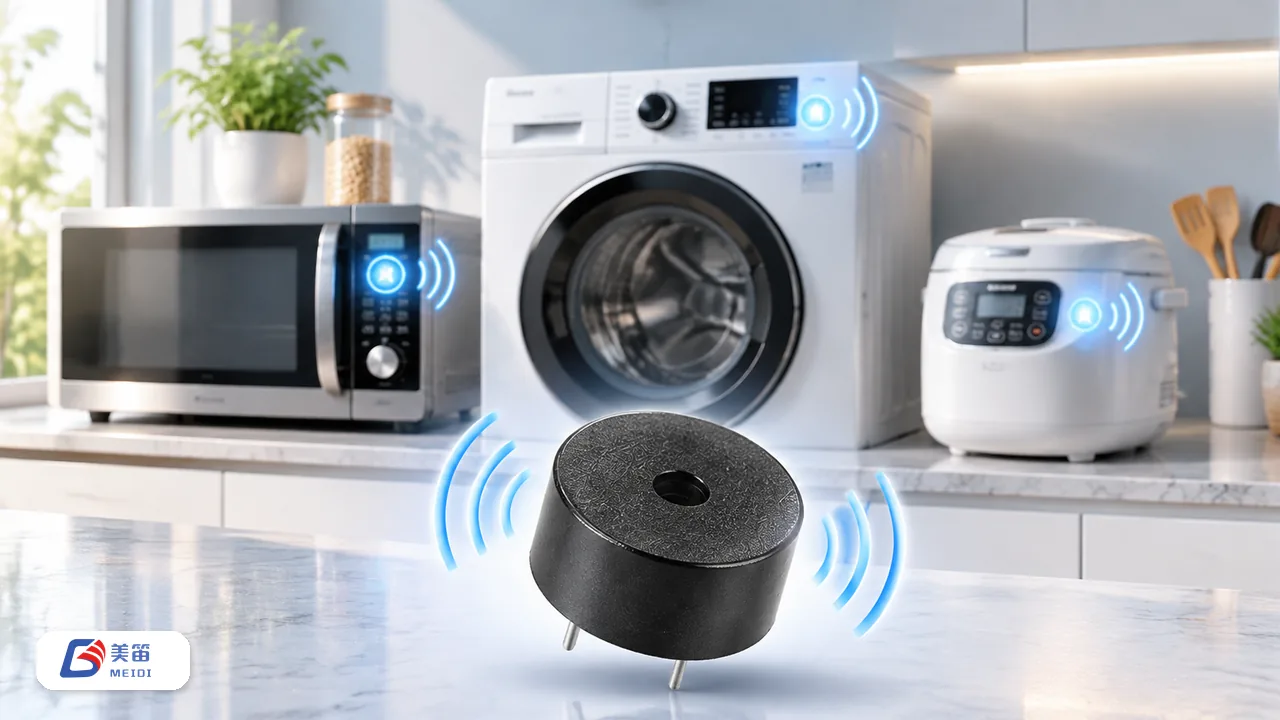
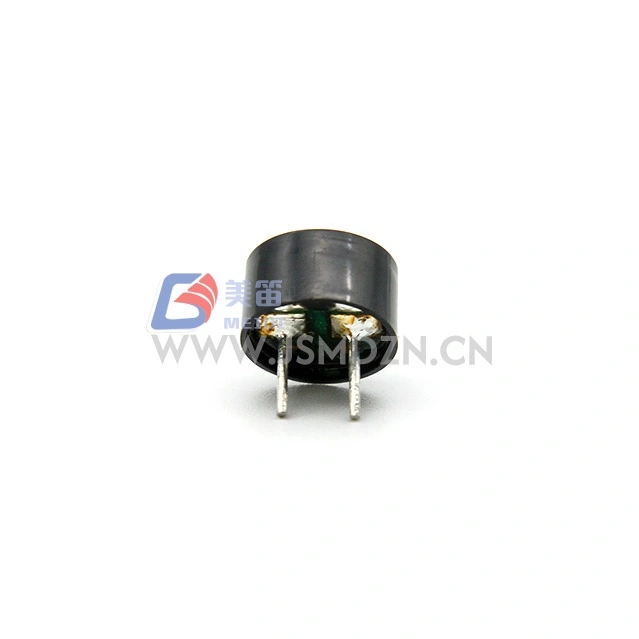
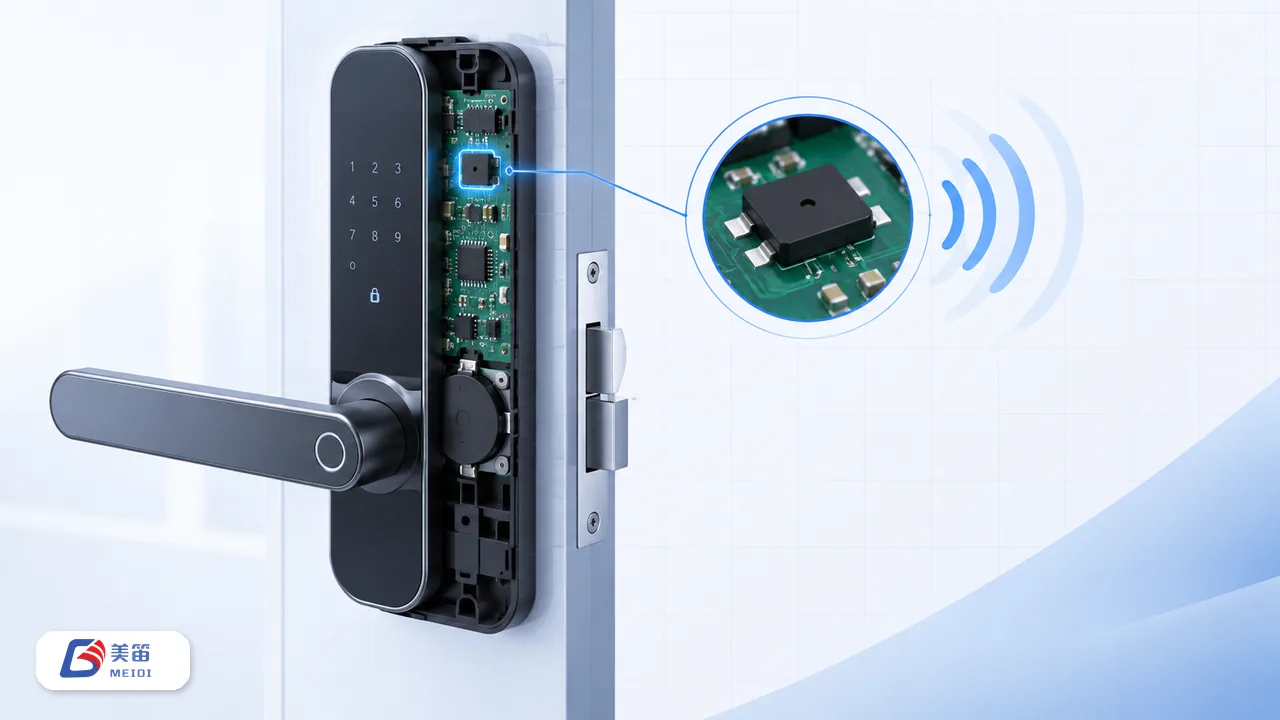
How long does a buzzer last? It is a question with a slippery answer, because the lifespan of a buzzer is not one number printed on a datasheet. Search the web and you will find claims from 1,000 to 100,000 hours, usually with no test conditions attached. The honest answer is that the life of a buzzer comes from its construction, the way it is driven, and the environment it lives in. This guide separates physics from marketing, explains the real failure modes of a piezo buzzer and an electromagnetic buzzer, and shows the temperature and specification data that actually predict how long a buzzer will serve.
In this guide: the typical buzzer lifespan for each technology, why published buzzer numbers disagree, the four failure modes that end a buzzer's life, the design and mounting factors that extend the life of the part, and a real MEIDI model table with verified operating ranges.
Before comparing numbers, it helps to know what a buzzer lifespan figure is measuring. For a buzzer, life is expressed in operating hours, but three definitions are in common use, and mixing them is where most confusion starts.
When a supplier quotes a buzzer lifespan, ask whether it runs continuously or is duty-cycled, at what temperature, and what failure criterion was used — complete silence, or an output drop below a stated SPL. Without those answers, two quotes cannot be compared. A responsible manufacturer states the test voltage, drive frequency and ambient temperature behind every published buzzer figure.
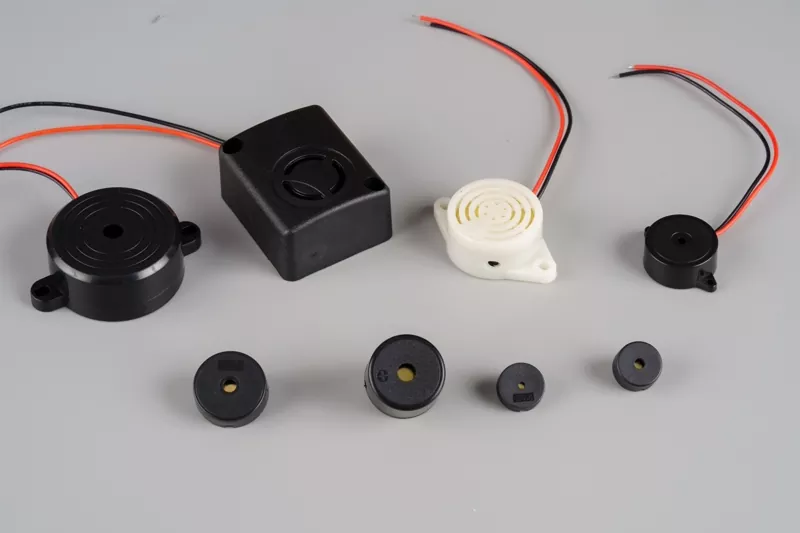
The construction of a buzzer sets its life ceiling. The table below gives the ranges you will see in manufacturer literature, with the physical reason behind each type.
| Buzzer type | Typical listed life | Moving parts | Why this buzzer lasts |
|---|---|---|---|
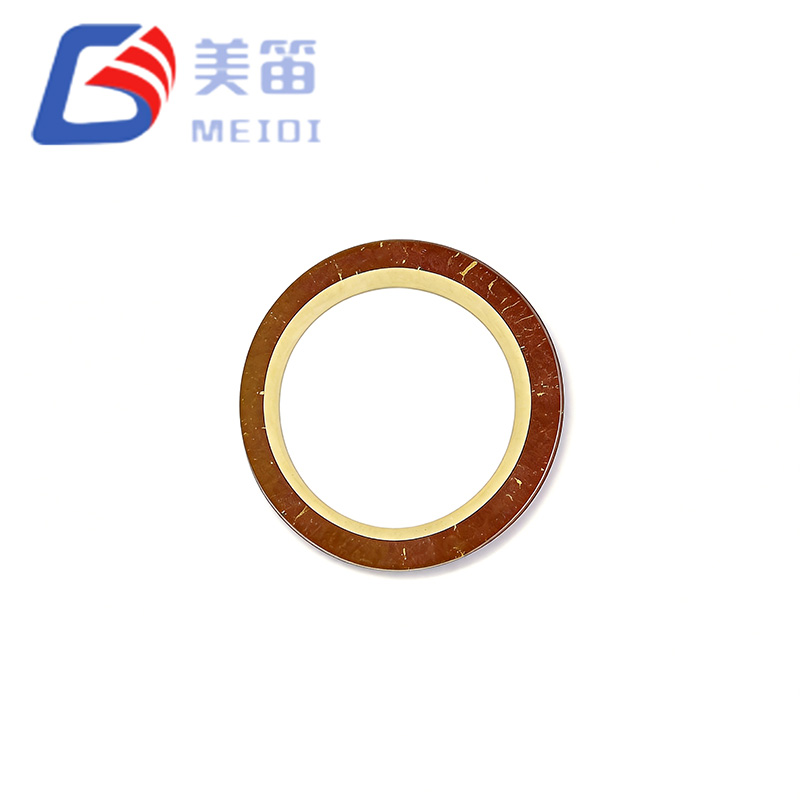
| Piezo (ceramic disc) | Tens of thousands of hours, up to ~100,000 h quoted | Essentially none | A ceramic disc flexes a metal plate; there is no coil to overheat and no contacts to wear in this design |
| Electromagnetic (coil + diaphragm) | Around 10,000–30,000 h | Vibrating diaphragm | The coil and armature here see continuous current and mechanical fatigue; a solder joint or wire can fail |
| Piezo alarm / siren unit | Application-dependent, often tens of thousands of hours | Essentially none | The same solid-state element sits in a resonant housing; buzzer life is limited by the enclosure and drive electronics |
These are not guarantees. They are the ranges that physics supports when it is driven inside its rating. A piezo buzzer driven far outside its rated voltage, or a buzzer mounted where moisture reaches the ceramic, can fail in weeks — regardless of the headline buzzer lifespan figure.
Field returns rarely say "the buzzer wore out." They say "it stopped working," and the root cause is almost always one of four problems.
Driving a buzzer above its rated voltage is the fastest way to shorten its life. On a magnetic buzzer, excess current heats the coil and can soften the bobbin or break the fine winding wire. On a piezo buzzer, over-voltage can crack the ceramic or depole it, permanently reducing output. Heat is cumulative: every degree above the rated operating range accelerates the ageing of the adhesive that bonds the disc to the plate inside the buzzer.
A passive buzzer is a mechanical resonator. When the drive frequency matches the resonant frequency, it moves efficiently and stays cool. Drive the buzzer a few hundred hertz away and the electrical energy that should become sound is dissipated as heat and mechanical stress. For a piezo buzzer rated at 2.7 kHz, running it at 2.2 kHz can cut output by 10 dB or more while working the ceramic harder — a double penalty for buzzer life and loudness.
Moisture is the silent killer of buzzer lifespan. On a piezo buzzer, moisture attacks the electrode and the bond line; on a magnetic buzzer, moisture corrodes the coil and the terminals. Standard open-hole buzzer parts are not sealed. If the product lives in a damp or dusty place, the enclosure — not the raw part — has to provide protection, or a sealed part must be specified.
A piezo buzzer ceramic is brittle. A mounting screw overlapped too far, a clip pressing on the disc instead of the rim, or a board that flexes under vibration can crack the buzzer. Magnetic buzzers tolerate shock better, but their solder joints and wire leads fatigue under continuous vibration. Rubber isolation mounts and correct torque do more for buzzer reliability than almost any electrical change.
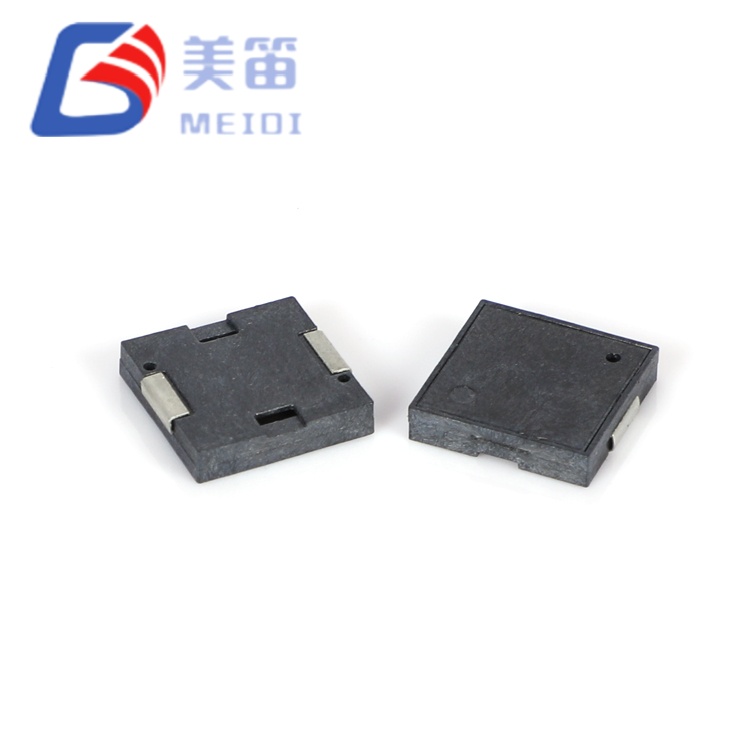
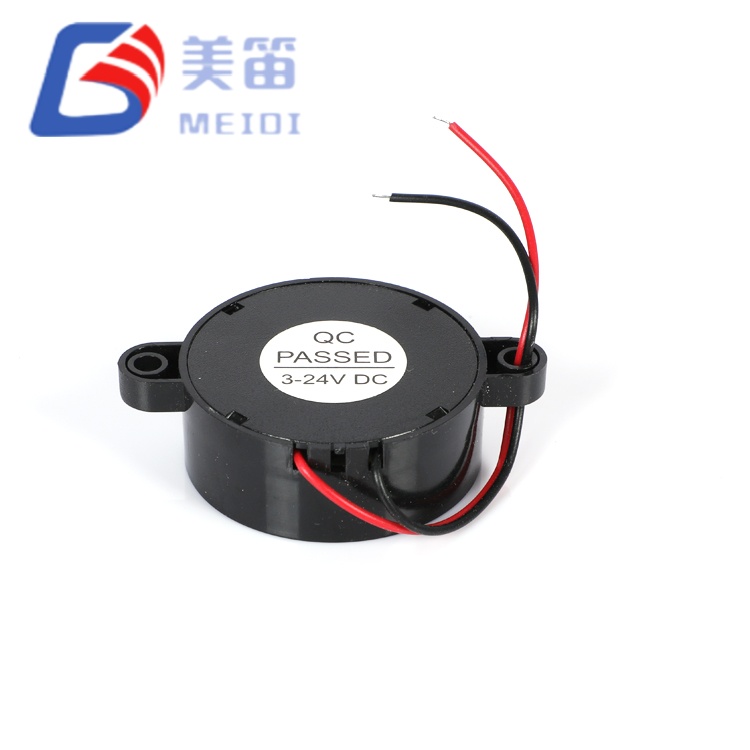
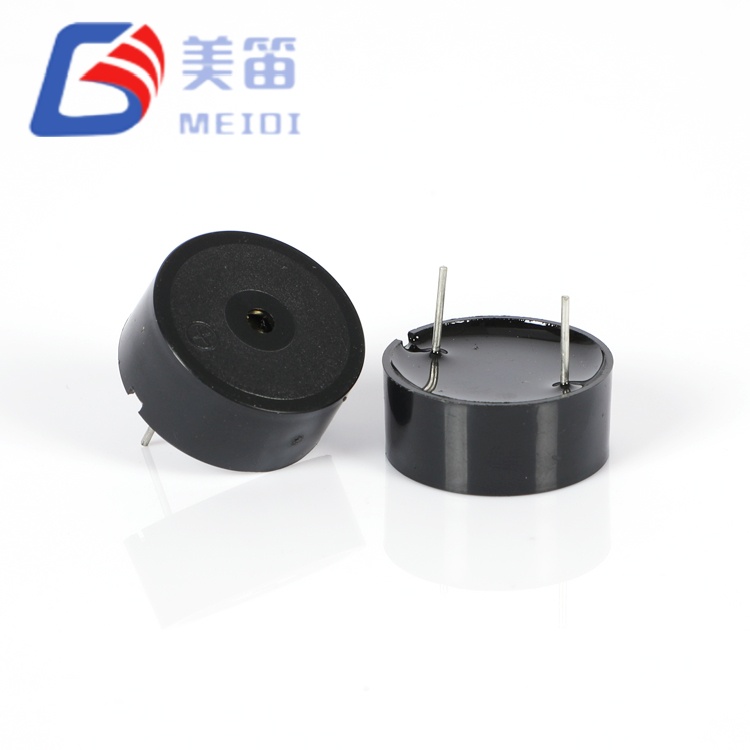
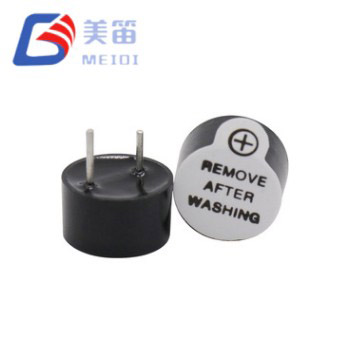
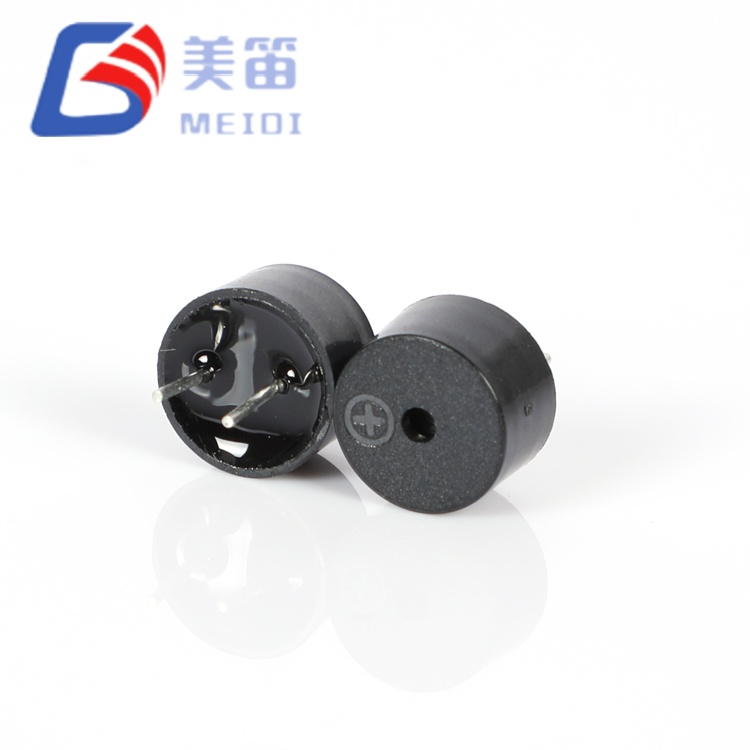
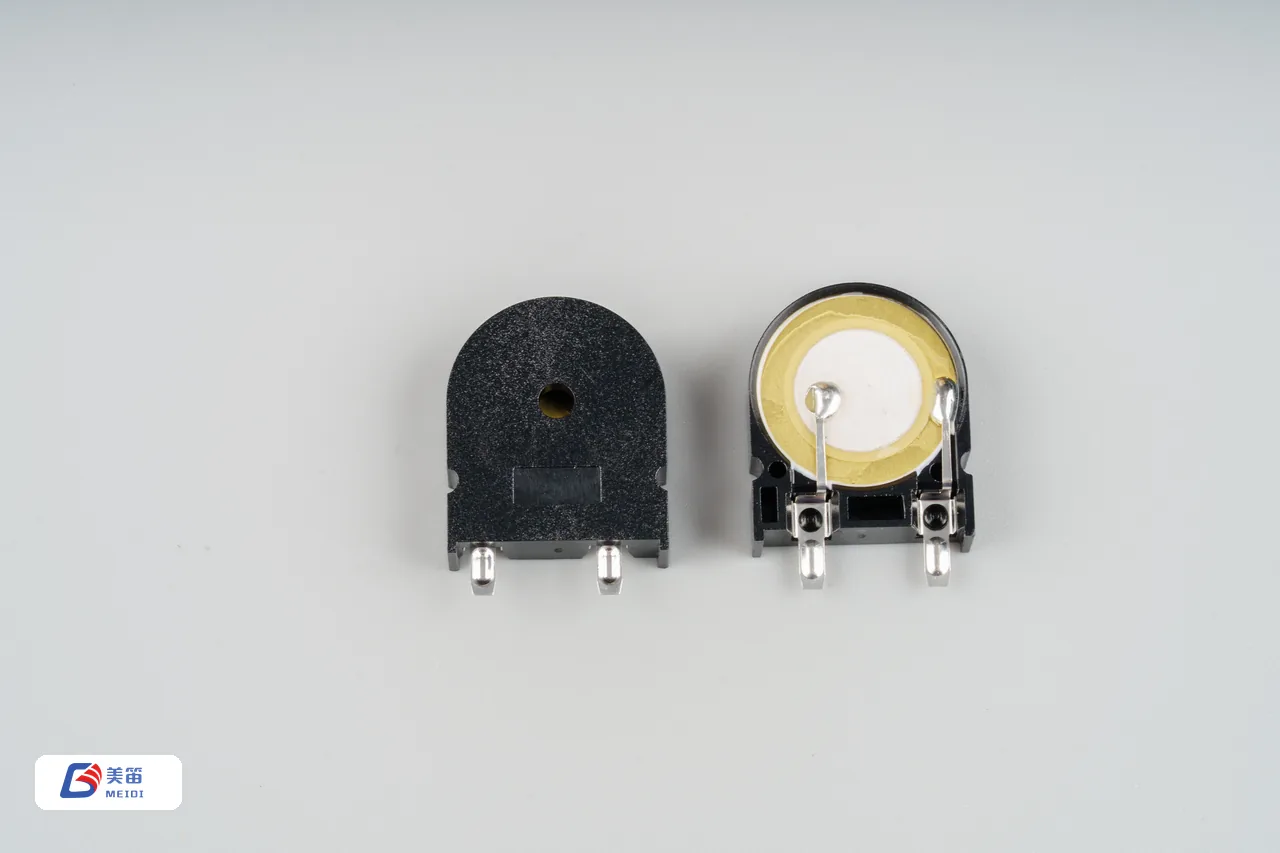 MEIDI buzzer production — construction sets the service-life ceiling.
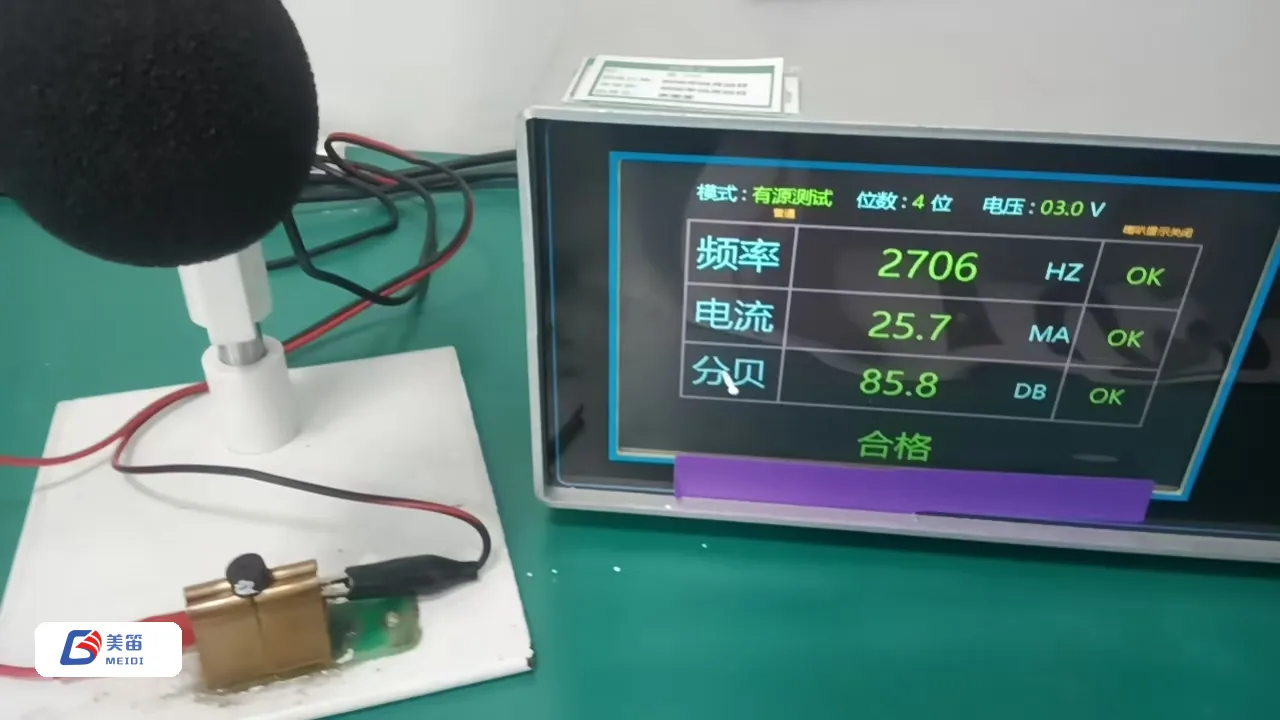
One reason published buzzer figures disagree is that the acoustic specification depends on conditions. A datasheet SPL of 85 dB is a measurement, not a fixed property of the device: the figure is quoted at a defined distance (commonly 10 cm), at the rated voltage, at the resonant frequency, with a defined waveform. Change any condition and the number changes — and so does the stress on the buzzer.
This is why a buyer comparing a "100,000 hours" buzzer from one supplier with a "10,000 hours" buzzer from another is often comparing a piezo part at room temperature with a magnetic buzzer under continuous drive. Both figures can be truthful and still be useless for a design decision.
A long buzzer lifespan is mostly an engineering outcome, not a lottery. These are the levers that matter in production.
The most useful reliability data on a buzzer datasheet is the operating temperature range and the rated drive. Below are real MEIDI buzzer models with verified specifications, spanning standard and wide-temperature parts. Every value comes from the current product catalogue — no estimates.
| Model | Type | Rated voltage | SPL @10 cm | Rated current | Operating temp. |
|---|---|---|---|---|---|
| MLT-13605Y-5V | Electromagnetic active SMD buzzer | 5 V | ≥85 dB | ≤50 mA | −40 ~ +105 °C |
| HND-2316 | Piezo active buzzer | 12 V | ≥90 dB | ≤10 mA | −20 ~ +80 °C |
| HND-3025 | Piezo active buzzer | 24 V | ≥105 dB | ≤30 mA | −20 ~ +70 °C |
| HNR-1255PA5.0 | Piezo passive buzzer | 5 V | ≥80 dB | ≤10 mA | −20 ~ +70 °C |
| TMB12A24 | Electromagnetic active buzzer | 24 V | ≥90 dB | ≤30 mA | −20 ~ +70 °C |
| HMB1275-05B | Electromagnetic active buzzer | 5 V | ≥85 dB | ≤30 mA | −20 ~ +70 °C |
| MLT-8530-32R | Electromagnetic passive SMD buzzer | 5 V | ≥85 dB | ≤80 mA | −30 ~ +70 °C |
For a product that sees real cold or heat, the MLT-13605Y-5V buzzer is the standout: a −40 to +105 °C range protects buzzer lifespan where a standard −20 to +70 °C buzzer would be outside its envelope. For conventional panels and appliances, the piezo buzzer HND-3025 and the magnetic buzzer TMB12A24 show the classic trade — very high SPL with modest current from the piezo buzzer, and a compact, simple DC-driven package from the magnetic buzzer. If you are still deciding between the two technologies, our piezo vs electromagnetic buzzer comparison walks through the choice in more detail.
Because published buzzer figures use different assumptions, the reliable way to predict buzzer lifespan is to test the buzzer in real conditions.
The point is not to reproduce a supplier's number. It is to establish that your buzzer, at its real temperature and drive, comfortably outlasts the product's intended service period. For a safety-critical buzzer in an alarm or medical alert device, that margin is the difference between a dependable product and an expensive field failure.
A piezo buzzer has no coil and no mechanical contacts, which is why quoted lifetimes reach tens of thousands of hours and sometimes about 100,000 hours. The real buzzer figure depends on temperature, drive voltage and moisture — a buzzer driven outside its rating or mounted in a damp enclosure can fail far sooner.
Generally yes. A magnetic buzzer has a vibrating diaphragm, a coil and solder joints, all of which can fatigue. Continuous high-duty operation heats the coil. A piezo buzzer is a simpler solid-state structure, so its life ceiling is higher — provided the ceramic is not cracked or over-driven.
Because buzzer test conditions differ. Continuous versus intermittent drive, room temperature versus elevated temperature, and even the definition of "failure" all change the buzzer number. Compare test conditions before comparing hour figures.
If "louder" means raising the buzzer voltage above the rated range, yes — heat and electrical stress rise quickly. If the buzzer is driven at its resonant frequency or the enclosure is improved, the buzzer can actually reduce stress, because the element works more efficiently for the same output.
Drive the buzzer at its rated voltage and resonant frequency, keep the buzzer inside its operating temperature range, isolate it from vibration, protect it from moisture, and choose a buzzer rated for the environment. Those five steps do more for buzzer lifespan than any specification on paper.
Every MEIDI buzzer model is produced under ISO 9001 and ISO 14001 systems and shipped RoHS and REACH compliant, with lot-level testing behind each buzzer shipment. Operating temperature and rated electrical data are published for every buzzer part; ask our team for the specific test data and samples when qualifying a buzzer model for a long-life product.
The life of a buzzer is not a number you read off a datasheet — buzzer lifespan is a system result. The technology sets the ceiling: piezo buzzer elements, with no coil or contacts, reach tens of thousands of hours, while an electromagnetic buzzer is shorter because of the coil and moving parts. What happens inside your product sets the reality: voltage, resonant frequency, temperature, moisture and mounting decide whether the buzzer approaches that ceiling or fails early. Specify the operating range the product will actually see, drive the buzzer the way it was designed to be driven, and verify it in the real enclosure. Do those things and buzzer lifespan stops being a guess — and your buzzer alarm keeps working for as long as the product it protects. To compare the two technologies, see our piezo vs electromagnetic buzzer guide.