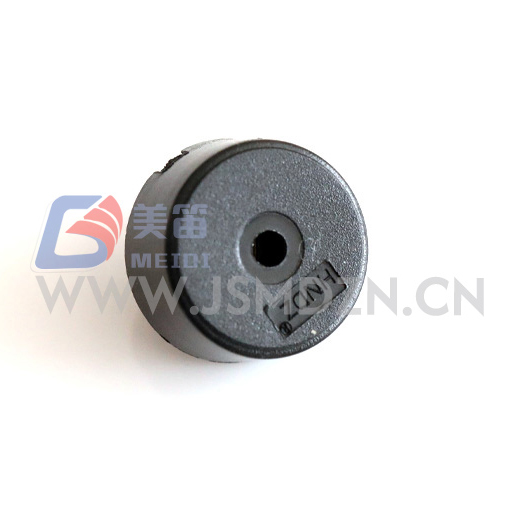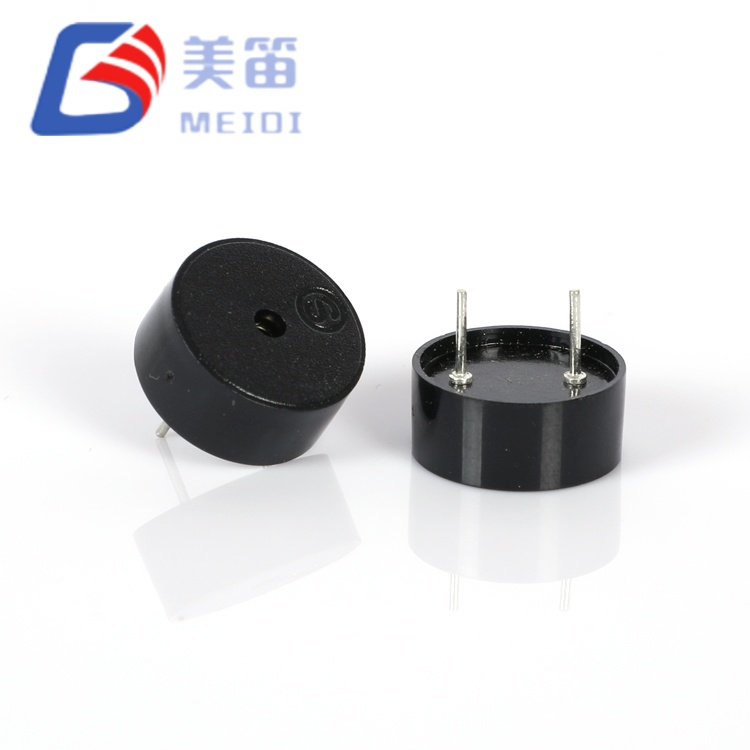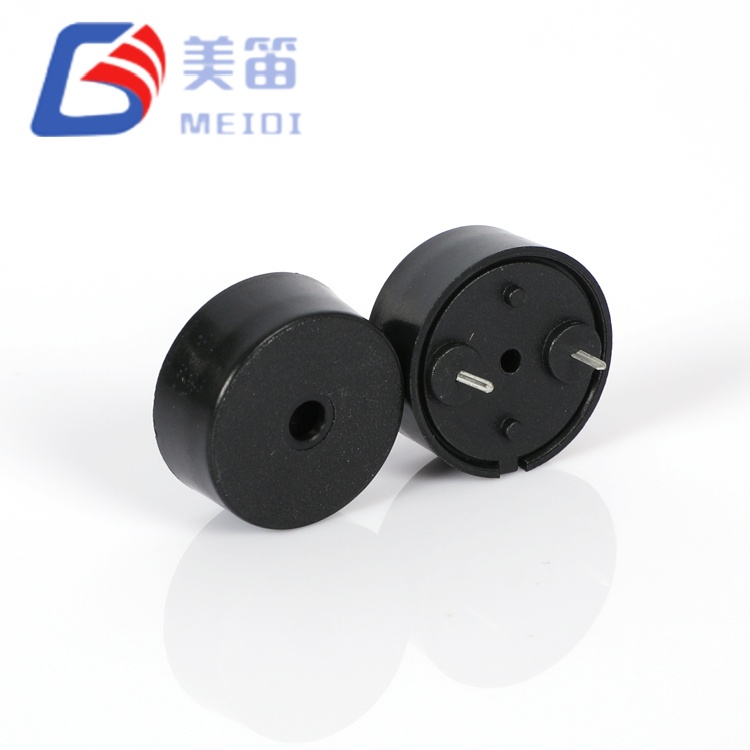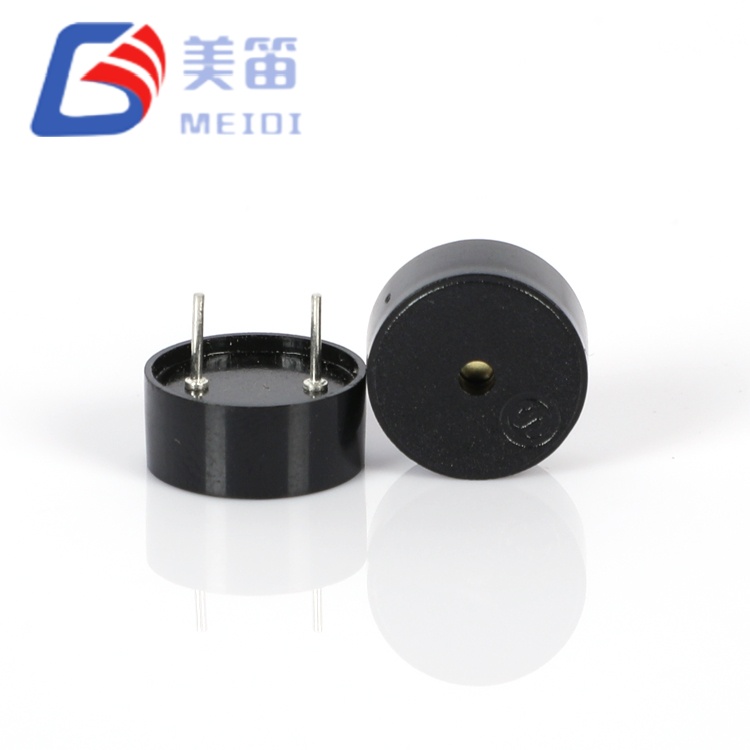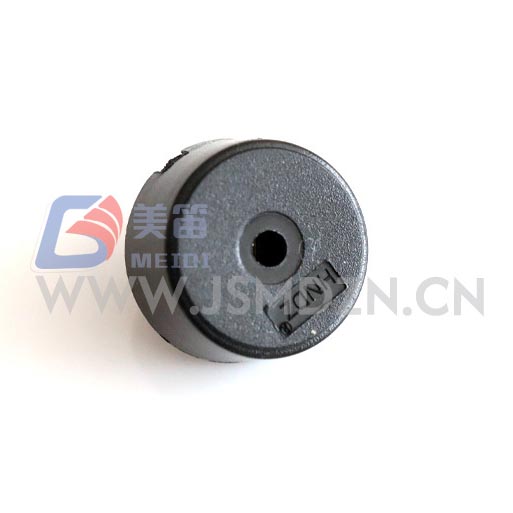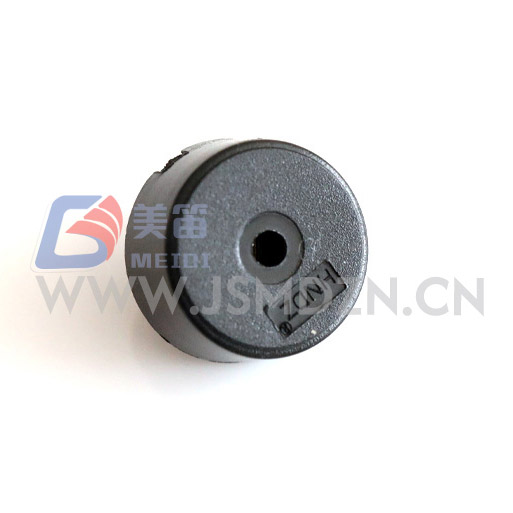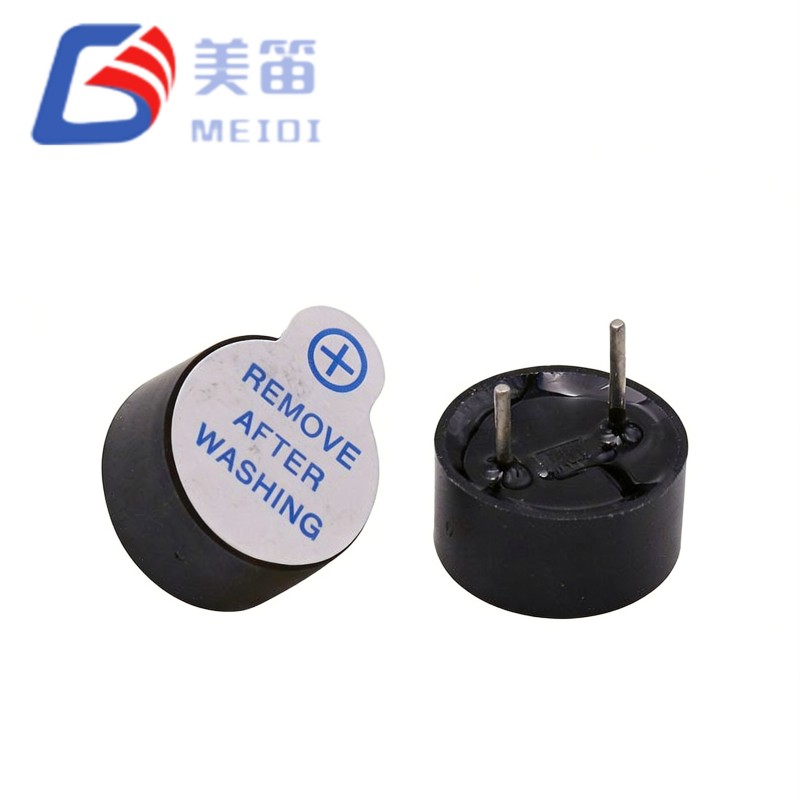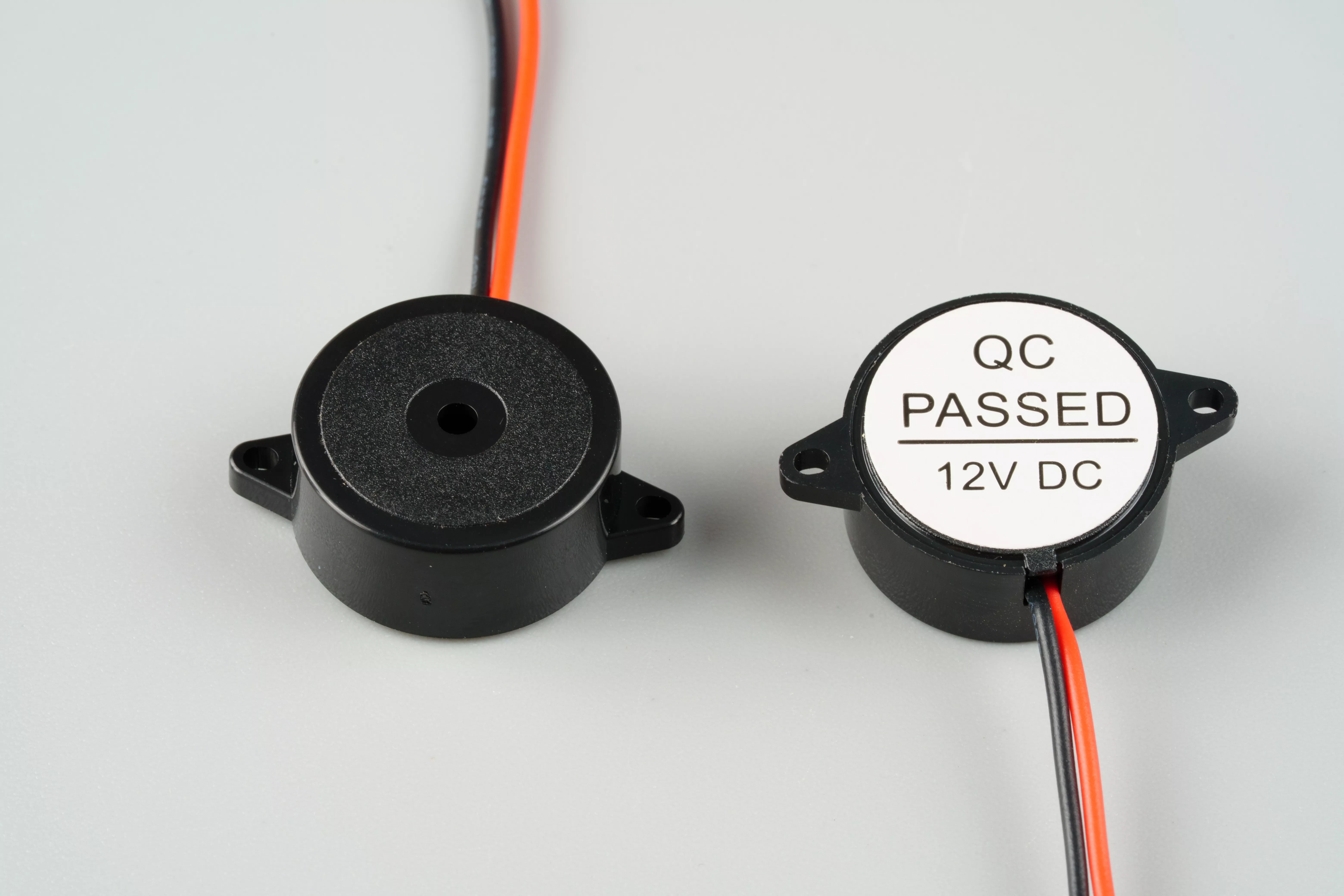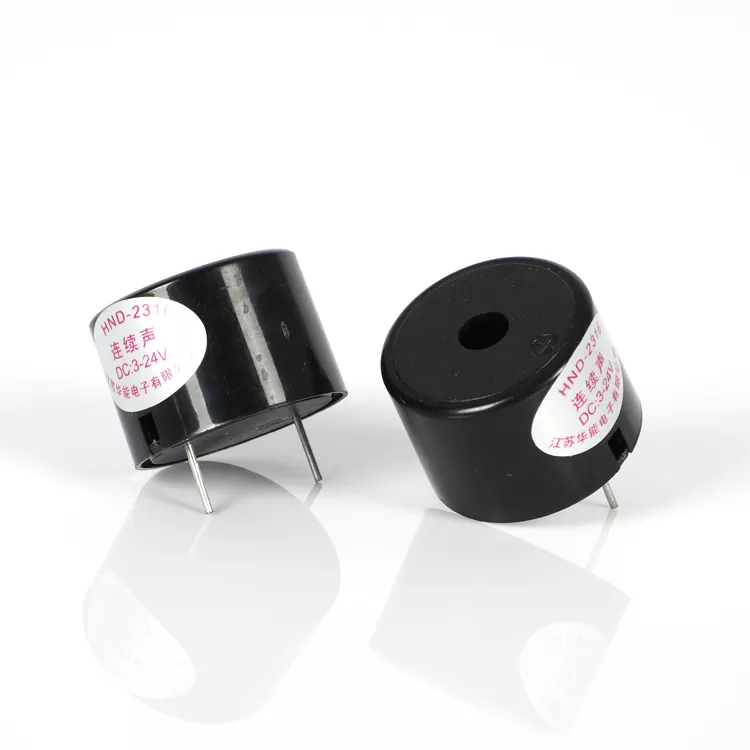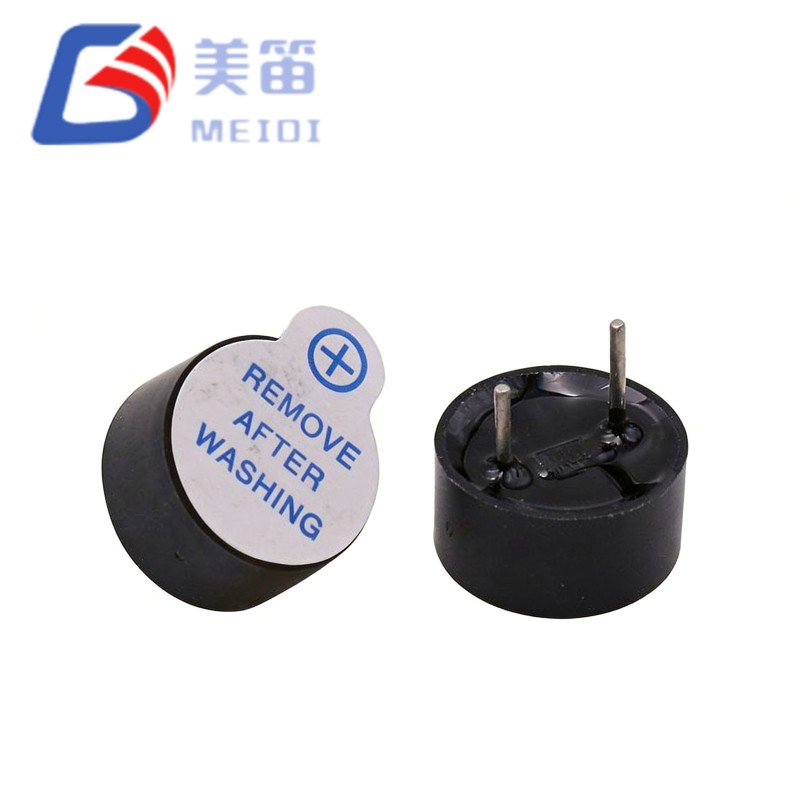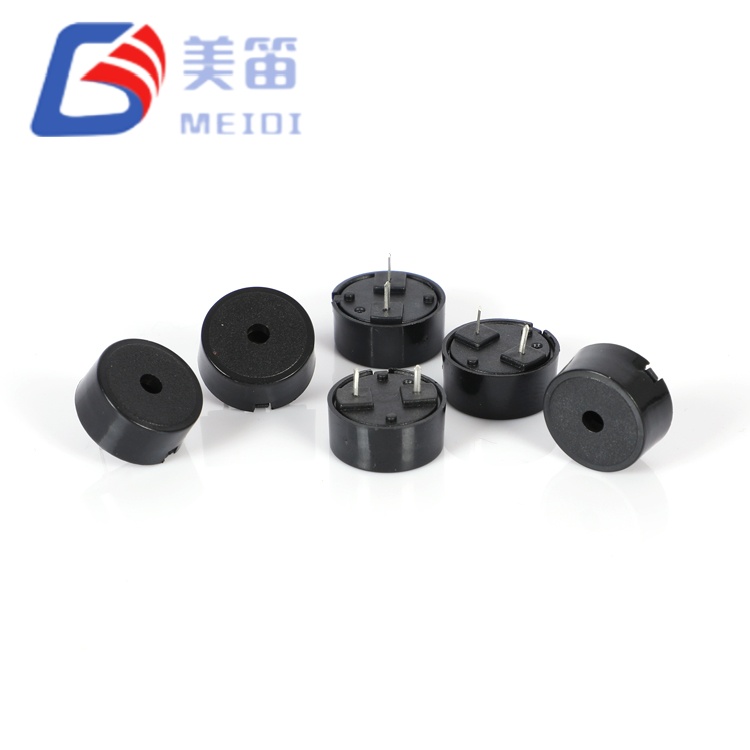
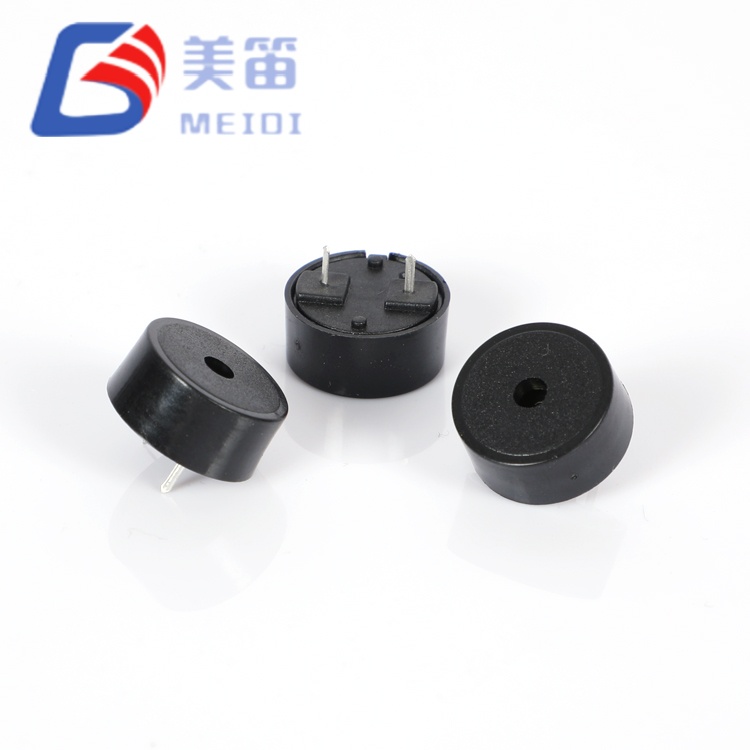
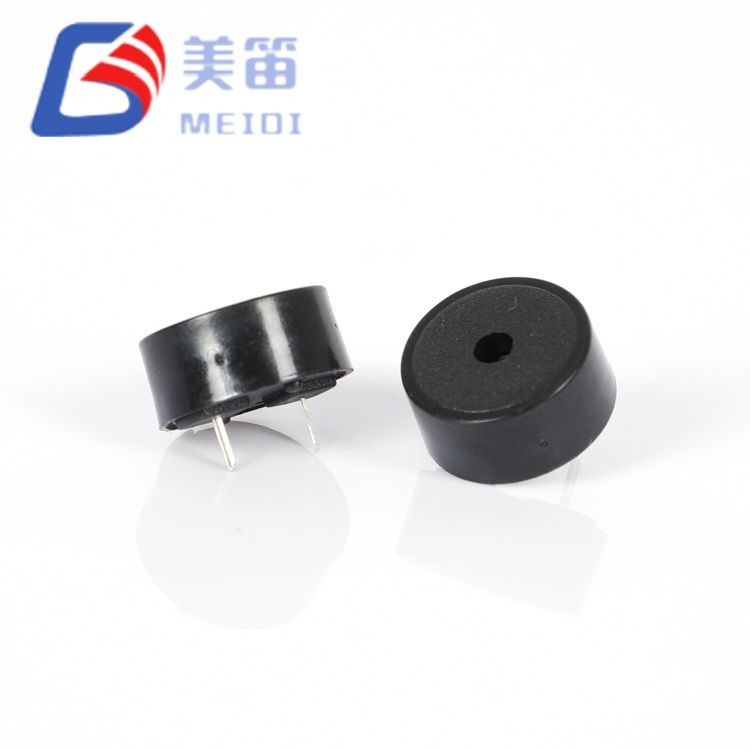
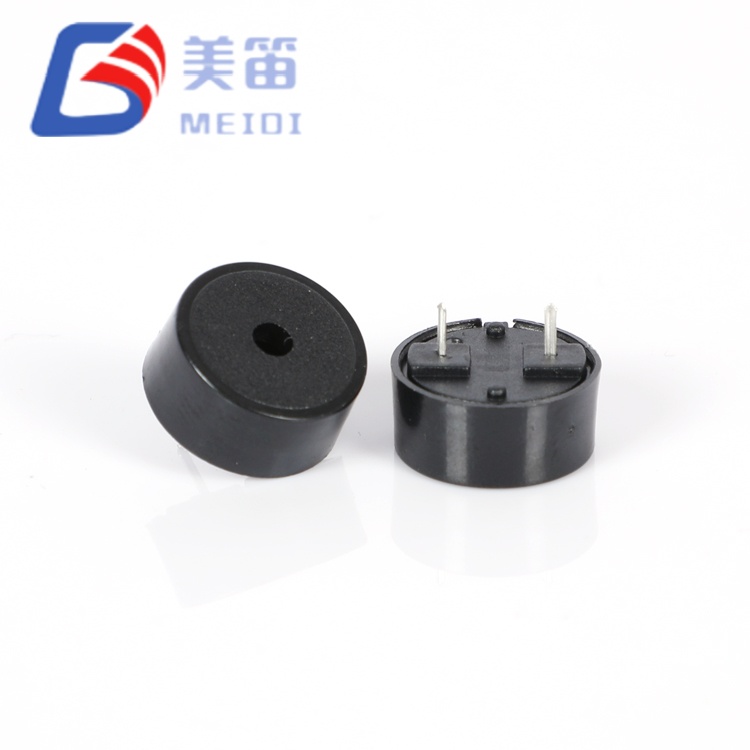
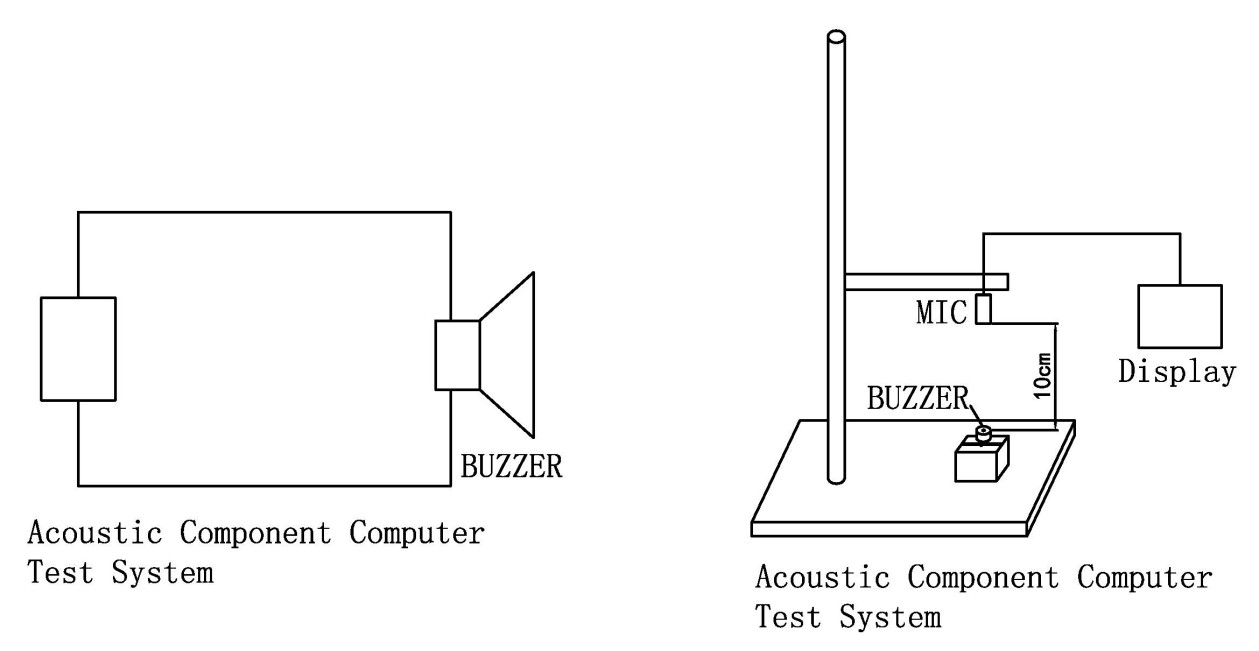
The 1407 Piezoelectric Passive Buzzer with Pogo Pin is a through‑hole piezoelectric passive buzzer that occupies a deliberate mid‑format position between compact 12.5 mm devices and large 22 mm models. With a 14 mm diameter diaphragm and 6.7 mm height, it delivers measured acoustic output of 89–94 dB at 4000 Hz and 5 Vp‑p – outperforming smaller alternatives while maintaining a footprint significantly less demanding than oversized solutions.
Manufactured at MEIDI’s ISO‑9001 certified facility in Jiangsu Province, this component benefits from our decade‑plus experience in piezoelectric transducer engineering. The 14 mm ceramic element provides 25% greater diaphragm area than 12.5 mm variants, translating to higher acoustic radiation efficiency without the PCB real‑estate commitment of 22 mm alternatives. The 1–30 V ultra‑wide operating range consolidates multiple voltage‑specific SKUs, while measured current consumption of just 0.63–0.78 mA at 5 Vp‑p ensures minimal impact on battery runtime in portable and handheld applications.
The 1407 Piezoelectric Passive Buzzer with Pogo Pin addresses a specific design challenge: achieving acoustic output that exceeds compact 12 mm buzzers without committing to the footprint and cost of 22 mm devices. At 14 mm diameter, it delivers a measured 89–94 dB SPL – a level that provides meaningful design margin for medical alarms, appliance alerts, and industrial indications where audibility cannot be compromised.
The 4000 ± 500 Hz resonant frequency sits at the upper edge of the human auditory sensitivity peak (2–4 kHz), producing a crisp, attention‑demanding tone that cuts through office, medical, and light‑industrial ambient noise. This frequency is particularly effective in environments where lower‑frequency tones may be masked by ventilation systems, computing equipment, or conversation.
As a passive piezoelectric transducer, the HNR‑1407PA75 requires external AC excitation – typically a 4000 Hz square wave from a microcontroller PWM output, timer, or dedicated driver IC. This architecture grants designers full control over tone patterns, frequency modulation for priority differentiation, and duty‑cycle‑based volume scaling – capabilities unavailable with fixed‑frequency active buzzers. The 12 nF nominal capacitance (measured 11.7–14.2 nF) allows direct drive from most MCU GPIO pins without external buffer stages in many applications.
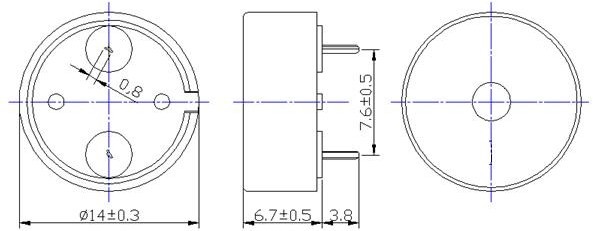
The 6.7 mm height and 0.85 g mass represent a balanced compromise between acoustic cavity volume and mechanical compactness. This form factor integrates readily into handheld medical devices, mid‑size IoT gateways, and commercial appliance control panels where 14 mm diameter fits standard 15–18 mm front‑panel cutouts.
14 mm mid‑format diameter – 25% more diaphragm area than 12.5 mm alternatives; delivers higher SPL without 22 mm footprint penalty
Measured 89–94 dB acoustic output – at 5 Vp‑p, 4000 Hz, 10 cm; provides design margin above the ≥85 dB specification
4000 Hz sharp tonal character – positioned in the human auditory sweet spot with strong perceptibility in office and medical environments
1–30 V ultra‑wide range – single SKU eliminates voltage‑specific BOM lines across 3.3 V, 5 V, 12 V, and 24 V systems
0.63–0.78 mA sub‑milliampere draw – at 5 Vp‑p; current scales with voltage and duty cycle for predictable battery budgeting
6.7 mm slim profile at 0.85 g – balanced form factor for handheld medical devices, portable instruments, and mid‑size IoT nodes
| Parameter | Value | Test Conditions |
| Product Type | Piezoelectric Passive Buzzer | — |
| Rated Voltage | 5 Vp‑p | Square wave, 4000 Hz |
| Operating Voltage | 1 – 30 Vp‑p | Continuous |
| Sound Output | ≥ 85 dB | At 5 Vp‑p, 4000 Hz, 10 cm; measured 89–94 dB |
| Resonant Frequency | 4000 ± 500 Hz | At rated voltage |
| Current Consumption | ≤ 10 mA | At 5 Vp‑p, 4000 Hz; measured 0.63–0.78 mA |
| Capacitance | 12 ± 40% nF | At 1 kHz, 25 ℃; measured 11.7–14.2 nF |
| Operating Temperature | -20 ℃ ~ +70 ℃ | Continuous |
| Storage Temperature | -30 ℃ ~ +80 ℃ | Non‑operating |
| Dimensions (Dia × H) | 14 × 6.7 mm | Body only |
| Weight | 0.85 g | Typical |
| Housing Material | Black PBT | UL94 V‑0 |
| Mounting Type | Through‑hole | Polarised pins |
| Soldering Temperature (Wave) | 260 ± 5 ℃ | 4–6 s, recommended |
| Soldering Temperature (Manual) | 350 ± 10 ℃ | 2–5 s, recommended |
Handheld medical devices – digital thermometer fever alerts, pulse oximeter limit tones, and portable ECG completion beeps where 14 mm diameter fits ergonomic housings
Mid‑size IoT sensor gateways – environmental threshold warnings, connectivity status chirps, and tamper alerts in devices larger than coin‑cell nodes but smaller than industrial controllers
Commercial appliance control panels – oven timer signals, dishwasher cycle‑end tones, and refrigerator fault alerts in standard 15–18 mm front‑panel cutouts
Automotive interior modules – seatbelt reminders, door‑ajar chimes, and diagnostic tool feedback on 12 V accessory buses
Industrial 24 V control systems – PLC fault annunciators, HMI button confirmation tones, and process limit audible warnings
Portable test and measurement instruments – multimeter continuity tones, oscilloscope trigger alerts, and power supply limit warnings on mid‑size benchtop devices
| Design Requirement | HNR‑1407PA75 Advantage |
| Higher SPL than 12 mm without 22 mm footprint | 14 mm diameter measured 89–94 dB at 5 Vp‑p; provides acoustic headroom for demanding alert applications |
| Balanced size/performance for handheld devices | 6.7 mm height and 0.85 g mass suit ergonomic medical and test instrument housings |
| Multi‑voltage platform consolidation | 1–30 V range replaces 3.3 V, 5 V, 12 V, and 24 V specific buzzers in BOM |
| Battery‑critical portable design | 0.63–0.78 mA draw at 5 Vp‑p; current scales predictably with voltage and duty cycle |
| Standard front‑panel cutout compatibility | 14 mm diameter fits common 15 mm appliance and instrument bezels with minimal clearance |
The HNR‑1407PA75 eliminates the binary choice between compact 12 mm buzzers with limited SPL and bulky 22 mm devices with excessive footprint. For designers of handheld medical instruments, mid‑size IoT gateways, and standard appliance panels, the 14 mm format provides acoustic headroom that 12 mm alternatives cannot match while maintaining PCB and front‑panel compatibility that 22 mm devices compromise.
MEIDI manufactures the HNR‑1407PA75 on dedicated piezoelectric assembly lines with automated ceramic pressing, electrode firing, and housing encapsulation. Our Jiangsu manufacturing base operates under ISO 9001:2015 quality management, with statistical process control at every stage – from raw material inspection to final acoustic verification.




Each production lot undergoes comprehensive qualification:
Resonant frequency verification – 4000 Hz ±12.5% statistical sampling; typical measured range 3900–4080 Hz
SPL batch verification – ≥85 dB minimum at 5 Vp‑p, 4000 Hz, 10 cm; measured sample range 89–94 dB
Current consumption validation – ≤10 mA maximum; measured 0.63–0.78 mA confirms sub‑milliampere efficiency
Capacitance screening – 12 nF ±40% at 1 kHz for drive circuit matching; measured 11.7–14.2 nF
High‑temperature storage – 48 hours at +80 ± 2 ℃; parameter recovery after 2‑hour ambient stabilisation
Low‑temperature storage – 48 hours at -30 ± 2 ℃; verified activation at 1 V minimum
Thermal shock cycling – 5 cycles between -30 ℃ and +80 ℃ with 30‑minute dwell per extreme
Mechanical stress validation – sinusoidal vibration (10–55 Hz, 1.0 mm amplitude, XYZ axes, 0.5 hours cumulative) and 75 cm free‑fall drop onto 10 mm hardwood (3 impacts)
Humidity resistance – 48 hours at 50 ± 5 ℃ / 90–95% RH followed by 2‑hour recovery and electrical characterisation
Solder heat resistance – 250 ± 5 ℃ for 10 ± 0.5 seconds with 2.0 mm body‑to‑solder clearance
All components are RoHS, REACH, and UL94 V‑0 compliant. Lot code markings on each unit enable 10‑year traceability to production date, test data, and raw material certificates.
Q1: How does the 14 mm HNR‑1407PA75 compare to 12.5 mm and 22 mm alternatives in the same application?
The 14 mm diameter provides measured 89–94 dB at 5 Vp‑p, 4000 Hz, 10 cm – a significant improvement over typical 12.5 mm devices (typically 83–86 dB) while maintaining a footprint considerably smaller than 22 mm alternatives (typically 95–100 dB). The 14 mm format is optimal when 12 mm output is marginal but 22 mm is mechanically or aesthetically unsuitable. For specific comparisons with alternative form factors, contact MEIDI for detailed cross‑reference data.
Q2: Can this buzzer be driven directly from a 3.3 V microcontroller GPIO?
Yes, in most cases. At 3.3 Vp‑p and 4000 Hz, the 12 nF capacitive load draws approximately 0.16 mA RMS – well within the 8–20 mA sourcing capability of standard MCU GPIO pins. No external transistor or driver IC is required for many 3.3 V applications. However, SPL at 3.3 V will be lower than the 89–94 dB measured at 5 Vp‑p; typical output at 3.3 V is approximately 76–80 dB. For maximum output from 3.3 V systems, consider a charge‑pump voltage doubler or dedicated piezo driver with integrated boost.
Q3: What is the practical battery life impact of the 0.63–0.78 mA draw?
Battery life is calculated by dividing cell capacity (mAh) by operating current (mA) for continuous tone duration. For a typical CR2032 coin cell (220 mAh), continuous tone at 5 Vp‑p would theoretically last approximately 280–350 hours. For intermittent duty cycles (e.g., 1 second on, 4 seconds off), multiply by the duty cycle ratio (20% duty extends life to approximately 1400–1750 hours). Actual battery life depends on cell characteristics, drive voltage, temperature, and age – treat these figures as first‑order estimates.
Q4: How does the 4000 ± 500 Hz tolerance affect multi‑unit installations?
The ±12.5% frequency tolerance is typical for piezoelectric buzzers in this size class. In multi‑unit installations where tonal consistency is critical (e.g., phased arrays or parallel alarms), frequency variation can produce audible beating between units. For such applications, MEIDI offers tightened tolerance options (±5% or ±3%) for volume orders. Contact our engineering team to discuss frequency grading and custom tuning for your specific multi‑unit requirements.
Q5: Is the 14 mm diameter compatible with standard front‑panel cutouts?
The 14 mm body diameter requires a minimum 14.5 mm panel cutout with 0.25 mm clearance per side. This fits many standard 15 mm appliance and instrument bezels without modification. For retrofit applications replacing 12 mm buzzers, the 14 mm diameter may require enlarging the cutout by 1.0–1.5 mm. MEIDI provides dimensional drawings and panel cutout templates upon request. For applications requiring 12 mm mechanical compatibility without modification, we offer the HNR‑1255 series (12.5 mm diameter) as an alternative.
Q6: What is the recommended drive waveform for maximum acoustic output?
A square wave at 4000 Hz with 50% duty cycle produces the highest SPL due to the rapid voltage transitions that maximise piezoelectric element displacement. Sine waves produce a cleaner tone but typically reduce SPL by 3–5 dB at the same peak voltage. For maximum output, use a square wave with as low rise and fall times as your driver permits. A series resistor of 100–330 Ω is recommended to dampen ringing and reduce EMI, but this may slightly reduce SPL – values above 330 Ω will noticeably attenuate output.
For technical datasheets, 3D STEP files, drive circuit application notes, PWM configuration examples, or volume pricing, contact MEIDI Engineering Support.
MEIDI applications engineering typically responds within one business day with PCB keepout drawings, acoustic enclosure integration guidelines, and volume pricing for qualified programs.
Address
No.6, Wenlin Road, Chenbao Town, Xinghua City, Jiangsu Province, China
Tel